
Roof Inspections in Havant
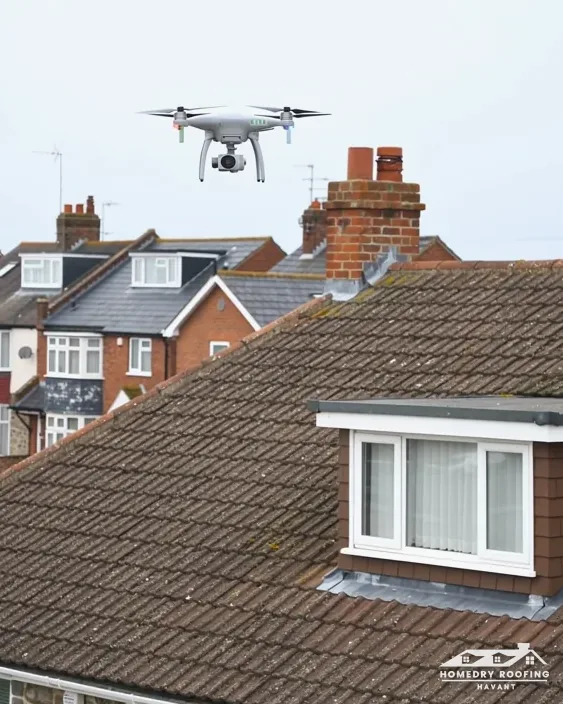
We check your roof by ladder, from the loft and by drone, then photograph what we find and write it up.
10-year workmanship guarantee, in writing
Roof inspection guides
All guides- The survey says the roof needs work: what to do nextGuide
- What should a roof condition report cover?Guide
- How much does a roof inspection cost in the UK?Guide
- A roof maintenance checklist for homeownersGuide
- Should you pay for a roof inspection before buying a house?Post
- Drone, ladder or loft: what each roof inspection can seePost
- How often should a roof be inspected?Answer
- What does a roofer check on a roof inspection?Answer
- Why does HSE say every roof should be treated as fragile?Answer
- What does a roof survey cost compared with a general survey?Answer
- What can you tell about a roof from the ground?Answer
- Can a roof with spray foam be inspected?Answer
- Do you need a roof inspection after a storm?Answer
- Will an insurer accept a roofer's report?Answer
- What is the difference between a roof inspection and a roof survey?Answer
- Do landlords need a roof inspection?Answer
Reading a roof the way rain crosses it
An inspection follows the same route as the weather. Six places we look, and what ladder, loft and drone can each show there.
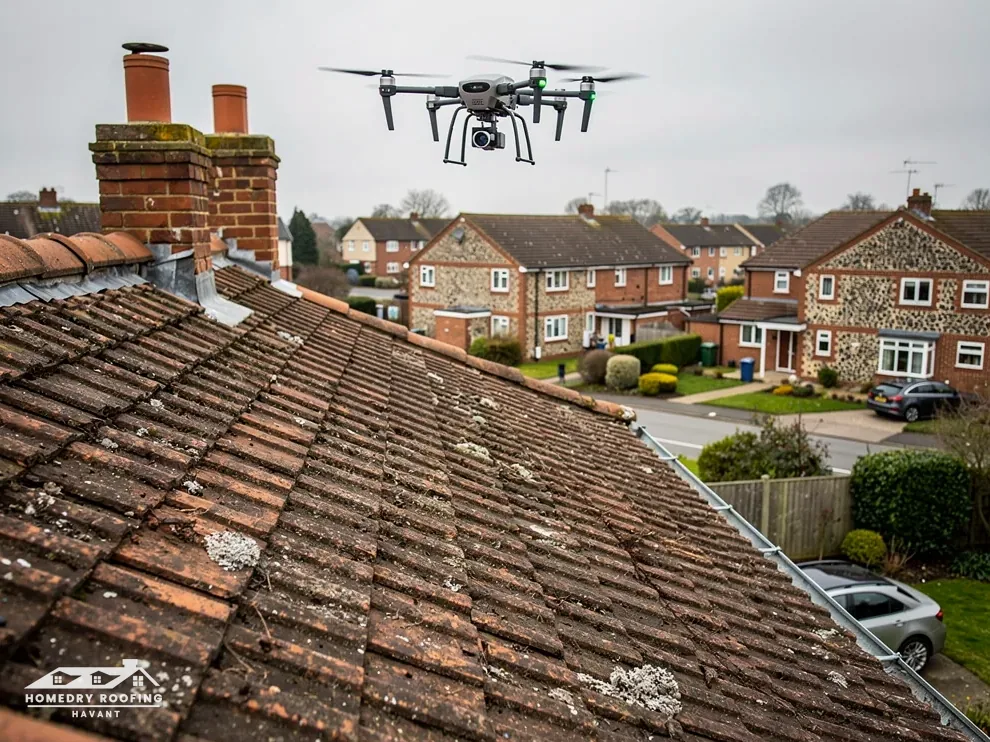
A drone shows us where to look next, and leaves the touching to the ladder.
RidgesWhat a drone can show along the top
Rain meets the roof first at the ridge, the line of capping tiles along the top, so a roof inspection starts there. It is also the hardest part to reach. From the garden you see one side of a ridge at a shallow angle, and from a ladder at the eaves you may not see it at all. A drone lifts a camera above the house with nobody climbing onto anything, and it shows the whole line from overhead.
From that height we look for ridge tiles that have shifted out of line, gaps in the mortar beneath them, hips that have opened up and debris lodged behind a chimney. A drone also helps on a tall house, or on a rear slope where a ladder has nowhere safe to stand.
What the camera leaves out
A camera records the surface and nothing under it. It cannot lift a tile, feel whether a ridge rocks or show the state of a batten. So we treat a drone roof inspection in Havant as the first pass, never the whole job: it tells us where to set the ladder and what to look for in the loft. Our post on drone, ladder or loft checks sets the three side by side. Any picture worth keeping goes into the report, marked with where on the roof it was taken. If the flight leaves a question open, the report records that and we answer it another way.
What we check
- Ridge
- Straight, with joints closed
- Hips
- Capping tiles still in line
- Mortar
- Cracked, missing or washed out
- Behind stacks
- Debris and blocked channels
Your view from the road
You can do some of this yourself from the pavement. Stand opposite the house, or at the far end of the garden, and sight along the top of the roof. It should run straight. A dip, a gap or a tile sitting proud is worth a photograph, along with the date you noticed it. Send that to us before we visit, so the first flight goes straight to it.
Where it shows
A wavering ridge line against the sky, or pieces of mortar lying on the slope and in the gutter below.
Where it gets in
Through open joints between capping tiles, or under a ridge tile that has lifted away from its bedding.
Will you need to walk on my roof?
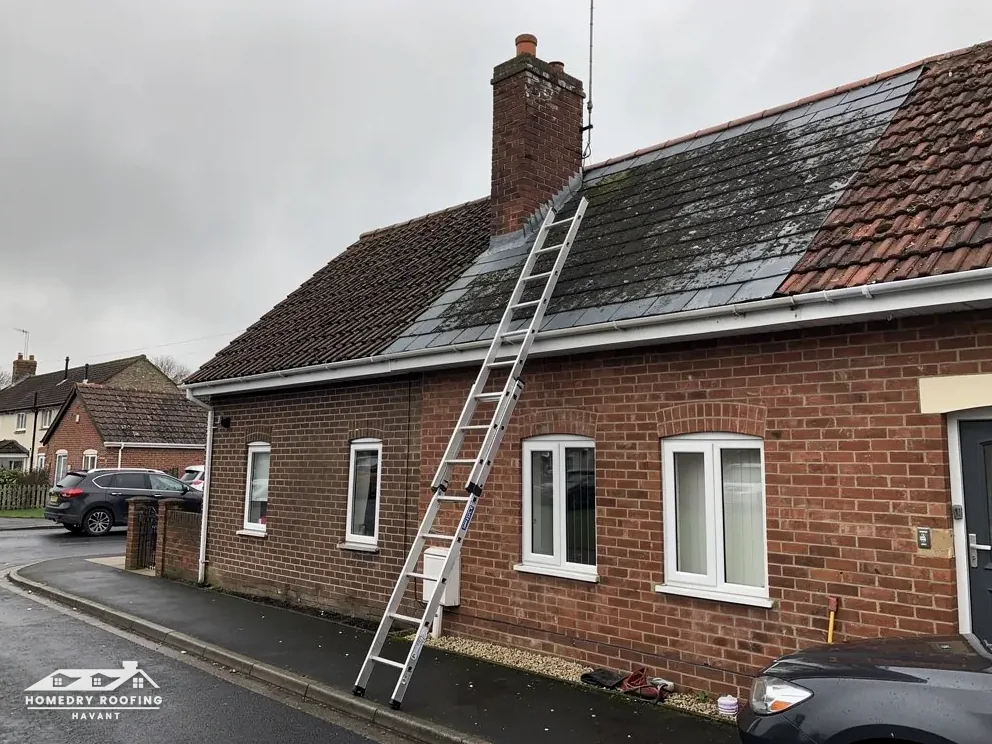
No. A ladder, a camera on a pole and a drone between them show the slopes without anyone standing on them. If something still needs touching, we say why and set up safe access for it.
CoveringsTiles and slates seen close from the ladder
Below the ridge, rain runs down the main covering, each tile or slate lapping the one beneath it. This is where a ladder earns its place. Footed and tied at the eaves, it brings the lower courses within arm's reach, close enough to see what a picture from above flattens out. Which signs matter depends on the material in front of us.
Materials and the problems each one shows
- Concrete and clay tiles: cracks, slipped tiles and worn nibs, the small lugs that hang a tile on its batten.
- Natural slate: slipped slates and tingles, the metal clips left by earlier repairs. A long run of those can point to nail sickness, where the fixings have rusted through.
- Flat roof coverings: blisters, open laps and standing water, all easy to read from a ladder at the edge.
Where a tile can be eased up without breaking it, we look at the batten and the sheet beneath, because they tell us as much as the surface does. We keep off the slope itself. A roof is treated as fragile until someone competent has confirmed otherwise, and a condition check can be done without anyone standing on the covering. Our answer on what a roofer checks goes through each part in turn. Damage we find gets a photograph and a place on a sketch of the roof, so you can see which slope it sits on. A cracked tile near the eaves and one near the ridge are different jobs.
Which faults matter depends on what the roof is made of, so we name that first.
Moss on the slope
Moss on a slope can look worse than it is, and it does not by itself tell us the tile under it has failed. So we look past it, at the laps and the fixings, and note it under upkeep instead of listing it as a fault. It moves up the list when it is blocking a gutter below or has pushed a tile out of line.
Close up from the eaves
- Tiles
- Cracks, slips and worn nibs
- Slates
- Tingles, slips and rusted nails
- Battens
- Soft, split or pulling away

Do you need scaffold to inspect a chimney?
Not for the look itself. A drone or a ladder on a low roof can show each face of a stack. Scaffold comes in when work starts, and if it stands on a public road, we arrange the licence with our scaffolder.
AbutmentsChimney stacks, lead and the walls beside them
Partway down, the slope runs into things that stand up through it: a chimney stack, a dormer cheek, the wall of a taller house next door. This meeting of roof and wall is an abutment. It is closed with a lead flashing, a strip let into the brickwork and dressed down over the covering, sometimes with soakers, small folded sheets worked in under the tiles at the sides.
On a chimney we photograph all four faces, and here the drone helps again, because the back of a stack is out of sight from the ground. We look for lead lifting out of its joint, mortar falling from the chase (the groove cut to hold the lead), cracked flaunching, the sloped mortar cap around the pots, and damp staining on the brick. Each of those gets a note saying which face of the stack it is on, and how far it runs.
Photographs after storm damage
After a gale we start here and at the ridge. The report takes a wide shot first, to fix where on the roof the damage sits, then a close one, and we date both. Where water is coming in now, the roof has to be made safe first, so we record what we saw before covering it, and what an insurer may do with a roofer's report is a separate question. The report sets down what is on the roof. Whether a policy pays stays between you and your insurer.
The back of a chimney is the side nobody ever sees until something comes down it.
Two pictures per fault
One close picture of a split in some lead means little to someone who has never been on your roof. So each fault in our report gets a pair: the wide view that shows which stack or wall it belongs to, then the detail itself. A surveyor, a landlord's agent or a seller's solicitor can then follow the page without having to ring us to ask where it is.
Where it shows
A damp patch on a bedroom wall beside the chimney breast, or staining on the ceiling against a party wall.
Where it gets in
Behind lead that has pulled from its joint, or through soakers that have split under the tiles at the side.
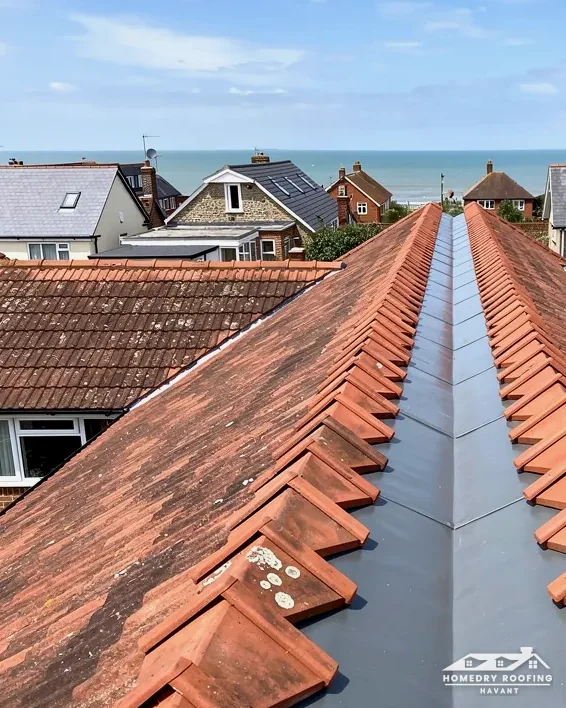
Before you buy is the one time a roof report can still change the decision.
ValleysWhen a house survey flags the roof you are buying
Where two slopes meet they form a valley, a channel lined with lead or a preformed tray that carries the rain of both slopes along one line. It works hard, and from the pavement it is close to invisible. That makes it one of the places a general house survey can only note in passing. Such a survey covers the whole building, so it may say the roof could not be fully seen, or advise you to have a roofer look.
Before you buy
That is the point to call us. A buyer needs the condition of this roof, in plain words, while the decision is still open. Ask the seller's agent for access to the outside and the loft hatch, and send us the survey's wording on the roof, so we answer what it raised. We go through the valleys, flashings and slopes in the same order as any other inspection, and you get photographs of each.
The report separates what needs doing now from what can wait. If work is needed, you can ask us for one written total to take into the conversation with the seller. Our guide to what to do when a survey says the roof needs work walks through the next steps. A clean report is useful as well: it may settle a worry the wording raised. It describes the roof on the day we saw it, and it does not replace your survey.
What a buyer gets
- Condition
- Each slope, in plain words
- Photographs
- Every fault we record
- Now, later
- What can wait, what cannot
- Unseen
- What we could not reach
Getting up there
A house you are buying is not yours to open up, so nothing gets lifted or disturbed without the seller's say. The first look can stay wholly outside: ladder at the eaves and a drone overhead. The loft needs a hatch we can reach and someone to let us in. If that cannot be arranged, the report says what went unseen, so you know how much weight to give it.
Where it shows
A line in the house survey saying the roof could not be fully seen, or a stain on the ceiling below.
Where it gets in
Through a split in the valley lining, or over its edge where leaves have dammed the channel and rain spills.
What if my loft has no hatch?
We inspect from outside and from the rooms below, then the report records that the loft went unseen. If the outside check raises a question only the timbers can answer, we tell you what access would be needed.
LoftsUnder the slope with a torch and camera
Anything the covering lets through lands on the underlay, the sheet beneath the battens, and after that in the loft. So the loft check is the second half of the job, and on a leak it can be the more useful half. Outside we see what might let rain in. Inside we see where rain has actually been.
With a torch and a camera we look for pinpricks of daylight, torn or sagging underlay, dark runs on the rafters, rusted nails, flattened insulation and wet patches on the back of the ceiling. A stain marks where the water stopped, so we follow it uphill and match it against the slope outside. A single run down one rafter points to one gap. Damp spread evenly across a whole slope may be condensation, which is a ventilation question more than a hole in the covering.
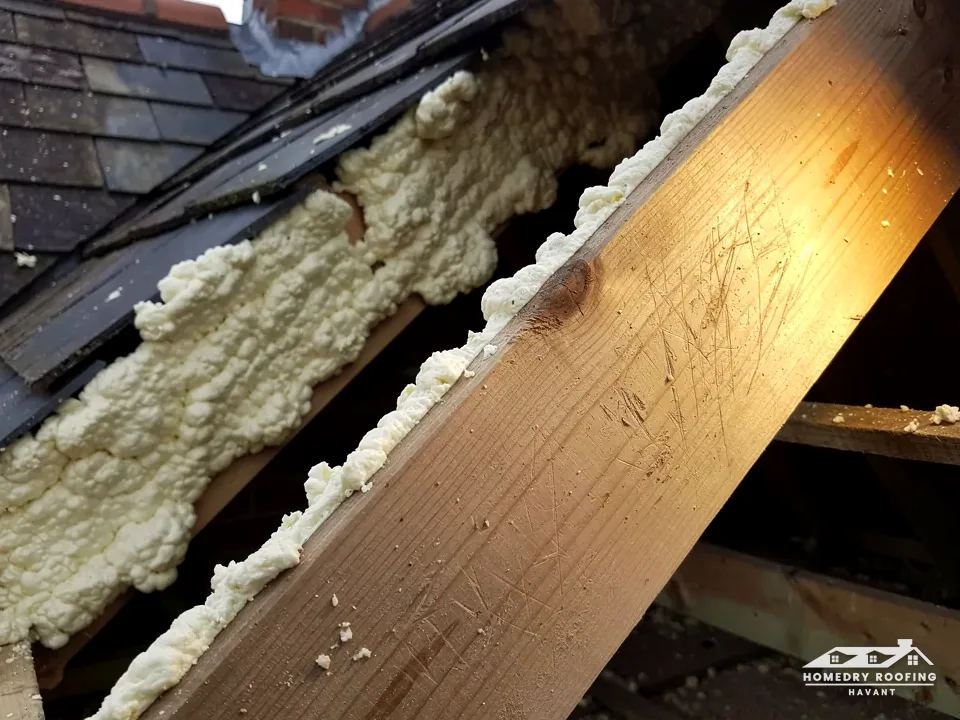
Where foam hides the timber
Some roofs have had foam sprayed onto the underside. Timber covered that way cannot be fully seen or inspected, and our report says so in plain words instead of guessing at what lies behind it. We record what we can reach, including the outside of the slope, the edges of the foam and any timber left exposed. Our answer on inspecting a roof with spray foam goes further. Should you decide to have it taken out, spray foam removal is covered separately, and that is a decision for later.
Outside shows us what could let rain in. The loft shows where it has been.
Before we come
It helps to clear a path from the hatch to the part of the loft below the mark on your ceiling. Boxes stacked against the eaves hide exactly the timbers we want to see. If you have a photograph of the stain taken during rain, keep it, because a dry visit shows only the mark left behind. Please do not step off the boards to get a better look.
In this photograph Spray foam · Rafters
Can I use your report with another roofer?
Yes. It is yours once you have it. It sets out what we saw and where, with photographs, so anyone else can read it and form their own view of the work before pricing it.
GuttersLandlords, upkeep and the report at the end
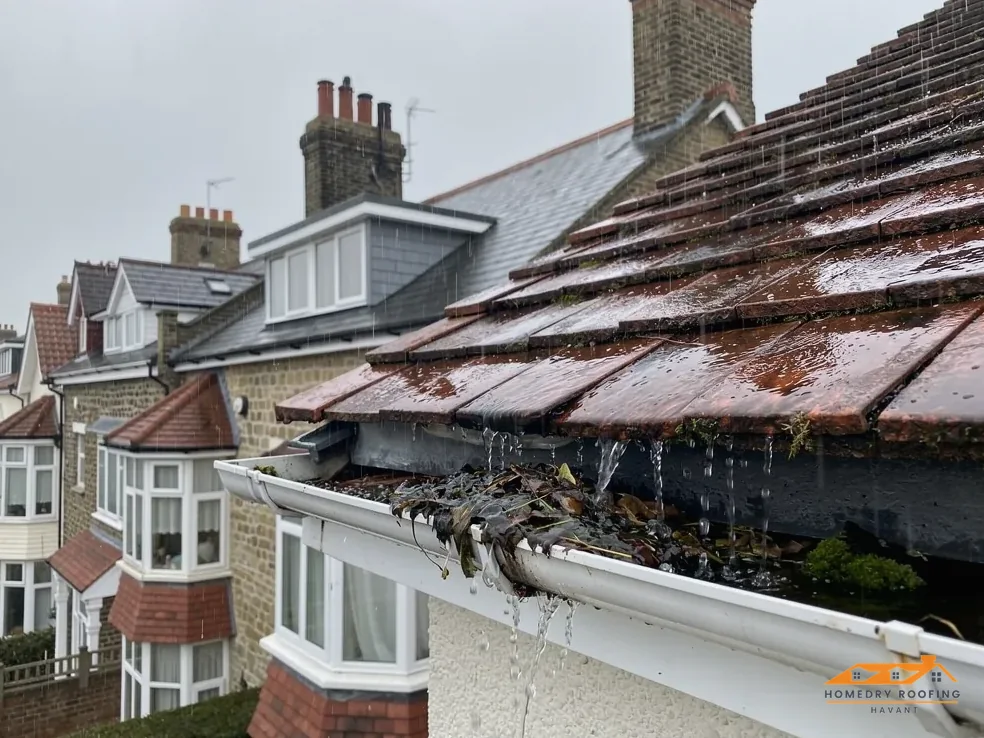
Everything the roof sheds ends up at the eaves, so the gutter is the last stop on the route and a useful witness. Pieces of tile or mortar in it point to the slope above. A tide mark on the fascia, the board carrying the gutter, shows where it has been spilling. We look along the soffit under it for staining too, and follow the downpipes to where they discharge. The state of the gutter also says something about the upkeep of the whole roof.
What the written report sets out
- The type of roof, and which parts we could and could not see.
- Photographs of each fault, with where it sits on the roof.
- What needs doing now, what can wait and what is simply upkeep.
- Whether each fault calls for a repair or a roof replacement, and why.
Our guide to what a roof condition report covers goes through this at more length.
Planned maintenance for landlords
A landlord with several houses can use the same format for each, giving a dated record of the state of every roof and a list of what to plan for next. Small jobs, such as clearing a gutter or refixing a slipped tile, can then be done before a tenant sees a stain. Where a fault needs work now, our roof repairs page covers tracing and closing it. The report stands on its own, and you are free to take it to any roofer you like.
A dated record of each roof lets a landlord plan work, not just react to it.
Worth a look after rain
The best time to watch a gutter is during steady rain, from indoors or from the far side of the garden. Water spilling over the front points to a blockage or a lost fall. A drip from a joint will show on the wall below it. Take a short video if you can, because it tells us in seconds what a dry day on a ladder may never show.
At the eaves
- Gutter
- Debris, sag and joints
- Fascia
- Tide marks and soft timber
- Soffit
- Staining along the underside
- Downpipe
- Running clear to the drain
Know the roof before you decide
Tell us what the report is for, and we start the inspection from there.
Roof inspection questions
Plain answers on reports, prices, buying a house, insurers and what happens next.
What happens, step by step, on a roof inspection in Havant?
It runs in four steps. We start on the ground, walking round the house and noting anything out of line. Next comes a ladder at the eaves for a close look at the covering, the gutters and the lower flashings. A drone goes up where the ridge, the back of a chimney or a tall slope cannot be reached safely that way. Then we go into the loft, if there is a hatch we can use, and follow any staining back up the slope. Photographs are taken throughout. You then get the findings in writing with those pictures: what we saw, what we could not see, what needs doing now and what can wait. If the roof needs work, we tell you which it is, a repair or a full re-roof, and give the reason.
Is a roof survey the same as an inspection, and what does each cost?
The two words get used loosely, so ask what you are getting. To us, an inspection is the look itself and a condition report is the written, photographed record of it. A general house survey is different again, because it covers the whole building. As a guide, MyJobQuote (2026) says "The average cost of a roof inspection in the UK is between £150 and £400." and "A standard roof inspection costs between £200 and £300." It also says "The average cost of a roof survey is around £300." With no VAT basis given, those are its figures, not ours. What moves the price is the size and height of the roof, the access and how much the report has to cover. Tell us what you need it for and we will tell you what applies.
Should I pay for a roof check before buying a house?
Yes, where the house survey has flagged the roof, or where a large bill would change what you offer. Ask the seller's agent for access, then send us what the survey said. We report on the condition of the roof, with photographs, and separate what needs doing now from what can wait. If your mortgage lender has asked for a specialist's view, send us its wording so the report answers the point it raised. A roof report sits alongside your house survey and does not replace it. Where foam has been sprayed under the slope, mention that to your lender early as well, and see our answer on foam below. The decision on the house stays with you, and the report simply gives you the state of its roof to weigh up.
Can you inspect a roof that has spray foam in the loft?
Partly, and the report says which part. RICS's consumer guide says "If the timber roof structure is covered with spray foam it cannot be fully seen or inspected", so we never describe timber we could not see. We can still inspect the outside of the slope, the foam edges and any exposed timber. On lending, in March 2023 RICS reported "concern within specific sectors of the lending market, such as equity release mortgages", and its guide says "Do check with your mortgage provider whether their lender policy allows the installation of such products." The Energy Saving Trust says spray foam is considered a permanent installation, and that removing it might also mean replacing the structure it was applied to. So find out what state the roof is in before deciding about the foam.
Can a photographed report support a storm damage insurance claim?
It can help you set out what happened, but it decides nothing. Tell your insurer first, get a temporary repair on if water is coming in, and keep your photos and receipts. The Financial Ombudsman Service says it will usually look at expert reports and photos of a property's condition, so take photos of the damage before anything is moved. By its account, "Your insurer will normally ask a surveyor to write a report.", so ours may sit next to theirs. Our report records what we saw on the day: dated pictures, where the damage lies and the state of the roof around it. What a policy pays out is for you and your insurer to settle, and the Financial Ombudsman Service is on 0800 023 4567 if a dispute gets that far.
How can a landlord keep a let roof under review?
Keep a dated, photographed record for each property. We inspect each roof to the same format, so you can compare one house with another and with its own last report. It lists what needs doing now and what can wait, which lets you plan maintenance and budget for it. Ask tenants to tell you about a ceiling stain as soon as it appears, and to send a picture, since they see the rooms below the roof and you do not. We arrange loft access through you or your agent. Have a roof looked at after a bad storm too. If several flats share one roof, tell us who holds responsibility for it, so the report reaches the right person. What the law requires of you is one for your own adviser.
What signs mean a roof should be looked at, even with no leak?
From the ground: a ridge that dips, tiles or slates out of line, pieces of tile on the path, lead standing away from a chimney, or a gutter that spills in steady rain. Indoors: a stain on a ceiling, a damp smell in the loft or daylight showing through. Any of these is reason enough. So is a storm that has done damage next door, a roof you are about to buy, or a plan to put something heavy up there. We cannot give you a single interval that suits every roof, because a sheltered bungalow and a tall exposed house are different jobs. A look from the road after the leaves have fallen costs you nothing. Our maintenance notes in the report then tell you what to watch.
Will the report say repair or replace, and how long is left?
It says which we would do, and why, and where a repair is sound, that comes first. A roof replacement comes up when faults run across the slopes instead of sitting in one place, or when the battens and underlay have gone as well. On how long a roof lasts, HomeBuilding gives approximate lifespans of 100+ years for Welsh slate, 60-80 years for clay tiles and 40-50 years for plain concrete tiles. Those are typical ranges from one source, never promises, and no one can read an exact number of years off a roof. So the report goes by condition rather than age: what we saw, how far it has spread and what it would take to put right. If you then want a price, the written quote is one total.
Can you inspect flat roofs, garages and commercial buildings?
Yes, with the same route and the same report. A flat roof reads well from a ladder at its edge, and a drone shows ponding and laps across a larger one. HSE says "all roofs should be treated as fragile until a competent person has confirmed they are not." It also tells people not to rely on sheeted roofing of any material to carry them, and says "almost one in five deaths in construction work involve roof work", so on a sheeted garage or industrial unit we keep off the sheets altogether. The same goes for you: please do not climb up to look. For a shop, office or block, tell us who holds responsibility for the roof and what the report is for. Any commercial roofing work that follows is priced after a survey.
Where around Havant do you inspect roofs, and how do I book one?
We are a local firm working from Havant, and we inspect roofs up to 30 road miles out, across Hampshire and east as far as West Sussex. Nearby, that means Bedhampton, Emsworth, Leigh Park, Cowplain and Waterlooville, with Hayling Island to the south. Further out, it reaches Southsea and Portsmouth, Fareham, Petersfield and Chichester. For the next step, call 023 9396 0313, send pictures by WhatsApp on 07880 284133 or send the form below. Give us the address, what shows from the pavement and who the report is for: you, a buyer, a landlord or an insurer. We then agree a time for the ladder, drone and loft checks, and send the findings in writing afterwards. If you then ask us to do the work, the site is left clean.
Where's the water showing?
You'll get one written total price.