
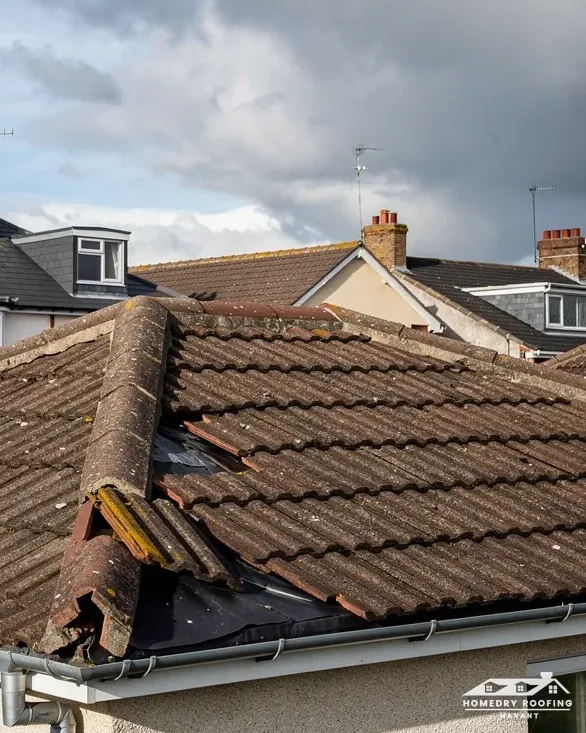
Emergency Roof Repairs in Havant
Water coming in, tiles down, masonry loose: keep clear, take photos and ring us. We make the roof safe, then repair it.
10-year workmanship guarantee, in writing
Urgent roof guides
All guides- What actually counts as a roofing emergency?Guide
- Making a roof insurance claim after a stormGuide
- Loose tiles or a damaged chimney after a storm: keeping people safeGuide
- Roof leaking? What to do firstPost
- Temporary roof repairs: what is safe to do yourselfPost
- Storm damage: what to check, and when to call a rooferPost
- How much does an emergency roof repair cost?Answer
- When should you call for an emergency roof repair?Answer
- Can I get help to fix my roof in an emergency?Answer
- Water coming through the ceiling: what to do firstAnswer
- Should you go up and check the roof yourself after a storm?Answer
- What is a make-safe repair, and how long does it hold?Answer
- Can you cancel an urgent roof repair you asked for?Answer
- Can a tarpaulin stop a roof leak, and who should fit it?Answer
- Who pays for an urgent roof repair when you rent?Answer
- A roof leak near lights or wiring: what should you do?Answer
Storm damage, followed from chimney pot to ceiling
In an emergency the order runs from what could fall to where the water lands. What to do at each stop on that route.
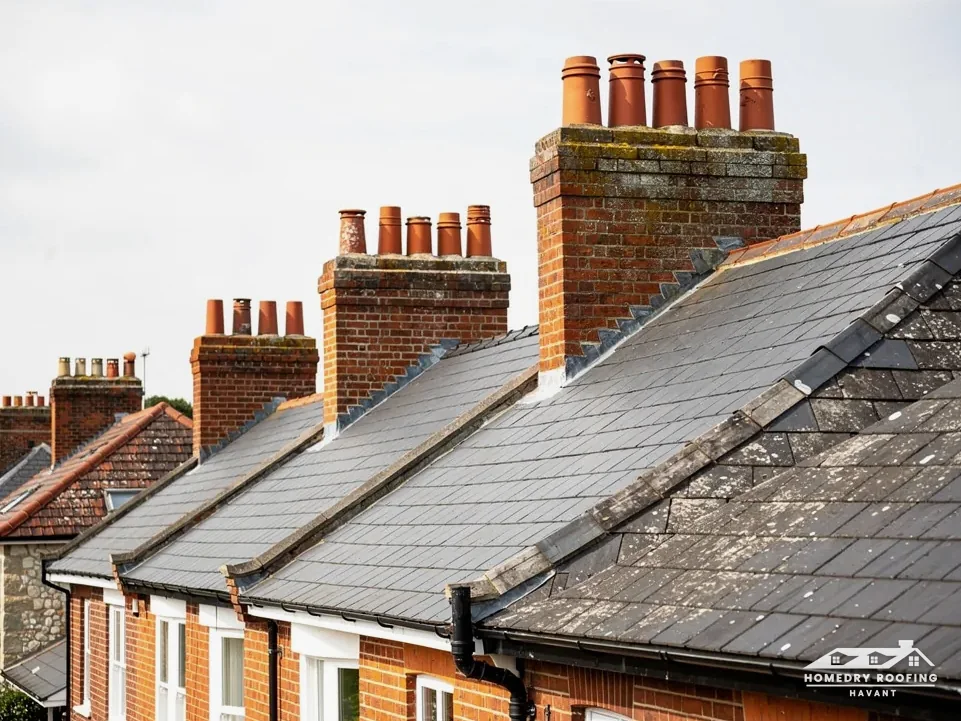
A leaning chimney pot threatens the path long before it troubles the ceiling.
ChimneysWhat could fall from a damaged chimney first
Start overhead, because a roof emergency is not always a leak. A cracked stack, a pot leaning out of line or bricks on the drive after a night of wind put anyone walking below at risk before a drop of water has reached the house. Our guide to loose tiles or a damaged chimney after a storm goes further into keeping people clear.
Move the car, shut the side gate and bring everyone in from that side of the garden. If the stack stands over a shared path or a neighbour's drive, knock on their door and tell them what you have seen. Stay out of any room directly beneath a stack that has moved, and leave the fire unlit until someone has checked the flue.
Photograph it from a safe distance, then ring us on 023 9396 0313, or send the pictures by WhatsApp to 07880 284133. Tell us what is loose, what lies underneath and whether the pavement is affected, because that decides what we need to bring and how we get to it safely.
On site, the first job is to stop anything coming down. We take off whatever is loose rather than leave it balanced, then cover any open top so rain stays out of the flue. Rebuilding the stack comes later, as a planned chimney repair. If scaffold has to stand on the highway for that, we arrange the licence with our scaffolder, and you need do nothing about it.
What we check
- Stack
- Cracks, lean and loose brick
- Pots
- Seated firmly or shifted
- Flaunching
- The mortar collar around pots
- Below
- Paths and drives in range
Keep the pieces
Before you sweep anything up, photograph where the bricks or the broken pot landed, with something in the frame that shows the scale. Then gather the pieces into a box and keep them. They show what came down and from how high, and a loose pot may be reusable. Wear gloves, stay well out from the wall while you do it, and leave anything lying right under the stack until it has been made safe.
Where it shows
Bricks on the drive, a pot out of line or a fresh crack running through the stack.
Where it gets in
An uncovered flue, or open joints low on the stack, once the masonry has shifted in the wind.
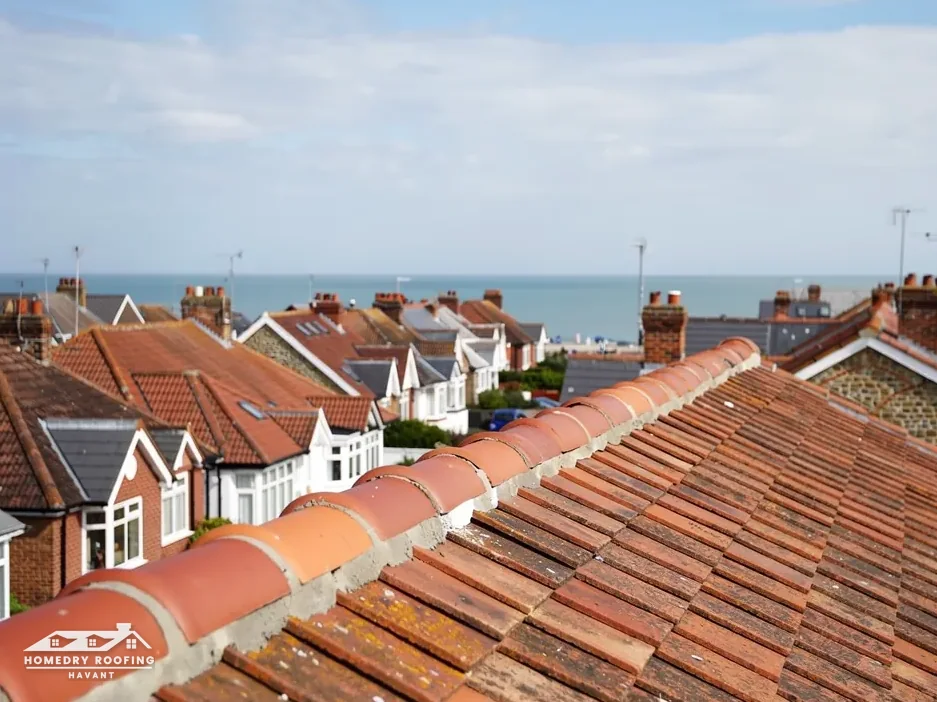
Is one loose ridge tile really urgent?
Treat it as urgent if it overhangs a path, a door or a drive, or if rain is getting in beneath it. Where nothing lies below and the loft is dry, ring us and we can talk it through.
RidgesWhat we check when wind lifts the ridge tiles
The ridge is the line of capping tiles that closes the very top of the roof, and the hips are the same capping running down an outside corner. Both sit high and exposed, so after a blow they are worth a careful look from the ground.
Height is the trouble here. A ridge tile that lets go has the whole slope to gather speed, and it can crack the tiles it hits on the way down before it clears the gutter. So the first question is what lies beneath it, not how the roof looks.
- Walk across the road and look along the top line for a gap, a step or a tile sitting crooked.
- Check the slope below for fresh chips and the ground for pieces.
- Keep people away from the door or path under the loose section, and use another way in.
- Leave the ladder where it is. A wet ridge is no place for a look round.
Rain at the ridge can run straight into the top of the roof space, so also look in the loft if the hatch is easy to reach, and listen for dripping. A wet patch along the top of the rafters tells you the opening is real.
Our make-safe at the ridge secures or lifts off what is loose and closes the opening against the next shower. Relaying the whole line follows once the weather allows it, as planned work.
The higher the loose tile sits, the further it can travel before it lands.
Reading it from the street
A phone camera does a lot of the work here. Stand well back, zoom in and take a picture of each end of the ridge, then one of the middle. Compare the line against the neighbouring house if yours is one of a pair. A row that looks straight next door and wavy on your side says something moved, and that picture helps us plan our access before anyone sets a ladder up on your wall.
What we look at
- Ridge line
- Gaps, lifts and cracked joints
- Hips
- Capping pulled off its corner
- Slope
- Chips from falling pieces
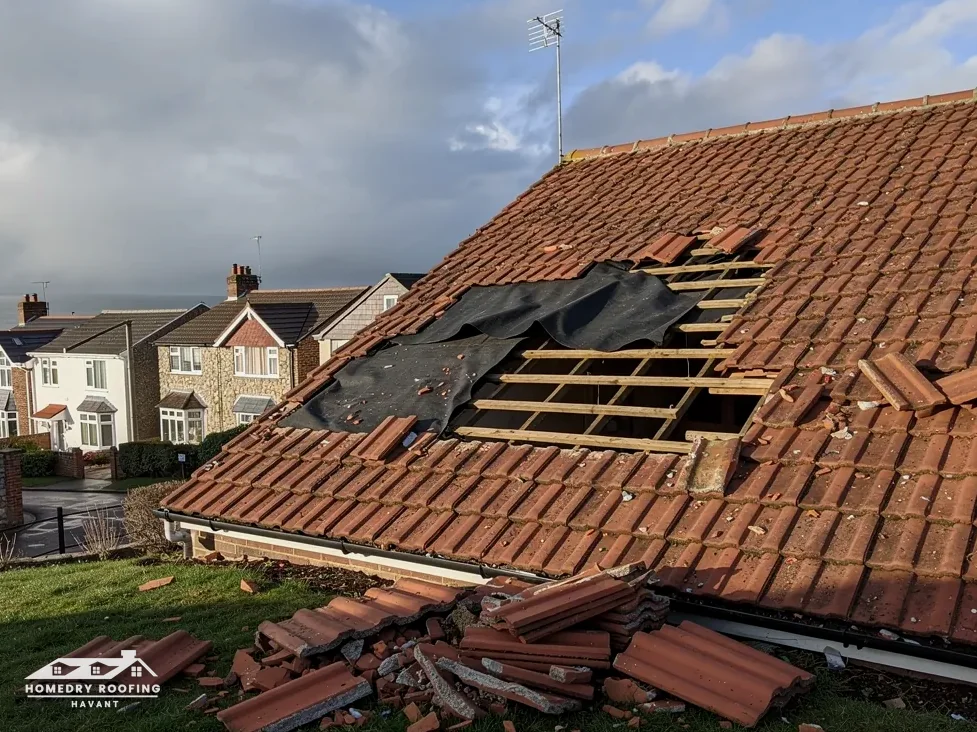
Will a temporary sheet survive more rain?
It can, while its fixings hold and the wind stays out from under it. Treat it as a stopgap with no set lifespan, and ring us if an edge starts flapping or the drip comes back.
TilesEmergency cover where slipped tiles leave a hole
Down the slope, the emergency is a gap: tiles or slates slipped, blown off or smashed, with the layer under them open to the sky. Whether that counts as urgent depends on what the rain is doing right now, and our guide to what counts as a roofing emergency sets out the line.
A make-safe is a repair done to stop further harm, with no attempt to finish the job. On a slope it can mean refitting sound tiles that slid, slipping a spare into a small gap, or fixing a sheet over a larger one so that rain runs off it and into the gutter.
A loose sheet is worse than none, since wind can get under it and drag it across the tiles beside the hole. That is why a tarpaulin on a roof is work for someone with safe access and the right fixings. It also has to run from above the damage and over the tiles below, or water simply passes underneath.
While you wait, deal with the loft. Stand on the joists or on boards, never between them. Move boxes out from under the drip and put a bucket on a board so the weight spreads across the joists.
Once the roof is covered, the house can start to dry out. We leave the cover in place until the permanent repair is booked, then take it away when that work starts on the roof, so the slope is never left open between the two jobs.
A sheet only helps while the wind cannot get a grip on it.
What happens on the visit
We start by asking what you have seen and where, then look at the damage from the ground, the loft and a safe point of access. You hear what we found and what the make-safe involves before it goes on. Afterwards you have photos of the opening and of the cover. The longer repair is a separate decision, made calmly once the roof has stopped letting rain into the house.
What you notice
A drip in the loft, wet boxes or tile pieces lying on the lawn after a windy night.
What has opened
A hole in the slope where tiles have slipped or blown off, leaving the layer beneath them exposed.
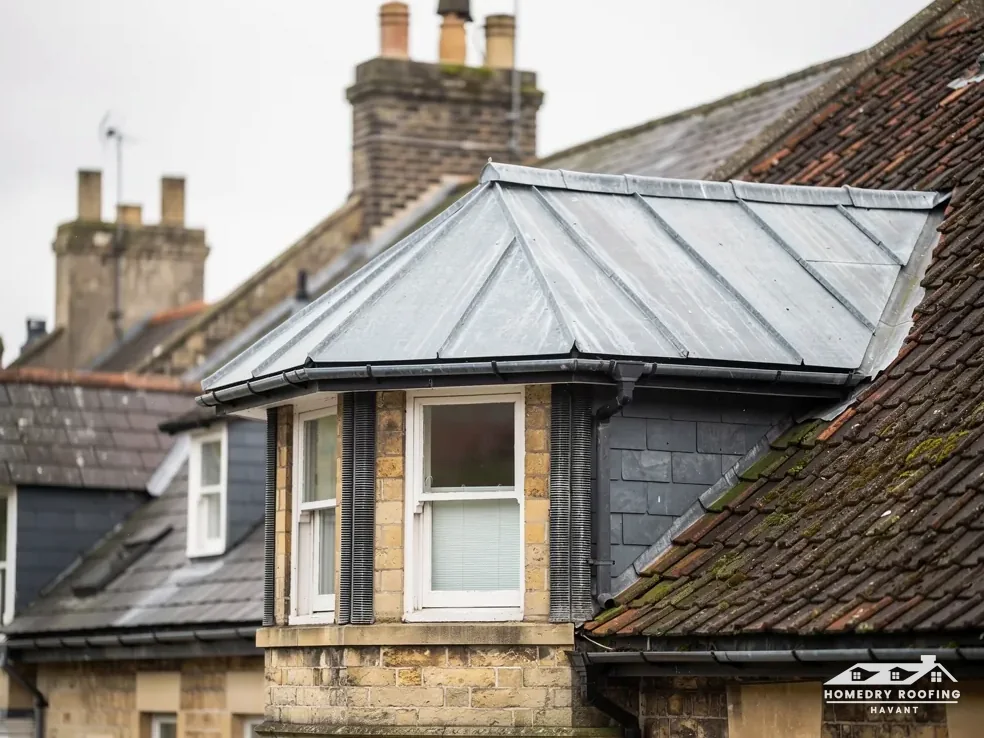
The damp patch tells you where the water stopped, and little about where it started.
FlashingsTorn flashings that send rain behind the wall
A flashing is the strip of lead or other sheet that closes the joint where a roof meets a wall, a chimney or a dormer. It is thin, it sits proud of the slope, and a storm can peel it back like the lid of a tin.
Two things then go wrong. A loose length of metal can flap, tear free and drop, so it counts as a falling hazard in its own right. And the joint it was covering now stands open, and rain running down the wall above goes straight in behind the roof.
That second part is what makes this damage hard to place. Water that gets in at a wall joint can run along a rafter or down the inside of the brickwork before it shows, so the damp patch may sit well away from the torn strip.
- Look for a dark line or a lifted strip against the wall or stack.
- Keep clear beneath anything hanging, and leave it alone: pulling on it can tear out more.
- Photograph the outside from the ground and the wet patch inside, so the two can be matched up later.
A make-safe here dresses the strip back down where it will go, fixes it, and covers the open joint until new material can be fitted. If a stain appears where you cannot explain it, tell us which rooms lie under each wall join. Your answer shortens the search, and it saves opening up parts of the roof that were never at fault.
When the stain moves
A patch that grows during rain and stops soon afterwards points to a live opening, and a mark that keeps spreading on a dry day suggests water is still held in the structure. Draw round the edge in pencil and date it. If the outline has moved after the next shower, you have a clear picture to show us, and you have saved everyone a guess about where the rain first came in at the roof.
Where it shows
A damp patch high on a bedroom wall, some way from the chimney or join behind it.
Where it gets in
A flashing peeled back by the wind, leaving the joint between the roof and the wall open.
What we check
- Wall joins
- Strips along each slope
- Chimney
- Front, back and both sides
- Dormers
- Side joints and roof edges
- Inside
- Damp beneath each join

Is an overflowing gutter a roof emergency?
It is when water is getting into the house, reaching a light fitting or running over a loose section above a doorway. Otherwise it can wait for a dry, still day and a planned visit, with the ladder footed on firm ground.
GuttersGutters, fascias and downpipes pulled loose in a storm
At the bottom of the slope, the danger changes again. A length of gutter hanging from one bracket, or a downpipe swinging from the wall, can drop on anyone using the door beneath it. The fascia is the long board at the roof edge that carries the gutter, and the soffit is the panel under it. Wind can lift either one, and a soffit panel on the path is a sign that the edge of the roof has been opened up.
Water is the other half. When a blocked outlet or a dropped section stops the gutter from draining, a downpour spills over the front or runs back behind the board. If it gets behind, it can reach the top of the wall inside and show up as a wet line along the ceiling edge.
From the ground, here is what to do:
- Close off the door or path under anything hanging.
- Take a photo of the loose part and of any wet wall below it.
- Keep buckets and furniture away from the wall line indoors.
- Stay off the ladder until the wind has dropped, and longer if the ground is wet.
Once we are there, we take down or refix what is loose so it cannot fall, then clear whatever is holding the water back. A sagging run or a damaged board then goes on the list for a dry day, along with the cleaning and other maintenance that keeps the edge of the roof in order.
A hanging gutter is a problem for the doorway first and the wall second.
Check the wiring outside
Look along the wall before you stand under the eaves. Outside lights, an alarm box, a phone line or a satellite cable can all be fixed close to the fascia, and a dropped gutter may have pulled one of them about. If a cable looks stretched or a wet fitting sits under the overflow, stay away from it, tell us when you ring, and ask an electrician to look at it before anyone switches it back on.
What we look at
- Brackets
- Fixings pulled from the board
- Fascia
- Board soft or coming away
- Soffit
- Panels dropped or blown out
- Outlet
- Blocked or running freely
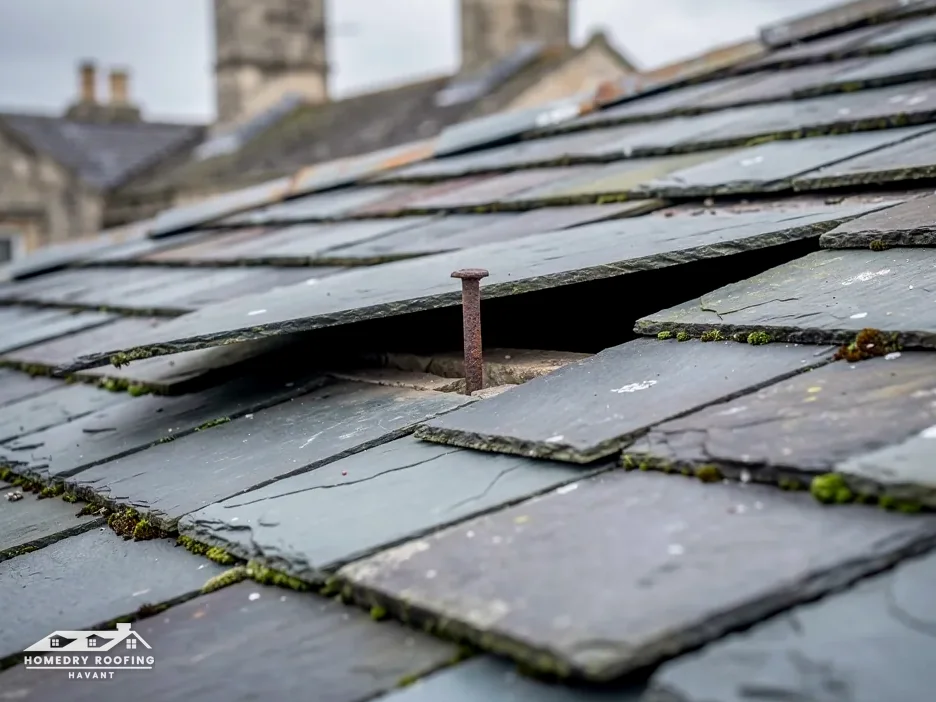
Should I pierce a bulging ceiling to drain it?
Leave it alone and keep everyone out of the room. Plaster holding water can fall in one piece, so catch what you can from the doorway, take a photo and tell us about it when you ring.
CeilingsYour first hour indoors when water comes through
The route ends in the room, and this is where you can do the most. Follow the order below when water is coming through the ceiling:
- Keep clear of wet light fittings and sockets. If water is near them and you can reach the consumer unit from a dry floor, switch that circuit off, and call an electrician.
- Get people out from under any ceiling that bulges or sags, and shut the door. Wet plaster can give way without warning.
- Move what you can, and catch the drips with buckets and towels.
- Take photos before anything moves: each wet room, the belongings affected and the outside from the ground. Our guide to a roof insurance claim after a storm explains why they matter.
- Stay on the ground. Going up to check the roof yourself is the one risk you can rule out, and official safety guidance on roof work shows why.
- Tell your insurer, ring us, and keep receipts for anything you buy to protect the house.
Tracing the cause fully and planning the lasting fix is the work of our roof repairs service, once the emergency is over. That visit comes after the house has stopped taking in water, when the survey can be done in the dry and there is time to think about what the roof needs and what it can wait for.
The questions below deal with the wording of a claim, and this official note explains what counts as storm damage in more detail.
Photos taken before the clear-up record what no one can show you later.
Drying out afterwards
Once the drip stops, leave the room to breathe. Open windows when the rain has passed, keep the door to the rest of the house shut and lift rugs off wet boards. Leave a stained ceiling unpainted until the roof has been repaired and the mark has stopped changing, because fresh paint hides the evidence. Photograph it again each day so you can show how it dried and how far it spread.
What you see
A spreading stain, a drip from a light fitting or plaster that has started to bulge downwards.
What to do
Clear the room, keep away from the electrics, take your photos and leave the ceiling alone.
Urgent roof questions
Plain answers for the hours after the damage, from the ground up.
What makes a roof problem an emergency rather than a job that can wait?
Treat it as urgent when something could fall on a person, when water is coming into the house now, or when water is reaching wiring or a bulging ceiling. Fresh storm damage with an open hole in the roof belongs here too, since the next downpour goes straight in. A single slipped tile over a dry loft, an old stain that has stopped growing or a gutter that overflows only now and then can wait for a planned visit. If you cannot tell which side of the line you are on, send a photo to our WhatsApp on 07880 284133, or ring 023 9396 0313, and describe what you can see from the ground. A picture of the outside and one of the wet room tell us a good deal.
Should I go up a ladder to look at the damage myself?
No. HSE says all roofs should be treated as fragile until a competent person has confirmed they are not. It also says "almost one in five deaths in construction work involve roof work. Some are specialist roofers, but many are just repairing and cleaning roofs." Add a wet ladder and a gusty day, and a look round can turn a repair bill into something far worse. You can learn plenty without leaving the ground. Stand across the road, zoom in with your phone and, if a neighbour agrees, look from an upstairs window. Check the loft if the hatch is easy to reach, keeping your feet on the joists or on boards, and leave the rest of the looking to someone with safe access.
How can I do a temporary roof repair safely from inside the house?
Think of it as protecting the house, because the roof itself is a job for someone with safe access. Indoors, put buckets under the drips, lay plastic sheet or old towels over floors and furniture, and move anything you value out of the wet room. In the loft, move stored boxes away from the drip and stand a bucket on a board laid across the joists. Stay clear of wiring and of insulation that has become soaked. Keep your receipts for anything you buy. Please leave tarpaulin, sealant and roof tape on the outside for us, because each one means working at height on a wet surface in poor weather, and none of them is worth a fall. Tell us what you have done indoors when you ring.
What does an emergency roofer call-out tend to cost in the UK?
MyJobQuote's cost guide, updated in October 2026, says: "Emergency roofer call-out costs typically range from £150 to £300, while extensive storm damage repairs can cost £1,200 or more." Those are its UK figures and not our prices. The call-out figure covers attendance, so ask whether the cover or the make-safe is part of it. The £1,200 figure refers to extensive storm damage, and a few tiles would not come near that description. What moves the cost on your roof is access, height, how large the opening is and what weather the work has to be done in. Our quote for the permanent repair is one written total price, given after a survey, so you can see it and decide in your own time, once the roof has stopped letting water in.
What will my home insurer want from me after a storm?
Tell your insurer first, then get the roof made safe with a temporary repair, holding on to every receipt. The Financial Ombudsman Service says it will usually look at expert reports and photos of a property's condition, so take photos of the damage before anything is moved. On the insurer's side it adds: "Your insurer will normally ask a surveyor to write a report." Keep any fallen pieces and ask before you authorise more than the make-safe. For our part, we can give you our photos of what we found and the written price for the repair. The decision on the claim is your insurer's, and the paperwork runs between the two of you, so ask them what they need before the permanent work starts, and get their answer in writing where you can.
What can I do if my insurer says it was not a storm?
Look first at the Financial Ombudsman Service's view of the word: "We say that a storm usually involves violent winds, usually with rain, hail or snow." It also says "Rain, hail or snowfall by itself can constitute a storm." On exclusions it says "The insurer has to prove that the exclusion applies - for example, with an inspection report." Complain to the insurer in writing first, since "For most complaints, a business has up to 8 weeks to consider a complaint." After that, "You have 6 months from the date on the final response" to take it to the ombudsman, whose helpline is 0800 023 4567. Your dated photos and any report on the roof are useful at each of these stages, so keep them together in one place.
Can I change my mind after asking for an urgent repair visit?
Be ready for the visit itself to fall outside the usual cooling-off rule. Regulation 28(1)(e) of the Consumer Contracts Regulations 2013 removes the right to cancel where "the consumer has specifically requested a visit from the trader for the purpose of carrying out urgent repairs or maintenance". Citizens Advice describes it in similar terms: "you invite the business into your home for urgent repairs or maintenance". The permanent repair is a separate matter. If you sign at home after our survey you have 14 days to cancel, and work starts sooner only if you ask in writing. The Citizens Advice consumer helpline is 0808 223 1133 if you want advice on your own contract, and it is worth asking before you sign anything for the longer job.
Is there any help with the bill if I cannot afford the repair?
Start with whoever may be responsible for the roof. If you own the house, that means checking your home insurance. If you rent, tell your landlord or housing provider straight away, in writing, with photos. If you own a flat that shares a roof, contact the freeholder or the managing agent. For a Havant address, Havant Borough Council customer services on 023 9244 6019 is the place to ask whether any support is open to you, and the Citizens Advice consumer helpline on 0808 223 1133 can talk through a bill. It also helps to take the job in two parts: the make-safe now, and the permanent repair once you have had time to weigh it up and talk to whoever may be paying for it.
Can a storm-damaged roof be repaired rather than replaced?
Yes, where the rest of the roof is sound. A hole in one slope does not condemn the others, and a sound repair comes ahead of anything bigger. The make-safe buys the time to look at the whole roof in dry weather, because storm damage can also show what was already tired. How long a temporary cover lasts depends on its fixings and the weather, so we book the survey while it is doing its job. You then hear whether the roof needs a repair or a re-roof, and why. Coastal homes are graded for higher exposure, so the fixing specification for any lasting work is calculated for the site under BS 5534 before the lasting repair goes on. You get that explained along with the survey.
Do you make safe flat roofs and slate roofs around Havant?
Yes, both. On a flat roof, the urgent signs are felt or membrane lifted at the edge, a split over a room below, or rain running indoors at a joint, and the same rule applies: stay off it, and photograph it from a window if you can. On a slate roof, the urgent signs are slipped or broken slates over a wet loft, or any about to slide off above a door. We are a local firm based in Havant, covering Hampshire and part of West Sussex up to 30 road miles out, including Leigh Park, Waterlooville, Cowplain, Hayling Island, Emsworth, Portsmouth, Southsea, Fareham, Petersfield and Chichester. Tell us the postcode when you ring, along with what has come loose, what lies underneath it and where the water is showing indoors.
Where's the water showing?
You'll get one written total price.