
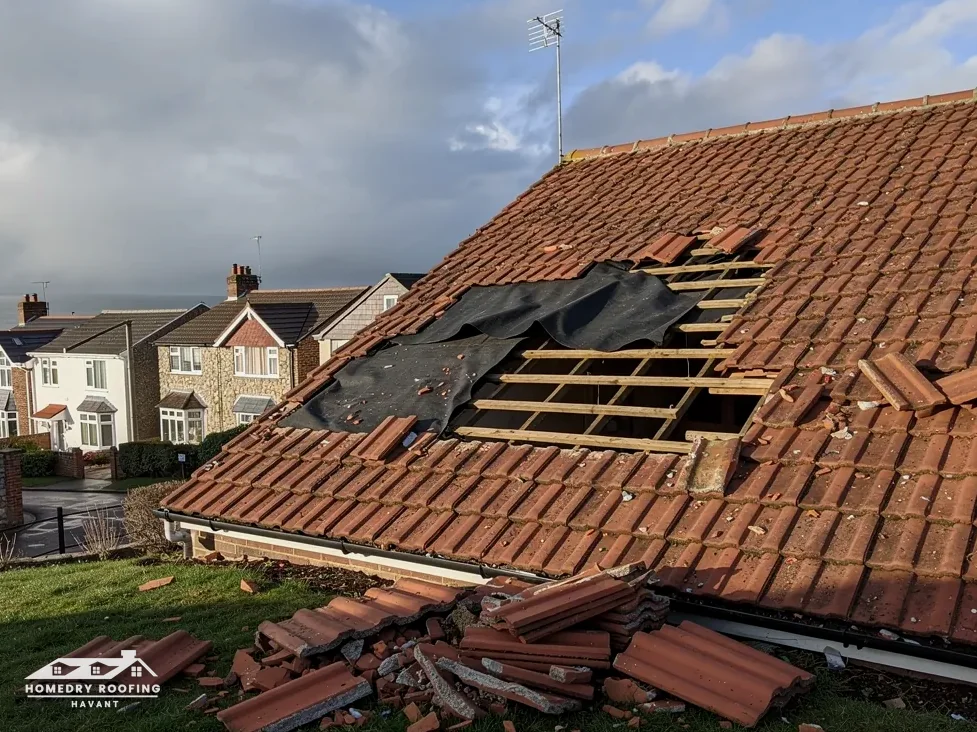
What a make-safe is for
After storm damage or a sudden leak, the roof has two problems. Something may be about to fall, and rain may be getting in. A make-safe deals with those two things and stops there.
What it involves depends on what has happened:
- Removing, or refixing, whatever is loose, so it cannot drop onto a doorway, a footpath or a parked car.
- Refitting sound tiles that have slid, or setting a spare into a small gap.
- Pressing a torn flashing back into position and covering the open joint.
- Fixing a cover over a larger opening, so that rainwater is carried over it to the gutter.
- Clearing a blocked outlet or securing a hanging gutter.
The test of a good make-safe is simple. Nobody below is at risk from the roof, and the loft is no longer taking in rain. It is a safeguard, and what the roof needs in the long run is a question for the survey that follows.
Before anything goes on, you hear what turned up and what is suggested, and afterwards you receive photos of the damage and of the cover. If you would rather have a second opinion before agreeing, say so.
What a make-safe is not
It is not the permanent repair, and it should not be described as one. A cover over a hole does not replace the tiles, mend the felt beneath or deal with whatever weakened the roof in the first place. If someone presents a quick patch as the whole answer, ask what the survey will show.
It is also not a guarantee that rain will stay out. No roofer can promise that a temporary measure will hold through every shower, and a sheet or patch can be lifted by a strong gust or by water running in behind it.
Nor is it a pricing shortcut for the lasting job. The visit and the permanent work are separate matters. MyJobQuote's UK figures (October 2026) show a call-out range of £150 to £300, which is attendance, and it is worth asking before anyone goes up whether a cover or a repair is part of that figure.
Treat the make-safe as time bought, and use that time to learn what the roof really needs, with the roof dry and nobody hurrying you.
How long a make-safe holds
No sound figure exists for this, and nobody should offer you one. The length of time depends on three things.
- How it is fixed, and what it is fixed to. A cover held along its edges lasts longer than one held at a few points.
- The weather it faces. Gusts and driving rain test a cover far harder than a still, dry week.
- The condition of the roof around it, because a sound slope holds a fixing and a tired one may not.
So keep watching it. Look at the loft after each shower, and keep an eye on the ceiling below the damage. If a corner lifts, a drip returns or a stain grows, ring us and describe what you see.
The right plan is to book the survey while the make-safe is doing its job. Our answer on a tarpaulin on a roof covers the sheet itself, and why fitting one is a job for a roofer who can reach the roof safely.
Whatever the cover is made of, do not climb up to check it yourself.
What follows the make-safe
With rain no longer entering, the urgent part is over. What comes next is an unhurried survey of the entire roof once the weather allows, with time to ask questions and no one waiting on the ladder.
| Stage | Aim | Price |
|---|---|---|
| Make-safe | Stop further harm | Agreed for the visit |
| Lasting repair | Fix the cause | One written total after a survey |
The survey says whether the roof needs mending or replacing, and gives the reasons for its view. Damage to one slope says little about the rest, so mending comes first wherever it is sound.
The cover comes off when the permanent work starts, so the opening stays protected until the new work is in. An insurer may ask for the photos and receipts from the first visit, so keep both with your other papers.
Ask whether anything found during the make-safe, such as damp battens or slipped felt, changes what the lasting repair involves. If you are weighing a repair against a bigger job, ask the roofer to explain what the survey found in plain terms, and to show you the photos that support it.
Our emergency roof repairs page explains how it begins, and when to call for an emergency roof repair helps you decide.