
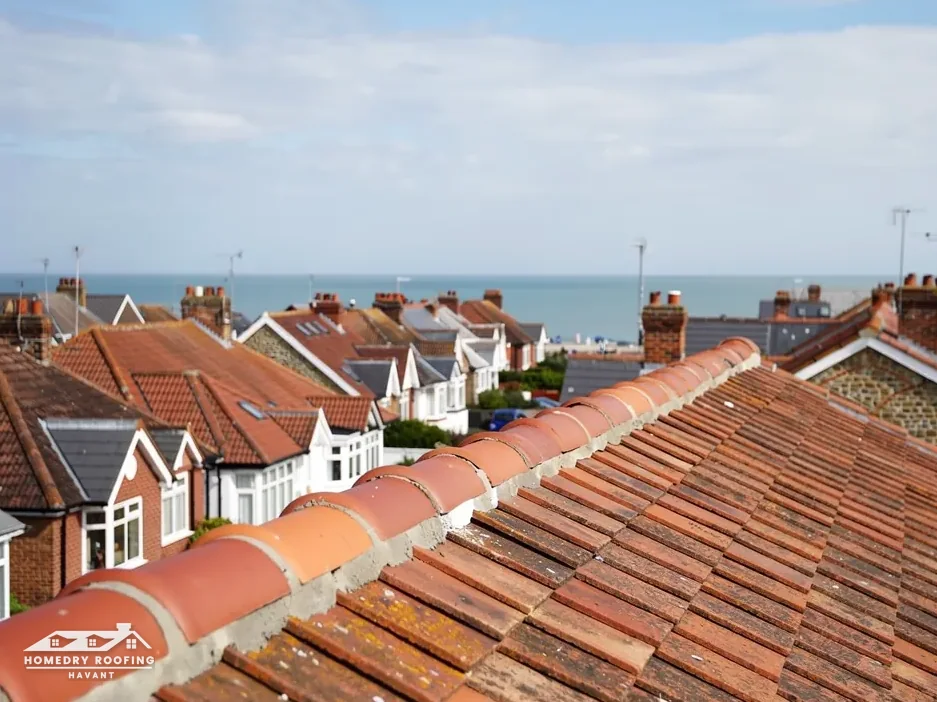
Ridges
Along the high line where two slopes meet and the capping tiles are bedded.
Loose bedding there opens a path for rain that is blown up the slope.

Roofers for Portsmouth, 8.4 road miles south-west of Havant: pitched and flat roofs surveyed from ridge to drain, then one written total price.
10-year workmanship guarantee, in writing
Along the high line where two slopes meet and the capping tiles are bedded.
Loose bedding there opens a path for rain that is blown up the slope.
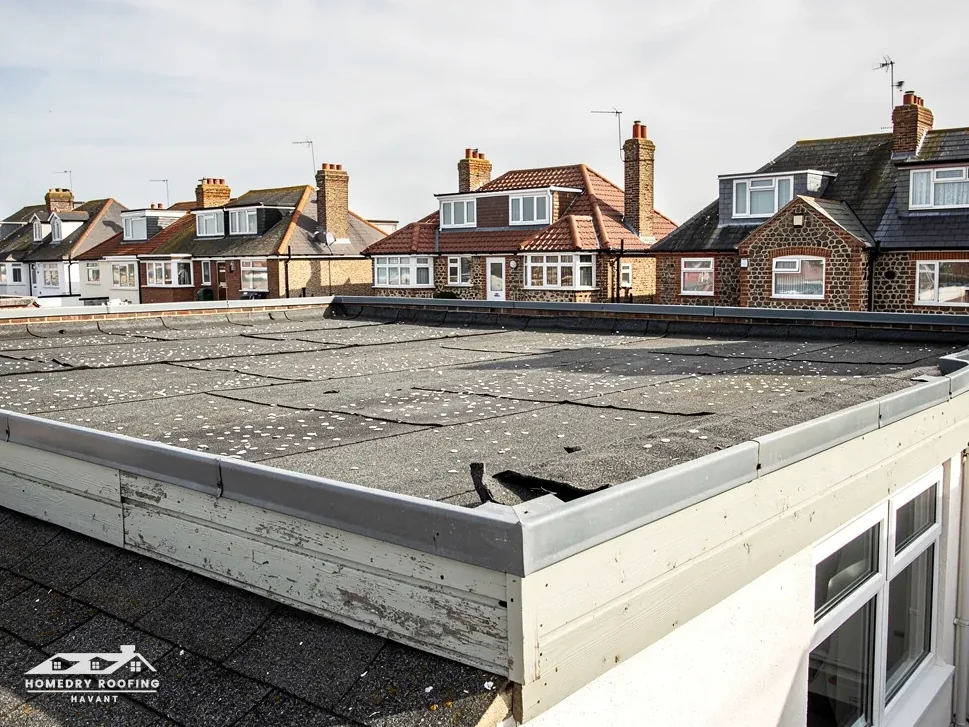
At the low point of a flat roof, where the whole surface is meant to drain.
If the outlet is blocked, the water has nowhere to go but the seams.
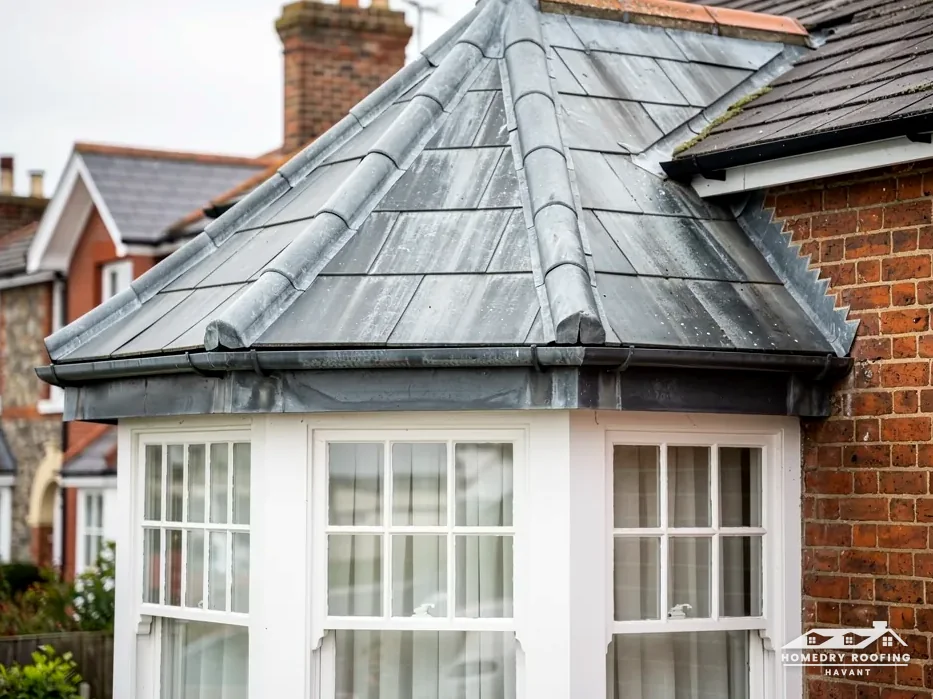
Where a low wall rises above the roof edge and a gutter sits behind it.
A cracked coping or a worn lining there lets water in behind the wall.
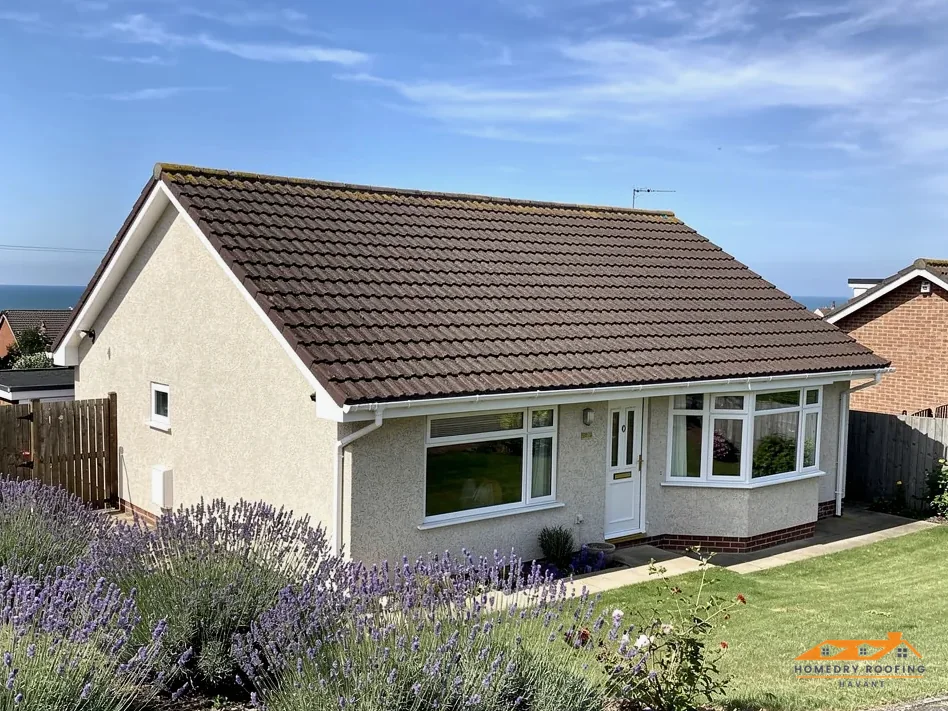
Read the roof from the top, because everything below is downstream.
At a Portsmouth survey the first job is the ridge. It is the topmost line of a pitched roof, and the rest of the roof is understood by working down from it. Capping tiles are tried for movement, and the bedding or dry fixings under them inspected. Slopes come next, scanned for lifted, chipped or absent tiles, then the verge, where a gable ends the roof, for pointing that has loosened. Where the hatch allows, we photograph the underlay and rafters from inside and watch for tracks left by running water. The point of entry may be well away from the stain, and the repair belongs at that point: that is the roof repair we mean.
Close to the middle of Portsmouth sit seven conservation areas: St David's Road, Southsea; King Street; Mile End, Landport; Old Portsmouth; The Terraces; Guildhall and Victoria Park; and Portsea. The planning decisions for all of them rest with Portsmouth City Council. Portsmouth City Council describes many changes to roofs and chimneys as still permitted development there, the exceptions being the special controls it calls Article 4 Directions, introduced in some cases. Directions are listed area by area, so confirm your own address with the council before a covering is ordered, and keep the answer with your papers.
Listing reaches the top grades in this city. Charles Dickens Birthplace Museum is Grade I, and Church of St Agatha and City of Portsmouth War Memorial are Grade II*. Under section 7 of the 1990 Listed Buildings Act, anything that alters a listed building's character needs listed building consent. For Church of St Agatha, where Roman Catholic worship continues, that denomination's own system of control applies instead. The planning guide for roof work sets out the remainder, so that this page does not have to.
In planning law a dwellinghouse does not include a building containing flats, or a flat within one, so the permitted development rights that cover a house do not reach a block. Where the roof you are asking about sits over flats, the council is the first call, and we can describe the roof and the work in terms it can use. Responsibility for the roof is a separate question again, and the report can be handed on.
A tide-mark stain on the ceiling that widens after rain, or flaking paint along a cornice.
A ridge tile that has moved on its bedding, or a missing tile higher up the slope than the stain.
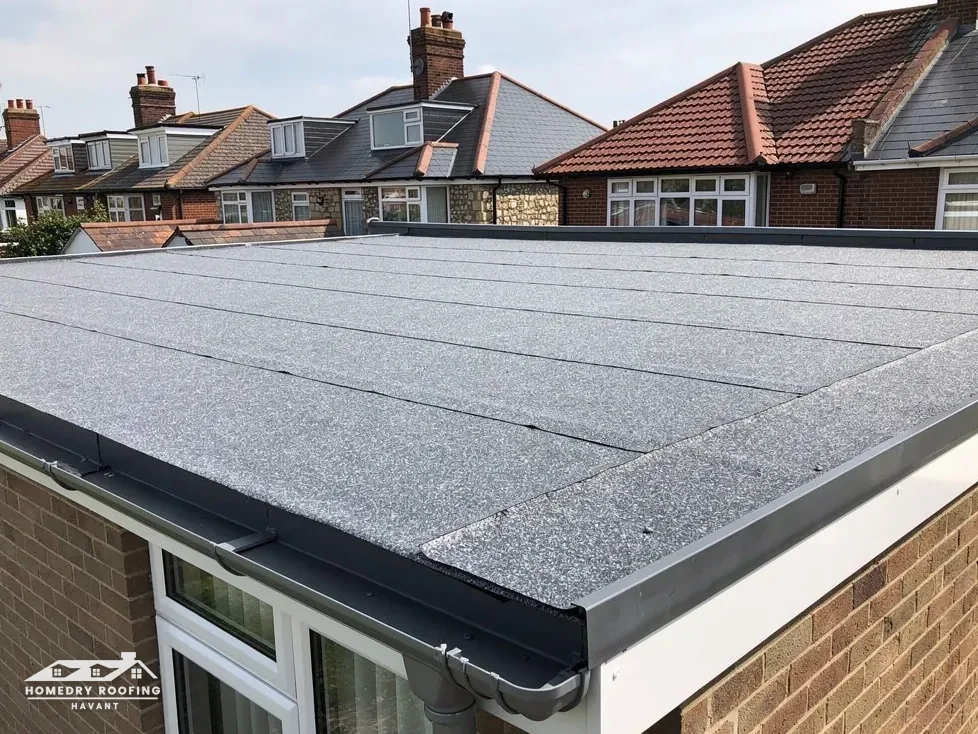
We look for standing water a day or more after rain, then check the falls along the roof with a straight edge. A shallow puddle can mean the surface dips between supports; a deep one can point to a blocked outlet, and the cause decides the repair.
Water that crosses the slopes ends at the gutters and outlets, and in a city the flat roofs matter as much as the pitched ones: extensions, garages, shop fronts and larger buildings. A flat roof is laid to fall towards an outlet, so we check the falls with a straight edge and look for puddles still standing after rain. The covering is examined for splits, blisters and open seams, and the upstand, where it climbs a wall, for a firm edge. Outlets are cleared and tested. Our flat roofing page lists the coverings, and bigger buildings are covered on the commercial roofing page.
On a pitched roof the gutter line takes the flow next. We look for open joints, sagging runs and brackets that have lost their grip, trace each downpipe from hopper to shoe, and press the fascia and soffit for rot. Where a parapet gutter sits behind a low wall, the lining and the coping above it are checked as well, because a gutter that cannot be seen from the ground still carries the whole roof's water. Each fault we find is photographed, so the report shows where it is, and the photographs are taken before anything is cleared or moved. A gutter packed with silt is cleaned out where that is safe to do, because a clean run shows the true state of the joints beneath.
Portsmouth lies close to the coastline. Cupa lists "slopes, hills or coastal areas as well as tall buildings" among the buildings that "will be graded with higher exposure", so fixings here are specified for the site under BS 5534, with the ridge, the hips and the verge each named in the paper you receive. Marley says installing to BS 5534 isn't required by law, which is why the specification states the method plainly and leaves nothing to habit.
A flat roof sheds rain only where its falls lead to an outlet.
Ask for the fixing method in writing before you agree to any work. The specification should say how the tiles, ridge, hips and verge are held, and it should be the same method that appears in the price. Where fixings differ between two quotes, that difference is worth a question. A copy goes into your folder and is talked through at the survey, before a single tile moves, so there is time to ask questions.
We read the roof from the top. The ridge, the slopes, the verge and any junction with a chimney or wall come first, then the gutters and the flat roofs, and the hatch into the loft shows the underlay and rafters where it can be reached. A stain on a ceiling marks only the place the water ended its journey, so we follow the line uphill to the break. You receive the finding in writing, with photographs and the position of each fault marked, and a plain statement on whether a repair will answer the leak or the roof has passed that point, with the reasons set down beside it.
It can be. The Planning Portal's test is that building regulations approval is not normally needed when a re-roof touches less than 25 per cent of the building envelope and less than 50 per cent of the roof, but it is needed for a covering 15 per cent or more heavier. For Portsmouth, the Building Control Partnership provides the service, and its Business Support team answers on 01329 824823. Before any job is booked we place your roof against that test, and where a heavier covering is in prospect we arrange a structural check first, because rafters carry what they are given and should be known to cope.
Highway scaffolding is licensed. We arrange the licence with our scaffolder. In Portsmouth the hoarding and scaffolding permit goes through Colas, and the form there shows £100.00 + VAT per month. When a frame will stand over a footway, its position and likely duration are settled with you during the survey visit, so the permit and the start date fit together without a scramble. If the frame has to move or stay up longer, you hear about it before it happens, not after, and neighbours are warned. The permit fee is part of the job we plan together, and it is dealt with before the poles go up.
The listing belongs to the whole building, and any work that alters its character needs listed building consent under section 7 of the 1990 Act. The city's entries include Charles Dickens Birthplace Museum at Grade I, and Church of St Agatha and City of Portsmouth War Memorial at Grade II*. Church of St Agatha holds Roman Catholic worship, and that exempt denomination runs its own system for works to the church. A listed house keeps its permitted development rights for roof work, and listed building consent comes in addition for work affecting its character.
The council's conservation area pages treat many roof and chimney changes as permitted development, and they name Article 4 Directions as the special controls introduced in some cases. The seven close to the centre are St David's Road, Southsea; King Street; Mile End, Landport; Old Portsmouth; The Terraces; Guildhall and Victoria Park; and Portsea. Directions are made area by area and road by road, so raise your own address with Portsmouth City Council ahead of ordering a covering, and tell us what it says, since a direction would change what we can price. We can then write the covering and the method into the quote so the council's answer and our paper agree.
Not for permitted development. The order defines a dwellinghouse as excluding a building containing flats, or a flat within such a building, so the rights that cover a house do not reach a block of flats. The council is the place to ask what a block needs. Who is responsible for repairing a shared roof is a different question, and our survey report gives you a clear description of the roof and its faults that you can pass to a freeholder or a managing agent, whoever deals with it. Nothing in the report assumes who that is.
Exposure, and nothing more dramatic than that. Cupa's slate guidance lists coastal areas among the positions "graded with higher exposure", and Portsmouth lies by the coastline, which means the site gets its own fixing specification under BS 5534. Marley notes that installing to the standard isn't required by law. The specification therefore names the fixings for the covering, the ridge, the hips and the verge, and you can set that paper against another roofer's before you decide. It concerns how the covering is held down on the roof, and the paper shows it, so that the choice of fixings is visible to you and to anyone who inspects the roof later.
Expect a single written total once the survey has been done, with the work spelled out, the covering identified, and VAT and scaffold either shown as included or not, to let you lay it next to other quotes. Where a repair will hold, that comes ahead of a replacement, and a replacement is advised only where the evidence supports it, with photographs. Good and fair pricing is the aim, and the price never arrives before the survey. The site is cleared at the end, and the report stays with you as a record, to be handed to the next owner or to a surveyor if the house is sold or remortgaged.
You'll get one written total price.
Fill in what you like. It opens WhatsApp with your message ready to send.