
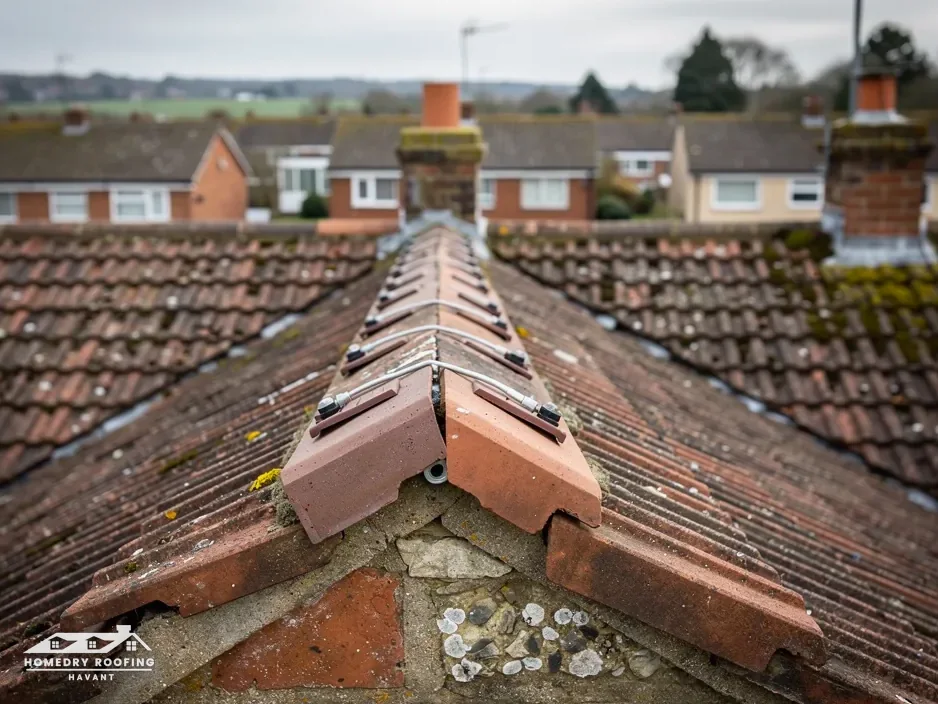
Ridges
Along the summit of the roof, where the top row of tiles is bedded in place.
A cracked bedding joint there lets blown rain slip past the first row.

Roof repairs and re-roofs in Southsea, which has 11 conservation areas near its centre, starting from the cause of the leak and ending in one written total price.
10-year workmanship guarantee, in writing
Along the summit of the roof, where the top row of tiles is bedded in place.
A cracked bedding joint there lets blown rain slip past the first row.

Where the flow from two slopes is gathered into one channel of lead or lining.
A split in it pushes the flow beneath the tiles at either edge.
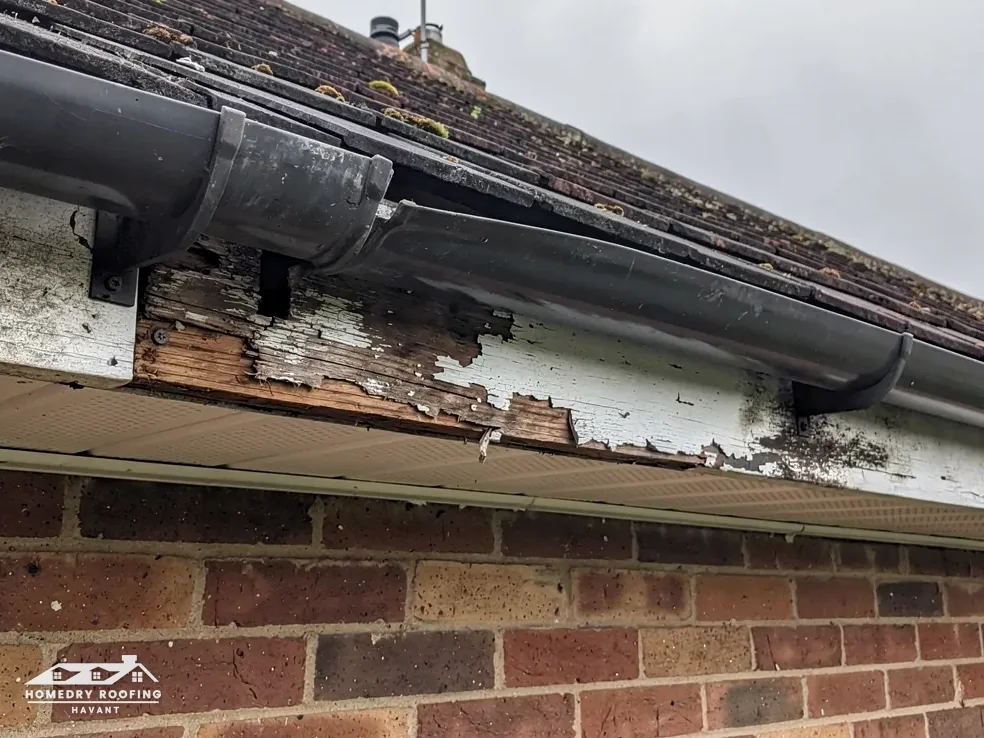
Beneath the overhang, where boards close the roof edge against the wall.
Spongy boards there mean the gutter overhead has been overflowing.
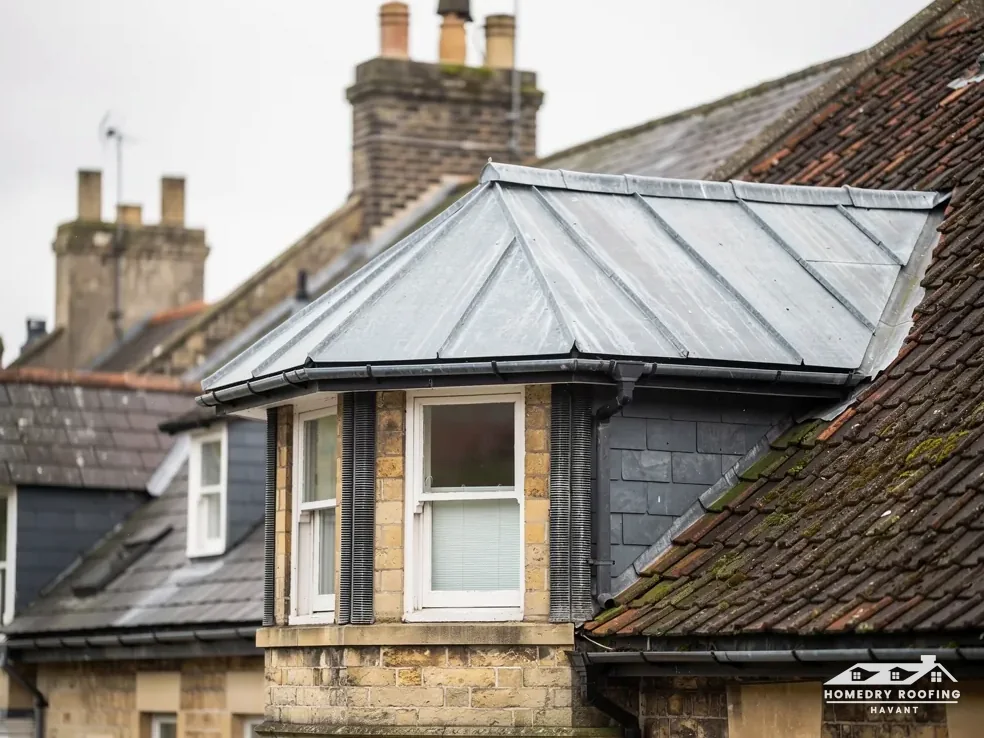
Water from both slopes ends up in a valley, so small faults count for more there.
Rain from two slopes is gathered by a valley, the channel formed where they join, so on a Southsea survey the valley gets a look of its own. We check the lining at the bottom, the tiles cut to its edges and any lead or other metal laid along it, then follow the water out to the gutter. Higher up we sight along the ridge, then each hip and the verge. In the loft, where we can get at it, the timber beneath the valley is checked for stains and softness. A roof repair belongs at the spot where the water crosses, which may be some way from where it drips, and the survey notes both places.
Southsea has 11 conservation areas near its centre, among them King Street; Stanley Street, Southsea; Castle Road; Old Portsmouth; The Terraces; The Sea Front, Southsea; Guildhall and Victoria Park; East Southsea; Campbell Road, Southsea; St David's Road, Southsea; and Owen's Southsea. Portsmouth City Council decides planning for all of them. A house re-covered in a conservation area normally stays within permitted development, but an Article 4 direction withdraws particular permitted development rights across a defined area. Ring Portsmouth City Council first and ask about your own house before choosing a covering.
Portsmouth City Council has made directions of that kind in Owen's Southsea; Castle Road; Highland Terrace; Highland Terrace; Campbell Road, Southsea; Stanley Street, Southsea; King Street; St David's Road, Southsea; and Craneswater and Eastern Parade, Southsea, each for named addresses only. Where one lists it, the replacement of the roof cladding on the main elevation fronting a highway needs planning permission. Whether your house is one of those addresses is a question for the council, which keeps the list, and our planning guide for roof work covers the wider rules in full. Bring the address and the covering you have in mind when you ring.
Each direction near Southsea is for named addresses, not for a whole conservation area, so two houses inside the same boundary can be treated differently. The only reliable check is your own address, put to Portsmouth City Council before the covering is chosen, and kept with your papers. We can describe the roof, the pitch and the covering you have in mind, and you can carry that description to the council with you.
A damp line on a first-floor wall beneath the valley, or a drip that arrives only in heavy rain.
A worn lining or a shifted edge tile at the bottom of the valley, where both flows meet.
For a Church of England church in use, such as Church of St Jude, the route is the Church of England's faculty system rather than listed building consent from the council. That route is settled before a roof is quoted, and we explain it at the survey.
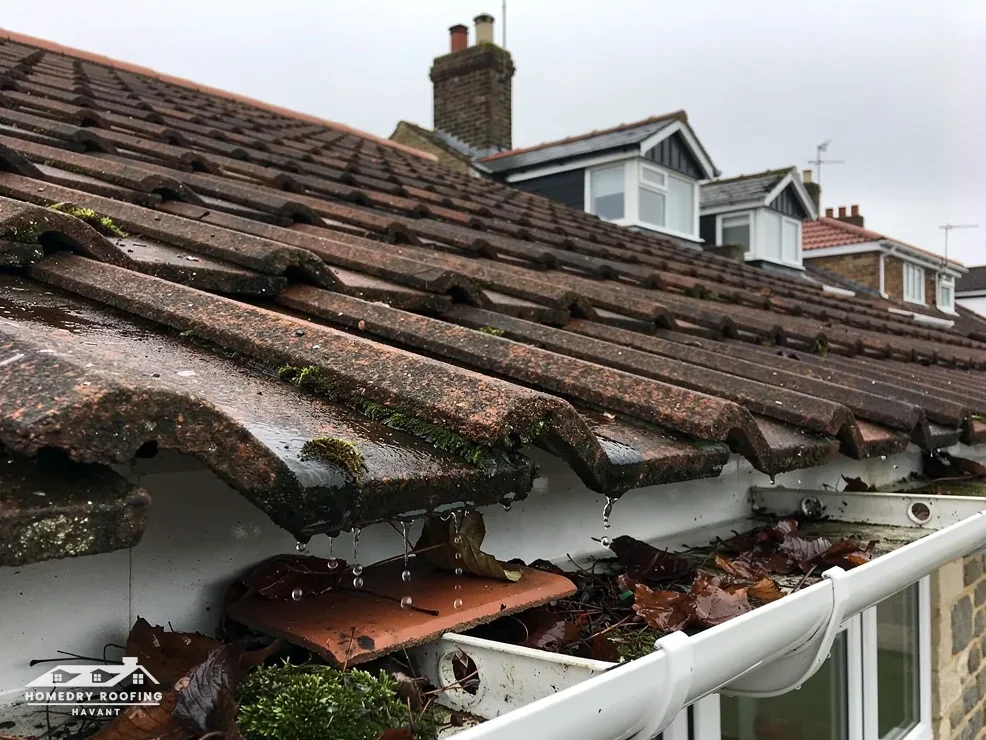
After the valley, the water arrives at the eaves, the lowest edge of the roof, where the first course of tiles overhangs the wall. The gutter's joints, falls and brackets are checked first, then the fascia board beyond it, and the soffit, the underside of the overhang, which we press for softness. Each downpipe is traced to the ground. Where a run is fixed back on new brackets, the fall is set again with a string line along the eaves, so that the water is carried to the outlet and not held in the middle. A gutter packed with silt or leaf mould is cleared where that can be done safely, and the clearing is noted in the report. Any gutter, fascia or soffit work that follows is described with photographs of each fault, so you can match the words to the roof.
Southsea's list entries include Church of St Jude, Woodend and Kersey House, each at Grade II. Church of St Jude, still used for Church of England worship, comes under the Church of England's faculty system for any work, not listed building consent from the council. Entries are read on Historic England's list by address, so look yours up before the survey. A listed house follows another route: it keeps permitted development rights for the roof, and listed building consent under section 7 of the 1990 Act is needed as well for whatever alters its character.
Southsea is close to the coast, and Cupa, the slate maker, describes coastal buildings as "graded with higher exposure", so the fixing method is set for the site under BS 5534 instead of copied from another address. Flood Zone 2 covers land near Southsea, as the Environment Agency maps it. That describes ground-level flooding, not roof construction, and nothing in the survey depends on it, because the work stays with the roof, its fixings and its drainage.
Rot in a soffit is the water's signature on the timber.
Soft timber under the overhang is a record of past spills, and it is read like one. A fascia that crumbles when pressed, or a soffit stained along one run, tells us a gutter above it has been overflowing, and the survey follows that clue back up the roof. It reads faster than the roof above, and it can account for damp on a first-floor wall. We photograph what we find.
Map of Southsea and the places around it, with the dashed line of our 30-mile service area from Havant. The same places are listed below the map.
A stain below a valley points uphill, so we start at the loft hatch where it can be reached and look at the underlay and timbers along the line of the valley for damp and daylight. Outside, we check the lining at the bottom of the channel, the tiles cut along its edges and any lead, then the ridge and hips above in case the flow starts higher. Where the valley has failed, you are shown the fault, told whether a repair closes it, and given the reason in writing, with one total price to follow the survey.
Conservation areas change the paperwork around a roof more than the roof. The council to ask is Portsmouth City Council, and 11 sit near the centre of Southsea, from King Street; Stanley Street, Southsea to Owen's Southsea. Inside a conservation area a house normally keeps its permitted development rights for a new covering, whereas other changes, such as a dormer, are covered in our planning guide and not on this page. With so many boundaries around, the first step is to ask which one your address falls in, and to ask before a covering is chosen. A map can mislead on a single street, whereas the council can answer for your door.
Where one lists it, replacing the roof cladding on the main elevation fronting a highway needs planning permission, so the address is what counts. Directions cover named addresses in Owen's Southsea; Castle Road; Highland Terrace; Campbell Road, Southsea; Stanley Street, Southsea; King Street; St David's Road, Southsea; and Craneswater and Eastern Parade, Southsea, which means neighbouring streets can have different answers. Quote your full address to Portsmouth City Council before work is booked. Article 4 directions take away rights, and one phone call settles whether yours is among them. We can give the council a plain description of the roof and the covering you want, which makes the call shorter and the answer clearer.
Church of St Jude is listed Grade II and remains in use for Church of England worship, which brings any work on it under the Church of England's faculty system and not listed building consent. A listed house takes another route: permitted development rights for roof work remain, though anything affecting its character needs listed building consent. Woodend and Kersey House are both listed at Grade II as well. If your property has an entry, give us the details at booking and the survey is planned with it in mind, so no tile moves before the right consent is held.
The Building Control Partnership does Portsmouth's building control, and the number for its Business Support team is 01329 824823. The Planning Portal sets the test: a re-roof touching less than 25 per cent of the building envelope and less than 50 per cent of the roof normally calls for no application, while a new covering 15 per cent or more heavier does call for approval. For a Southsea house we work out which side of the line the roof sits before a start date is set, with a structural check first when the covering gets heavier.
Putting scaffolding over a public footway needs permission from the highway authority. We arrange the licence with our scaffolder, and in Portsmouth the hoarding and scaffolding permit runs through Colas, with £100.00 + VAT per month on its form. A frame over a pavement is raised at the survey and its position agreed with you, so the permit is part of the plan and not an afterthought. The start date allows for it, and the street is given warning before the first pole goes up. Where the position of the frame has to move, we tell you before the work, not after it.
Close to the coast, Southsea falls under Cupa's remark that coastal buildings are "graded with higher exposure", so the fixing specification is calculated for the site under BS 5534. Marley says installing to the standard is not required by law, and it adds that mortar alone "could no longer be relied upon". Apart from fixings, land near Southsea appears in Flood Zone 2 on the Environment Agency's map, a matter of floodwater at ground level, so it alters nothing about how a roof is fixed or covered. At the visit we record where every downpipe discharges, and mention in the report any that ends against a wall.
It names the work, the covering and the order of the job, and it gives one total. Compare it with others by checking whether VAT and the scaffold are in the figure. A repair that closes the fault comes first; a replacement is recommended only when the evidence points that way, and the evidence is shown. We aim for fair prices, and the quote follows the survey, never precedes it. At the end the site is cleared, and the photographs taken at the survey stay in your folder as a record of the roof's condition on the day.
You'll get one written total price.
Fill in what you like. It opens WhatsApp with your message ready to send.