
The two published figures
MyJobQuote's emergency roofer page, updated in October 2026, says: "Emergency roofer call-out costs typically range from £150 to £300, while extensive storm damage repairs can cost £1,200 or more." MyJobQuote states no VAT basis for either figure, so make no assumption about it.
| Figure | What it describes | Do not read it as |
|---|---|---|
| £150 to £300 | A roofer's emergency call-out | A price for a finished repair |
| £1,200 or more | Extensive storm damage repairs | The price of a few lost tiles |
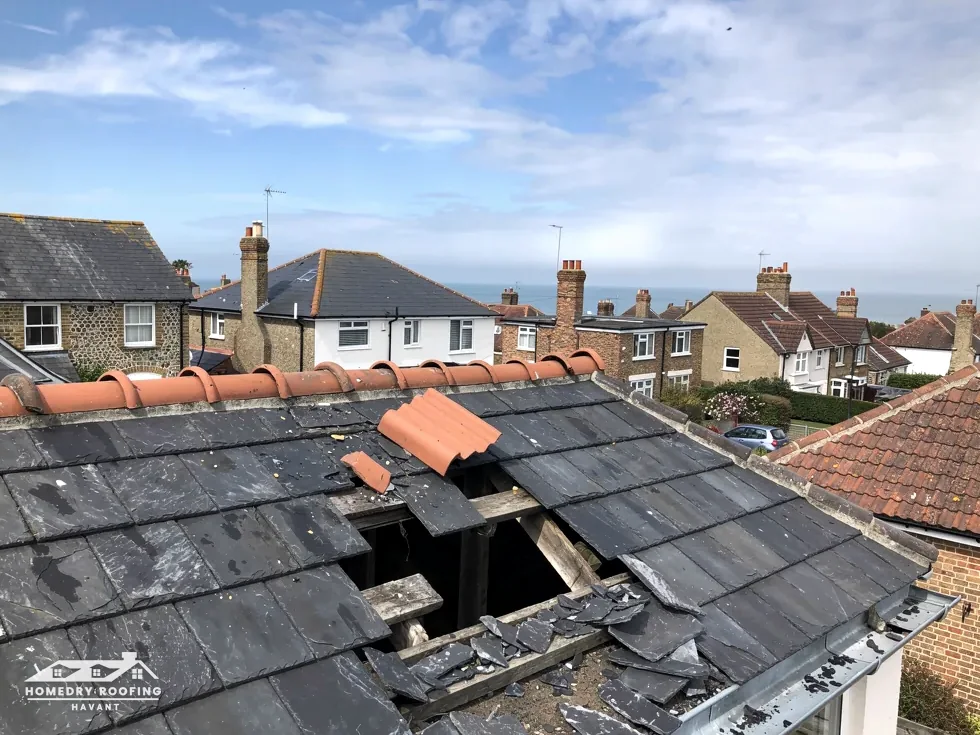
The word extensive matters. A slipped tile or a lifted ridge section sits a long way below that description, so a sum of that size is not one to expect for a small job.
Neither number is a quote for your roof, because neither has seen it. Treat them as the outer markers of a wide range, and ask for a figure that fits your own house.
It also helps to separate the two events in your mind. A call-out happens in the first hour or two of a problem, and the repair of storm damage is planned afterwards, once the extent is known. The two prices answer different questions.
What sets the price on your roof
Published ranges are wide because roofs and conditions are. On your own house, the price comes down to a short list of things a roofer can only judge on the day.
- How high the damage sits, and how safely it can be reached.
- How large the opening in the roof is.
- What the roof is covered with, and whether matching tiles or slates can be found.
- The conditions on the day, which affect how long the work takes.
- Whether a scaffold has to be erected to get at the damage.
For the South East, Which? Trusted Traders adds: "Prices are likely to be at the upper end of the scale if you live in London or the South East." Hampshire and West Sussex both fall within it, so a national average is a rough guide for you and not a target.
Ask a roofer what is included before comparing two sums. One firm may include a temporary cover and another may not, and a lower figure can hide that.
Be cautious of a firm sum quoted over the phone before anyone knows the height, the access or the size of the hole. A reasonable roofer will say what a figure covers and what would change it.
Questions to ask before anyone goes up
The call-out figure pays for attendance, so begin by working out what you would receive for it. Put each of these questions to the roofer before agreeing to a visit, and write down the replies.
- Does the figure include fitting a cover or doing a make-safe repair, or only turning up and looking?
- Are materials included, or charged on top?
- Does the price say whether VAT is included?
- If scaffold is needed, is it included in the written quote?
- What will be put in writing, and when will you receive it?
Keep the replies in a message you can show later. The urgent visit you ask for carries no right to cancel, so the replies are what protect you. If a reply is hazy, ring a second firm before you agree. Our answer on cancelling an urgent roof repair explains why.
For the longer repair that follows, the survey comes first because it shows what the roof needs, and one written price is given after it. There is nothing sensible to price before it.
Where the money may come from
If the damage came from a storm, your insurer may pick up the cost, so tell them before you spend beyond keeping the house dry. The Financial Ombudsman Service says it will usually look at expert reports and photos of a property's condition, so take pictures of the damage before you move or throw away anything. Keep every receipt, the call-out included, and the dates on which you reported the problem.
If you rent, the landlord may be the one to pay, and the same goes for the freeholder of a flat. Our answer on getting help to fix a roof in an emergency sets out who to ask.
The make-safe and the lasting repair are separate decisions, taken at different times. Our emergency roof repairs page describes the first visit. With the opening covered, you have time to look at what the repair involves, and to compare it with what your insurer or landlord will agree to.
Ask for the full price in writing before agreeing to work, whoever is paying. If your insurer or landlord is paying, send them the written price before the work begins, so that nobody is surprised by the bill afterwards.