
The wording HSE uses
HSE's roofwork guidance sets the rule out in one sentence: "all roofs should be treated as fragile until a competent person has confirmed they are not." The weight of it falls on the word until. A roof does not have to be proven weak before it is handled with care. It is handled with care until someone competent has shown that it is sound.
The guidance goes on to warn against placing trust in sheeted roofing of any material to take someone's weight. That covers sheets of every kind, so a roof that looks substantial is not exempt because of what it is made of.
Putting the burden this way round is deliberate. If the default were that a roof is safe, the first person to find out otherwise would be the one standing on it. Setting the default at fragile means that nobody goes onto a roof on the strength of a guess, and the checking happens before the weight does.
In practice the rule changes who has to prove what. Nobody has to show that a roof is weak. The competent person has to show that it is not.
Why the default is set so cautiously
HSE gives a figure that explains the caution. It reports that "almost one in five deaths in construction work involve roof work. Some are specialist roofers, but many are just repairing and cleaning roofs."
The figure is HSE's own, for construction work in general, and it says nothing about any single roof. It does show why the guidance is cautious by default. That second sentence matters for a homeowner. The people at risk are not only specialists with years on roofs. They include those doing a small repair or a clean, which is the sort of job an owner might take on. A job can feel small and still put someone at the edge of a roof, on a surface they have not tested.
A sensible reading of the rule is that a roof's condition cannot be judged by looking down on it. A deck that has softened or a covering that has turned brittle may look much like a sound one from above, so the confirming is left to someone competent, and a mistake on a roof has a long way to fall.
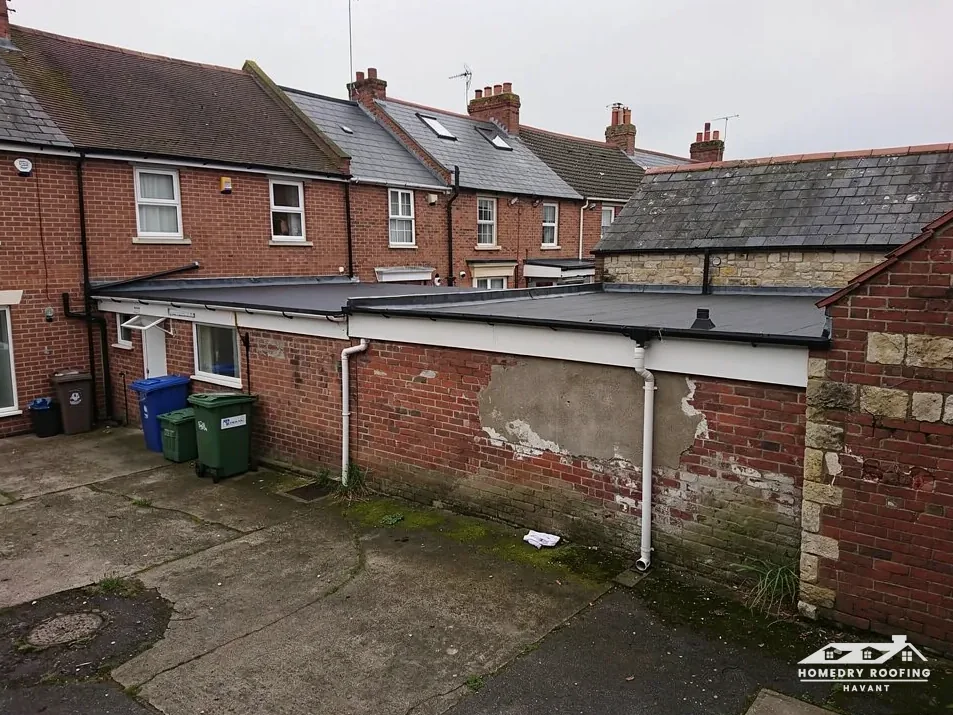
Our page on walking on a flat roof applies the same rule to one kind of roof.
Roofs that are fragile for a known reason
For some roofs, nobody has to wait for a competent person to say they are fragile, because the material settles it. HSE's sheet A14 on asbestos cement says: "AC roofs are always fragile." Asbestos cement can be found on garage and outbuilding roofs, and there is a second hazard with it: if the sheets break up, they can release dust.
That makes the garage roof a case where two cautions meet. The roof will not carry a person, and breaking it is itself a risk. Our page on walking on asbestos cement sheets sets that out, and the garage and asbestos roofs hub covers the work.
For every other roof the rule is the general one. Slate, tile, felt, rubber and fibreglass are all covered by the general rule, and the confirmation still has to come first. That includes a roof that has carried a ladder, a gutter clearer or an aerial fitter without trouble in the past.
The rule makes no allowance for age or appearance. A garage roof that has stood for years is covered by the same warning as one that was fitted last month.
What the rule means for an owner
For an owner the practical result is simple. You do not need to step onto a roof to learn most of what you want to know, and the rule gives you a reason not to.
- From the garden or the pavement, use binoculars or a zoom lens.
- Lean in at the loft hatch with a torch and check the roof's underside.
- Take dated photographs of anything that concerns you.
- Leave anything that needs the roof walked to someone competent, using access suited to the building.
A roofer working to the same rule inspects from safe positions and says in the report which ones were used. Our page on what a roof shows from the ground covers what you can learn without leaving it, and our page on what a roofer checks follows the inspection from the ridge to the drain. For a visit, see our roof inspections page.
If someone offers to go up and look, you can ask who will confirm the roof is safe to walk on and how they will get there. A roofer who has thought about the question will have an answer ready.