
What the two published views say
Two organisations have written about spray foam and borrowing, and their lines pull in slightly different directions. RICS, the surveyors' body, said in its March 2023 press release that "there has been concern within specific sectors of the lending market, such as equity release mortgages, which is now having a wider impact on lenders."
The Energy Saving Trust, whose advice page was updated in October 2026, puts it more gently: "there should be less of an issue with getting a mortgage for homes that have had spray foam insulation installed correctly."
Read side by side, they suggest that providers do not all see foam alike, and that the quality of the installation counts, which is why paperwork gets a section of its own below. Neither says a mortgage will be refused, and neither says one will be granted. For your house the answer sits with the provider you approach, under its own policy on the day you ask.
That is why a general rule would mislead you, and why one phone call, followed by an email to confirm it, can settle more than any amount of reading.
Questions to put to a lender or broker
Alongside the concern it reported, the RICS consumer guide gives the first step in a sentence: "Do check with your mortgage provider whether their lender policy allows the installation of such products." It is easiest before the foam goes in, and it is still worth doing afterwards, when you already own a house with foam and are about to remortgage or sell. Put these to the lender, or to the broker acting for you:
- Is a house with this kind of roof insulation something you lend against?
- Does the foam type matter, or the name of the installer?
- Will you want a report on the roof timber, or the installer's paperwork?
- Would a different answer follow if the foam were removed?
- Can you give me your position in writing?
File the replies with the property papers. A yes gives you the confirmation you need. A no, or an unsure reply, tells you where you stand before anyone spends on the roof, and leaves you free to approach another provider, or to ask a broker who deals with a range of them. Note the name of whoever answered, since policies change and a dated reply is worth having.
Paperwork and the roof itself
The Energy Saving Trust's words "installed correctly" are a reminder that the record counts. Where foam has been sprayed already, hunt for whatever the installer left behind: a product name, the date of the job, and any certificate that came with it. Documents on paper answer a question faster than memory does.
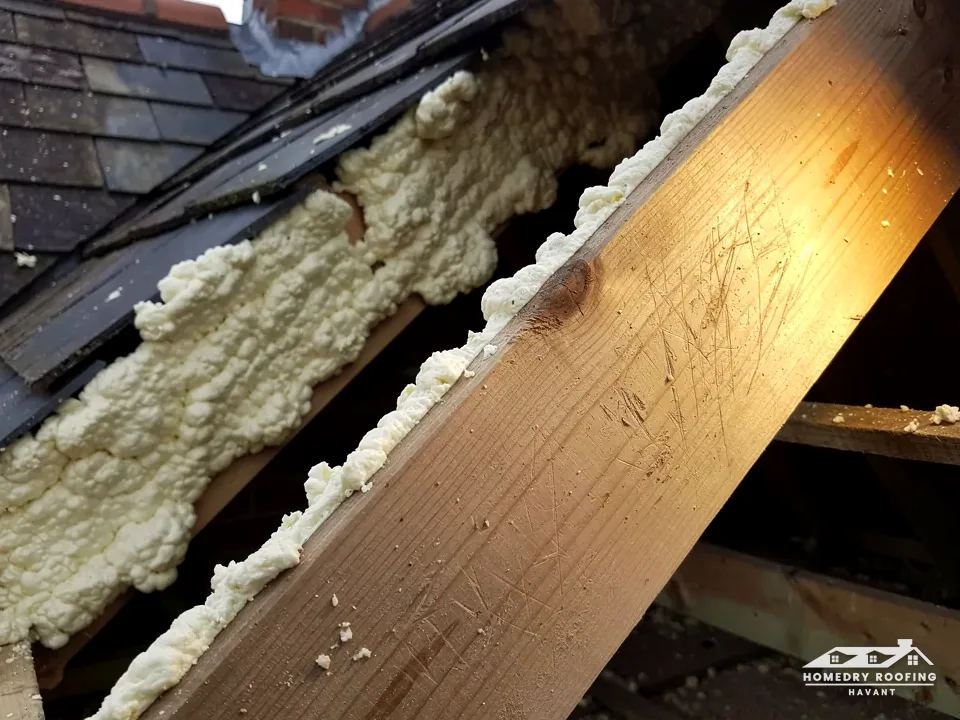
The roof is the other half. Any surveyor inspecting the roof meets the limit that anyone meets, and RICS states it as "If the timber roof structure is covered with spray foam it cannot be fully seen or inspected." The report describes the foam surface and the weather side of the roof, and lists the timber as not visible.
A dated check of the covering, flashings and gutters from outside, with photographs, gives the reader something concrete. It cannot replace sight of the timber behind the foam, and it never decides the outcome, but it shows that someone has looked at the roof.
Photographs and notes of this kind are worth passing to whoever is handling the application, so that they arrive together instead of in pieces.
When a lender asks for the foam to go
Sometimes a provider wants the foam removed, or the timber seen. Removal is possible, but the Energy Saving Trust is blunt about it: "spray foam is considered a permanent installation. If you decide to remove it at a later stage then you might also need to replace the structure it was applied to." So obtain the lender's position in writing before paying for the job, and ask what it would need to see afterwards.
If removal goes ahead, the bare timber is examined and photographed, then what follows is agreed with you: repair where it is sound, replacement where it is not, and new underlay and insulation. The quote arrives as a single written total after our survey, and the Building Regulations route is confirmed before work starts.
Lifting the foam out does not decide a lender's answer. It supplies better evidence for them to weigh.
Our post on selling a house with spray foam covers the sale side, and our answer on spray foam and equity release covers the RICS example. The spray foam insulation removal page explains the job, and the RICS consumer guide is the source for the advice above.