
The right the Act gives
The Act gives a building owner a list of rights over party walls and neighbouring structures, and notice goes out before any of them is used. One entry on that list concerns lead. Section 2(2)(j) is the right "to cut into the wall of an adjoining owner's building in order to insert a flashing or other weather-proofing of a wall erected against that wall".
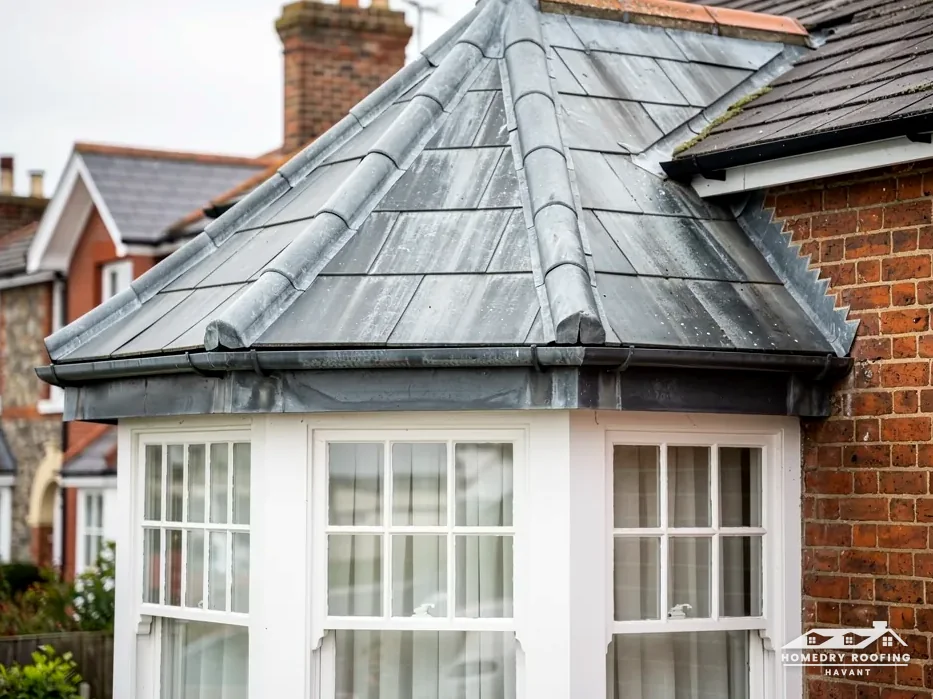
Picture a wall of yours built up against a neighbour's building, such as a side extension, a porch or an infill. Its roof needs a lead flashing, and the top edge of that lead has to be tucked into the neighbour's brickwork so that rain runs down your slope and not behind your wall. The cut is made in their wall, and that is where the Act comes in.
A flashing set into your own wall, including one where the roofs meet along a shared line, does not use that right. Which of the two applies depends on whose masonry the lead enters, so we look at the junction during the survey and describe what we see before any dates are fixed. Section 2 of the Act lists every right in full.
Who serves the notice, and the lead time
The building owner, the person who intends the work, serves the notice on the adjoining owner. A roofer cannot serve it for you, and the neighbour does not serve it either. Section 3(2)(a) sets the lead time: for work to a party wall, the party structure notice goes out at least 2 months before the proposed work begins. The sequence looks like this:
- The survey establishes whose wall the lead would be cut into.
- The owner serves the notice on the adjoining owner, describing the work.
- The 2 month period runs, unless the neighbour agrees to a sooner start.
- The neighbour consents, dissents or says nothing for 14 days.
- The lead work begins when the position is settled.
An earlier start is possible. Nothing in section 3 stops a building owner using a section 2 right "with the consent in writing of the adjoining owners and of the adjoining occupiers", so a neighbour may agree in writing to work beginning sooner. Because scaffold and materials are booked around the start date, we ask about the notice early.
Silence from next door
No reply does not mean yes. Section 5 treats an owner who sends no consent within 14 days of the notice as having dissented, and a dispute then exists. GOV.UK puts it in everyday words: "You cannot assume that no response means they agree to the works."
A dispute leads to surveyors. Section 10 lets the owners appoint one agreed surveyor between them, or a surveyor each, and GOV.UK says: "You must appoint a surveyor if you and your neighbour cannot agree." Until a dispute exists, no surveyor is needed. Building control is the wrong body for questions about the notice, and a party wall surveyor is the right one.
For the neighbour who has received a notice, the choices are to agree in writing or to dissent and let the surveyors take over. Whichever you choose, answer inside the 14 days and keep a dated copy. The GOV.UK party walls guide sets out the steps for both sides, and a notice that is explained face to face before it arrives can go more smoothly than one that appears unannounced.
Getting ready before the roofer starts
Most of the preparation is finding out early. Decide whose wall is involved, speak to the neighbour before any paperwork lands, and file dated copies of every letter sent or received, noting the day the notice was served. The start date, the scaffold and the delivery of lead all follow from that, and a notice that has been served in good time keeps the whole job from stalling.
Roof work meets the Act in other places too. Cutting away a projecting chimney breast uses section 2(2)(g), which we cover in our answer on party walls and a chimney breast, and the question for roof jobs in general is in the answer on party wall agreements for roof work.
For the lead at the wall itself, the thickness is taken from the specification, and our answer on soakers and stepped flashing shows how the pieces work together along a wall. After the survey you are given a single written total price, and the notice period is worked out beside it. The lead roofing page lists the other joints we cover, from valleys to bay roofs.