
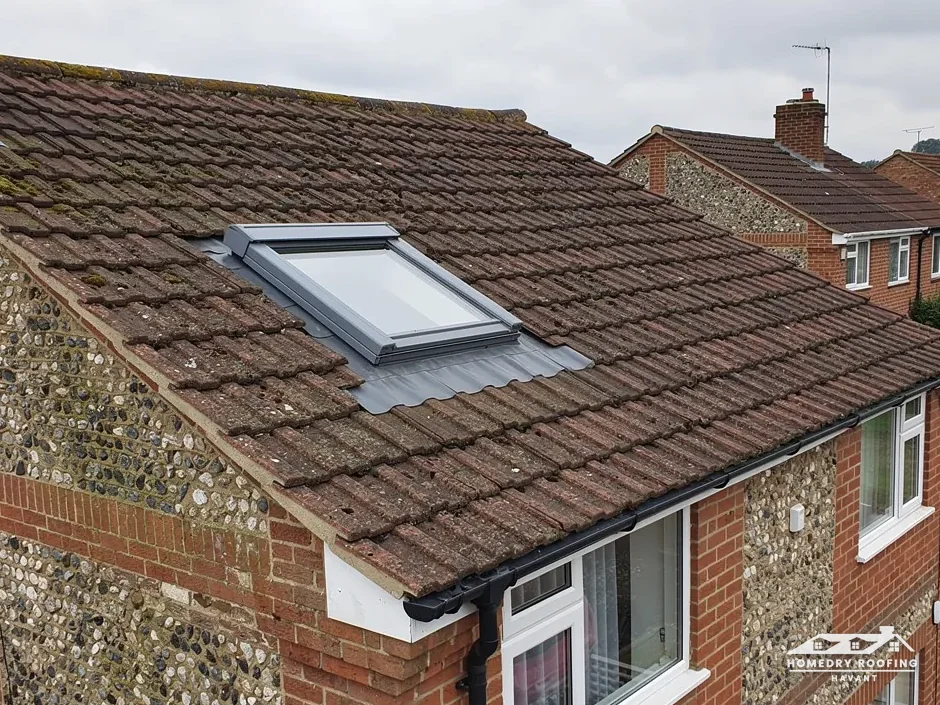
Is it cheaper to repair a roof or to replace it? On the day, a repair is. The harder question is whether the repair will hold, or whether it only moves the next visit a few months further on. The answer sits in the roof itself. No published rule says that a roof of a certain age, or with a certain number of slipped tiles, must be replaced, and a percentage offered without a survey is a guess.
So the first job is the survey. It settles which parts of the roof are sound, which parts are worn out, and whether the fault sits in one place or runs across a slope. A sound roof gets the repair, and a failing one gets a plain explanation of why a repair would be money wasted. Either way the result is one written total price.
What follows covers what a survey looks at, which jobs count as repairs and which as replacement, what outside sources publish for each, and the rules that begin to apply once a repair grows into a re-roof. Treat each figure as a pointer to where prices sit, never as the price of your own roof.
What a survey reads, from loft to ridge
A roof is read from both sides. Outside, the survey looks at the covering: tiles or slates that are cracked, slipped, loose or missing, the ridge and hip details, the verges, and the junctions with chimneys, walls and valleys. Inside, from the loft, it looks at what the covering is carried on: the battens, the underlay, any daylight showing where none should, damp patches, staining, and the airflow at the eaves.
HSE's guidance on roof work is to assume nobody can safely stand on a roof until a competent person has judged it, so walking on your own roof is no way to survey it. Do not lean a ladder where you cannot see what the top rung rests on. Photographs taken from the ground, and a torch in the loft, tell you more than a climb.
Tiles that look sound from the street can hide a failed batten or a torn underlay, and a slipped tile can hide a perfectly good roof. That is why a survey records what is found on both sides of the covering before anyone names a price.
The survey is trying to settle four questions:
- Is the fault local, on one slope or at one detail, or does it run across the roof?
- Are the battens and underlay sound enough to carry a repair?
- Is the covering still doing its job, or is it worn out?
- Would a repair in one place put strain on another part of the roof?
The answers go into a written note that says repair or replacement and gives the reason, so you can test the reasoning against what is visible from the pavement and the loft hatch. If the note cannot explain its own conclusion, ask for the explanation before you accept the price.
Jobs that count as repairs
A repair puts right a fault in a roof that is otherwise doing its work. It leaves the battens, the underlay and the bulk of the covering where they are, which is why the survey has to be sure they are sound first. Repair jobs include a few tiles or slates refixed or replaced, a ridge tile re-bedded or renewed, a flashing redressed, a valley or a chimney detail put right, and a gutter cleared or refitted.
Outside sources publish typical ranges for some of these. They cannot know your pitch, your access or the condition of what lies under the damage:
| Job | Figure | Source |
|---|---|---|
| One to six broken or missing standard roof tiles | £75 to £400 | Which? cost guide, November 2025 |
| A new ridge tile along the top of the roof | £80 to £300 | Which? cost guide, November 2025 |
| Average roof repair | around £650 | MyJobQuote, 2026 |
Which? built these from a survey of 11 tradespeople in November 2025, with labour and materials included and VAT excluded, and it says South East addresses are likely to sit at the top of its ranges. MyJobQuote's figure is an average, and a single number cannot describe both a handful of tiles and a repair along a whole slope.
Our page on the cost to replace a few roof tiles goes further into the smallest job, and what the survey does with the result. Ridge work may belong in either group, because a ridge is a repair on some roofs and a re-bed along the whole length on others.
Jobs that count as replacement
A replacement strips the covering from a slope or from the whole roof and lays it again, with new battens and underlay where the survey finds them failing, so the roof starts afresh from the timbers upward. Because the roof is open, anything found underneath can be put right at the same time, rather than being covered over. It is a larger job, with scaffold, labour, materials and waste inside one written total.
| Job | Figure | Source |
|---|---|---|
| Whole roof, average three-bedroom house | £7,000 to £21,000, excluding VAT | Which? cost guide, November 2025 |
| Average new roof | around £5,250 in the UK | MyJobQuote |
The two sources disagree, and the gap is worth noticing. Which? gives a range for an average three-bedroom house and says prices for the South East are likely to land towards the top. MyJobQuote gives a national average and states no VAT basis. Neither describes a roof with your pitch, your covering or your chimneys, and only a written total following a survey describes your roof.
Replacement is the right job when the covering as a whole has stopped doing its work, when the battens or underlay beneath it are failing, or when repairs would have to spread over so much of the roof that they amount to a re-cover done in pieces. Our page on when a roof needs replacing sets out the signs, and the survey confirms them for your roof.
Where a repair stops being the better buy
A repair is the better buy where it is sound. The difficulty is telling when it has stopped being so, and a few situations point that way:
- The fault is not the tile. A flashing, a valley or a gutter that has failed needs its own detail put right, and swapping tiles around it changes nothing.
- The fault is under the covering. If the underlay has gone or the battens are soft, a new tile rests on a weak base.
- The repair would have to be repeated. The same slope calling for work again and again suggests the covering as a whole is the problem.
- Access is costly. Where scaffold is needed, each separate repair carries its own access.
That last point has a published edge. A scaffold licence is granted for a stated period. Hampshire County Council says it does not offer extensions, so a further period needs a fresh application and fresh fees: £211.90 on application for the first 2 weeks, and £72 for each additional 2 week period. We arrange the licence with our scaffolder, and the written quote includes scaffold.
Repairing in stages can therefore cost more in total than doing the work once, where access is the expensive part. The survey puts a plain reason beside its recommendation so you can weigh that for your own roof. Our answer on how long a roof lasts explains why age alone never decides it.
When a repair becomes a re-roof in the rules
These are England's rules, and they apply to a roof in Hampshire, Portsmouth, Southampton or West Sussex alike. Under the Planning Portal's guide, re-roofing does not normally need a building regulations application if it affects less than 25 per cent of the building envelope and less than 50 per cent of the roof. A new covering brings one more test, since approval is needed where "you use a new covering material which increases the weight of the roof covering by 15 per cent or more"; Approved Document A calls an increase in roof loading of more than 15% a significant change.
Planning is a separate question. Under Class C, permitted development rights in England extend to re-roofing a house, so it is normally permitted development. A listed home needs listed building consent for any work touching its character, and an Article 4 direction can withdraw rights, so the council is asked before work is priced. For an address in Arun District Council's area, its own building control page lists replacing roof coverings on pitched and flat roofs among alteration projects that need approval.
Energy rules arrive with larger jobs. Approved Document L (2021 edition) asks for the whole of a roof to be upgraded to the Table 4.3 standard once more than 50% of its surface is renovated: a threshold of 0.35 and an improved figure of 0.16, in W/(m²·K), provided that is technically feasible and pays back within 15 years. The Planning Portal's re-roofing guide gives the first test; our page on building regulations for re-roofing covers the rest.
Taking the decision, and the written price
With the survey note in hand, the decision follows a short run of steps:
- Read the reason given for the recommendation, and check it against the photographs taken in the loft and on the roof.
- Ask what the roof will need next, so that a repair today does not hide a replacement that is already coming.
- Ask whether scaffold and its licence are in the written total, and whether VAT is.
- Ask how the work could be staged if you want to spread the spending, and what each stage would leave protected.
One total price is written after the survey, and a good one sits beside a note saying what has been found. If two roofers give different recommendations for the same roof, ask each for the reason in writing and set the reasons side by side. A gap between two totals can come from a difference in the job described. Our answer on what a roofing quote should include goes through what a quote should state in writing.
The roof repairs page shows how a survey is booked, and the quote form is on every page. When the written total arrives, keep it beside the survey note, and put any question about either to the roofer in writing so the answer is on record. Where the roof is sound, the answer is a repair, and the price says so.
Filed under Roof repairs