
What sets the timetable
The visible damage is the smallest part of the question. Five things matter more, and you can ask about each when a roofer offers you a date.
- Access: a ladder, a tower or a full scaffold each change how long setting up and taking down will need.
- The number of places: one spot is one job, whereas three flashings and a ridge are four, even on a small roof.
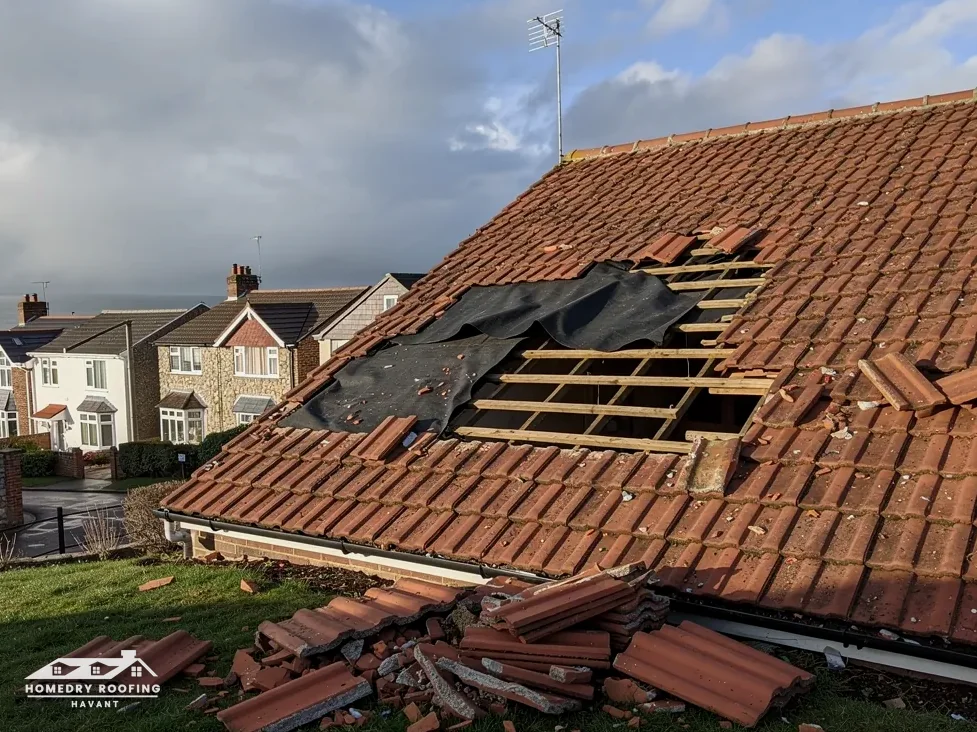
- What lies beneath: a broken tile can hide a split batten, the timber strip it hangs from, and mending that adds work.
- Materials: a common tile may come from stock, while an old pattern of clay tile or a particular lead code may take time to obtain.
- The weather, which decides which days are safe and suitable for the product being used.
We name no duration before seeing a roof, since a figure offered blind is only a guess dressed up as a promise. Once the survey is done, the written quote describes the work and we talk through how the days are likely to run, with the caution that weather can move them. Ask for that conversation if it is not offered, and ask which part of the plan is firm and which part depends on the forecast, because the two are different.
Where the time goes in a repair
Much of the elapsed time sits around the work and not in it. The table shows the stages and what can stretch each one.
| Stage | What can stretch it |
|---|---|
| Survey | Reaching the loft, or access to a roof above a flat-roofed extension |
| Written price | A fault with more than one cause |
| Booking in | Materials to order, or a scaffold to arrange |
| The work | Rain, wind or low temperatures on the day |
| Clear-up | Debris to bag and carry from a tight site |
A simple repair on a dry day, reached by ladder, can be completed in one visit. A more involved job can need several, with the roof made safe and covered between them.
We would rather tell you that after the survey than promise a finish date that depends on the sky. If the plan changes, you hear it from us before the day and not on the doorstep. Where a job runs over more than one visit, the plan says what is left open and what is covered in the meantime.
When scaffold on the highway adds notice
Section 169 of the Highways Act 1980 requires a licence for scaffolding that obstructs the highway, and the notice a council asks for can set your start date. Hampshire County Council states: "Hampshire County Council requires a minimum of ten clear working days between the date of application for a scaffold or structure licence and the intended start date of the licence." Hampshire County Council also says "Scaffolding companies must apply on behalf of their customers." West Sussex County Council asks for at least 10 working days' notice.
For Portsmouth, the permit for hoarding and scaffolding sits with Colas. Southampton City Council says contractors who hold £10 million public liability insurance may apply for a licence. Whichever council applies, we arrange it with our scaffolder and tell you ahead of time if the licence will push the start date back.
The law covers scaffolding erected or retained on or over a highway, so the question arises where a repair reaches over a pavement or road. A quick-looking job can therefore wait on paperwork, not roofing. The survey shows how the roof will be reached, and the written quote says whether a licence is in play. Where none is needed, the notice period drops out of the timetable altogether.
Weather, and questions for a given date
Rain, wind and frost all affect a roof job. Roofers can work through some wet and cold spells, but each product has its own limits, and an opened roof must be covered before the crew leaves for the day. A rushed job in poor conditions can be a poor one, so a date that moves for weather is a sign of care and not of delay. Our answer on whether roofers can work in the rain goes through it.
When you are given a date, three questions tell you most.
- What is the access, and does it need a licence?
- Which materials are in stock, and which must be ordered?
- If the weather turns on the day, does the roof get covered, and does the visit move?
A damp patch that is getting worse may need a temporary cover first, and that step belongs to our emergency roof repairs service. For a settled repair, the roof repairs page lists the work, and how long a repair lasts covers what comes after the job.