
The published figures and their units
Cost guides use different units, so set each figure against its own unit and never against another, even where two of them look alike at first glance. Three matter for a small tile job, and none of them is a quote.
- The Which? range of £75 to £400 is for the whole job of one to six tiles, in November 2025, and leaves VAT out.
- MyJobQuote puts the average roof repair at around £650 in 2026, and states no VAT basis.
- Checkatrade (June 2026) lists concrete tile repairs at £90 to £120 per m², clay tiles at £110 to £160 per m² and natural slate at £150 to £220 per m².
The MyJobQuote figure is for a roof repair in general, not for a few tiles. The per m² rates in the last bullet rest on up to a maximum of 3m², leaves VAT out and omits access equipment. A rate per square metre shows how the work is measured. It is never multiplied into a total, whatever the number of tiles you are looking at on your own roof.
What pushes a quote higher or lower
Six tiles on a low rear roof and six tiles above a conservatory are not the same job, even though the count matches. The list sets out what a roofer weighs before giving a figure.
- Access: a roof reached by a short ladder is quicker to work on than one needing a tower or scaffold, and the published tile-repair rates leave access equipment out.
- The tile itself: a standard concrete tile is easy to match, whereas a clay tile of an older pattern can mean a search for a good second-hand one.
- What lies beneath: a broken tile may sit on a split batten (the timber strip each tile hangs from) or a torn underlay, which adds time.
- How many separate places the tiles are in: three spots on three slopes can cost more than six tiles side by side.
Which? states that its prices cover labour and materials but not VAT. Read what each quote you hold says about VAT and about access, because published guides differ on both, and a quote that stays silent on them may be leaving them to be added later, when the job is already agreed.
Why the tiles broke matters more than the count
A tile that has cracked, slipped or gone missing is a symptom. A branch or a footstep can break one tile and leave the rest sound. A run of slipped tiles in one place points elsewhere: a failing fixing, a mortar bed giving way at a ridge or a line of battens that has decayed.
Replacing the visible tiles without finding the cause can let the same gap open again, so a sound survey answers one question before it answers the cost question: why did these tiles move? If the answer is a single impact, six replacements are the whole job. If the answer is the fixings or battens, the sensible repair is wider and the written quote describes it.
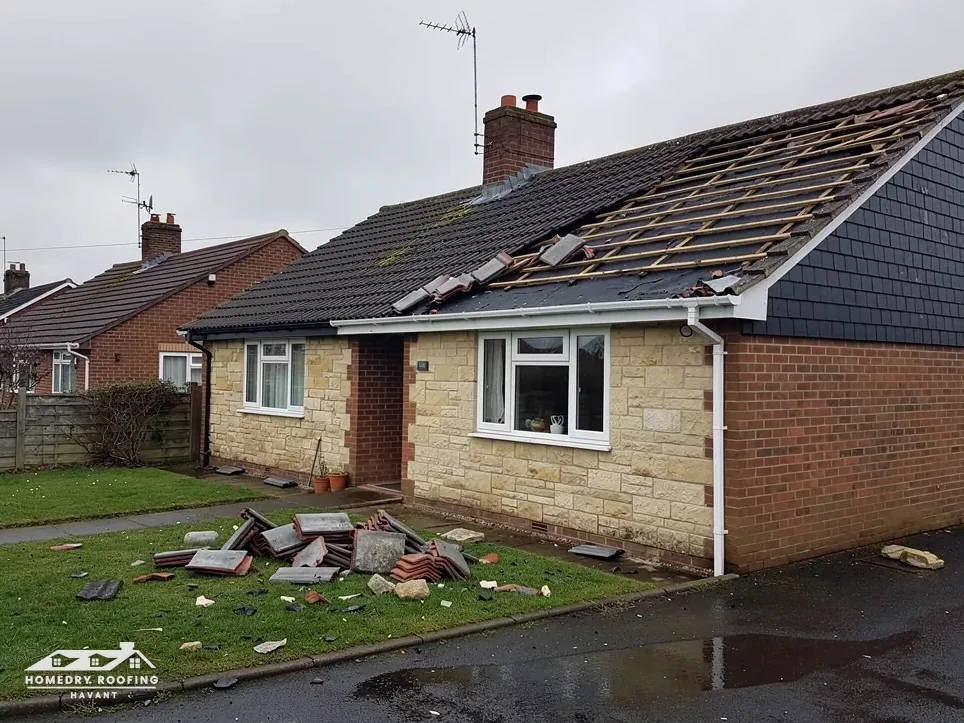
Should a storm have broken the tiles and you mean to claim, photograph the damage before anything is touched. The Financial Ombudsman Service says that "we'll usually look at expert reports and photos" in a dispute, and our answer on wear and tear and insurance sets out the plain steps.
How the price for a small repair is set
A photograph can show a broken tile, but it cannot show the batten under it, the pitch or the way in, so a figure by phone for a roof not yet looked at would be a guess. Once the roofer has been up, you receive a written total that spells out the job in plain words. Access, materials and the clear-up all sit inside that single figure and none of them arrives later as an extra.
When patching is sound, patching is what we put forward first. If the covering turns out to be past the point where patching buys much, you are told plainly, so that you can choose between a modest job and a larger one with the facts to hand. Either way the decision is yours, and nothing is booked in until you have read the price and agreed to it.
Small jobs are ordinary work, and our answer on whether roofers take on small repairs explains how one is arranged. What a repair then lasts depends on what failed, which how long a roof repair lasts covers. The roof repairs page lists the whole range of repair work.