
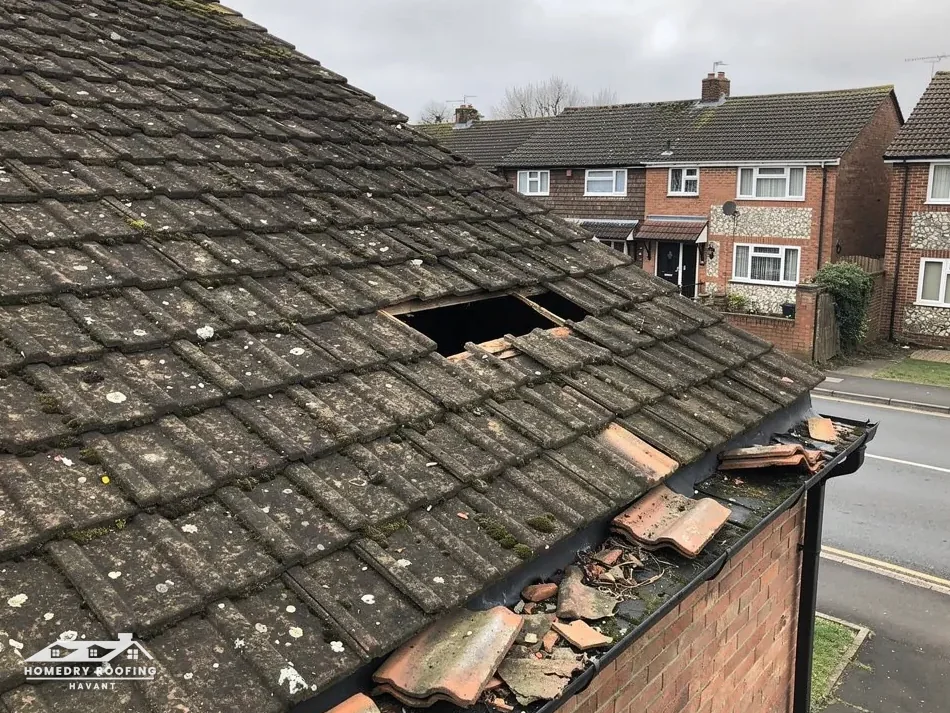
Storm damage and wear are different questions
A roof can be damaged in a storm, or it can wear out slowly, and an insurer may treat the two very differently. The schedule and the policy booklet list the risks insured and the exclusions, so they are the first documents to read. Look at how the booklet describes storms and how it describes gradual deterioration, and quote its exact words if you write to the insurer. A broad phrase such as wear and tear can cover a lot of ground, and the words around it often set its limits.
The Financial Ombudsman Service is the free body that settles disputes between consumers and financial firms. It says: "We say that a storm usually involves violent winds, usually with rain, hail or snow." It also says "Rain, hail or snowfall by itself can constitute a storm." Wind force is a further factor: "We take into account the Beaufort Scale." The Ombudsman notes that "Some insurers say that only winds above a certain point on this scale count as storm-force winds."
None of this means a claim will succeed. It describes how the Ombudsman looks at disputes, and the outcome turns on your policy and the facts, which your insurer and, if you complain, the Ombudsman must weigh.
Which evidence helps in a dispute
When the cause is argued over, evidence counts. The Ombudsman says "To do this we'll usually look at expert reports and photos. Your insurer will normally ask a surveyor to write a report." It adds: "The insurer has to prove that the exclusion applies - for example, with an inspection report."
You can build your own record as you go:
- pictures showing how things stood when you found the problem, taken before anything is moved, mended or thrown out;
- photographs of the roof around it, so that its general condition shows;
- notes of the date, the weather and what you noticed;
- a written report from a roofer on what has failed and where rain got in;
- receipts for any temporary repair.
We can survey the roof and describe in writing what we find, including what looks like impact or movement and what looks like age. That describes the roof and is no promise about how an insurer will respond. Our answer on a roof report for an insurer explains what a report can contain.
Plain steps if you need to claim
These steps are general good practice and are not advice on your particular policy.
- Contact your insurer first, before arranging any permanent repair.
- Protect the house with a temporary repair, such as a cover over an opening, and keep the receipt.
- Photograph everything as described above, and keep any damaged material you can.
- Ask your insurer what it needs, and in what form.
- Keep copies of everything you send and receive.
Stay off the roof while you do this. HSE says "all roofs should be treated as fragile until a competent person has confirmed they are not." A photograph from the ground, or a survey by a roofer with proper access, is safer than a ladder in poor weather.
Our part is to survey, explain and give a single written total for the repair, so that you have the facts to hand when you speak to your insurer. Our guide to home insurance and roof damage goes through the wider picture, and the cost of replacing a few roof tiles shows published repair figures.
Disagreeing with a decision
If a claim is declined and you disagree, you can complain. Begin with the insurer itself. The Financial Ombudsman Service says "For most complaints, a business has up to 8 weeks to consider a complaint." It also says "You have 6 months from the date on the final response" to take it further. The Ombudsman's helpline is 0800 023 4567.
Ask the insurer to put its reasons in writing, including the exact wording it relies on, and to share any report it has used. That lets you compare its reasoning with your own evidence and with a roofer's description of what the roof showed.
Do not hold back urgent work while a dispute runs, since a leak left open can add to the damage and to the argument. If rain is coming in, a temporary repair protects the house, and its receipt belongs in your file. A permanent repair can wait for the insurer's inspection if one is requested, so tell it what you plan and give it the chance to see the damage first.
For the repairs themselves, see our roof repairs page, and for the first hours after a storm, our answer on a storm damage insurance claim.