
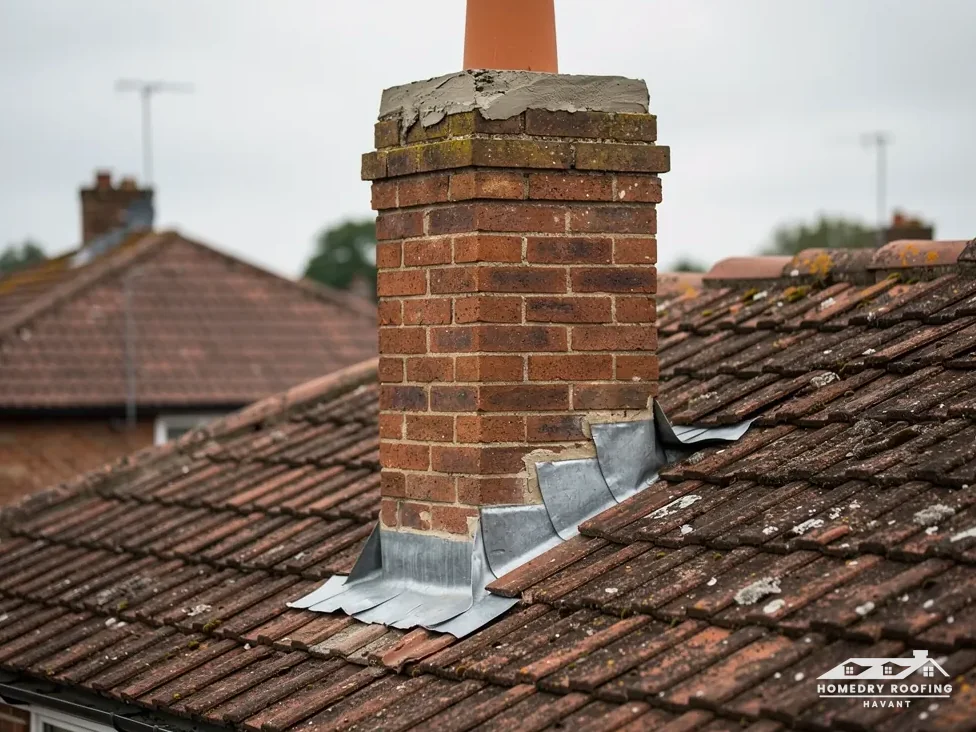
A pot comes down in a gale, or a stack starts to shed bricks into the garden, and the first thought can be about money. Will the house policy pay for this, or is it one more bill? Nobody can answer that from the outside, and a roofer cannot answer it either. The answer sits in two places: the wording of your policy and the cause of the damage.
What a roofer can do is the part before and after the claim. We can tell you what has happened to the stack and why, and what the repair would involve, so that the information you hand to your insurer is clear and in writing. The claim itself is between you and your insurer.
This post sets out what to read in the policy, how storm damage differs from slow deterioration, what to do on the day, what evidence helps, and where to take a complaint if you disagree with the outcome. For the guidance on how the Financial Ombudsman Service looks at these disputes, the source is the Ombudsman's own published advice, quoted here by name.
Start with your policy, then your roofer
The first document to find is the policy itself, and in particular the schedule and the section headed buildings cover. Chimneys are part of the building, so any cover would normally sit there, but the exact wording decides what counts and what does not.
Look for these four things:
- How the policy defines a storm, since that word can decide whether a claim is made under the right heading.
- Any exclusion for gradual damage, such as wear, deterioration or lack of maintenance.
- The excess, which is the amount you pay towards any claim before the insurer pays anything.
- Any condition about telling the insurer promptly, or about when repairs may begin.
None of this requires a lawyer, only time with the document and a pen. Mark the passages that mention storms, and the ones that mention wear and tear or maintenance, and keep a note of the page numbers.
Then compare the likely cost of the repair with the excess. A small repair can cost less than the excess, and then a claim makes no sense. Your own written quote is the figure to put beside the excess, not a national average, and a quote that names each part of the stack it covers makes that comparison easy. Our chimney repairs page explains how we survey a stack before pricing it.
If you are unsure what the policy words mean, ask the insurer to explain them in writing before you decide what to do.
Storm damage and slow deterioration are not the same claim
A chimney can be damaged in two quite different ways. One is sudden: a gale takes a pot off, or a section of the stack fails during a night of wind and rain. The other is slow: mortar weathers away over years, a flashing lifts, a joint opens, and one day water appears on the breast. A policy can treat the two differently, and that is where a dispute can begin.
The Financial Ombudsman Service explains how it looks at the word storm on its own consumer pages:
"We say that a storm usually involves violent winds, usually with rain, hail or snow."
It then adds that rain, hail or snowfall by itself can constitute a storm, and that it takes into account the Beaufort Scale. It also records that some insurers accept only winds beyond a particular force on that scale as storm-force. Your own policy may have its own definition, so read it rather than assume.
What a survey can describe
A roofer's survey can help here by describing what was found. A fresh break in the brickwork, with clean faces on the broken bricks and debris below, tells a different story from a stack with old, powdery mortar and years of staining.
The point is not for the roofer to decide the claim, and a roofer cannot. The point is to describe the damage accurately so that the insurer is looking at the real cause. Read the Ombudsman's own storm damage guidance before you speak to the insurer.
What to do on the day the chimney is damaged
When a stack or pot is damaged, the order of the first few steps matters more than the speed. The plain advice runs like this.
- Make sure nobody is under or beside the stack. Loose masonry can fall without warning, so keep people and pets clear of the area.
- Photograph the damage before anything is moved, whether from the garden, the street or an upstairs window. Never climb up to get a better picture.
- Tell your insurer first, before you agree any permanent work, and ask what it needs from you.
- Have a temporary repair put on to close any opening, such as a covering over a gap, so that more rain does not get in.
- Keep every receipt, plus a note of each call: the date, the person and what was said.
The order is deliberate. The insurer should hear about the damage from you before a skip arrives or a stack is taken down. Photographs taken before the clear-up show what was there.
A temporary repair is not the same as a permanent one. Its job is to stop a bad situation getting worse, and a policy may expect you to take reasonable steps to limit further damage, so check the wording.
On cost, MyJobQuote's October 2026 page on emergency roofers puts typical call-out charges at £150 to £300, with extensive storm damage repairs at £1,200 or more. A call-out pays for someone to attend, not for a full repair, so a first visit is not the final bill. Keep each receipt, because a temporary repair may form part of the claim.
Evidence: photographs, reports and what a surveyor writes
When there is a dispute about the cause, evidence is what settles it. Here is what the Financial Ombudsman Service says: to judge the cause it will usually look at expert reports and photos, and your insurer will normally ask a surveyor to write a report.
That gives you a clear job: build the file before anyone asks for it. A useful file holds the items below.
- Photographs of the damage from several sides, taken before any clear-up.
- Photographs of the debris, with something in the frame to show its size.
- The date and time you noticed the damage, and what the weather was doing.
- The written findings of the roofer who surveyed the stack, including what was found and what is proposed.
- Any previous work on the chimney, with dates, if you have the paperwork.
The Ombudsman also says that where an insurer relies on an exclusion, the insurer has to prove that the exclusion applies, for example with an inspection report. That is worth remembering if a refusal says only that the damage is wear and tear. Ask what evidence the insurer is relying on.
A roofer's written description of what was found is not a substitute for the insurer's own surveyor, and it should not pretend to be one. It is a plain record from someone who has looked at the stack from the roof, and it is something you can hand over with your photographs. Ask for it in writing, and ask the roofer to describe what they saw rather than to guess at the cause beyond what the survey shows.
Repair before or after the insurer agrees?
The temptation is to get the chimney fixed straight away. If the damage is leaving the roof open to the weather, a temporary repair cannot wait, and the section above covers it. A permanent rebuild is different, because it removes the evidence and may breach a condition in the policy.
A sensible sequence for a permanent repair looks like this:
- Tell the insurer what has happened and ask whether it wants to inspect before work begins.
- Ask what it needs from the roofer, such as a written quote or a description of the damage.
- Get the quote in writing and make sure it says whether scaffold is included.
- Keep the insurer's answers in writing, by email if possible.
Where scaffold is needed on the public highway, the highway authority grants a licence. For Havant addresses that is Hampshire County Council, which says scaffolding companies must apply on behalf of their customers; we arrange the licence with our scaffolder. Hampshire County Council wants ten clear working days of notice, so where a licence is needed a permanent repair cannot start the day after the quote.
Quotes also vary because stacks vary. A stack that needs repointing and a new flaunching is a different job from one that must be taken down and rebuilt, and a written price comes only once the survey is done. If an insurer asks for more than one quote, give it the written totals, each naming what is included.
Our short answer on a leaning chimney stack covers what a survey looks for when the brickwork has moved.
If the insurer says no: the next steps
A refusal is not always the end of the matter. If you think the insurer has decided wrongly, the route is clear, and it starts at the insurer's own door.
Take your complaint to the firm first. The Financial Ombudsman Service says that in most cases the business has up to 8 weeks to look into a complaint. If you are unhappy with the final response, or the 8 weeks pass without one, you can take the complaint to the Ombudsman. The time limit is 6 months, counted from the date of the final response letter.
The Ombudsman's helpline is 0800 023 4567. The Ombudsman is free to use, and you do not need a representative to put your case.
When you write, set out the facts in the order they happened:
- What was damaged, and when you noticed it.
- What the weather was doing.
- What you told the insurer, and when.
- What the insurer said, and the reason it gave.
- The evidence you hold: photographs, written findings and receipts.
Keep your tone flat and factual. The Ombudsman looks at the evidence and at what the policy says, not at how annoyed you are.
One more point on routine care. A stack that has been looked at regularly gives a clearer history if a claim ever arises, and our short answer on how often a chimney should be checked sets out what a check covers.
No roofer can tell you that a claim will succeed. What a roofer can give you is a written, accurate description of the damage and a clear price for the repair.
Filed under Chimney repairs