
What the published averages say
MyJobQuote's page on removing a chimney breast, which carries the date 03/11/26, gives two averages that answer this question directly. The first covers the breast inside the house. The second covers removing the entire stack along with its breast, which means the part above the roof as well as the part in the room.
| What comes out | MyJobQuote average |
|---|---|
| The chimney breast | Around £2,500 |
| The entire stack with the breast | Around £3,000 to £3,500 |
The guide does not say whether VAT is included, so do not read either figure as including it or leaving it out. It also covers the whole country, which is why it cannot reflect a particular road, roof or house, or a stack that is awkward to reach.
Read each average as a ballpark for the size of the job. It is a starting point for a conversation with a roofer, and your own total is something only a survey can produce. The work differs too much from house to house for a list price to mean anything, which is why the total comes after the survey.
What moves the figure on your house
Two houses with a stack apiece can be priced differently without either roofer being careless. What shifts the written total is a short list:
- How much comes out: only the part above the roof, only the breast in the room, or both together.
- What will carry whatever is left standing, for instance the stack above a breast that has been removed.
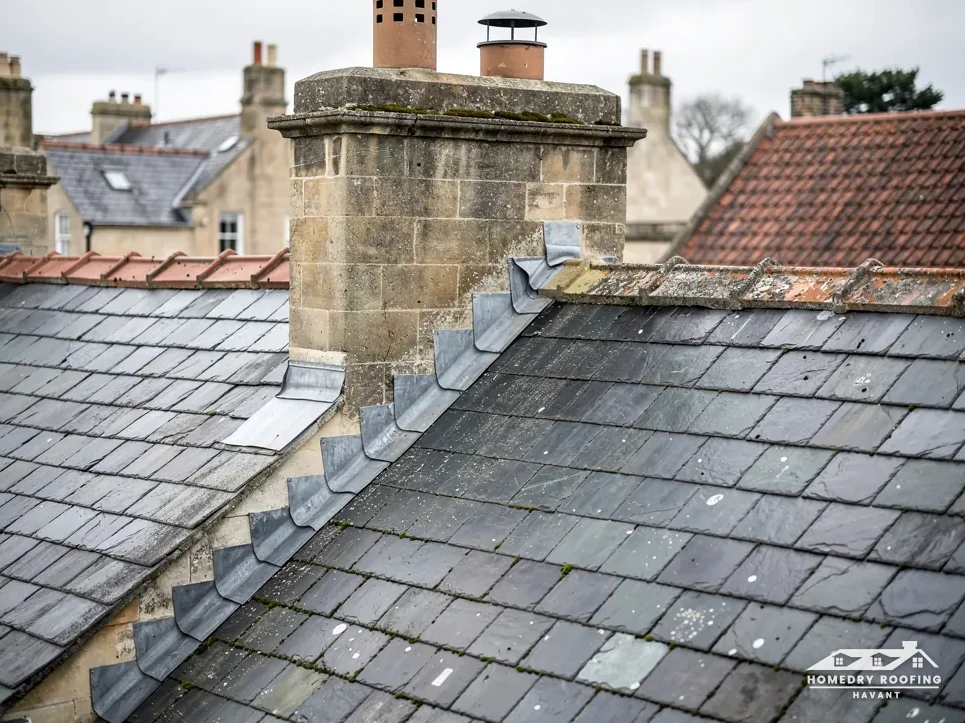
- How the gap in the slope is closed afterwards, with new battens, matching covering and lead where it is needed.
- How tall the stack is and how the crew gets up to it.
- The route the debris takes out of the house, and the rooms it crosses.
- Whether the breast shares a wall with next door, which adds a notice and some waiting.
- Whether the room below has to be redecorated or only made good.
None of these is visible from the pavement. Only a survey on the roof and in the room can turn an average into a price, so a number quoted over the phone is a guess. We survey first and give the figure afterwards, and the written total names the work it covers so it can be checked against the job you asked for.
Scaffold, approval and the extras that come with removal
A chimney stack is a tall thing to take down, so scaffold is part of most removals. Scaffold hire is priced after a survey: the height, the width of the elevation and the time the structure stays up all count. Where the scaffold stands on the highway a licence is required, each council charges in its own way, and we arrange the licence with our scaffolder. Ask any roofer whether scaffold is part of what you are being quoted, and who will arrange its licence, before you compare one total with another.
Approval comes in if a breast goes with the stack. The Planning Portal states: "Building regulations approval will always apply when removing chimney breasts as they are part of the building's structure." Allow time for that step before anything is booked, because it comes ahead of the scaffold and the first day on site.
A shared wall adds a party wall notice. The building owner serves it at least two months before the first cut is made, and our answer on the party wall and a chimney breast explains the notice, and the one on building regulations for breast removal deals with approval.
How we give you a price
After we have surveyed the stack and the room below it, you receive one total, written down, covering the job as a whole and naming the work in it. It names the work it covers, so you can see what you are agreeing to. A quote that cannot say what is included is hard to weigh against another, and the MyJobQuote averages cannot settle that question for you.
If you are deciding between removal and keeping the stack, ask for both options to be priced. Capping an unused flue is a smaller job that keeps rain out of the flue, while removal is the right route only when you want the stack, the breast or both gone for good. Our post on removing or capping an unused chimney compares the options.
Tell us at the start if the house has listed status or lies in a conservation area, because that can add a consent before any work begins, and the consent can take time. The chimney repairs page lists our other chimney answers, and every route starts with the survey.