
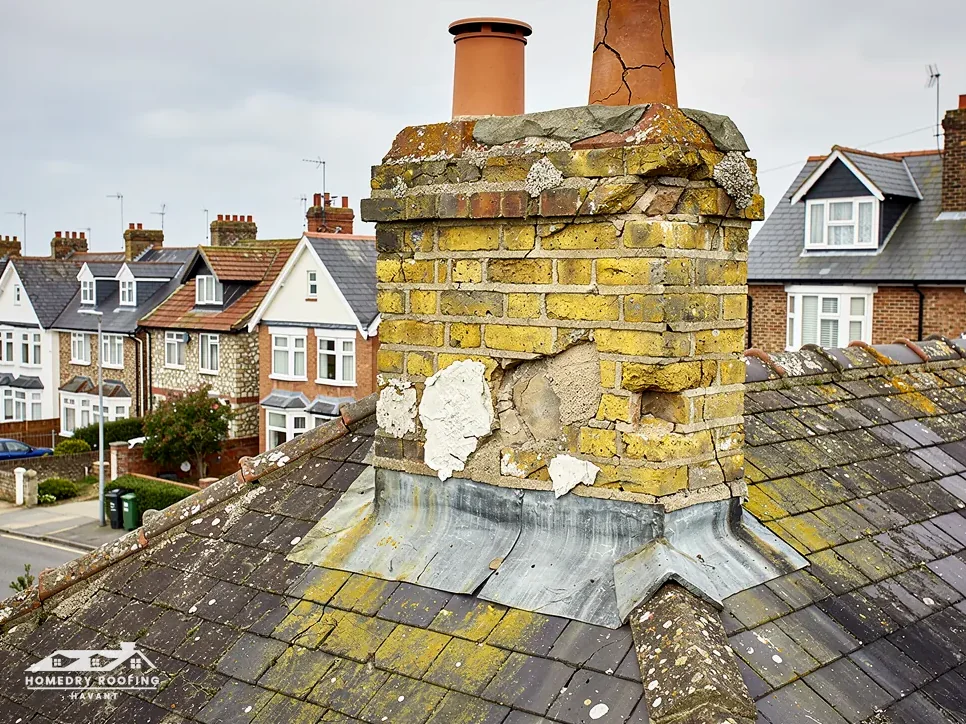
What the mark on the wall tells you
The breast is the section of the stack that stands in the room, so anything entering the stack from the top can travel down to it. A brown stain, flaking paint, blown plaster or a damp smell beside the fireplace all say the same thing: water has arrived. None of them says where it started.
That distinction decides what gets fixed. Treat the wall and the patch can come back, because the route that fed it is still open. Follow the water back up the stack and the job moves to the place that let it in, which may be some way from the stain, and may be out of sight from the garden.
A damp breast can also have a cause that is not the chimney, such as a gutter or a pipe running close by. A survey looks at those as well. A wall that stays wet after the stack has been put right is a sign to widen the search, so the repair lands on the real source and not on whatever is easiest to reach.
Photograph the mark, and note whether it grows when it rains. That helps the survey. Tell us too whether the fireplace is in use, boarded over or filled in, because the answer changes what the flue is doing.
Places the water can come in
Working down from the top of the stack, we check each of these in turn:
- The pot and the mortar slope that holds it, called the flaunching. A cracked pot or a split slope lets rain into the flue.
- An open flue top. If the flue is unused and uncovered, rain runs straight down the inside, and no fire is there to dry it out. Our answer on a chimney cowl or cap explains the cover.
- The brickwork joints and faces, where worn mortar or flaking brick lets rain in sideways and carries it into the stack.
- The lead collar round the stack at the slope, which carries the rain over the joint. Our guide to chimney flashing leaks follows it strip by strip.
- The roof covering close to the stack, where tiles or slates can have slipped, and the sheltered corners around the base where leaves and moss can gather.
Each of these can put a damp patch on the breast. That is why the survey works from the pot down, one place at a time, and does not stop at the first thing it finds.
Why plastering first does not help
Fresh plaster on a damp wall covers the stain for a while, but the route stays open. The water carries on arriving, and the fresh finish blisters or stains again. It also keeps the wall wet beneath the plaster, because a sealed surface gives the moisture nowhere to go.
So the order matters. First the way in is closed, then the wall is given time to dry, and only then is the surface made good. When the breast is to stay, plastering is the final step, and the decorator follows the roofer.
Blocking up the fireplace is another step that can trap damp in the flue and the breast, if the top of the stack has not been dealt with. A flue that has been shut off at the bottom and left open at the top is the case to watch.
If you plan to take the breast out, damp is a reason to look at the stack first, since the route may still be open. The answer on chimney breast removal and building regulations covers the approval that removal needs.
What you can do now, and our survey
Plenty can be done safely from inside the house and from the ground, without anyone going near the roof:
- Keep your feet on the ground and leave the stack alone: the roof may be fragile, and the stack is its highest point.
- Use binoculars from the garden to look at the pot, the joints and the lead.
- Photograph the stain, and keep a note of when it grows.
- Leave any vent or air brick near the fireplace clear.
When we survey, we go over the stack from the roof, pot to lead, check the flue and the covering round it, and explain what the water is doing and where it enters. You then hear whether the stack needs mending or rebuilding, along with the reason. Where a repair is sound, a repair comes first, and a rebuild is proposed only where the stack needs it.
You receive one written total after the survey. More on stacks is on our chimney repairs page, and nothing is replastered until the stack has been put right.