
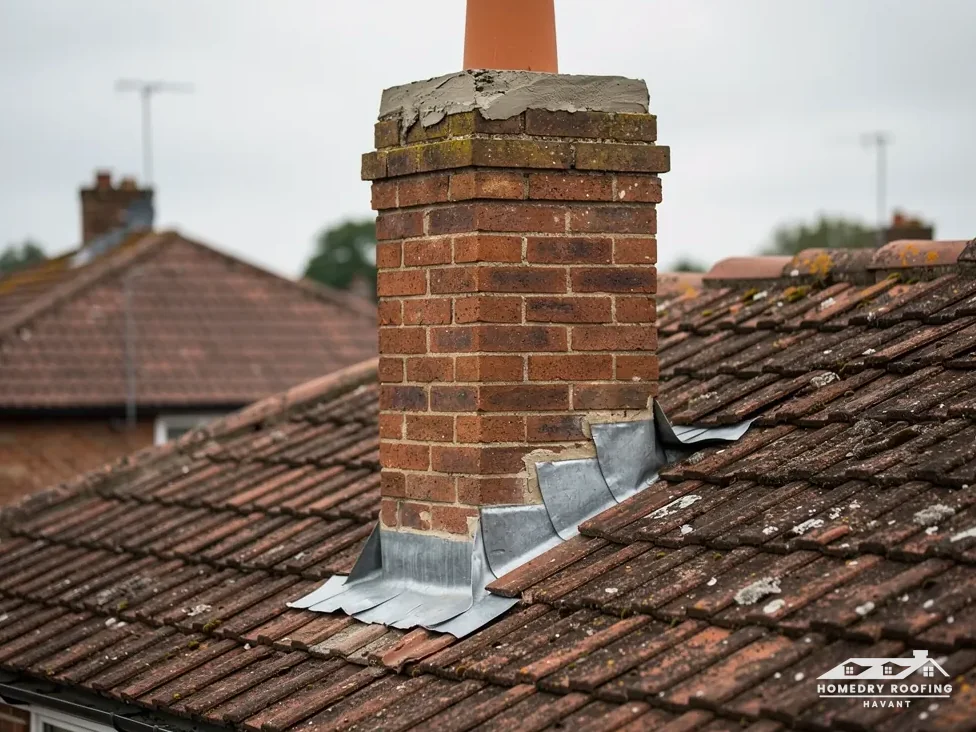
What a conservation area does and does not do
A conservation area is a designation on part of a town, and it changes what is expected of work on the outside of a house. It does not freeze every roof inside it. Portsmouth City Council describes the position for its own areas: "Many changes to doors, windows, roofs, chimneys and boundary walls remain permitted development". That means work you can carry out without planning permission.
The same page adds the caution that matters for a chimney: "In some cases special controls called Article 4 Directions have been introduced." GOV.UK's guidance defines one as a direction that "enables the Secretary of State or the local planning authority to withdraw specified permitted development rights across a defined area".
So the conservation area label tells you to ask a question, and the direction, if there is one, supplies the answer. Two houses in one area can be in different positions, because a direction can be drawn around particular streets. Do not assume that a street has no direction, and do not assume that it has one either.
Directions that name chimneys around Havant
Only some directions are published in a form that names chimneys. The table sets out the ones read for this area, each for its own place and for no other:
| Place | What the wording says |
|---|---|
| Langstone, Havant | "Any chimney, flue and/or waste pipe work", on elevations facing a public area |
| Old Portsmouth | "The removal / alteration of chimney stacks" |
| Castle Road, Southsea | The same two roof items as Old Portsmouth |
| Campbell Road, Portsmouth | "The removal / alteration of chimney stacks" |
Havant Borough Council describes the reach of the Langstone direction in its own words: "The Direction covers all properties within the Conservation Area, but only to those elevations which front onto a public area. Rear and side elevations where they do not face a highway, public footpath or public space are not included." The council's leaflet for Langstone lists the eight alterations that are controlled, and chimney, flue and waste pipe work is one of them. The council publishes its list on the Article 4 directions page, and the Old Portsmouth directions add the replacement of roof cladding on the main elevation fronting a highway, so a re-cover there is not a question to skip either.
Homewell, listed homes and the rest of the area
The Homewell direction in Havant is dated 26 July 1985, and the copy available is a scan with no searchable text. We cannot state what it covers, so if your home is in Homewell, check with Havant Borough Council.
Portsmouth's directions belong to the addresses they name, no further. They are not city-wide, and they do not reach Havant. For other councils in Hampshire and West Sussex we cannot tell you what a direction says, so the advice there is the same: ask the council before any stack is touched.
A listed building is a separate route. Section 7 of the Planning (Listed Buildings and Conservation Areas) Act 1990 requires consent for works "in any manner which would affect its character as a building of special architectural or historic interest". Havant Borough Council puts the risk plainly: "It is a criminal offence to carry out works to a listed building or protected trees without first getting permission from the council, even if you did not know the building was listed or the trees were protected."
A listed house keeps its permitted development rights for roof work, with consent required on top of them. Both questions get asked, and neither answer replaces the other.
How to check before a stack is touched
These steps take little time and spare you a stopped job or an enforcement letter later:
- Ask the council if the house is listed, and if it falls inside a conservation area.
- If it does, ask whether an Article 4 direction covers your street, and whether it names chimneys, flues or roof covering.
- Ask whether the work you have in mind, such as taking down a stack or altering a pot, needs permission or consent.
- Pass the council's reply to your roofer, in writing if you can.
We check with the council ourselves before any stack is altered, because only the survey tells us exactly what is to be done to it. A plan that starts from the idea that the area is probably fine is a poor start, and a stopped job costs more time than one extra phone call.
Related answers: chimney breast removal and building regulations and a post on removing or capping an unused chimney. The chimney repairs page links the rest of our chimney answers.