
What counts as waste on the job
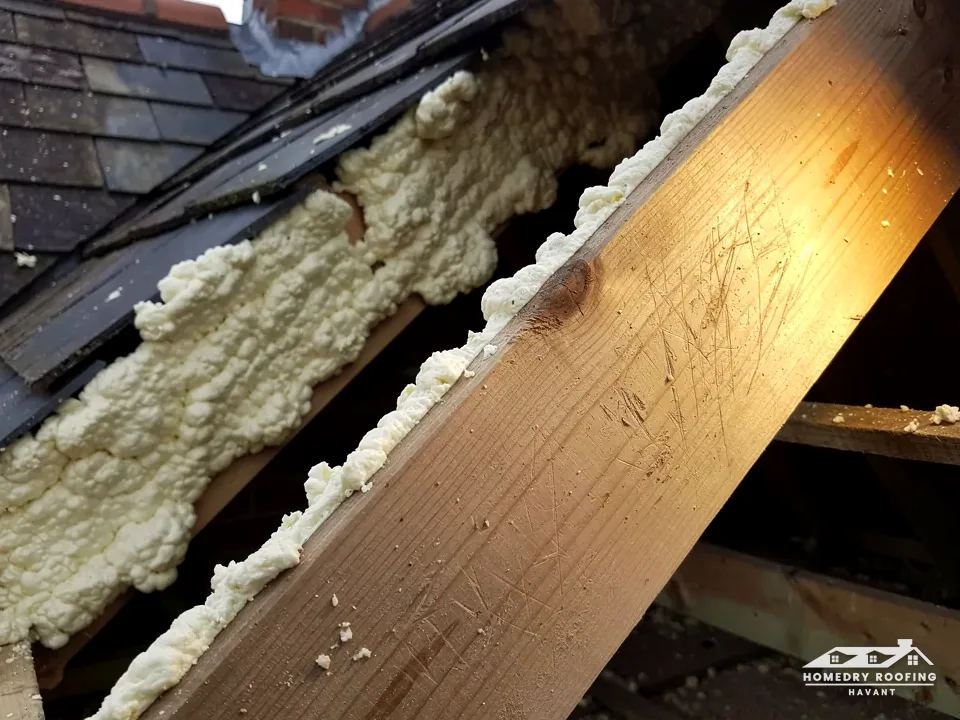
Foam is bulky, so a roof that has been lined with it produces a lot of waste for its size. The foam itself is the main part, and it is not the only part. Once it is out, other materials may follow it.
- The foam, cut away in pieces and bagged as it comes off the timber.
- Old felt or underlay that the foam has bonded to and torn.
- Battens that cannot be reused after the foam has been taken from them.
- Tiles that break while they are lifted for access.
- Dust and offcuts from the loft floor and the landing.
How much of each there is turns on the surface under the foam, which the survey establishes. A roof where the foam sits on clean timber produces little beyond the foam, while one where it has locked onto felt and battens produces more. The written quote allows for the waste the survey expects, and you should hear promptly if the work turns out to be larger. Ask to be told before extra waste is created, not afterwards, since it changes the cost of the job.
What to ask before you agree
Waste is a cost in the job and a point where quotes can differ, so it is fair to ask about it directly. A clear answer to each of these questions tells you what the quote covers, and what it leaves for you to arrange.
- Is taking the waste away included in the written total?
- Will a skip stand on site, and where, and for how long?
- Who carries the waste, and does it leave the property each day?
- What happens to old tiles that are still sound?
- Is the loft and the rest of the house cleaned at the end?
If a skip is wanted on the road, ask whether it needs any permission, and who arranges it. Skips and scaffolding on the highway are separate matters, and any scaffold licence is something we arrange with our scaffolder.
A quote should say in plain words what it covers, with VAT and scaffold stated, so that it can be put beside another on the same basis. Vague wording about waste is a reason to ask again.
Keeping the house clean while it happens
Foam removal is dusty, and the waste has to travel through the house or down from the roof. Good preparation limits the mess, and it begins before anyone arrives.
Move stored boxes and anything fragile out of the loft, and clear the landing and the stairs. The hatch and the route down are covered, and boards are laid across the joists so that nobody puts a foot through the ceiling. Foam is bagged at the point where it is cut, instead of being dropped to the floor, which keeps the loose pieces under control.
Tell the survey about any breathing problems or allergies in the household, since dust is the main concern and the plan can change to suit. Pets and children should keep clear of the hatch while work is going on, and it helps to agree a spot in the house where nobody needs to walk through dust.
When the work finishes, the loft and the route through the house are cleared, and the site is left clean. A walk-round with you before the crew leaves is a fair thing to expect, and you can point out anything you want looked at again, whether it is a mark on the landing or a bag left by the side gate.
When something unexpected turns up
Occasionally the removal exposes something nobody planned for. HSE's advice is to assume there is asbestos in a building that was built or refurbished before 2000, so boards, sheets or old insulation found behind the foam in such a house are not handled on a guess. Work on them stops until the material has been identified, and any asbestos that is confirmed becomes a separate matter with its own rules and its own price.
HSE also says to use a lockable skip for asbestos, never an open one, and GOV.UK guidance leaves asbestos waste out of the household consignment-note exemption. Those are the reasons we pause and ask, instead of carrying on and hoping. It will not arise on every house, and it is mentioned here so that, if it does, you know why the work stopped and what happens next.
For ordinary foam waste, the points above are all you need to settle in the quote. The spray foam insulation removal page covers the whole job, and our guide to the cost of spray foam removal explains what moves the price. Our answer on how long spray foam removal takes sets out the order of work.