
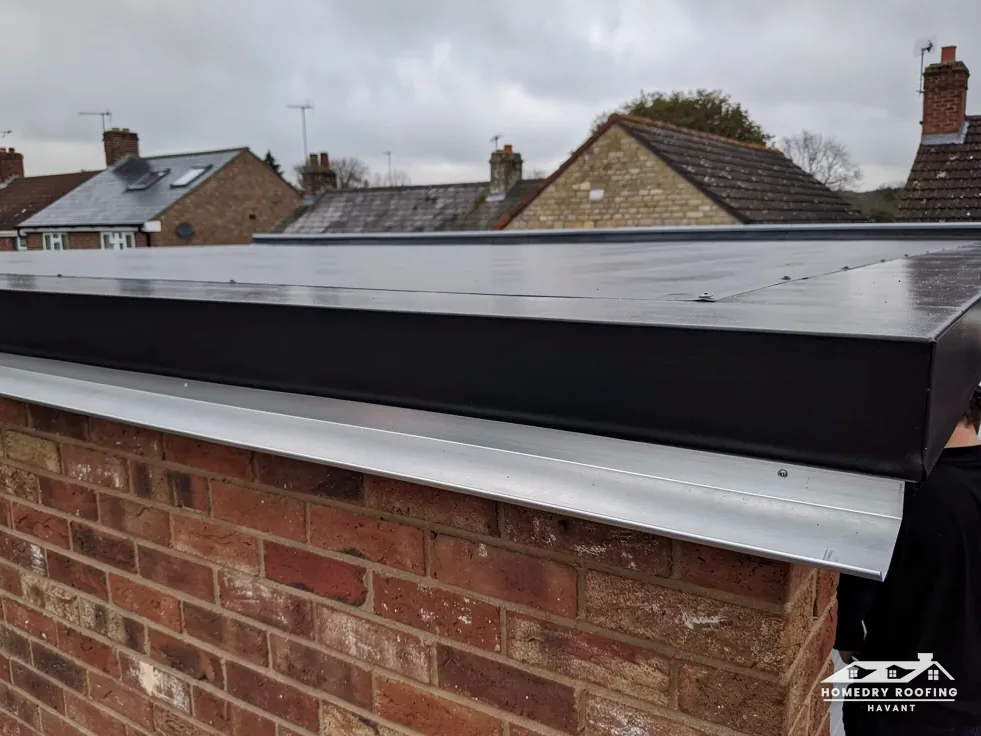
Why a roof has no fixed uplift
A percentage uplift would be a guess dressed up as a fact. A house is valued as a whole, and a roof sits next to the location, the size, the condition of everything else and the market on the day. Any neat number for what a new roof adds should be met with the question of where it comes from.
A local estate agent or a valuer can tell you what buyers in your road are paying for, and they are the right people to ask about your own house.
What a roof can do is remove a worry. A covering that is sound, with the work recorded on paper, leaves less for a buyer's surveyor to question. That is a judgement and not a measured gain, so no sum is attached to it. A roof that has been repaired well and is still sound may not need replacing before a sale, and the survey is where that gets decided. If you are weighing a repair against a replacement, the same survey sets the work and the price, in one written total.
What a new roof costs, from published guides
Three published guides give different answers, and the table keeps the basis each one states.
| Guide | Figure | House or basis |
|---|---|---|
| Which? Trusted Traders | £7,000 to £21,000, excluding VAT | An average three-bedroom house, November 2025 |
| HomeBuilding | £10,000 to £15,000 | Standard three-bedroom semi, 65m2 roof, plain concrete tiles; covers labour, scaffolding and insulation |
| MyJobQuote | Around £5,250 | UK average for a new roof |
Which? adds that the upper end of its range is likely in the South East, where HomeBuilding says labour rates are higher too. The Which? prices come from a survey of 11 traders, gathered in November 2025. HomeBuilding's guide was last updated on 30 September 2025, and the MyJobQuote page was updated on 3 November 2026, so the three do not come from the same month. HomeBuilding adds that a Welsh slate roof for the same semi might reach £18,000. MyJobQuote gives no VAT basis for its figure.
The gaps come from house size, the covering and what each guide counts in the price. Those are other parties' numbers. Your own total is written down once a surveyor has seen the roof, and the quote should state whether VAT and scaffolding are inside it.
How long a covering is expected to last
Lifespans are typical ranges from each source, never a promise, and the sources state them differently. HomeBuilding gives approximate lifespans of 100+ years for Welsh slate, 60 to 80 years for clay tiles, 40 to 50 years for plain concrete tiles and 30 to 40 years for fibre cement tiles. Marley says the BRE determined a minimum life expectancy of 60 years for clay roof tiles.
For concrete the sources differ. Marley puts the expectation for roof tiles at around 60 years and describes that as a typical figure, not a statement of how long yours will last, while HomeBuilding's figure for plain concrete is 40 to 50 years. Both are named here because neither is a promise.
Read those as how long a good covering may be expected to serve, set against what was spent. A covering expected to go on for decades spreads its cost over a long time, whatever the roof adds to a sale. Our guide to when a roof needs replacing explains how the survey tells age from condition.
What to keep, and what can matter at a sale
When a roof is replaced, keep the paperwork together in one place:
- The written quote, showing the covering and the total price.
- Photographs taken before, during and after the strip.
- The name of the covering and the maker's data sheet for it.
- Anything that building control or a registered building control approver sends about the work.
What lies under the covering can matter at a sale too. RICS's consumer guide warns that spray foam over the roof timbers hides them from inspection. It adds that you should ask your mortgage provider whether the installation fits their policy. In March 2023 RICS reported concern within specific sectors of the lending market, such as equity release mortgages. If your roof carries spray foam, our answer on spray foam and mortgages covers it.
Hand the folder to your solicitor or agent when you sell, so a buyer's questions about the roof can be answered from papers and not from memory.
For the job itself, see new roofs. The post on what drives the cost of a new roof covers what moves a price.