
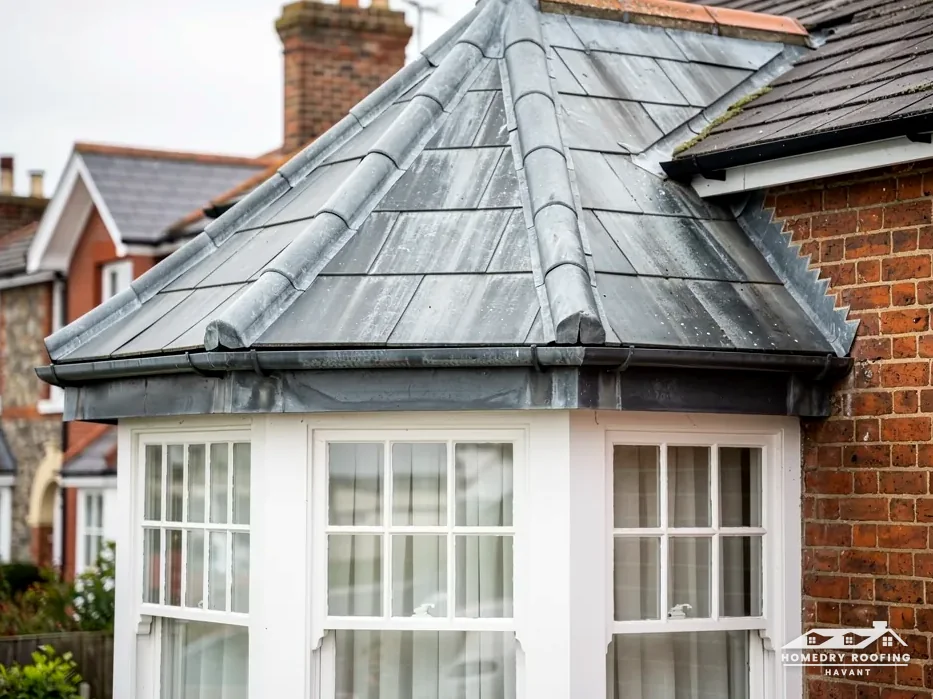
First steps, from the ground
Do not go up to look. A roof that has just been worked over by thieves may have been stepped on, cut or left unsafe, and HSE's advice is that nobody should take it for granted that a roof will bear weight. Everything useful can be done from the garden and from indoors:
- Photograph the roof from several angles with the zoom on a phone, covering the bare joint, any cut ends of lead and marks on the wall.
- Photograph the ceilings and walls below, and any wet insulation you can reach from the loft hatch without stepping on the boards.
- Write down when you noticed it, and when you last saw the lead in place.
- Put out bowls for drips and move belongings from under the damaged part.
- Ring a roofer to arrange a temporary cover, and ring the police and your insurer.
Leave any lead that remains where it is, and let the neighbours know, since a terrace or a run of garages may all have been targeted on the same night. A neighbour may also have seen or filmed something useful.
Reporting it and telling your insurer
Report the theft to the police, and ask for a crime reference, which your insurer is likely to want. Then contact your insurer before any permanent repair is booked, so that nothing is done that could weaken the claim. Read your policy for the details of what is covered, the excess and what it says about temporary repairs.
The Financial Ombudsman Service, which handles complaints about insurers, says that in a storm complaint it will usually look at expert reports and photos. A theft is not a storm, so that wording does not describe your claim, but the same sort of evidence helps whatever the cause: pictures taken before anything was moved, and a roofer's account, in writing, of what has gone.
If an insurer's answer seems wrong to you, complain to the firm first. The Ombudsman's helpline is 0800 023 4567, and its own guidance sets out the time limits. Whether a claim is paid is between you and the insurer, and we do not take part in it. Our role is to describe the roof and close the opening.
Temporary cover and the permanent repair
A temporary cover is a stopgap. A roofer fixes a sheet or board over the open joint, working from safe access, to keep rain out while the loss is recorded and the repair is planned. It is not the repair, and it should be described in writing: what was fitted, where and when, with a receipt. If the opening is above a bedroom or a loft with stored belongings, say so when you book, because that is where a leak does most harm and the cover should go on first.
The permanent work starts with a close look at what is left behind. Lead that has been ripped away can leave bent edges, loosened wedges and damaged pointing, and those are put right along with the new sheet. The new lead is cut from a code chosen for each detail, and our answer on which lead code suits a flashing lists them.
Whether to fit lead again is a fair question. That is a fair question, and our post on lead theft and the alternatives goes through the options, including lead on an older building where lead is the likely fit. The lead roofing page shows the other details we work on.
Evidence worth keeping
Gather these together while the details are fresh, in a folder on paper or on your phone. Together they give an insurer a clear account of what happened, what it did to the house and what has been done since. None of them needs a roof visit by you, and each takes a few minutes to collect.
| Item | What it shows |
|---|---|
| Photographs of the roof, from the ground | The state of the roof before any cover went on |
| Photographs indoors | Where water has reached ceilings, walls or insulation |
| Police crime reference | That the theft was reported, and when |
| Roofer's written note | What lead is missing, and what the temporary cover is |
| Receipts | What was spent on temporary work, and on what date |
| Notes on timing | When the lead was last seen in place, and when the loss was noticed |
Keep the originals of everything, and send copies. If your policy asks for the insurer to approve temporary work or a repairer, ask what it needs from you before the permanent job is booked, and tell the roofer the answer, since it can change the order in which things happen.
The Ombudsman's guidance on storm damage is at financial-ombudsman.org.uk.