
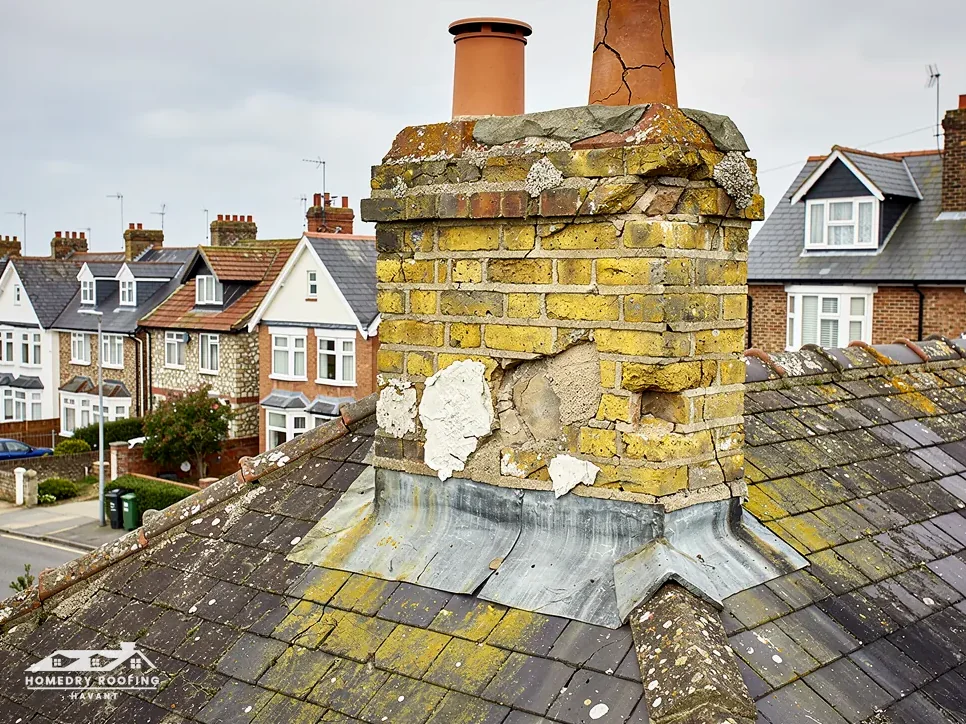
Why a pot cracks
A chimney pot is the topmost part of the stack, with nothing above it and nothing to shelter it. It takes every shower, every gust and every change of temperature the weather brings. Over the years, that exposure can wear a pot down, and a crack can be the result, the more so on a pot that has never been looked at.
The pot also depends on what it sits in. It is bedded in a mortar slope called the flaunching. If the mortar weathers, splits or shifts, the pot can move with it, and a pot that moves can crack or work loose. A crack may be the first sign of trouble in the mortar beneath, and not a fault in the pot at all.
Other causes include a knock from something falling on the stack and plants rooting into the top. A survey works out which applies, because the repair has to fit the cause.
Nobody can tell the cause of a crack from the ground. A pot that looks sound from the garden can be split on the side facing away from you, so the pot is checked close up, on the roof, with a hand on it.
Repair, refix or replace
Which of these the pot gets turns on what the survey finds:
- A pot that is sound but loose can be refixed in new flaunching.
- A pot with a crack that has not gone right through may be repairable, depending on where the crack runs and how the pot sits in its bed.
- A pot that is cracked right through, or in pieces, is replaced.
- A pot whose mortar bed has failed gets new flaunching whether or not the pot itself is changed.
The mortar is worth as much attention as the pot. New flaunching under an old, cracked pot only moves the fault, and a new pot on failed mortar will not stay put. A crack is also the cue to look at the joints below the pot and at the flashing round the foot of the stack. Our answer on chimney cowl or cap explains the cover that can go on the new pot.
All of this is work at height. Scaffold or other access is part of the written price, and a ladder against the stack is no substitute for it. A pot that has fallen, or one that rocks when touched, is a reason to keep people away from the ground below it until the stack has been made safe.
Checks before a pot comes off
Taking a pot off a stack is not a job to start without looking first. We check three things:
- Whether anything is living in the pot. Wild birds' nests are protected while they are in use or being built, and a bat roost is covered by a stricter rule that needs no intent to be proved, so the pot stays put until we know what is in it. Our answer on birds nesting in a chimney sets out the law.
- Whether the flue is in use. A fire or appliance below means the new pot, or its cover, must leave the flue open.
- Whether the home is a listed building or in a conservation area.
A pot is part of how a stack looks, and replacing one counts as altering a chimney. Listed buildings are covered by listed building consent, which reaches any work touching their character, and a conservation area may be subject to an Article 4 direction that withdraws rights. We check with the council first.
We also record the style of the pot at the survey, so that a match can be looked for.
What replacement involves and how it is priced
Replacing a pot is a short job once access is in place. The old pot comes off, the old flaunching is cleared, a new pot is set on a fresh bed of mortar and the slope is formed to shed rain away from the flue. If a cover is wanted, it goes on once the new pot has set.
If other defects show up while we are up there, we tell you before anything else is touched, and nothing is added without your say. A cracked pot often comes with its mortar bed failing, and the joints below can need attention too. Our guide to chimney repointing and flaunching follows that work.
Pots come in different styles and sizes, and the access, the height and the state of the mortar all affect the work, so the price follows the survey. Once we have been up, you get one total in writing, listing the work that it includes, with nothing held back.
If you want to look at the wider picture, the chimney repairs page gathers our chimney answers.