
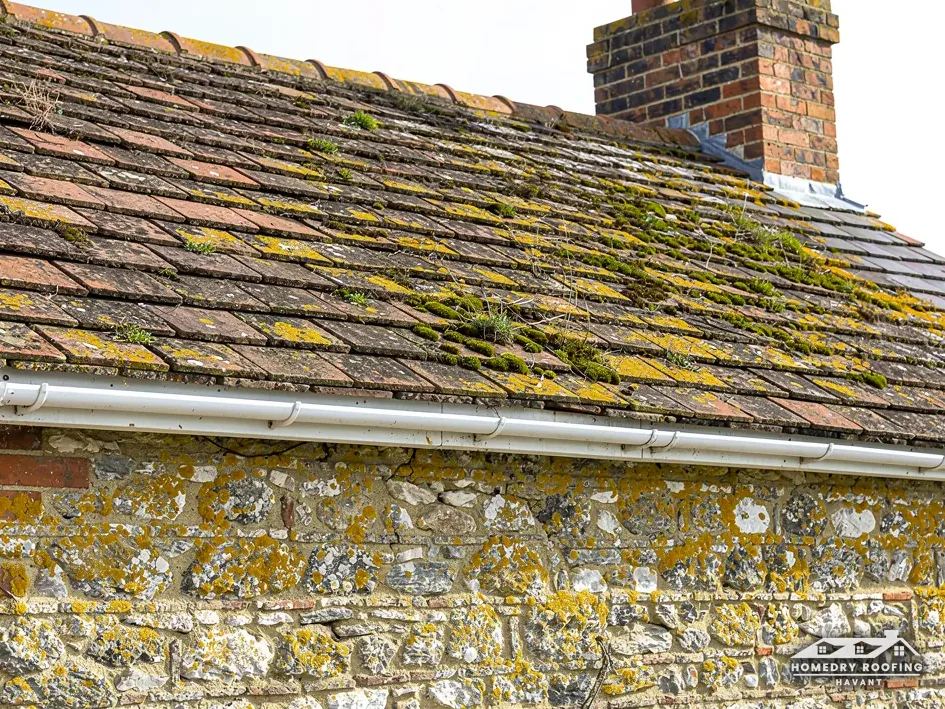
Clips
The small metal pieces that hold a tile or slate to the batten beneath it.
A clip gone slack lets its tile lift in a gust and drop back out of line.
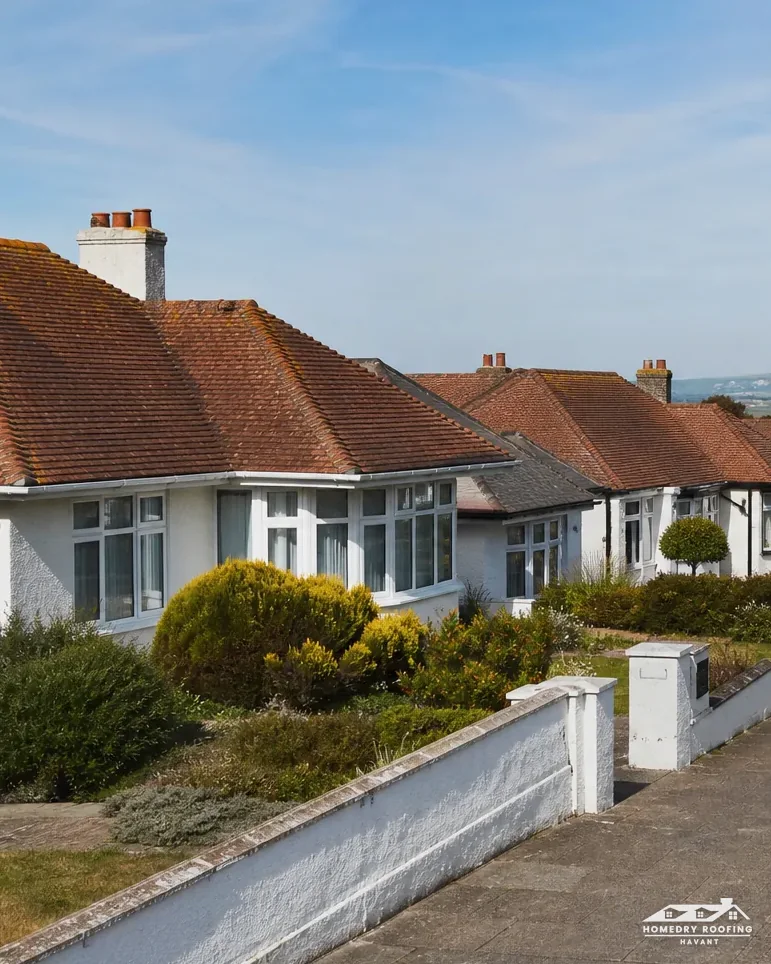
Bracklesham lies 16.2 road miles south-east of Havant, and its fixings, battens and drainage are each read for the route of the rain before one written total price is given.
10-year workmanship guarantee, in writing
The small metal pieces that hold a tile or slate to the batten beneath it.
A clip gone slack lets its tile lift in a gust and drop back out of line.
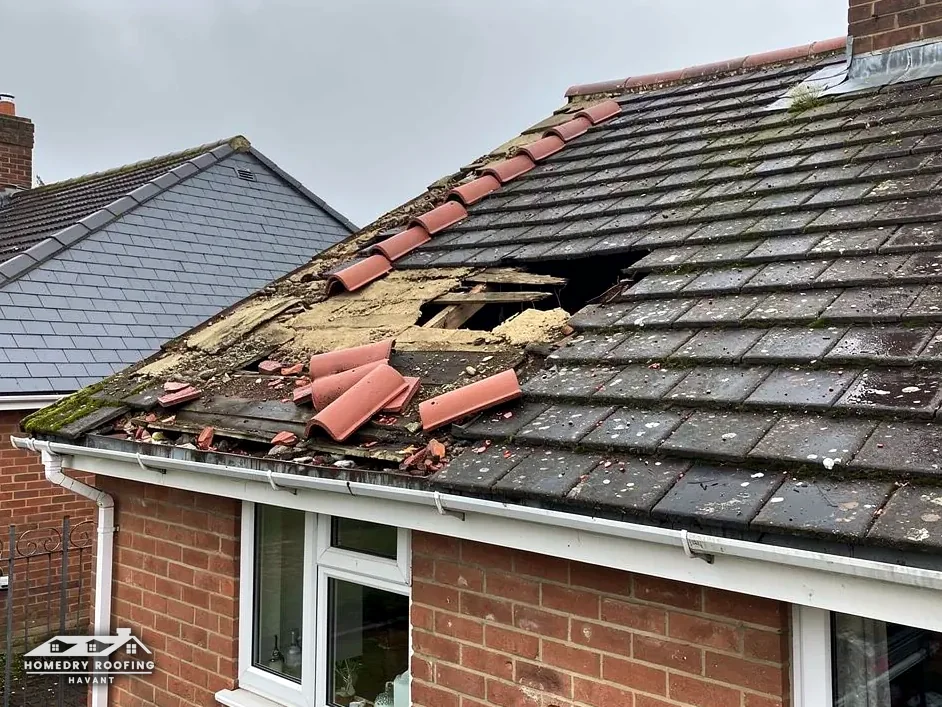
The timber laths nailed across the rafters, from which every tile hangs.
Where one has split or rotted, the tiles it carried sit loose and uneven.
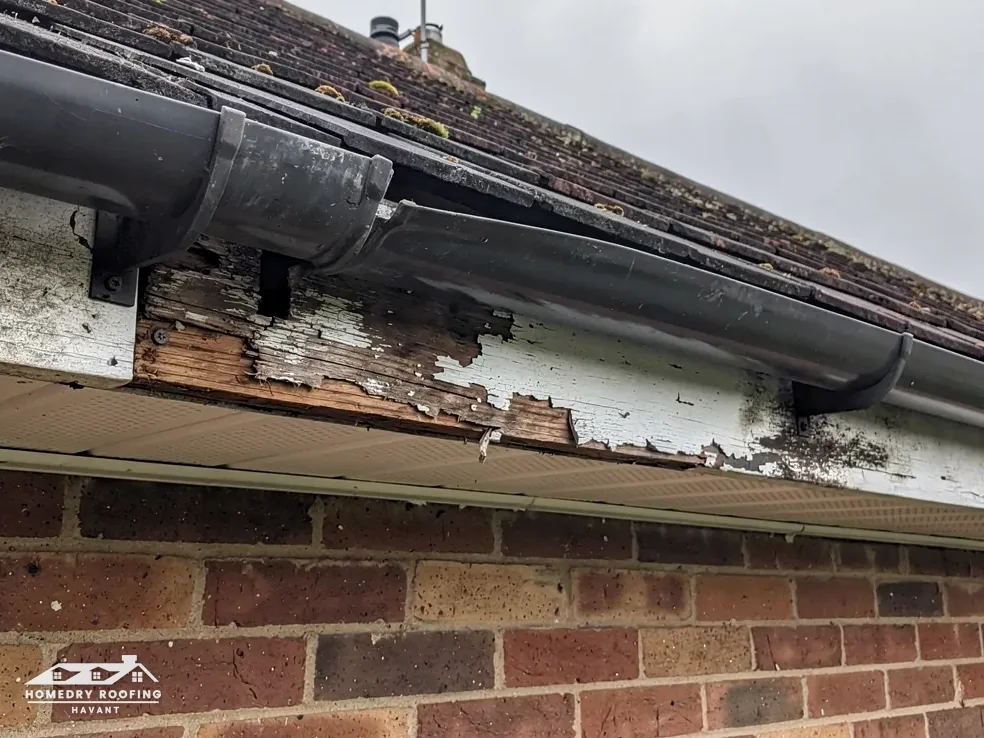
The drain at ground level where a downpipe empties its load.
One that backs up sends the water over the pipe's foot and against the wall.
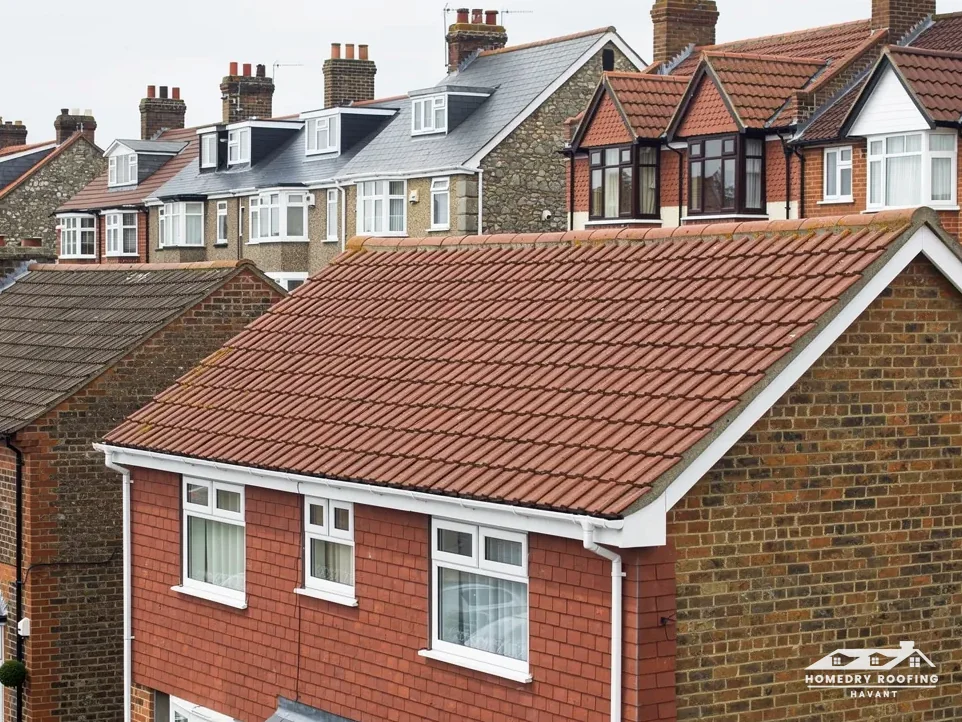
A tile stays put because of what holds it, not because of its weight.
Tiles and slates hang from timber battens, and each is held by a nail, a clip or both. At Bracklesham that fixing detail is what the survey leans on. We lift a tile here and there along the eaves, the ridge and the verge to see the nail and the batten beneath, check that the batten itself is sound and well spaced, test neighbouring tiles by hand for movement, and look for nail heads that have worked up or clips that have gone slack. Cupa, the slate maker, writes that coastal areas "will be graded with higher exposure", which is why the fixing specification for a re-covered roof is calculated for the site under BS 5534.
Marley notes that BS 5534 "isn't required by law", though it also says mortar alone "could no longer be relied upon". Ridge and hip tiles here are therefore fixed mechanically, and our dry ridge and verge page describes the systems that do it. Our pitched roofing page covers the slopes themselves. The fixings we find are written up with photographs, so you can see the nail or clip that has failed and judge for yourself whether a repair is enough. Where only the odd tile has eased, those tiles are refixed and the rest are left as they lie, with no stripping of a sound slope.
The National Heritage List has a Grade II entry for Clifford Cottage Restaurant in Bracklesham. A listed building of any use, a restaurant included, needs listed building consent for work that affects its character, and that applies to whoever owns or runs it. A neighbour's listing places no condition on the house next door, so the question is always about the address in front of you, and the entry itself states what is protected. Bring it to the survey if you hold one.
Nail heads and clips are small, yet they are what keeps a covering on the roof. We photograph a sample from each slope, so the findings show what holds the tiles and where the fixings have eased. If the fault is a few clips, the repair is a few clips. If a whole slope was fixed in a way that no longer suits the site, you are told so, with the photographs beside the explanation.
A tile that has slid out of line on a slope, or a rattle in the loft when a gust crosses the roof.
A clip that has gone slack or a nail head that has lifted, leaving the tile free to move.

No. A flood zone is about water lying on the ground; it puts no condition on roof coverings or fixings. What it does is make us look harder at where each pipe empties, so the roof does not add to a wet patch below.
Every roof's rain has to end up somewhere, and in Bracklesham the survey follows it to the ground. Gutters are checked for joints that drip, brackets that have let a run sag and a fall that carries water to the outlet. Downpipes are checked at the top, at each bracket and at the shoe, and the gully below is watched to see whether it takes the flow or backs up. Flat roofs on extensions get the same route read in reverse: upstand, surface and outlet in that order, with any pool on the surface noted and its cause worked out before a repair is suggested. Our gutters, soffits and fascias page shows the options when a run has to be replaced.
Flood Zone 3 land lies near the centre of Bracklesham, according to the Environment Agency. The designation is about water on the ground. It is not a roofing rule, and nothing in the specification changes because of it. We use it in one way only, as a prompt to see where a pipe discharges and whether the ground there can take the flow, and if a pipe empties against a wall we flag it and suggest a short run to somewhere better.
Conservation areas around Bracklesham include Earnley, Somerley and West Wittering, and Chichester District Council holds the boundaries that show whether your address falls under any of them. Check with Chichester District Council about Article 4 directions as well, since a direction can take further rights away. Our planning guide for roof work sets out the roof rules, and scaffold that stands on the highway is licensed by West Sussex County Council, a licence we arrange with our scaffolder. Your written quote states whether the scaffold is in the total.
The survey does not stop at the gutter; it follows the water to the ground.
The roof's route ends at the foot of the pipe, so the survey ends there too. We look at the shoe, the gully and the ground round them, and at any place where water is dropped onto a path or against brickwork. A pipe that discharges badly is photographed, and the fix can be a short extension or a different outlet, which goes into the same written total as everything else.
Map of Bracklesham and the places around it, with the dashed line of our 30-mile service area from Havant. The same places are listed below the map.
Samples are taken from each slope. We lift a tile at the eaves, the ridge and the verge to see the nail and batten beneath, test neighbouring tiles by hand, and look for nail heads that have lifted or clips that have gone slack. Along the ridge and hips every tile is tested in turn. The findings come with photographs, so you can see the fixing that failed, and with a view on whether a few clips will do or a slope needs re-fixing, and why. A loose tile near the eaves tells us little alone, so the tiles around it are tested before we decide anything.
Coastal buildings, in the words of the slate maker Cupa, "will be graded with higher exposure", and Bracklesham is coastal. For a re-covered roof the fixing specification is therefore calculated for the site under BS 5534. Marley says installing to BS 5534 "isn't required by law", yet that mortar on its own "could no longer be relied upon", so ridge and hip fixings are described in the survey notes, and you can see for yourself what holds each part of the covering in place. If a slope was fixed to an older standard, we explain what would change and why, and the decision stays with you.
The Planning Portal sets two limits: building regulations approval is not normally needed for a re-roof touching less than 25 per cent of the building envelope and less than 50 per cent of the roof. When the weight of a new covering rises by 15 per cent or more, approval is needed whatever the area. For Bracklesham addresses we put the plan to Chichester District Council's building control team before work starts and relay its reply in everyday language, so the route is known before a single tile is lifted. Nothing about those tests depends on how close a house stands to the coast, so the answer is the same on every street.
Under section 169 of the Highways Act 1980, scaffolding on or over the highway needs a licence, and West Sussex County Council issues it, at £266 for one month with at least 10 working days' notice asked for. We arrange the licence with our scaffolder, so there is no form for you to complete. The written quote states whether scaffold is part of the total, which is worth asking of any other firm. We also check on the day where the poles would stand, since a scaffold that never reaches the road or pavement has no licence to apply for.
Not for the covering. The Environment Agency places Flood Zone 3 land near the centre of Bracklesham, but a flood zone describes water on the ground and gives no rule for what goes on a roof. Where the map matters is at the bottom of the downpipe: if it empties against a wall or into a gully that backs up, the damp stays near the house. We note every outlet at the survey and suggest a change where one discharges badly. The covering itself is chosen for the roof and its exposure, and the flood map plays no part in that choice.
Earnley, Somerley and West Wittering are the conservation areas around the village, and Chichester District Council keeps the answer to whether an address falls inside any of them. The planning guide for roof work shows what a designation changes for a house, and an Article 4 direction can take further rights away. Check with Chichester District Council about your own road, and tell us what you are told, so the plan is made on the council's answer. Keep its reply with the house papers, in case the question comes up again.
Clifford Cottage Restaurant is listed Grade II, and any work that would alter the special character of a listed building, whatever its use, needs listed building consent. Listed building consent is a step of its own, whatever else the planning rules allow. Another building's listing has no effect on your own roof. If your own address is on the list, bring the entry to the survey, and we will read it with you before anything is ordered. The entry names what is protected, and that decides which parts of a roof the consent touches.
One total in writing, sent after the survey, covering the work the roof needs and stating if VAT and scaffold are included. A repair that will hold comes ahead of replacement, and the price is good and fair. The site is swept of offcuts, packaging and spare tiles before we go. No roof can be priced from the road, so the figure waits for the visit. Ask other firms what they include, and the totals can be compared on equal terms. A lower figure may simply leave out the scaffold, and the written detail would show it.
You'll get one written total price.
Fill in what you like. It opens WhatsApp with your message ready to send.