
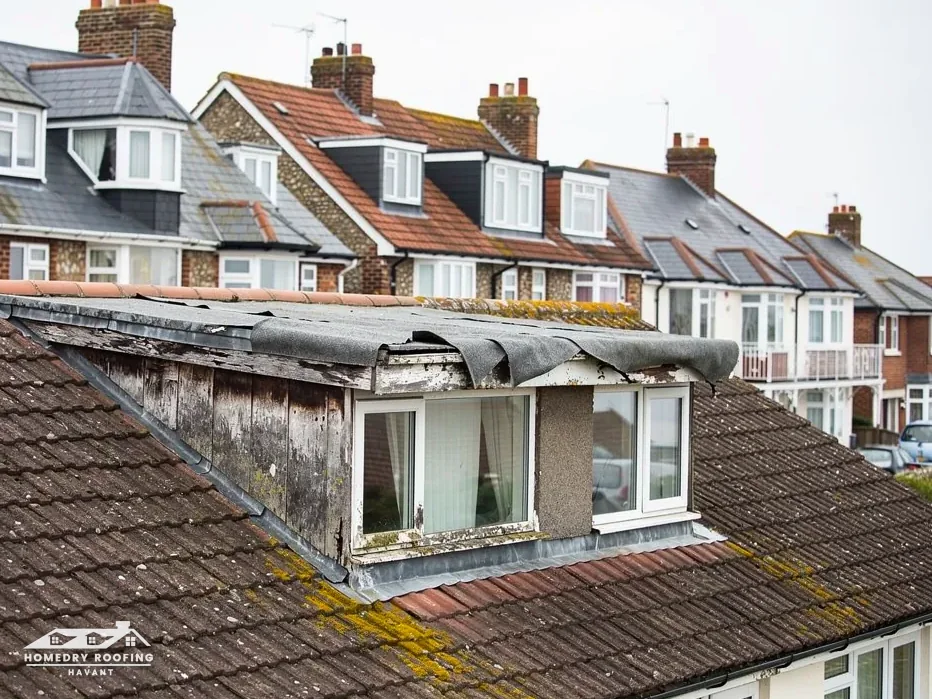
Lofts
The space under the slopes, where the timbers show what has come through.
Damp timber, daylight at a joint or a blocked vent each point back to a cause.

Sidlesham is 13.6 road miles south-east of Havant; valleys, wall joins, conservatory roofs and fascias there are surveyed in turn, and the findings come with one written total.
10-year workmanship guarantee, in writing
The space under the slopes, where the timbers show what has come through.
Damp timber, daylight at a joint or a blocked vent each point back to a cause.
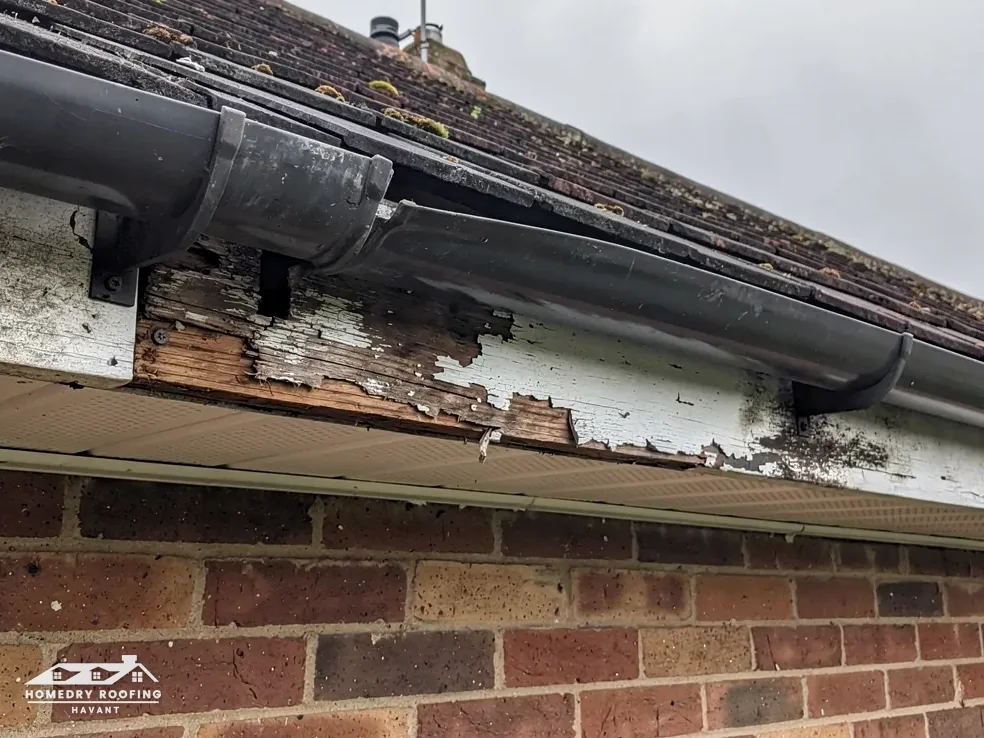
The boards running along the roof's lower edge, which carry the gutters.
Once a fascia softens, the gutter loses its hold and the eaves take the water.
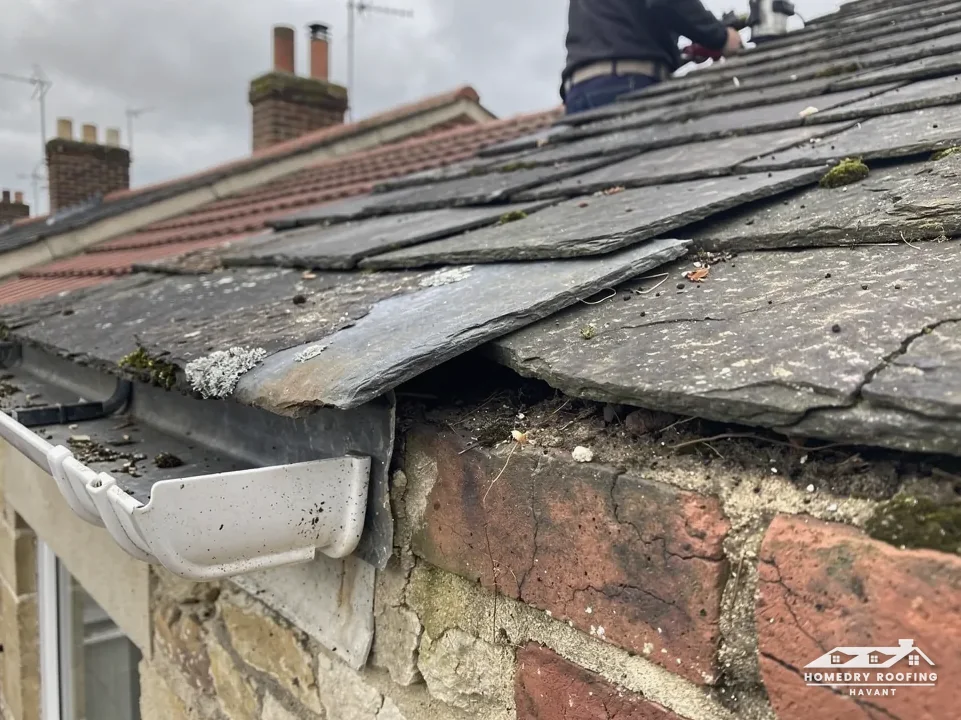
The small roof over a bay window, a short run of lead or membrane between two walls.
A lifted edge or a blocked outlet there leaves the window head wet inside.
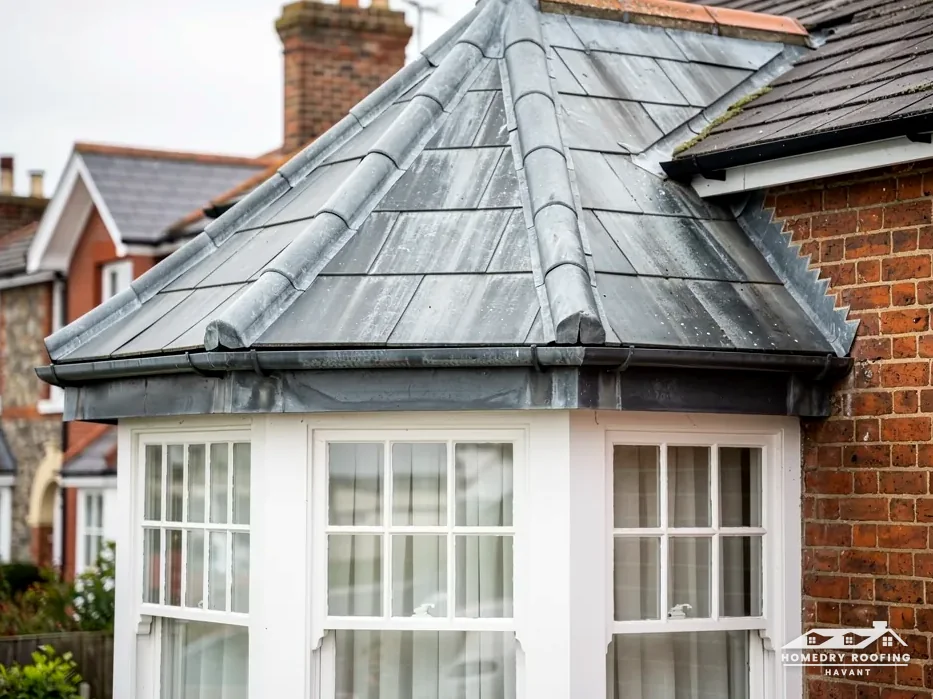
Sometimes. Where the lining is sound and only debris or a few edge pieces have failed, the valley is cleared and the edges refixed. A lining split along its length is renewed, which means lifting the covering on both sides, and the survey states which of the two you have.
Two slopes that tilt towards each other share a valley, and the lining under it carries the water from both. Walking the fold, we look for splits, for places where the metal has gone thin, and for leaf mould that has packed in. The edges on either side, where the covering is cut to the line, are read as well. A wall that climbs through the roof raises the same questions in another form: stepped lead along its side, an apron at its foot, and a top edge that should sit firm in the wall. The leadwork page describes these details, and roof repairs explains how a located fault is closed.
The national list carries a Grade I entry for Sidlesham's Parish Church of St Mary, which is still a Church of England church in use, and that denomination is exempt, so works to its roof run through the faculty system and the council's listed building consent is out of the picture. Swan Cottage has a Grade II entry. Where a house itself is on the list, the council route applies: consent is needed for works affecting its character as a building of special architectural or historic interest, and a roof change can fall within that.
Sidlesham Church and Sidlesham Quay are conservation areas around the village, and you can ask Chichester District Council if a given address lies within either. Directions under Article 4 can remove permitted rights from an area, and the same council answers for your own road, so put that question to it before a date is fixed. The planning guide for roof work holds the rules and where each comes from. Photographs of both joints go into the report, which keeps any later discussion with the council specific.
A mark in one room can begin at two different joins.
Two joins can feed one stain. A worn valley lining and a lifted strip of lead at a wall may each send water to the same corner of a bedroom. The survey follows the mark upward, looks hard at both joins, and photographs what it finds, so that the repair goes where the fault really is and the other join is cleared in the report, with a picture, as sound.
A damp corner of the bedroom ceiling that spreads and fades with the weather.
A valley lining worn thin along its fold, or a strip of lead at a wall that has lifted and let the rain behind it.
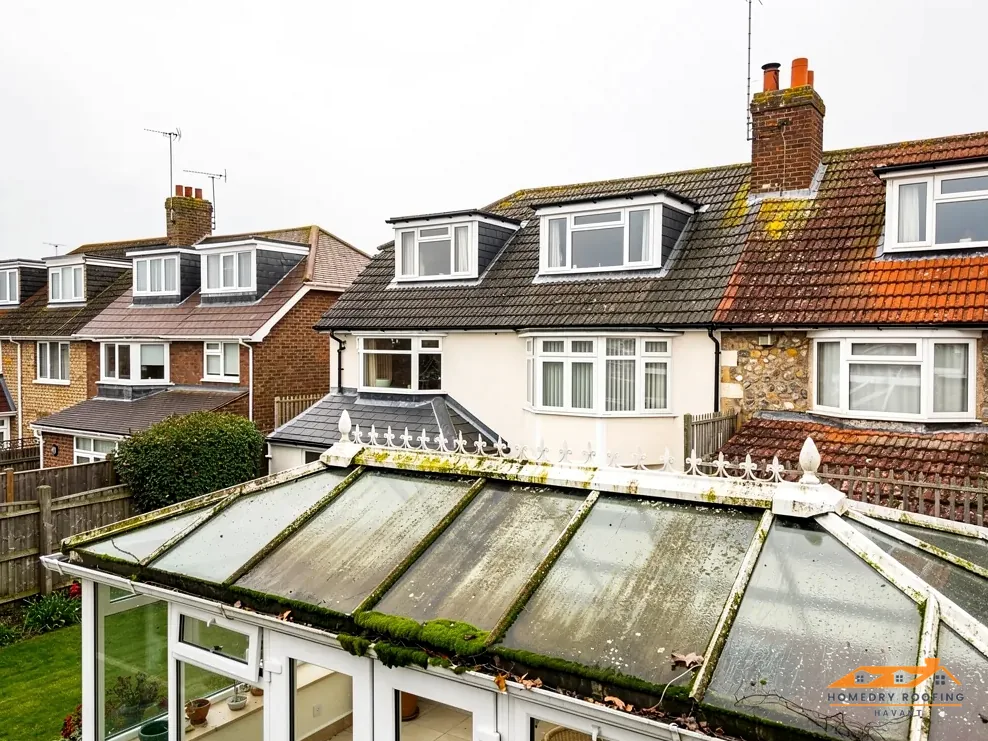
Yes, along the junction where the conservatory meets the house. A flashing that has lifted, or a seal that has shrunk, lets rain slide behind the covering and drip inside. We check the top edge of the flashing and the line of the seal before looking at the glazing itself.
A small roof fixed to a house has the joints of a large one packed into less space. A conservatory roof has glazing bars, seals between its panels, a ridge, a gutter and a junction with the house wall. Each seal is checked for gaps, each bar for a cap that has lifted, and the flashing along the wall for any stretch that has pulled away. Misting inside a sealed glazing unit points to a failed unit, not a leak, and the two are separated before a repair is suggested. Our conservatory roofs page describes repairs and the choices for a replacement covering.
A bay window can carry a short roof of its own, and a porch a lean-to. Both have an upstand where the covering rises to meet the wall, an outlet or gutter where it leaves, and a fascia at the front. Because each is small, a blocked outlet or a lifted edge has a large effect on the room beneath. We look at them from a ladder first and then from inside the room, reading the ceiling for faint rings that mark an old stain and for a fresh one that has joined it, and photographs of both go into the report.
When a conservatory is given a solid roof in place of its glazing, the new roof must comply with building regulations, so building control is asked before anything is ordered. The report that follows the survey gives its findings in plain terms, with a picture of each fault. A repair comes first where the frame and the timber are sound, and a replacement is argued for only when they are not. The drive is swept and the path cleared before we go, and any debris from the gutters leaves with us.
A small roof has less room to hide a fault.
A conservatory or bay roof is small, so a little water has few places to go and reaches the room quickly. That is why a bead of sealant that has shrunk or an outlet choked with leaves matters more here than on a large slope. We look from outside first, then from inside under the roof, and photograph both, so the weak point is on record before any repair is chosen.
Map of Sidlesham and the places around it, with the dashed line of our 30-mile service area from Havant. The same places are listed below the map.
Following the lining along the full length of the fold, we look for splits, thinned metal and packed leaf mould, then turn to the edges either side where the covering is cut to follow the line. A damp corner on a bedroom ceiling may trace back to the same valley, so the loft gets its turn too. The outcome is a plain statement: either the lining can be cleared and its edges refixed, or it must be renewed end to end, with photographs behind whichever it is. Nothing is lifted merely to look.
The Planning Portal sets two limits for building regulations: less than 25 per cent of the building envelope and less than 50 per cent of the roof. Inside both, an application is not normally required; the exception is a covering that raises the load on the roof by 15 per cent or more, which wants approval. Chichester District Council's building control team is asked which route applies before a start date is fixed. Planning rights follow the house and its surroundings, such as a listing or a conservation area, and our planning guide lays out how, source by source.
Nobody may occupy a public highway with scaffolding without a licence under section 169 of the Highways Act 1980. For Sidlesham, West Sussex County Council licenses scaffolding on the highway at £266 for one month and asks for at least 10 working days' notice. A tower needs room, so its position, and whether your own ground can take it instead, are settled at the survey, well before a booking, with the spot marked on a photograph of the frontage. Once the dates suit you, we arrange the licence with our scaffolder.
Not the council's listed building consent. Sidlesham's Parish Church of St Mary has been given a Grade I entry and, being a Church of England church in use, falls within the exemption, so the faculty system handles works to it. That route is reserved for a church in use. Swan Cottage is listed Grade II, and a house with an entry follows the council route instead. Search Historic England's list by your own address ahead of any roof job, because an entry changes how the roof must be recorded and who must be asked first, and the answer shapes the whole timetable.
Sidlesham Church and Sidlesham Quay are conservation areas close by, and Chichester District Council answers the question of whether an address sits inside either. Being inside changes the planning picture. Article 4 directions can withdraw further rights, so make the enquiry about your own road to Chichester District Council. Our planning guide gathers the rules for roof work and cites the source of each, so that the enquiry you make is an exact one, and the answer you receive can be set beside the rule it applies.
A ground-level conservatory of up to 30 m² with Part K glazing is exempt from the energy rules only while a wall, door or window still separates it from the house and, in the words of Approved Document L, the heating system of the dwelling is not extended into the conservatory. Swapping the glazed roof for a solid one is a separate question. The Planning Portal says a new roof must comply with building regulations, so we ask building control before anything is ordered, and the reply is put in writing for you to keep with the house papers.
MyJobQuote says correctly installed lead flashing can last for over 80 years, and the weight of that sentence rests on the words correctly installed. A flashing laid badly, or one whose top edge has come away from the wall, will not reach such a figure, so the survey looks at the fixing and the top edge as well as at age. A fold that has cracked is photographed, and the report says whether a patch is enough or the whole strip must be renewed. Lead is judged on how it was fixed and how it has been treated since, so a young flashing can fail where an old one carries on.
It should describe the job, name the covering, and state whether the scaffold and the VAT are included in the figure, resting on findings gathered on the roof itself. We give one written total after the survey, offering a sound repair ahead of any replacement. If you hold a second quotation, ask its author to put in writing what the total includes, since a lower number can simply leave out the scaffold or the VAT. Each fault in our report has a photograph beside it, so the figure can be read against the evidence.
You'll get one written total price.
Fill in what you like. It opens WhatsApp with your message ready to send.