

Slopes
Where tiles or slates lie in overlapping rows across the rafters.
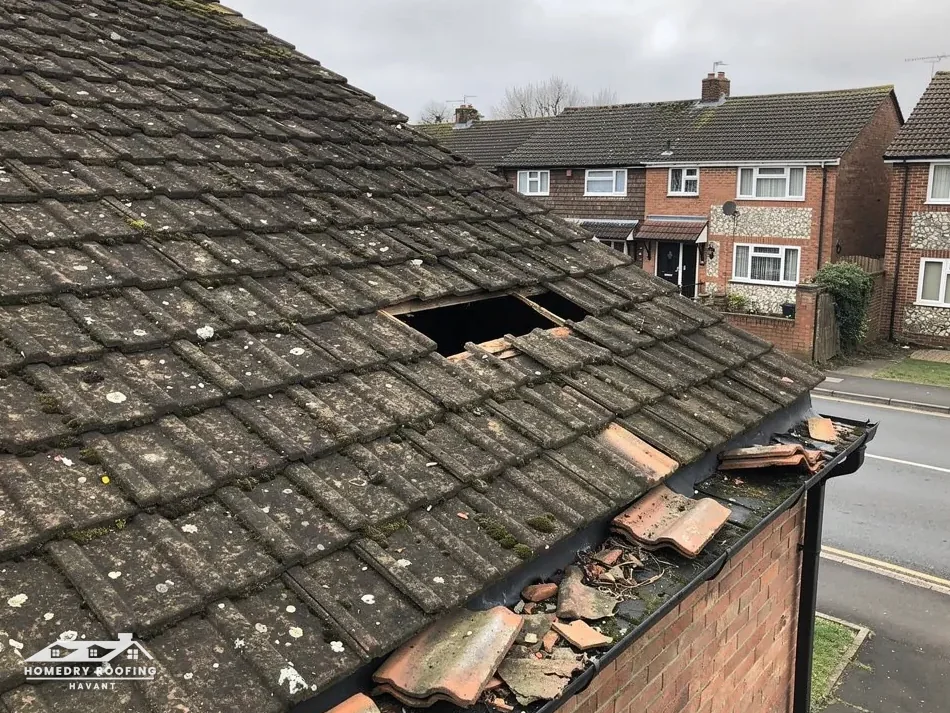
A slipped or cracked piece breaks the overlap and lets rain run under the row above.

Binsted is 27.4 road miles north of Havant and inside the South Downs National Park. Slopes and wall junctions there are surveyed first, and one written total price follows.
10-year workmanship guarantee, in writing
Where tiles or slates lie in overlapping rows across the rafters.
A slipped or cracked piece breaks the overlap and lets rain run under the row above.
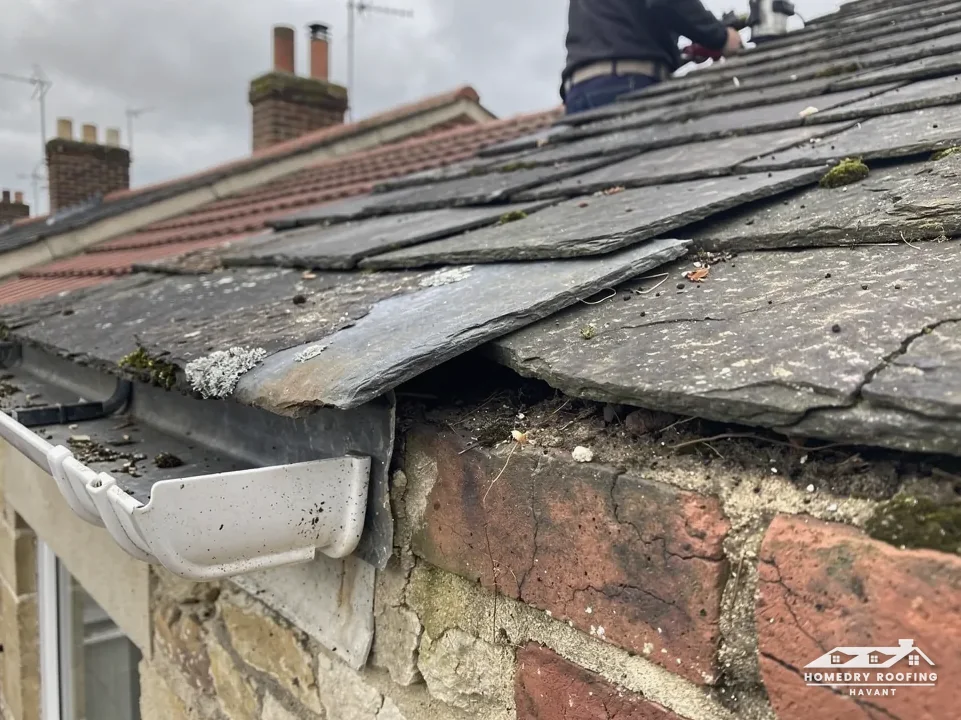
Where a roof slope ends against a taller wall, whether house, extension or outbuilding.
A stepped lead strip carries rain away from the join until an edge lifts.
Where an outbuilding with a listed entry has a roof of its own to keep dry.
Work that affects its character follows the council's consent route before a tile moves.
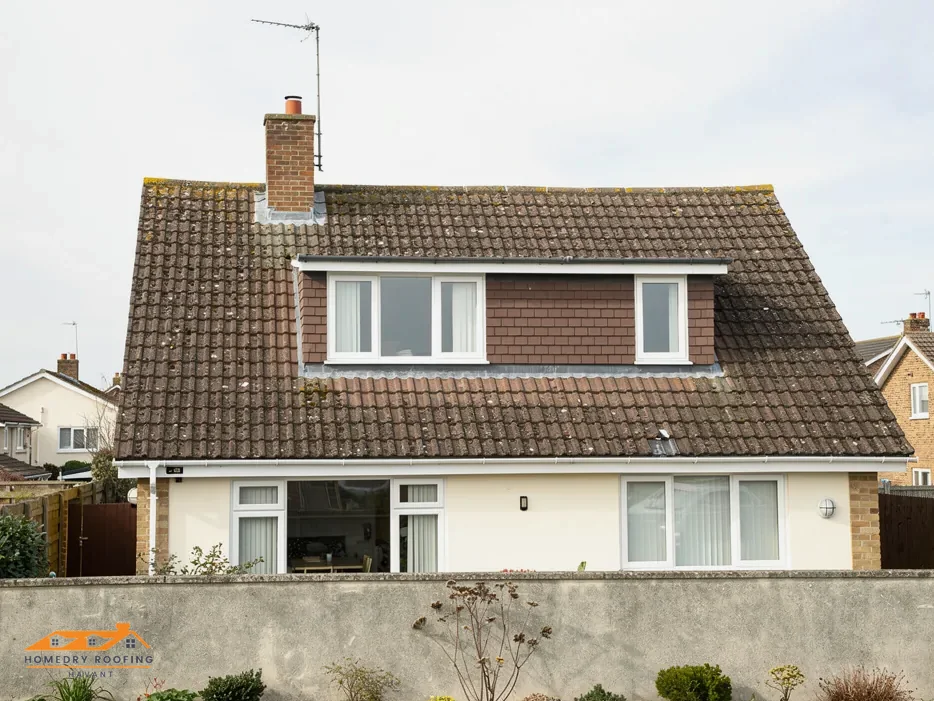
A slope is a surface of overlaps, and one broken overlap is enough.
A roof slope is read in two directions. Across it we look for slipped, cracked or missing pieces and for the gaps they leave in the overlap; from the loft, looking up, we check the underside for daylight, staining on the battens and wet insulation. The two views together show whether a few tiles need replacing or the whole covering has reached the end of its useful life. Where a covering can be mended, that comes first. Rain needs only a small opening: one tile lifted by a gust can let water reach the battens, which then carry it sideways well beyond the spot where it came in, so the stain indoors may appear far from the damaged piece. Our roof repairs page describes the smaller jobs, and the new roofs page explains what re-covering a slope involves.
Binsted lies inside the South Downs National Park, so the South Downs National Park Authority is the planning authority. East Hampshire District Council processes applications here on the Authority's behalf, unless one is called in. Building control stays with the district council, because the Authority does not provide it. Ordinary re-roofing stays under the normal rules, and our planning guide for roof work sets out what the Park changes for other work.
Binsted has a conservation area close to its centre, and East Hampshire District Council, handling planning here for the Authority, is the body to ask about it. Barn and Stables 40 Yards East of Kings Farmhouse and Barn 15 Metres South-East of Kings Farmhouse are both listed Grade II. A listed outbuilding follows the same rule as a listed house: work that affects its character needs listed building consent, and the entry defines what is protected. Read the entry before a roofer prices anything. We photograph the slope before and after any repair, so the work is shown to you and not just described.
Two bodies sit behind a Binsted roof question, and they answer different things. The Authority is the planning authority for the Park, with East Hampshire District Council handling applications for it, while building control is the district council's own service. We tell you at the start which question belongs to which body, so a call goes to the right desk the first time and the work is not held up by a wrong turn.
A damp stain that spreads across a bedroom ceiling after long rain, or insulation in the loft that feels wet.
A cracked or slipped tile in the slope above, where rain reaches the battens beneath and then travels along them.
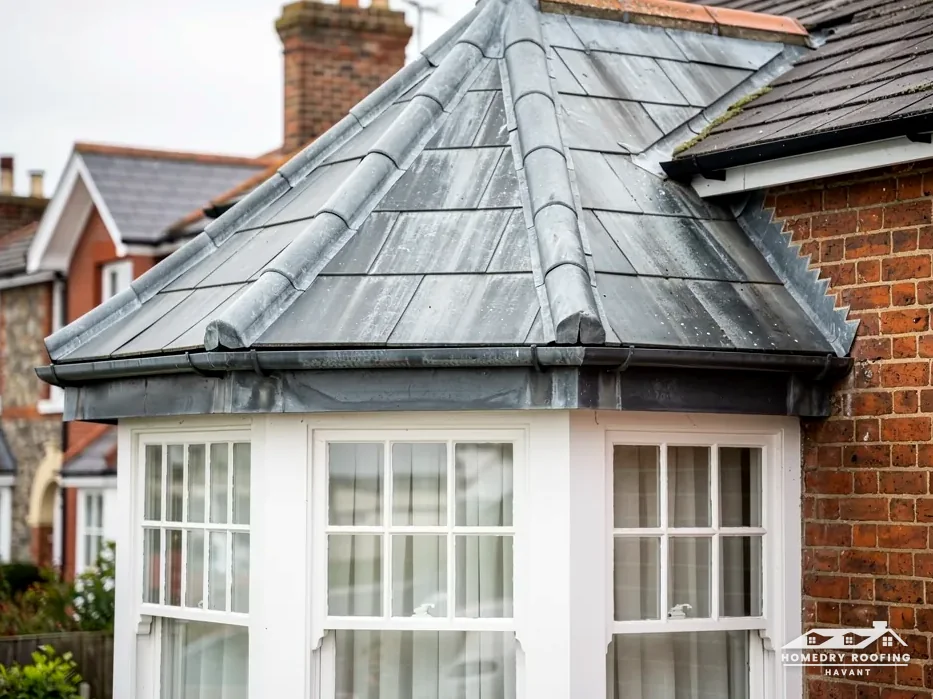
Rain that gets past a lifted flashing runs down inside the wall junction until it finds somewhere to show, which can be a metre from the entry point. The stain marks where the water ended, not where it began.
An abutment is any place where a roof slope finishes against a wall that rises above it: the side of an extension, a party wall, an outbuilding or a chimney. The join is covered with a flashing, a strip of lead stepped to follow the courses of the brickwork and tucked into a cut in the mortar. We check that its top edge is still locked into the joint, that the lead has not split where it was bent, and that the mortar around it is sound. A lifted edge is one point of entry, and it is easy to see once you are on the roof. Our leadwork page describes the metal and how it is dressed.
Lead moves as the weather warms and cools, so a long strip is laid in short lengths with room to slide. A single length run too far is the kind of thing a survey picks up, because the metal creeps and then splits at the weakest bend. Where a flashing has failed, the repair is a new length tucked into a fresh cut, and not a smear of sealant over the old line, which hides the fault for a season and then lets go.
Walls beside a roof take weather as well. Pointing that has crumbled above a flashing lets water reach the join from behind, so the survey reads the brickwork too. When we finish, you receive the findings with photographs of each junction, and a single written total covers the work that is needed. Nothing is added later, and the list of what was done is kept short and in plain words. Each junction is photographed before and after, so you can see the repair for yourself.
Where a roof meets a wall, the join decides how dry the room is.
A bead of sealant over a failed flashing looks like a cure on the day and may not be one a year later. Sealant sticks to a surface that is still moving, and lead moves. The repair that holds is a flashing dressed properly into a clean cut in the wall, and photographs before and after let you compare the two jobs for yourself. That is the kind of detail the survey settles.
A slope is repaired when its tiles are sound and the faults are few and local: some cracked or slipped pieces, a bedding failure, a damaged ridge. It is re-covered when the failure is spread across the surface, when battens beneath are soft from long wetting, or when the underside shows daylight in many places. We look from outside and from the loft, photograph what we find, and write down which case you have and why. A repair is offered first wherever a repair is sound, because replacing a roof that only needed a patch is the expensive way to be wrong, and the survey is how we avoid that mistake on your behalf.
Binsted is inside the South Downs National Park, so the South Downs National Park Authority is the local planning authority. For this part of the Park, East Hampshire District Council processes applications on the Authority's behalf, unless the Authority calls one in. Ordinary re-roofing stays under the normal rules, and our planning guide covers what the Park changes for other roof work. Because it is your address that matters, confirm the route with the council before a contractor orders anything, and keep the reply in writing. We ask for the postcode at the start and note which body replied, so the paperwork for the job is complete before the first day on site.
It can, and the test is in two parts. The Planning Portal's test is that re-roofing normally needs no building regulations application when it touches under 25 per cent of the building envelope and under 50 per cent of the roof; a covering 15 per cent or more heavier does need approval. The South Downs National Park Authority does not provide building control, so the contact is East Hampshire District Council's building control service on 01730 234207. We work out where your roof falls on the test, and the answer reaches you in writing, ahead of any start date.
No. A scaffold that obstructs the highway is licensed under section 169 of the Highways Act 1980 by the highway authority, which for Binsted is Hampshire County Council, not the Park. Hampshire County Council says: "Scaffolding companies must apply on behalf of their customers." Its charge is £211.90 on application for the first 2 weeks and £72 for each additional 2-week period, and it asks for ten clear working days before the start. We arrange it with our scaffolder, and the dates are fixed with you beforehand, so the booking and the licence line up and nobody waits on a start day.
Barn and Stables 40 Yards East of Kings Farmhouse and Barn 15 Metres South-East of Kings Farmhouse are listed Grade II, and listed building consent must be obtained before any work that would alter a listed building's character. A new covering or a change to the roof structure can do that. Consent is applied for through the council, and the list entry sets out what is protected. If the barn is part of your property, read its entry first, then ask before work is priced, because the answer shapes what can be offered and how long the preparation takes.
Binsted has a conservation area close to its centre, and though the South Downs National Park Authority is the local planning authority, in this part of the Park you ask East Hampshire District Council. Re-roofing a house is normally permitted development in a conservation area, as it is elsewhere. Whether a direction under Article 4 takes further rights away at your address is for the council to say, so check with East Hampshire District Council, and let us have the answer in writing so that the survey and the programme can be fitted around it.
MyJobQuote says correctly installed lead flashing can last for over 80 years. The wording matters: it is a figure for flashing that has been installed correctly, so the survey reads the dressing, the chase and the pointing and not only the metal itself. A strip that has split because it was laid in one long length will not reach that figure, and neither will one with its top edge loose in the mortar. We check both, and tell you what you have, with a photograph of each junction so the difference between a sound one and a failing one is plain to see.
After the survey we write one total price for the work that is actually needed, and the findings sit beside it. If the south slope has failed and the north slope is sound, the quote covers the south slope, with the reasons given. Say so if you would rather see both options, and each gets its own written total for you to weigh. We want the price to be good and fair, and whether VAT and scaffold are in the total is stated in the quote itself, so nothing is left to be found out after the work starts.
You'll get one written total price.
Fill in what you like. It opens WhatsApp with your message ready to send.