
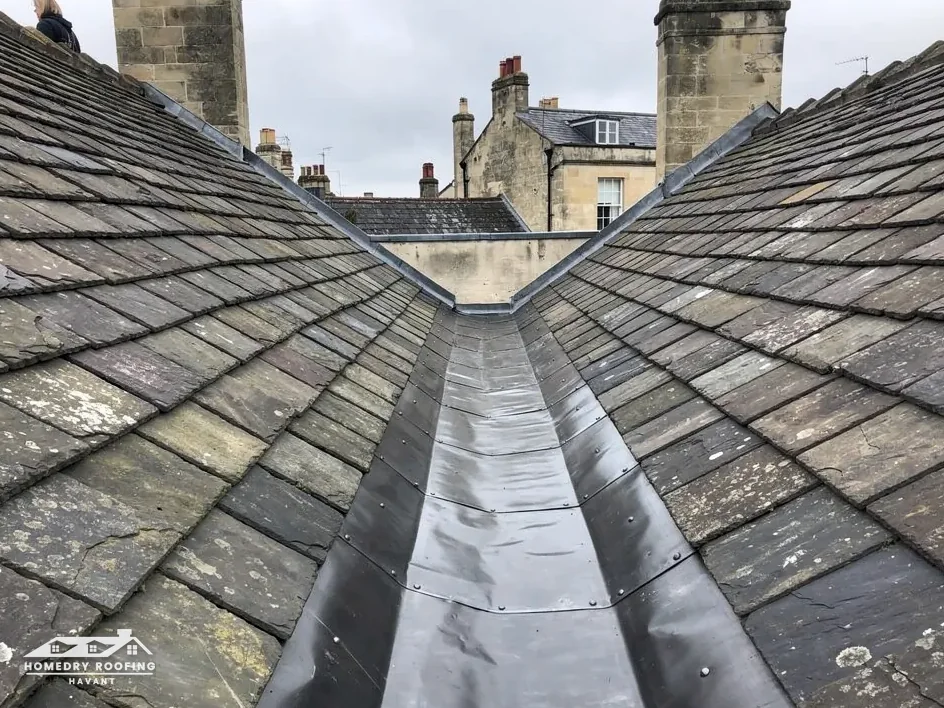
Valleys
Where two slopes run into each other and form an inward corner.
The lining along that corner carries both slopes' rain, so a thin patch soon tells.

Bentley is 29.5 road miles north of Havant. Valleys, listed roofs and the run of downpipes there are surveyed before anything is priced, and a single written total comes after that.
10-year workmanship guarantee, in writing
Where two slopes run into each other and form an inward corner.
The lining along that corner carries both slopes' rain, so a thin patch soon tells.
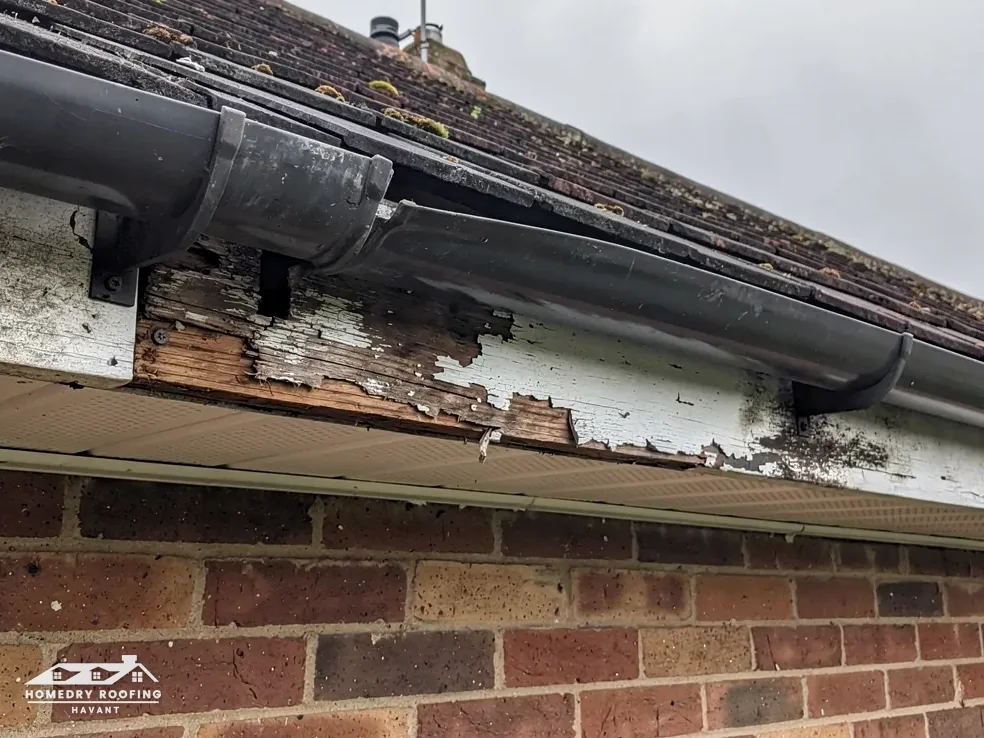
The box at the end of a gutter that feeds the top of a downpipe.
Leaves collect in the box, and an overflow runs down the wall below it.

Where a downpipe meets the ground and passes its water to the drain.
A blocked gully backs water up the pipe until a joint above it gives.
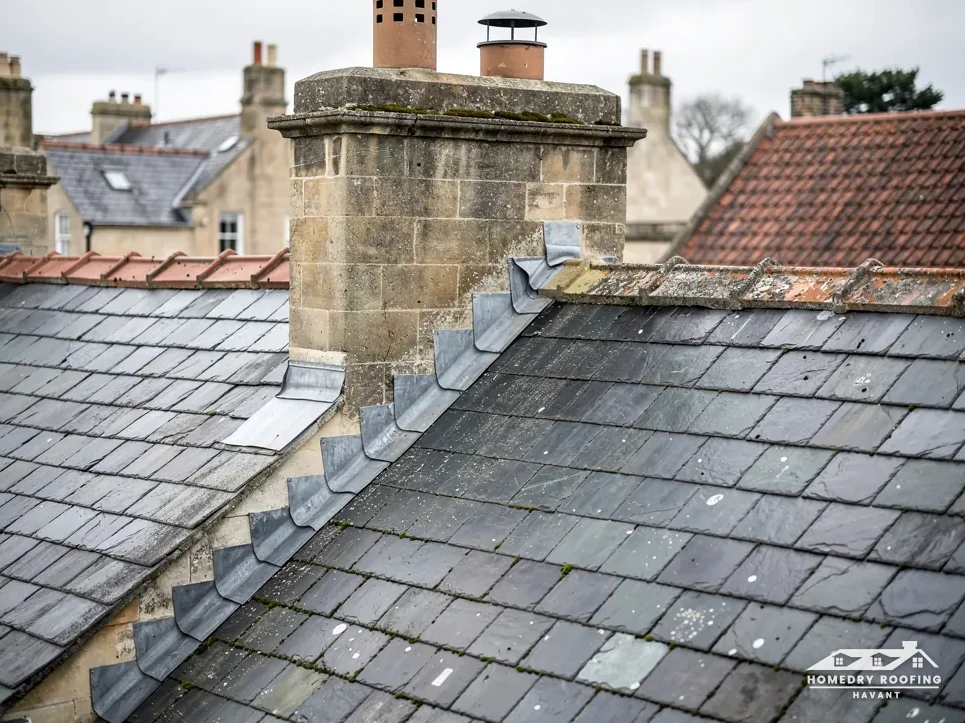
No. A lining with one local split can be repaired, and one that is merely choked with moss only needs clearing. A lining worn thin along its length is renewed along that length, because the thin spot you can see is not the only one to deal with.
Two slopes that run into each other make an inward corner, and the trough formed along that corner is the valley. It collects the rain of both slopes and passes it to the gutter, so it works harder than any other stretch of covering. The survey looks along the lining for splits and thin patches, at the tile edges on either side for cracks, and at the whole length for moss and leaf litter. Where the lining is lead, our leadwork page explains how it is laid, and the roof repairs page covers the smaller fixes. Some valleys are covered in tile, with no metal showing, and for those the check is the join of the tiles and the line beneath them. Whichever kind it is, we take photographs along the fold, so the condition can be seen from the ground.
Bentley has listed buildings on the National Heritage List. Lime House, Star Cottage and Red Lion House are each Grade II. Work to a listed building that would affect its character needs listed building consent from East Hampshire District Council, and the wording of the list entry defines what is protected, so it is worth reading before any roofer is asked for a price. Matching the existing roof is not the only question for a listed address; the consent route comes first, and the programme follows from the answer.
The Bentley conservation area lies near the centre, and the council can say whether an address lies inside it. A house re-roof stays permitted development in the normal run, here as elsewhere. East Hampshire's list names Article 4 directions at Bentley Industrial Centre and Bentley Business Park, and those named sites say nothing about village houses; because a direction can take away more rights, ask the council about your address. The planning guide for roof work covers the rest.
Two slopes drain into one trough, and the trough has to cope.
If your Bentley house is on the list, the first call is to East Hampshire District Council, before a roofer is booked and before slates, tiles or timber are ordered. Tell the council what is planned and ask in writing whether consent is needed. Their reply fixes the specification and the timetable. We photograph the roof as it stands, from the ladder, to give that conversation something solid to refer to, and the same pictures go into your findings.
A tide mark on a side wall upstairs, or a ceiling stain that returns in the same corner after each wet spell.
A thin or split patch in the valley lining, or tile edges that have cracked beside it, where rain runs beneath.
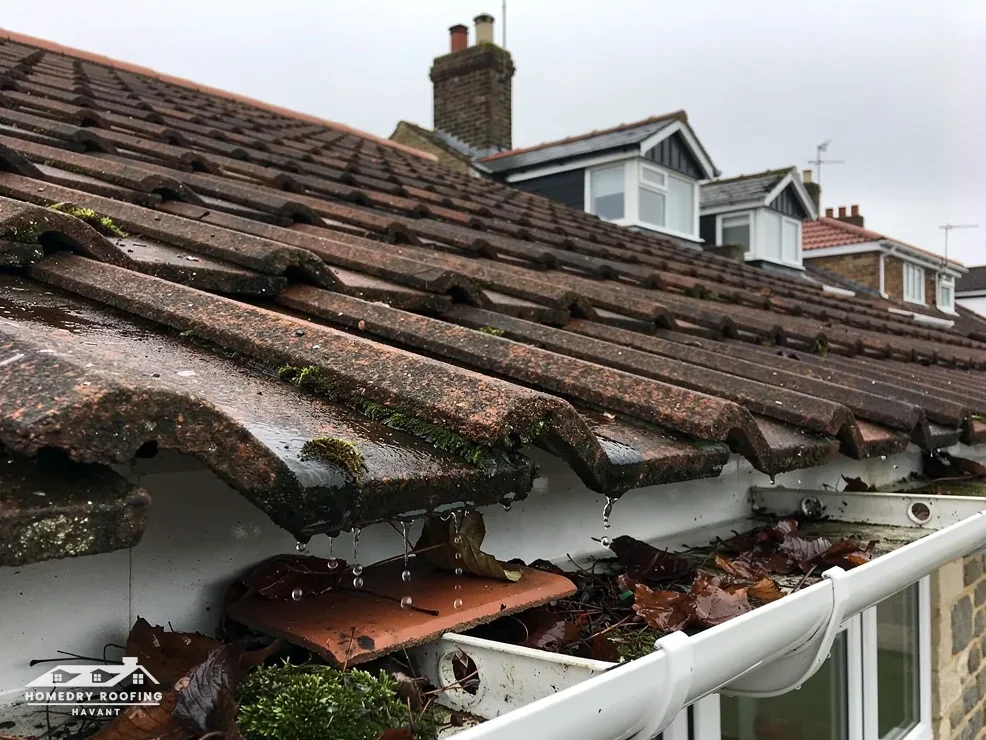
The hopper is probably blocked, or the pipe below it is, so the water has no way down and spills over the rim. Clearing the outlet can end it, and the run is then tested with a hose.
Once the gutter has collected a roof's water, a hopper or a stop-end outlet hands it to the downpipe, and from there it runs to a gully at ground level. Each hand-over is a place where a fault can start. At the top, the hopper box clogs with leaves and grit. Along the pipe, joints open and brackets slacken, and a stain on the wall behind a pipe can mark a joint that weeps. At the bottom, a gully choked with silt sends water back up the pipe, and the overflow finds the weakest joint above. Our gutters, soffits and fascias page sets out the replacement choices.
A hose test shows these faults quickly. Water poured into the hopper should reach the gully without leaking at a joint or backing up in the pipe. If it does not, the survey finds where and why, and the repair is matched to the fault: a bracket refixed, a joint remade, a length replaced or a gully cleared out. A downpipe that discharges against the wall base is pointed at a better place when that is feasible, and the new spot is chosen with the drain in mind, with the ground falling away from the wall.
Access matters at this end of a roof as well. Work at the eaves needs a ladder or a tower, and any scaffold on the public highway has to be licensed, which is arranged in good time so the work does not wait for it. The findings are written up with photographs, and one figure covers the roof, the gutters and the pipes together, whichever of them turn out to need attention. Anything that proves unnecessary is left out, and you are told why, so that you pay for the roof you have and not for a list of possibilities drawn up in advance.
The last metre of a roof is the one that gets forgotten.
A green or dark stain that runs down the wall behind a downpipe is a record of past leaks. Water has been escaping from a joint or a hopper for some time, and the brickwork has absorbed it. Staining on its own is no cause for alarm, but it is a reason to run a hose test and see which joint is responsible, and to correct that joint before the pipe is painted over.
A valley takes the rainwater from two slopes together, so a fault there admits more water than one cracked tile ever would. We clear moss and leaves, look along the lining for splits and thin patches, and check the tile edges on each side. Inside, a stain high on a side wall can point to the same place, and the loft shows timber that has darkened under the valley. The report says whether the lining can be mended, needs renewing along its length, or only needs cleaning, and it explains why in plain words, with photographs beside each finding.
It depends on the shape of the wear. A single split or a lifted edge can be repaired in place. A lining that has thinned along much of its length is renewed along that length, because patching the worst spot only moves the failure a short way down the run. The tiles on each side are lifted and relaid when that is needed. You are told which case yours is, with pictures of the lining before anyone suggests a replacement, so the decision rests on what is actually there and not on a guess from the ground.
Lime House, Star Cottage and Red Lion House are listed Grade II. For any listed building, work that would affect its character needs listed building consent from East Hampshire District Council, and the list entry defines what is protected. For a house on the list, consent comes through the council route, and the same applies to a listed barn or outbuilding. If your house is listed, read its entry in full, ask the council in writing, and wait for the reply before materials are ordered or a start date is promised to anyone.
The council's list names Article 4 directions at Bentley Industrial Centre and Bentley Business Park. Those are named sites, and they say nothing about the houses of the village. An Article 4 direction can take rights away, though, so the only safe step for your own address is to check with East Hampshire District Council before the work is booked. We note the council's reply in the job paperwork, which keeps the programme honest if a consent turns out to be needed, and nobody is surprised halfway through. A short email to the council costs nothing and is quicker than discovering the question late.
The Bentley conservation area lies near the centre, and East Hampshire District Council holds the map that shows whether your address sits inside it. Ordinary re-roofing is normally permitted development within a conservation area, so the designation does not forbid a new covering. Whether an Article 4 direction removes further rights at your address is for the council to confirm. Ask before work is booked, and keep the answer with the quote, so that later questions about what was allowed have one place to look. A short note from the council, kept in the same folder as the quote, is all that is needed.
It can. The Planning Portal sets two measures: re-roofing does not normally need a building regulations application if it affects less than 25 per cent of the building envelope and less than 50 per cent of the roof, whereas a covering that is 15 per cent or more heavier calls for approval. East Hampshire District Council's building control service takes application queries on 01730 234207. We work out which side of that test your roof sits on, and we put the conclusion in writing before work starts, so the route is settled early and no one is chasing an approval after the first day on the roof.
Scaffold that blocks a road or pavement needs a licence under section 169 of the Highways Act 1980. For Bentley the licensing body is Hampshire County Council, whose page says: "Scaffolding companies must apply on behalf of their customers." Hampshire County Council charges £211.90 on application for the first 2 weeks and £72 for each additional 2-week period, with ten clear working days required between application and start. We arrange it with our scaffolder, and the likely start reaches you well in advance of the day.
Yes. After the survey you are sent a single written total for everything the roof needs, whether that is a valley lining, a run of guttering, a hopper, or all three, with the findings set out beside it in plain words. The quote states in writing if VAT and scaffold are counted in the figure. If you would rather have only the gutter work done, say so, and that job gets a written total of its own. Our prices are meant to be good and fair, and the choice stays with you.
You'll get one written total price.
Fill in what you like. It opens WhatsApp with your message ready to send.