
Working in stages
The method on a building that stays in use is to uncover and renew the roof one section at a time, and to close each section against the weather before the working day ends. The areas beneath the section being worked on are kept clear of people and stock.
The survey answers the questions that decide whether this is practical:
- how the roof divides into sections, and whether the layout allows a clean break
- what lies below each section, from open floor to offices, stock racks or plant
- where people enter, and where deliveries and vehicles need to pass
- which sections can be done on a weekend or after hours, if you want that
A shop that trades through the week, an office that is full on weekdays and a unit with a night shift each need a different plan, and a school or surgery would need another again. We set out the plan in writing, section by section, so you can match it against how the building is used and say where it will not work. A plan that you have read and challenged is more use than one handed over on the first day.
Protecting people and stock below
Inside the building, the main risks are from above. A covering that is being lifted, a hole in a deck or an area open to the weather will all affect the floor beneath, and the plan deals with each.
The measures that make staying open workable, where the survey calls for them, are listed below, and the survey decides which of them your building needs:
- exclusion zones below the work, marked and agreed with whoever runs the building
- covers or protection over stock, equipment and machinery that cannot be moved
- temporary weather protection over any part that is opened up
- fixed routes for vehicles and pedestrians, kept apart from the work area
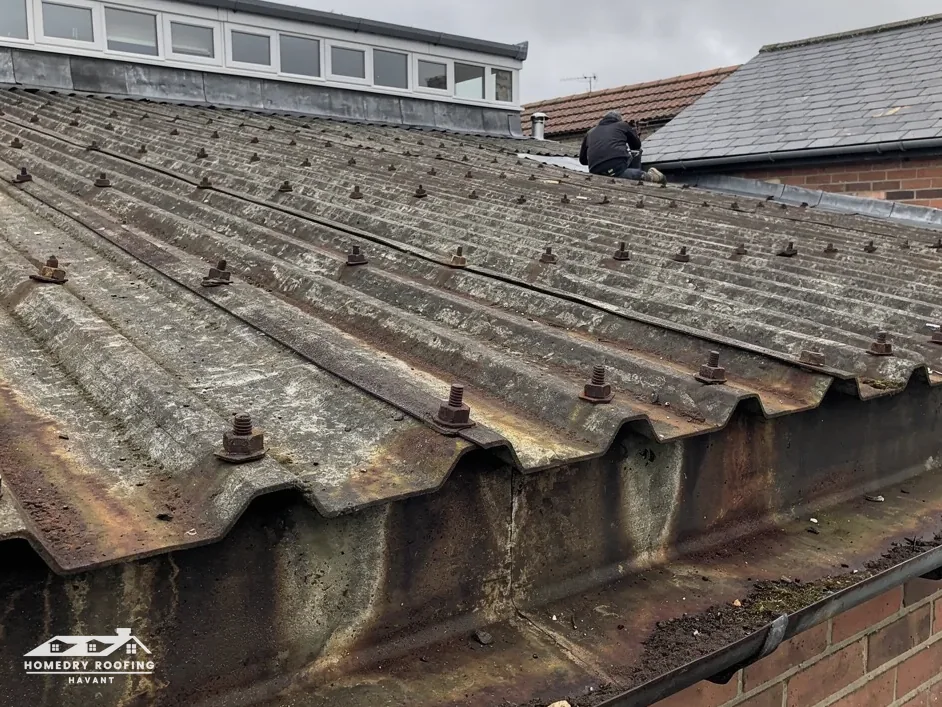
Waste is the next concern, and a skip in the wrong place can block a doorway or a fire route. Old covering is lowered or chuted into skips placed where it will not block a doorway or a fire route. Asbestos waste goes in a lockable skip: HSE's EM9 guidance asks for one and rules out sheeting thrown over an ordinary skip. Our page on asbestos cement on an industrial roof covers that.
Safety rules that apply
Occupation does not change the legal framework, but it makes the arrangements matter more. A commercial client keeps its CDM 2015 client duties in full. Regulation 4(1) asks the client to arrange the management of the project, with enough time and other resources for the job, which is why a rushed programme on an occupied building is a warning sign. Ask how long each section is expected to stay open.
If several contractors share the project, the client must put the name of a principal designer and a principal contractor in writing. A roof job with a separate firm for scaffold, electrics or asbestos is likely to meet that test, because each of those is a contractor in its own right. Our page on who the client is under CDM sets it out.
Asbestos has its own rule. On non-domestic premises, whoever holds the maintenance or repair obligation or controls the premises has the duty to manage asbestos. Anything found on the roof before or during the work is dealt with through them, and the sheeting stays out of reach until it has been identified, so nobody below is exposed to a surprise.
Access, noise and your own routine
People inside will hear the work. Noise, vibration and the arrival of deliveries are part of a roof job, and the plan says when the loudest operations happen. If your business has quiet periods, telephone work, appointments or sensitive equipment, tell us at the survey so that the loudest stage can be set for a time that suits. A building with a dispatch bay or a reception desk can usually be organised around its own busy periods once the plan is on paper.
Access for the crew is a separate matter from access for your staff. Our page on working at height on a commercial roof lists what we need on site, including the route to the roof, a place for materials and room for a skip.
After the survey comes a single written total, and that quote should say which work is done outside normal hours, if any, and whether access equipment, skips and VAT are included. The commercial roofing page covers the other business roofs we work on, and we leave the site tidy at the end of the job.