
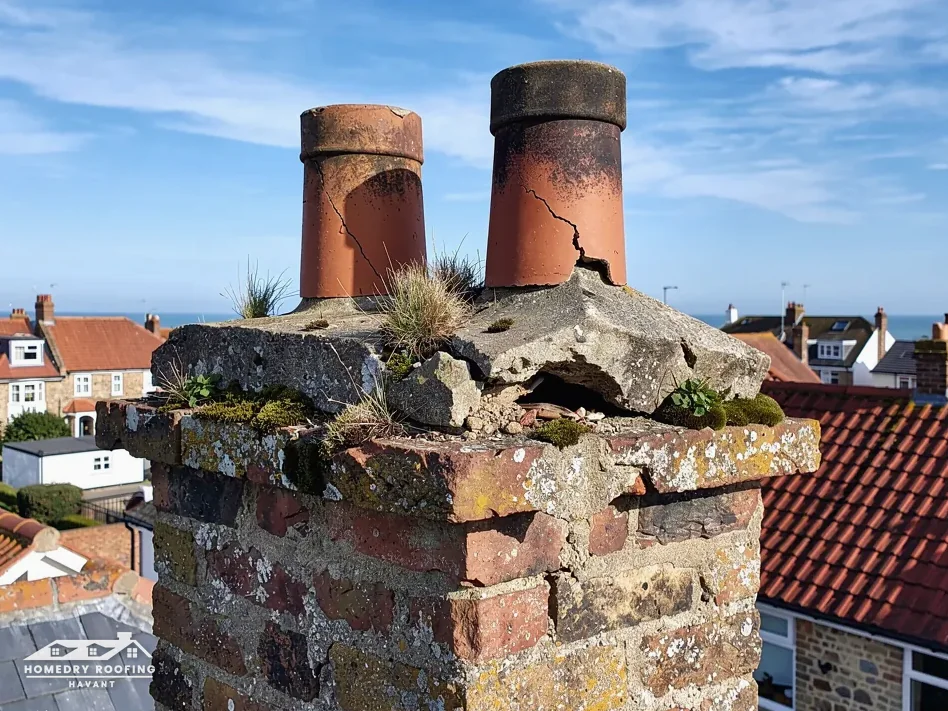
Two quotes for the same chimney can sit a long way apart, and the gap does not always mean one roofer is wrong. A stack is a tall, narrow structure perched on the highest part of the house, and the price follows what the survey finds: a loose pot, a failing joint, a lifted flashing, or brickwork that has to come down.
No article can put one price on that. What it can do is show what moves a price, give published figures for the work where a dated figure exists, and say plainly where one does not. That is the plan here. Every number carries its source and its date, and each is a third-party UK figure and does not stand as a price for your roof.
The other half of the answer is how a price is built. A roofer's written quote should be one total, given after the stack has been looked at, saying what is mended and what is left. The sections below follow the work in the order the rain travels, then turn to scaffold and to the questions worth putting to each roofer.
What moves the price of a chimney repair
The first thing that sets a price is the kind of repair the stack needs. A job that stays at the top, such as refixing a pot or renewing the flaunching (the angled mortar cap round the base of the pots), is a small one. A job that runs down the stack, such as repointing or rebuilding sections of brick, is bigger, and a job that takes the stack down to the roof is bigger again.
Four more things move the total after that:
- Height and position. A stack at the ridge of a tall house takes longer to reach than a low one on a bungalow.
- Access. How the crew gets onto the roof, and whether a scaffold has to stand beside the road.
- The flashings. The lead round the stack may need patching, replacing or leaving as it is.
- What lies underneath. Tiles, battens or timber disturbed by the work may need making good.
None of these shows from the pavement. A survey on the roof does, which is why a figure given over the phone can only be a guess.
It is also why two roofers can price one stack differently without either being careless. One may have allowed for flashings that the other assumed were sound, or may have planned a rebuild where the other planned a repair.
Published averages hide the spread. A national figure cannot allow for a narrow road, a high ridge or brickwork that has started to fail, so treat each figure below as a sense of scale. The number that matters for your house is the written total after our survey, and it names the work it covers.
Taking a chimney breast or stack out: published figures
Removal is the one part of chimney work where a dated published average is available. MyJobQuote's page on removing a chimney breast, last updated 03/11/26, gives two figures.
| Work | Average as published |
|---|---|
| Removing a chimney breast | Around £2,500 |
| Removing the whole stack with the breast | Around £3,000 to £3,500 |
MyJobQuote gives no VAT basis for these figures, so none is assumed here. They are averages across the UK and say nothing about any single house.
Removal also brings in rules that a price does not show. The Planning Portal says building regulations approval will always apply when removing chimney breasts, since they form part of the building's structure. A breast on a party wall brings in a party wall notice as well, served by the building owner, and the clock on that notice runs for weeks before any work starts.
That means removal is a job with a lead time, which is worth knowing when you are choosing between repair and removal for a stack you rarely use. Approval and notices come before scaffold, and scaffold comes before the first brick leaves the wall. If you are weighing removal against repair, ask for both to be priced. Ask too what the roof will look like once the stack is gone, since the hole it leaves in the slope has to be closed with new covering, battens and any lead that is needed.
For more, read our short answer on the cost to remove a chimney stack, which stays with the removal rows and the rules around them.
Flashings: what lead repair and replacement cost
The lead round the base of a stack can be a reason for quotes to differ, because it can be mended or renewed, and only the survey shows which is sound. Outside sources give figures for each.
MyJobQuote puts a patch repair to chimney lead flashing at around £200 and a full replacement at an average of around £570. On the same site's leadwork page, last updated 22/09/26, a full leadwork replacement is given as between £350 and £920, depending largely on whether scaffolding is required.
The words after that comma are the ones to notice. For a stack high on the roof, the lead is only part of the story, and what moves the figure is the cost of getting to it.
Checkatrade's repair guide, last updated in June 2026, gives lead flashing repairs at £50 to £70 per metre, excluding VAT and without access equipment. A per-metre rate is a rate, not a total, and the metres are what a survey measures, so never multiply one into a figure for your own house.
Lead and its life
Lead repays being done well. MyJobQuote says correctly installed lead flashing can last for over 80 years, and the phrase carrying the weight is correctly installed. A patch laid over failing lead may not hold for long, which is why the survey reads the lead before it names a repair.
Our guide to chimney flashing leaks follows the rain along each strip of lead.
Scaffold, height and the licence
Scaffold is a part of a chimney price worth reading closely in any quote. A stack is tall, a ladder is a poor platform for masonry, and a scaffold has to be put up, checked and taken down again. We have not found a reliable published figure for scaffold hire, so this post gives you the licence fees instead. The written quote includes scaffold, and its cost turns on the height, the length of the elevation and the time it stands.
Scaffold standing on the pavement or the road needs the highway authority's licence, and each authority sets its own fee in its own unit. These are the authorities around Havant, listed so that you can recognise them on a quote, never to be compared with one another.
- Hampshire County Council: £211.90 on application for the first 2 weeks, then £72 for each additional 2 week period. A further period is a new application, because the council does not offer extensions.
- Portsmouth: the hoarding and scaffolding permit goes through Colas, at £100.00 + VAT per month.
- West Sussex County Council: 1 month of scaffolding is £266.
- Southampton City Council: £496 minimum, renewable weekly at £36 per week.
Havant addresses fall under Hampshire County Council, which says scaffolding companies must apply for the licence on behalf of their customers. On our own jobs we arrange the licence with our scaffolder.
The licence fee is one piece of what the scaffold costs. The structure, the weeks it stands and the licence are settled by the survey, and your quote should say whether they are included. If a quote is silent about scaffold, ask the question before you compare totals.
Repointing and the jobs we do not price in print
You will notice that this post gives no repointing figure. Repointing is a very natural thing to ask about, and the omission is deliberate, because the published guides disagree on it. How deep the old mortar is cut back, the height of the stack, the mix that suits the brick and the state of the flaunching on top all change the time involved.
The same applies to several other jobs a stack can need:
- Refixing or replacing a pot or a cowl.
- Renewing the flaunching.
- Rebuilding the top courses of brick.
- Making good a roof covering the work has disturbed.
Each is priced after a survey. Some are quick when done alone and slow when they sit on a stack that also leans or sheds brick, and only a look from the roof tells you which case you have.
Nothing here is a reason to put up with a vague answer. A roofer who has surveyed the stack can tell you what the job is, whether repair or rebuild is the sounder route, and why, then give one total in writing. A roofer who names a number without looking has given you a guess, and a guess is not a quote.
If you want to judge a repointing quote without a published price beside it, our guide to chimney repointing and flaunching sets out what the work involves and what a sound job looks like at the top of the stack.
Reading a chimney quote before you say yes
With two or three quotes in hand, the aim is not to pick the lowest figure. It is to find out whether every quote describes the same job. Lay them next to each other and check the following.
- What each quote mends, what it rebuilds and what it leaves, in plain words.
- Whether the flashings are patched, replaced or left alone.
- Whether scaffold is included, and whether a highway licence fee is covered.
- Whether VAT is included, since a total without it cannot be set beside one with it.
- Where the waste goes, and what state the site is left in.
If one quote comes in far below the others, look first at what it omits. A very short description can point to a very short survey, and a quote that does not mention the stack's height or the flashings has probably not looked at either.
At HomeDry the stack is looked at from the roof before any price is written. We trace where the rain enters and say whether the brickwork can be mended or has to be taken down, and the reason for that call goes in writing with the price. You get one total, set at a good and fair level, and the work finishes with the site tidy.
The service is described on our chimney repairs page. To ask about your own stack, the phone number and the quote form sit on every page.
Filed under Chimney repairs