
Flashings
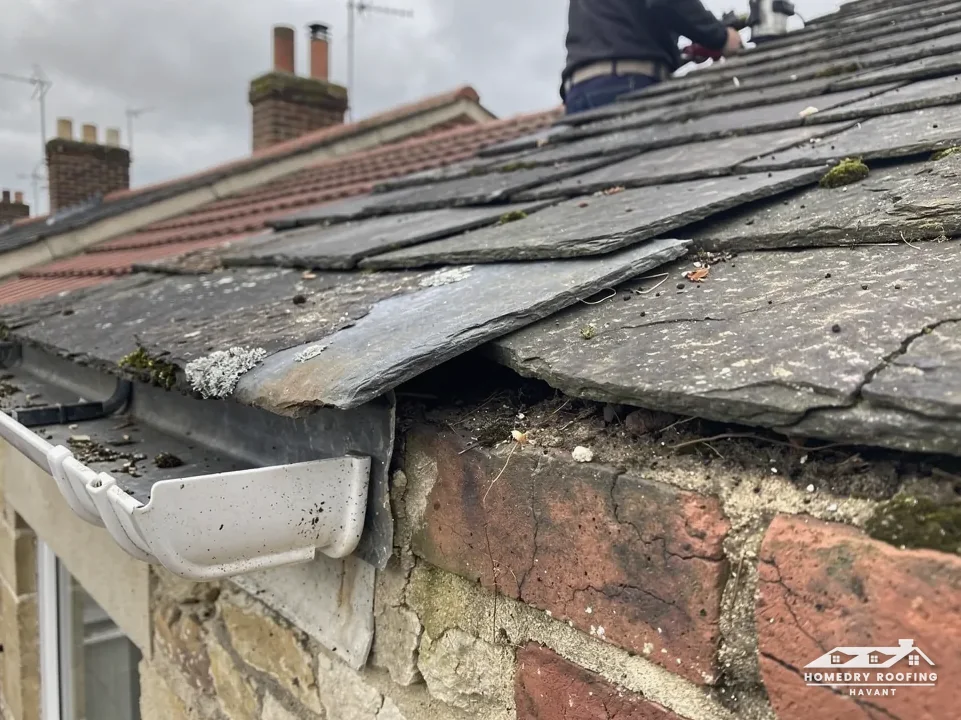
Where a strip of lead is bent between the roof and a wall or chimney that rises beside it.
A split fold, or an edge curled upward, lets rain run behind the metal.

On Shedfield roofs, 14.7 road miles north-west of Havant, we start with lead flashings, soffits and eaves, and a written total price follows.
10-year workmanship guarantee, in writing
Where a strip of lead is bent between the roof and a wall or chimney that rises beside it.
A split fold, or an edge curled upward, lets rain run behind the metal.
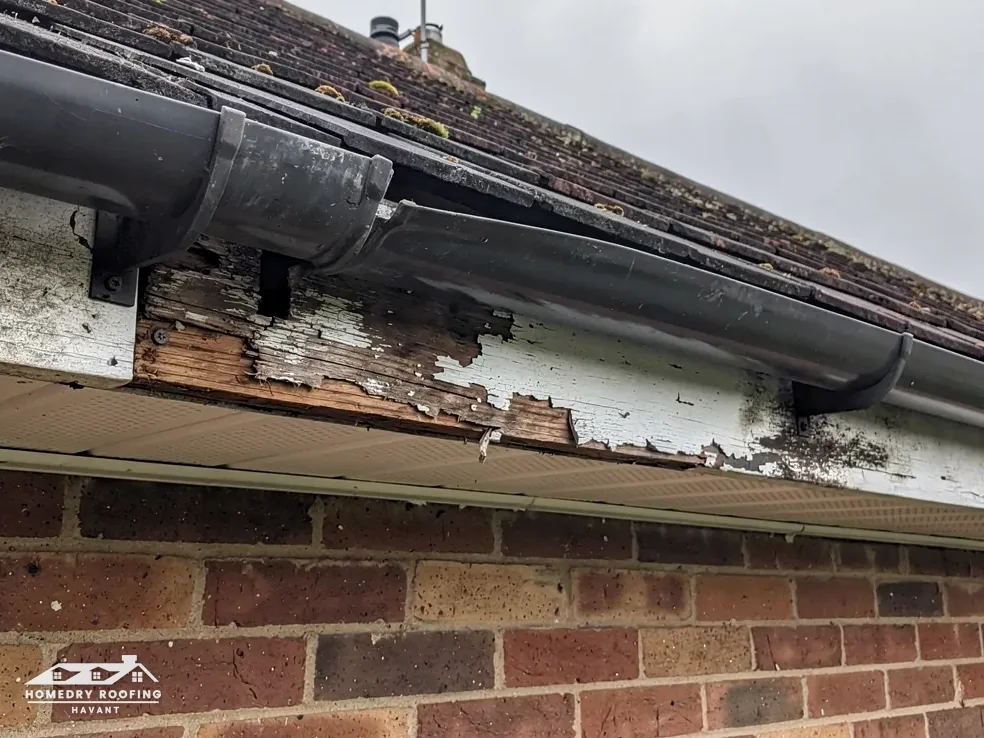
Where a board closes the underside of the eaves and joins the fascia at the front.
A board that has sagged or cracked leaves a gap for the weather, and for birds.
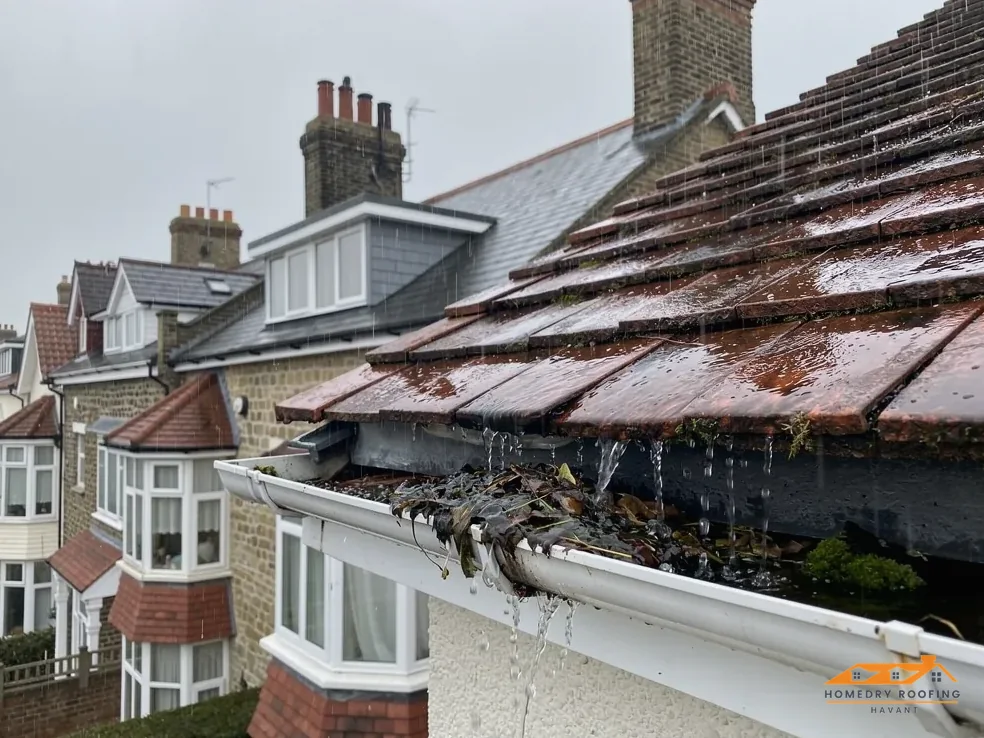
Where a board runs along the roof edge and carries the gutter on its face.
Timber gone soft behind the paint can no longer hold the brackets or the weight of water.
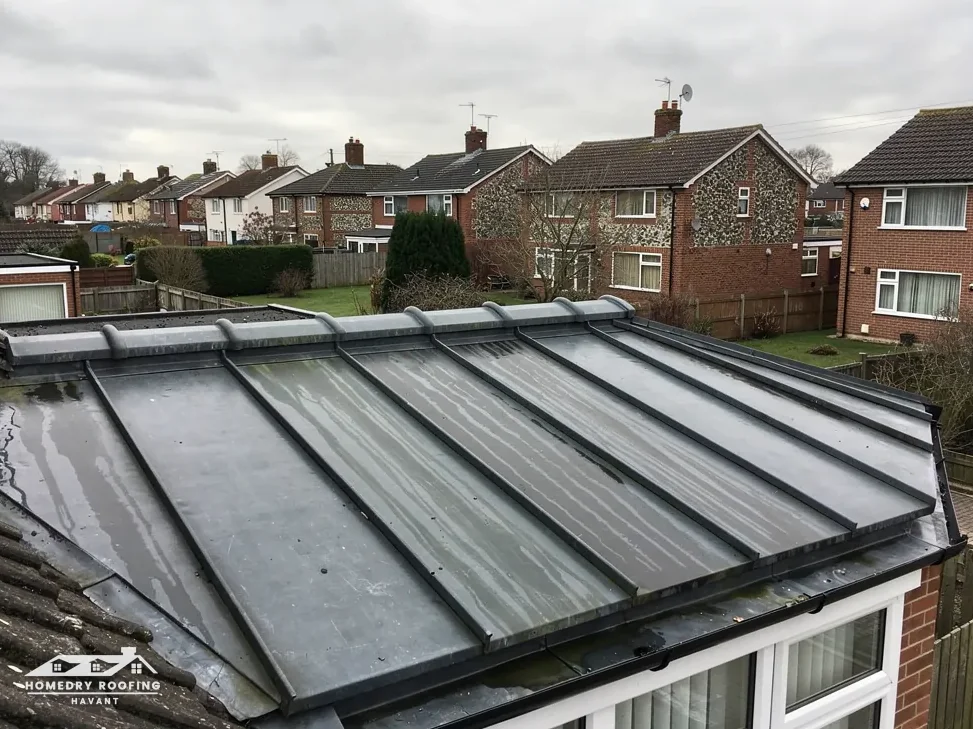
Lead earns its keep at the folds, and the folds are where it fails.
Wherever a roof stops against something taller, a strip of lead is bent between the two. Against a chimney it wraps the stack, against a house wall it steps up the brickwork in a staircase of small pieces, and at a gable the pieces slide under the tiles on one side and into a slot raked into the wall on the other. We check each piece for splits at the folds, for edges that have curled and for the mortar line that holds the top edge. MyJobQuote says correctly installed lead flashing can last for over 80 years, and the words "correctly installed" do the work in that sentence, which is why the fixings are looked at as closely as the metal. Our leadwork page explains how flashings are cut and dressed.
Shedfield has a conservation area, which Winchester City Council can confirm, and Historic England lists the Church of St John and the Tower of the Old Church of St John, each at Grade II. How a listed church is consented turns on whether it is in use for worship, so the question goes to Winchester City Council before anyone books work. A listed house in the village needs listed building consent for roof work that touches its character. The planning guide for roof work holds the rules for roofs.
Re-covering a roof around its flashings can raise a building regulations question. The Planning Portal sets two limits: a re-cover that stays under 25 per cent of the building envelope and under 50 per cent of the roof falls outside the building regulations application rule in the normal run, and a separate rule asks for approval where a new covering's weight is up by 15 per cent or more. Shedfield addresses come under Winchester City Council's building control team (01962 848 176), and we put the roof to the team before ordering.
A curled edge on a flashing has a reason behind it. Sometimes the wall mortar that held it has weathered out. Sometimes the metal was stretched when the roof moved and has not gone back. Either way, pressing it flat only hides the cause, so we look at the mortar line and the fixings first, and photograph the edge close up, to let you see why a strip is refixed in one place and renewed in another.
A stain climbing the plaster beside a chimney breast, or a bubble of paint on a wall beside the roof.
A split at a fold in the lead, or an edge that has curled out of the wall groove.
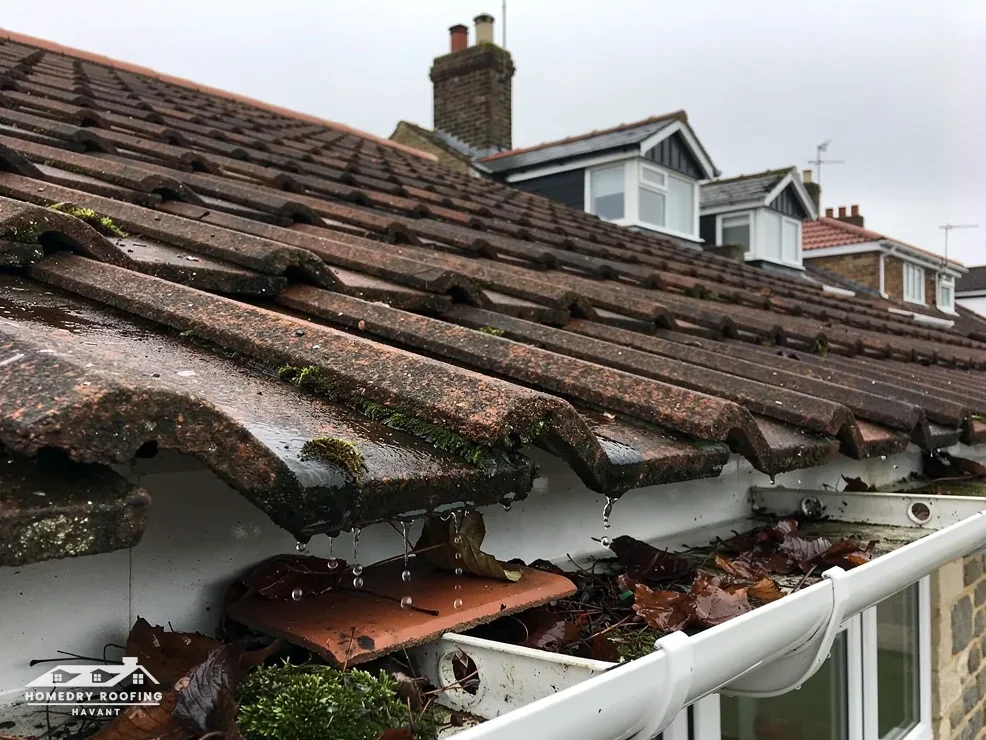
We stop on that stretch and tell you what we found. A nest in use or being built is covered by the Wildlife and Countryside Act, so the next step is agreed with you first.
The eaves are the last part of a roof to carry water and the first part wildlife comes to. Two boards matter here: the fascia, which runs along the roof edge with the gutter fixed to it, and the soffit, which shuts the underside of the overhang against the house wall. We press the timber, look for paint lifting over soft wood, and check that the soffit still leaves the small opening that lets air into the roof space. A retailer of uPVC boards says that, when installed correctly, they can typically maintain reliable performance for between 20 and 40 years. Our gutters, soffits and fascias page lists the work.
Birds and bats can be behind a soffit. The Wildlife and Countryside Act makes it an offence to intentionally take, damage or destroy a wild bird's nest while it is in use or being built, and under separate rules damaging or destroying a bat roost is an offence whatever the intent. Where a board comes off and a nest or a roost is found behind it, we stop, tell you what we have seen and talk through the next step before work goes on. Nothing is pulled out in a hurry, and a stretch with a nest in it can wait.
Work at the eaves can call for scaffold, and on a village road that can mean the highway. Hampshire County Council licenses scaffolding on the highway at £211.90 on application for the first 2 weeks and £72 for each additional 2-week period, needs 10 clear working days in advance of the start date, and says scaffolding companies must apply on behalf of their customers; we arrange it with our scaffolder. You hear the dates first, and the road and verge are left tidy when the boards are in. The access is planned so that the footpath stays usable wherever the licence allows.
The eaves are where a roof meets the weather and its neighbours.
Fresh paint can cover a board that has been wet for years. We probe the timber in several places, then look from the loft at the back of the board and the wall plate behind it. Dark staining or crumbling wood there confirms the damage the outside hid. Findings are photographed, so you can see where the sound timber ends and the soft timber starts.
Map of Shedfield and the places around it, with the dashed line of our 30-mile service area from Havant. The same places are listed below the map.
Most of the check is done by eye and by hand. Working from a ladder, we scan the metal for splits at the folds, curled edges and gaps in the mortar line that holds the top. Pressing a gloved hand along the metal shows whether it has lifted from the brickwork. From the loft we look for staining below the junction. Only where those signs point to a hidden fault do a few tiles come up beside the lead, and the findings, with photographs, say whether the strip needs refixing or renewing. If a flashing proves sound, it stays, and the findings say so.
Ordinary re-roofing of a house stays permitted development in the normal way, even in a conservation area, but an Article 4 direction can take away further rights. The Shedfield conservation area falls under Winchester City Council. For your own house, ask that council about both ahead of a start date being fixed, and keep its answer with your papers. Give the full address and describe the work, so the reply answers your case and not a general one. Roof rules are in the planning guide, and the council hears about your address ahead of our price.
Listed Grade II are the Church of St John and the Tower of the Old Church of St John. Which consent route covers a listed church depends on whether it is in use and on its denomination, and a Church of England church in use goes through the faculty system rather than listed building consent. We do not assume the answer for a particular building. Winchester City Council can say what route applies to the one in question, and a church officer can confirm how the building is used. Ask both before roof work on any listed church is planned, and keep the replies.
Then the work on that stretch stops at once. It is an offence to intentionally take, damage or destroy a wild bird's nest while it is in use or being built, and damaging or destroying a bat roost is an offence whatever the intent. We tell you what has been found, photograph it where that is safe, and talk through the choices with you before any board comes away. Nothing is cleared in a hurry, and the written price reflects the plan that you and we agree for the stretch concerned, so the cost is known before the boards are touched again.
For a Shedfield address, building control means Winchester City Council's team on 01962 848 176. The Planning Portal sets two limits for a re-cover without an application, under 25 per cent of the building envelope and under 50 per cent of the roof; a covering whose weight rises 15 per cent or more is dealt with on its own and needs approval. Your roof goes to the team before work is ordered, and you receive the answer in ordinary words, with the reasons, before you commit to a date for the work.
Section 169 of the Highways Act 1980 requires a licence for a scaffold on the highway, and for Shedfield the issuing body is Hampshire County Council. Hampshire County Council says: "Scaffolding companies must apply on behalf of their customers." Its fee is £211.90 on application for the first 2 weeks and £72 for each additional 2-week period, with 10 clear working days needed first, and no extensions are offered, so one application covers the whole stay. We arrange it with our scaffolder, and we confirm the dates with you first.
Sometimes a small split can be repaired, if the lead around it is sound and the fixings hold. Lead is soft metal that may have been stretched by movement, though, and a repair on thin metal may fail beside the patch. We look at the whole length before deciding, including the side that is hidden under the tiles. Where the strip is worn through or the fold has fatigued, renewing it along its whole run is the better finding, and we show you the photographs of the metal so that you can see why a patch would not last, and which stretch is still sound enough to keep.
Expect it to name the work and the covering going on, say if the total includes scaffold and VAT, and be written once someone has seen the roof. After the survey we give one written total, findings alongside, with the repair offered first where it would hold. Prices are good and fair too. Should another firm's figure be silent on scaffold or VAT, ask in writing; a lower total can be lower only because items are missing, and the reply shows it, so each can be read against the other without guessing.
You'll get one written total price.
Fill in what you like. It opens WhatsApp with your message ready to send.