
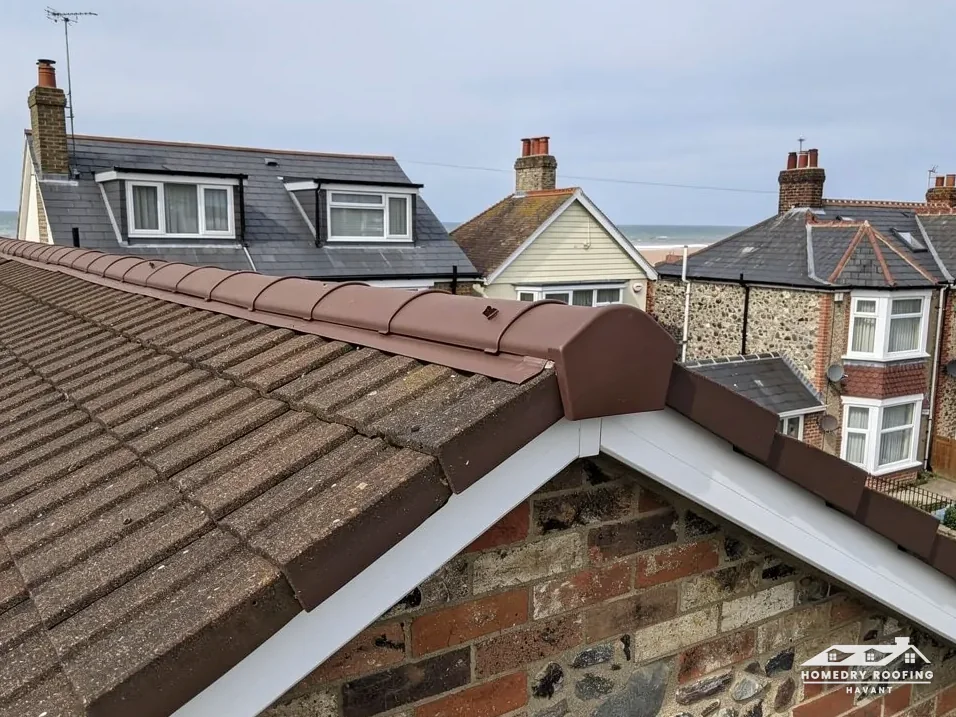
Slopes
Across a Curdridge roof, where one slipped or cracked piece of covering opens a path for rain.
Under it the batten gets wet first, then the underlay, then the plaster below.
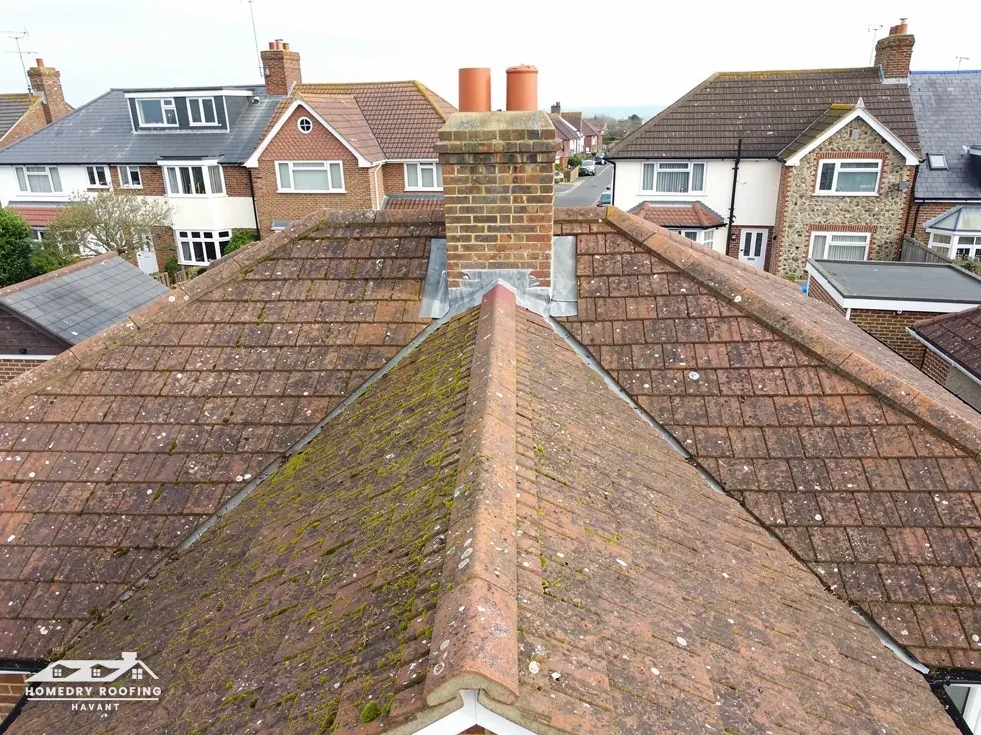
Curdridge is 16.8 road miles north-west of Havant; slopes, battens and loft timbers there are read in turn, and the price comes afterwards as one written total.
10-year workmanship guarantee, in writing
Across a Curdridge roof, where one slipped or cracked piece of covering opens a path for rain.
Under it the batten gets wet first, then the underlay, then the plaster below.
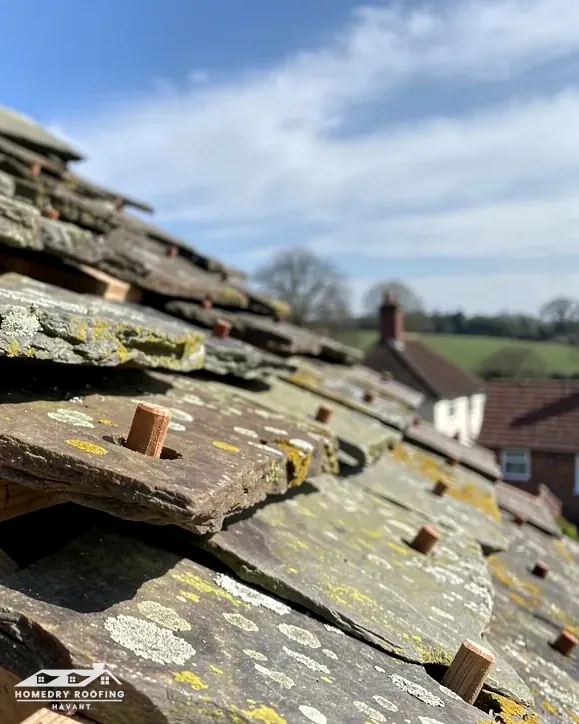
Beneath the covering, where each row hangs from a timber lath nailed across the rafters.
A lath gone soft from long damp lets the row above it drop out of line.
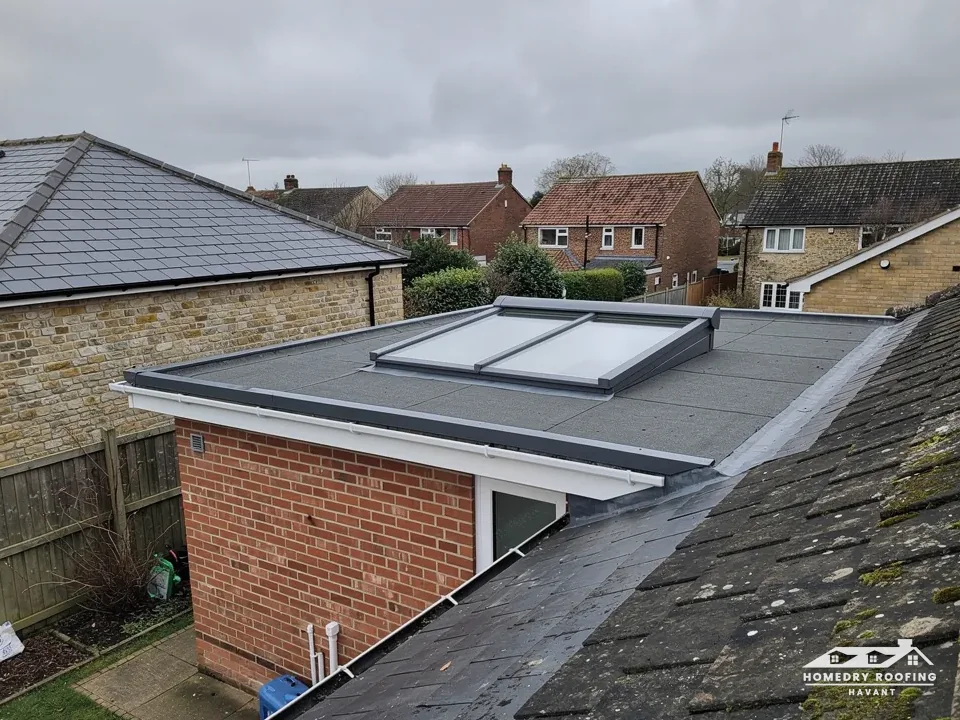
Above the bedroom ceilings, where the underside of the roof can be read in daylight.
A pinprick of light, a dark stain or damp insulation each points back to an entry.

A roof is a great many small pieces, each doing one small job.
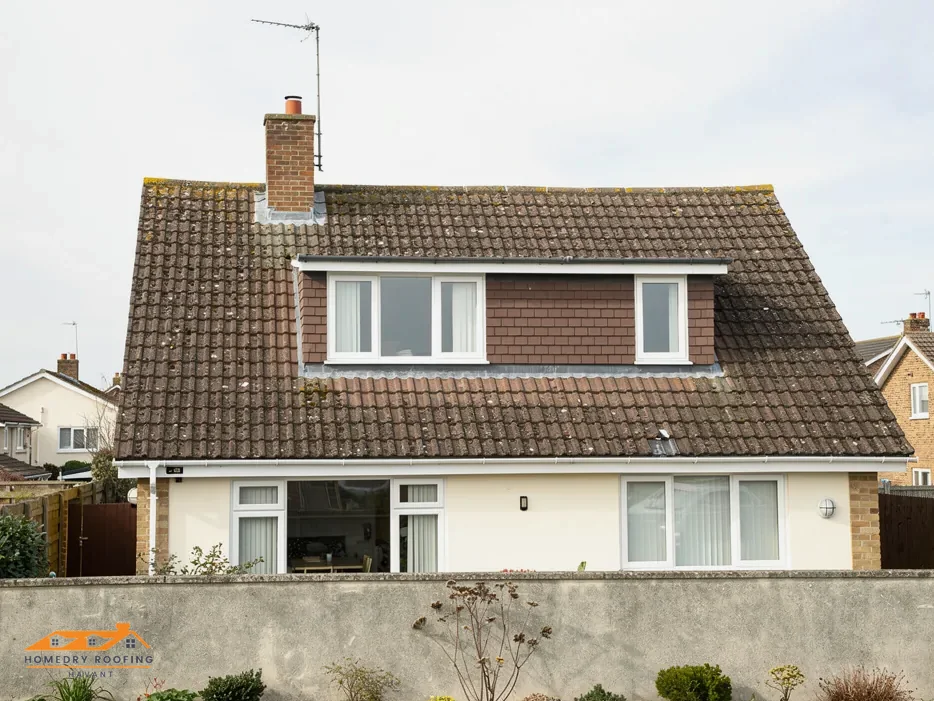
Rain meets a pitched roof one covering at a time, so the survey starts with the individual pieces: a tile or slate slipped out of line, a corner snapped off, a gap along a course where the lap has opened. From a ladder and then on the slope, we note each one and look at what sits beneath it: the batten, the nail, the underlay. A covering can look whole from the road while the timber under it is damp, which a view from the pavement cannot show. HSE's guidance is to assume fragility until a competent person has inspected it and said otherwise, so access is set up before anyone steps onto a slope; boards, ladders and edge protection come ahead of the first tile. Our pitched roofing page explains coverings, laps and battens, and our roof repairs page covers what a mend involves.
Curdridge lies in Winchester City Council's area and outside the National Park, so the council decides planning here, and Winchester City Council's building control team deals with the building control side. A Botley conservation area lies close by, and whether any given address falls inside it is a matter for Winchester City Council. Whether an Article 4 direction reaches one street is a further question for Winchester City Council. Our note on what a roof job needs by way of permission holds the permitted-development detail, so it is left there.
Meanwhile the survey itself goes on at the roof. Each defect is photographed where it sits and described beside the picture, so a slipped piece at the back of the house is shown at the back of the house. The report that follows states whether the fix is a handful of replaced pieces, a repaired batten, or a covering that has simply run its course, and it gives the reasons in ordinary words.
A slipped tile is only the visible part of a fault. Behind it the batten may have taken water for a long while, and the underlay may be damp or torn. We lift the covering only as far as the evidence demands, look at what is underneath and photograph it, so that a one-tile repair is not sold as a re-roof and a failing batten is not left hidden behind a patched surface.
A stain spreading outward on a bedroom ceiling, or paint blistering below a wall plate in a wet week.
A slipped or snapped piece of covering, or a lap that has opened so water runs under the course.
Look for chinks of daylight in the covering, dark staining on the timbers, damp or flattened insulation, and wood that feels soft. Photograph each one and send the pictures, and we will say what each points to before anyone visits.
The loft is where a roof is read from the inside. We go up with a torch and look for pinpricks of daylight where the covering has slipped, tide-marks on the rafters and on the underside of the underlay, insulation that is dark and heavy with moisture, and any timber that gives under a thumbnail. Daylight at a gap is evidence of an entry; staining on the wood shows where water has run and whether it is still running. Ventilation matters as well: with a high-resistance underlay in a cold roof, Marley gives 25 mm of eaves ventilation at 15° or less and 10 mm above 15°. Our roof inspections page explains what a survey covers and what a written report says.
The Church of St Peter at Curdridge is listed Grade II (list entry 1095645). Because it remains a place of worship for the Church of England, its works follow the faculty system, not listed building consent. Church View and Wollams each hold a Grade II entry too (1095651 and 1095646). A house carrying an entry in the National Heritage List needs listed building consent for alterations to its character, so search the list with your address before work is planned, and let the council know what you find. That one search can spare a job from being stopped halfway.
The findings come written up in plain language, with photographs taken outside and in the loft, and one total price follows, naming what is inside it and what is not. A sound repair is put ahead of replacement, and replacement is reserved for roofs where the timber or the covering has genuinely failed. Nothing is priced from the pavement, and the loft is left as tidy as we found it.
From inside, the roof shows every place it has let the weather in.
A pinprick of light through a roof is an entry the survey has to explain, and a dark stain on a rafter is a trail it can follow. Together they place the fault more exactly than the ceiling mark below, which may sit a metre away from the real entry. We photograph both and report which one each marks, so the repair goes to the cause and not the stain.
Insulation darkened and pressed flat beneath one part of the slope, with the ceiling below it stained.
A gap in the covering above that spot, or an underlay split letting rain run down onto the rafters.
The batten that carries it, the nail that was holding it and the underlay below. A tile can slip because a nail has failed, because the batten has softened, or because the roof was knocked, and each cause needs its own repair. We lift only what the evidence needs, photograph what is under it, and write down which of those three it was. A single piece replaced is called a single piece; a run of failing battens is called a run, and the report does not blur the two. You see each one pictured in place. The price arrives afterwards in writing as one total.
Winchester City Council's building control team, on 01962 848 176, is the contact for Curdridge. Two measures decide whether a re-roof needs a building regulations application, according to the Planning Portal: less than 25 per cent of the building envelope and less than 50 per cent of the roof, inside which none is normally needed. Weight is a separate trigger, because a new covering 15 per cent or more heavier needs approval. We take the particular roof to the team before any work starts, so that the route is settled early and reported back to you plainly.
Yes. Curdridge is outside the South Downs National Park, so the council is the planning authority, and there is no National Park Authority involved in a roof job here. An Article 4 direction can remove further rights, and that turns on your own street rather than the parish as a whole, so check with Winchester City Council. The detail on what needs permission is in our note on roof job permissions, and the council's answer for your address goes into the written survey notes for safe keeping.
No. The Church of St Peter has its own Grade II entry, and because it is still a Church of England place of worship, work to it goes through the faculty system, with no need for the council's listed building consent. Church View and Wollams each have separate Grade II entries. A house on the National Heritage List must have listed building consent before any change to its character, and a re-roof can be one. Search the list for your address, then put the question to Winchester City Council while the job is still being planned, because an answer received late costs more than one received early.
Winchester City Council and Eastleigh Borough Council each list a Botley conservation area, and it lies close to Curdridge; for the position of your own address you should ask Winchester City Council. A straightforward re-cover of a house is normally permitted development, conservation area or not, but an Article 4 direction can remove further rights, which is why we check with the council first. Our note on what roof jobs need by way of permission sets out the position, and the council's reply for your house is copied into the written findings, so it travels with the job.
Section 169 of the Highways Act 1980 requires a licence for scaffolding that would obstruct the highway, and for Curdridge the licensing body is Hampshire County Council. Hampshire County Council charges £211.90 on application for the first 2 weeks and £72 for each additional 2-week period, and its notice period is ten clear working days. Hampshire County Council's page says: "Scaffolding companies must apply on behalf of their customers." We arrange it with our scaffolder, and you see the planned dates before anything goes in, so neighbours can be told how long the poles will stand outside their windows.
The outside shows the covering; the loft shows what the covering has let through. Daylight at a gap, staining on a rafter, insulation gone dark and heavy, and soft timber each mark a different stage of the same story. We note them all, photograph them, and set them against what we saw from the ladder, which can explain a ceiling stain that appears nowhere near its source. A loft showing none of those signs is reported as clear, and the report says so in the same plain words as any other finding, with a photograph of the timbers to back it up.
HSE's guidance is to assume fragility until a competent person has inspected the roof and said otherwise, and a covering that looks sound from the ground can still hide a weak spot underfoot. Boards, ladders and edge protection are put in place first, and only then does the survey begin, so nobody tests a weak spot with their own weight. The quote that follows is one written total, and it records which of VAT and scaffold it includes, with a repair offered before any replacement. We keep prices good and fair, and the findings carry photographs of whatever the crew went up to see.
You'll get one written total price.
Fill in what you like. It opens WhatsApp with your message ready to send.