
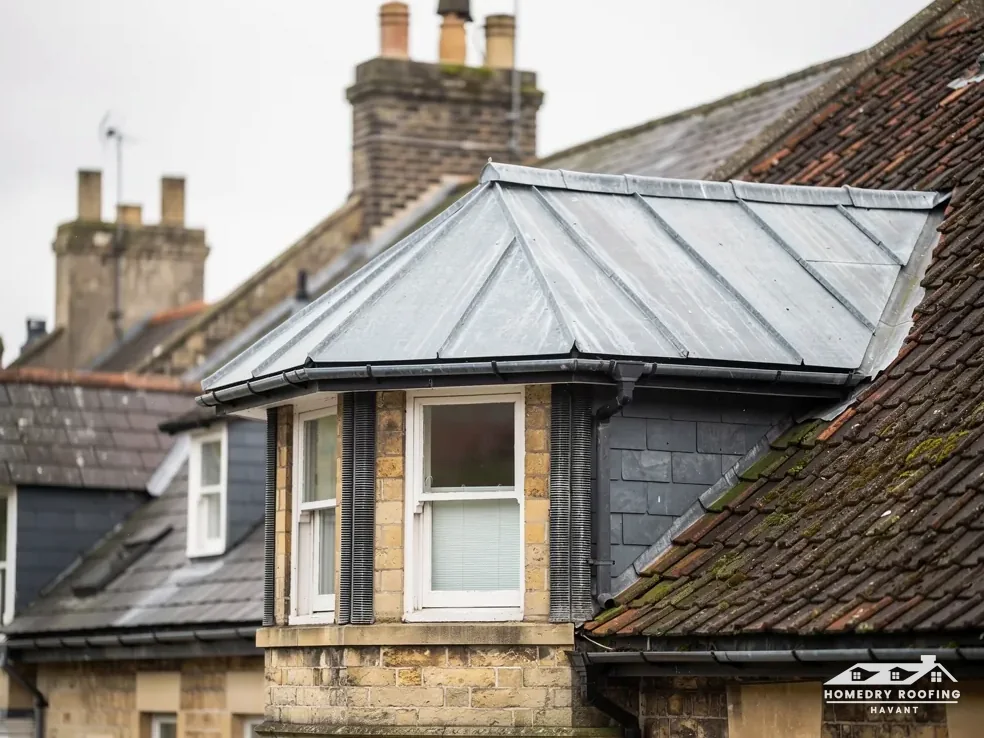
Abutments
Where a pitch rises to meet a wall and a band of lead covers the join.
A lead edge that has lifted lets rain run behind it and down inside the wall.
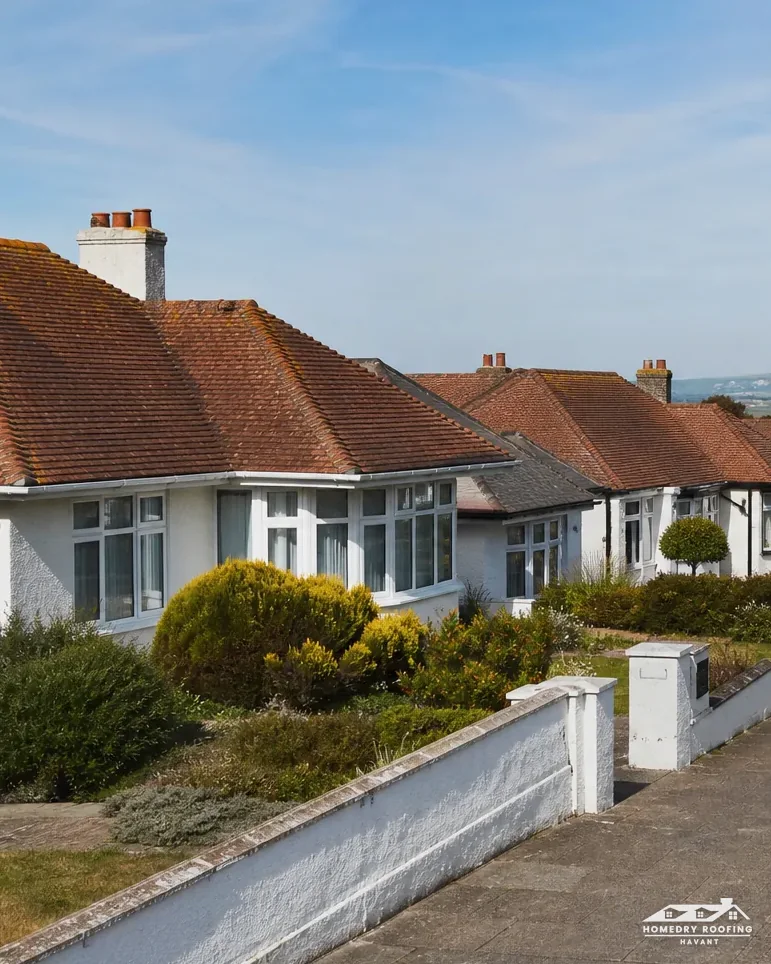
Flashing, loft and roof repair work for Cosham homes, 4.4 road miles west of Havant, with the leak read first and the whole price set down once.
10-year workmanship guarantee, in writing
Where a pitch rises to meet a wall and a band of lead covers the join.
A lead edge that has lifted lets rain run behind it and down inside the wall.
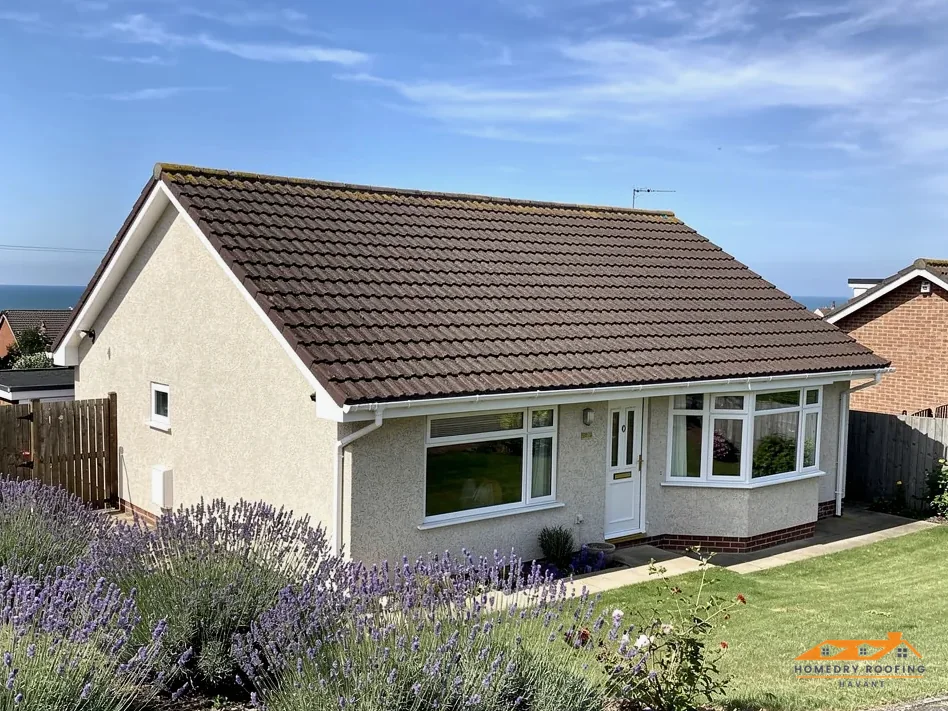
Where a membrane under the tiles catches whatever blows past the first layer.
A torn or sagging sheet traps rain against the battens instead of shedding it.
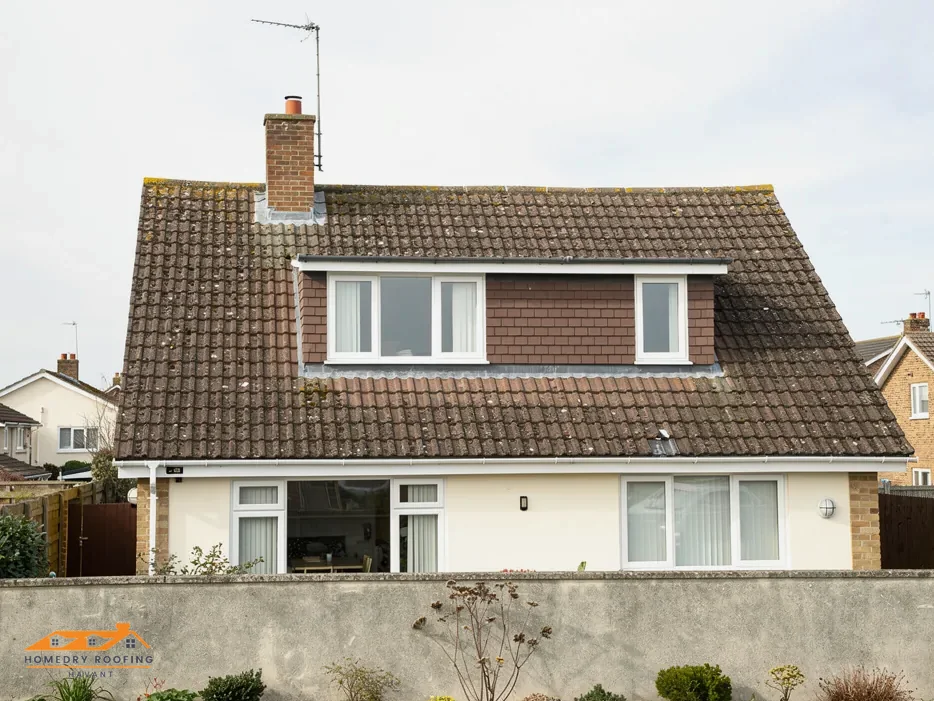
Where the roof timbers show, from beneath, what the slope above has been doing.
A dark ring on a rafter or a damp patch in the insulation marks the way the rain came in.
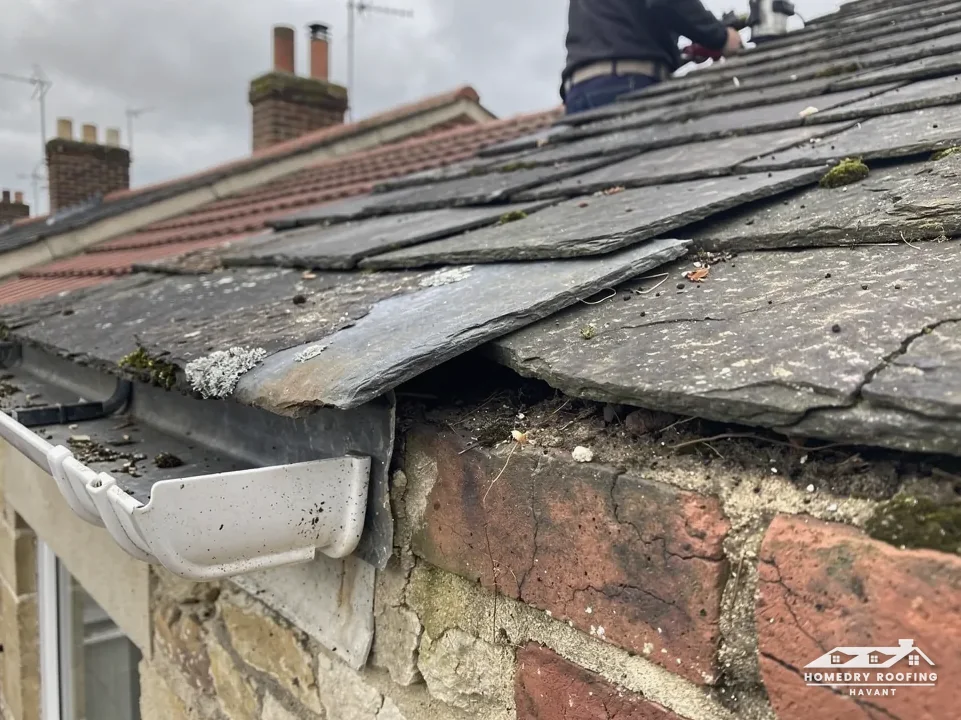
The fault may be on the upper edge, hidden in the wall groove, where pointing has fallen out and rain gets behind the metal. We look at the groove as well as the visible lap.
Wherever a roof slope meets a wall, whether the wall belongs to the house, to an extension or to the neighbour, the join is closed by a flashing. Lead is the usual metal for the job: a strip goes into a groove cut in the wall and is dressed over the edge of the tiles below it. On a Cosham survey we look along every such join for lead that has lifted, for pointing that has fallen out of the groove and for splits where the metal has been folded. Royston Lead's cast-lead brochure lists codes 4 and 5 among those used for flashings, so we note the code that is on the roof before suggesting new sheet. Our lead roofing page explains the metalwork, and our roof repairs page covers what follows a survey.
A flashing fault need not show at the flashing. Rain that gets behind the lead runs down inside the wall and may appear as a damp patch on the plaster of an upper room, with nothing visible outside. We trace the damp back up to the join, find the first place where the lead has lifted or the pointing has failed, and photograph it. A repair at the join is then matched to the cause and not to the stain, which saves you paying for plaster work that would only be wet again.
The National Heritage List includes Cosham Park House and Cosham House, both listed Grade II (entries 1387040 and 1333208). Old Wymering is a designated conservation area near Cosham, and Portsmouth City Council is the authority to ask about it. Portsmouth says many changes to roofs remain permitted development in conservation areas, while in some cases special controls called Article 4 Directions have been introduced. Our planning guide for roof work explains the rules.
Lead at a wall has two edges to hold, and either can let the rain in.
The strip of lead has two jobs: it is tucked into the wall to stop water running behind it, and it laps over the tiles so the rain runs on down the slope. If either half has lifted, the join is open. We check the groove, the tuck and the lap in turn, and when one half has gone we show you which, so the repair is aimed at that edge and not at the whole run.
A loft keeps a record of every drip that has ever reached it.
The loft is the part of the roof you rarely see, and it is where a survey does its quietest work. From beneath, the underside of the slope shows daylight where a tile is missing or a joint is open, dark rings on the rafters where water has dripped, and wet patches in the insulation where it has landed. A loft can also be damp without a leak: moisture from the house condenses on cold surfaces. BS 5250 is the British Standard for managing moisture in buildings, and Marley gives 25 mm of eaves ventilation where a cold roof has a high-resistance underlay at 15° or less, and 10 mm above 15°. So we check the eaves are clear as well as the slope above. A loft that is damp from poor airflow needs a different cure from one that is damp from a leak, and the two are told apart before any quote is written.
Underlay is the sheet beneath the tiles that catches what blows past the first layer. If it has torn or sagged, rain collects against the battens and the timber stays wet, and this shows from the loft as stained battens and not as a hole. We take photographs of what we find so that you can see the cause with your own eyes, and a ceiling stain is matched to the marks above it. Our roof inspections page describes the survey in full.
Cosham lies within a mile of the coastline. Cupa, a slate maker, treats a coastal area as graded with higher exposure, so the fixing specification is calculated for the site under BS 5534. The survey records the fixings on every slope, and the written price follows only when the loft and the slope have both been seen, so nothing in it rests on a guess.
Condensation and a leak look alike on a ceiling, yet they have different causes and different cures. A leak leaves a stain beneath a particular fault, while condensation spreads across cold surfaces and can follow blocked ventilation. We look for the pattern, check the eaves and tell you which one you have, so money is not spent on tiles when the answer is airflow, and the loft is left as it was found.
A brown ring on a bedroom ceiling that spreads after rain, or a musty smell in a cupboard below the loft hatch.
A slipped tile above the mark, a torn underlay between the battens, or a cold surface that collects condensation.
Map of Cosham and the places around it, with the dashed line of our 30-mile service area from Havant. The same places are listed below the map.
We look along the join for three things: lead that has lifted from the tiles, pointing that has fallen out of the groove in the wall, and splits where the metal was folded. Rain that gets behind the lead can run inside the wall, so a damp patch upstairs may be traced to the flashing outside. We photograph the first fault we reach, then tell you whether the lead can be refixed or must be renewed, and why. Pictures of the join go with the report, so you can follow the reasoning without climbing a ladder. The written price follows from that decision and not before it.
Portsmouth's building control service is carried out by the Building Control Partnership, which can be reached on 01329 824823. Under the Planning Portal's guide, re-roofing does not normally need an application if less than 25 per cent of the building envelope and less than 50 per cent of the roof is affected, but a covering that is 15 per cent or more heavier must have approval. We ask the Partnership which route applies to your house before work begins and relay the answer in everyday words. If the new covering is heavier, a structural check of the rafters is raised first, so you are not surprised halfway through the job.
A licence under section 169 of the Highways Act 1980 is needed before scaffold can stand over the highway. We arrange the licence with our scaffolder; Portsmouth's hoarding and scaffolding permit goes through Colas, and its form says £100.00 + VAT per month. The monthly fee is Portsmouth's own unit and is not comparable with any other council's. Once you accept the survey, the permit is applied for before the scaffold is booked, and the start date we give you allows for that. No scaffold goes up on the pavement until the permit is in place, and the date is confirmed to you in writing.
Cosham Park House (entry 1387040) and Cosham House (entry 1333208) are each listed Grade II, and a listing belongs to the building named in it. Your own house is covered only if it has an entry of its own, which Historic England's list will show. A listed home keeps its permitted development rights for roof work, but listed building consent is needed for work affecting its character, and Portsmouth City Council decides on that. We write up the survey findings in a form that can go with an application.
Old Wymering is a designated conservation area near Cosham, and Portsmouth City Council is the authority for it. Portsmouth says many changes to roofs remain permitted development in conservation areas, and that special controls called Article 4 Directions have been introduced in some cases. The council's own list of directions is the one to consult, so check your address with Portsmouth City Council before you book anything, and tell us what it says. If a conservation area does apply, the survey findings are written so that they can go to the council unchanged, and we explain what they show.
A leak leaves a stain beneath a particular fault, such as a slipped tile or a torn underlay, and the timber around that point is dark and wet. Condensation spreads across cold surfaces and follows poor airflow. BS 5250 covers the management of moisture in buildings, and Marley gives 25 mm of eaves ventilation where a cold roof has a high-resistance underlay at 15° or less, so we check the eaves are open. Then we tell you which you have, and what the cure is. A loft that only needs its eaves cleared is not a roofing job, and you are told that plainly.
It depends on how far the fault runs. A single lifted edge can be refixed and dressed down, while lead that has split along its folds or worn thin is better renewed along the whole join. MyJobQuote says correctly installed lead flashing can last for over 80 years, so the age of the lead is no verdict; its fixing and laps are. Sections are replaced only where the metal either side is sound enough to join to, and we show you the evidence for each case. Where the lead is sound at both ends of a fault, only the faulty length is cut out and replaced.
A Cosham quote is one number, the total for the job as surveyed. Before you accept it, look for the type of covering or lead being used, for a clear statement of whether scaffold and VAT sit inside the total, and for the survey findings attached. If a repair is sound, you are quoted for the repair and not for a re-roof. Our prices are set to be good and fair, and when the job ends the site is swept tidy and the old material is taken away.
You'll get one written total price.
Fill in what you like. It opens WhatsApp with your message ready to send.