
Skylights
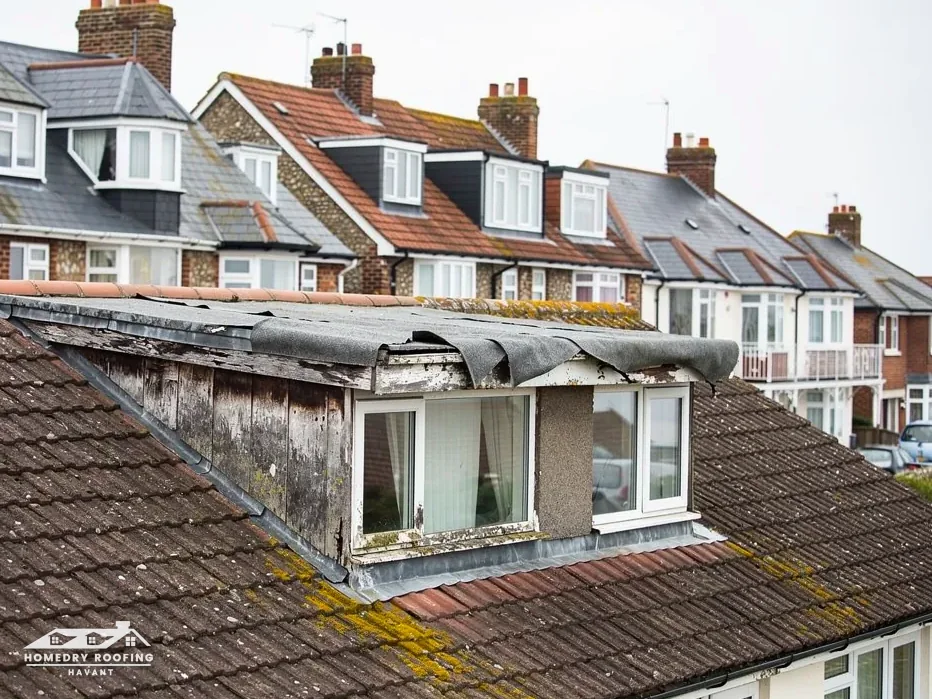
Where a Bitterne roof window sits in an opening framed between two rafters.
Once its seal hardens, damp spreads across the plaster beside the glass.
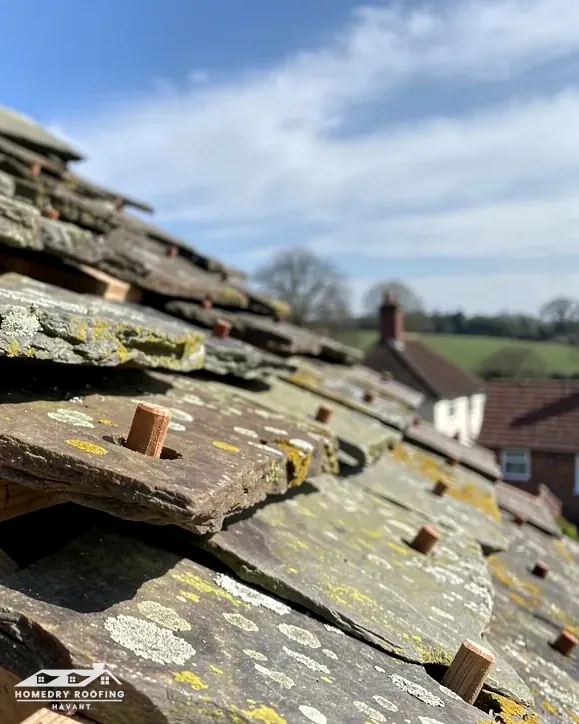
Bitterne is a district of Southampton, 19.7 road miles west of Havant; roof windows, flat extension roofs and the outlets beneath them are followed from the stain back to the opening that admitted the water.
10-year workmanship guarantee, in writing
Where a Bitterne roof window sits in an opening framed between two rafters.
Once its seal hardens, damp spreads across the plaster beside the glass.
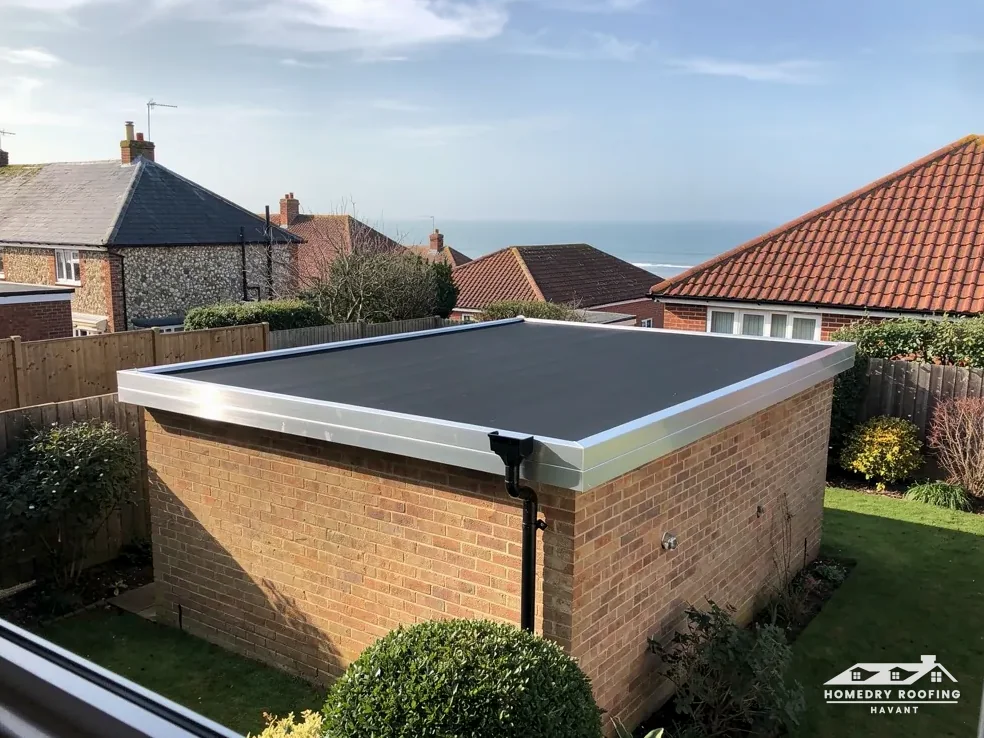
Where the covering of a flat extension turns up the wall of a Bitterne house.
A split along that turn lets rain behind the membrane and onto the ceiling below.
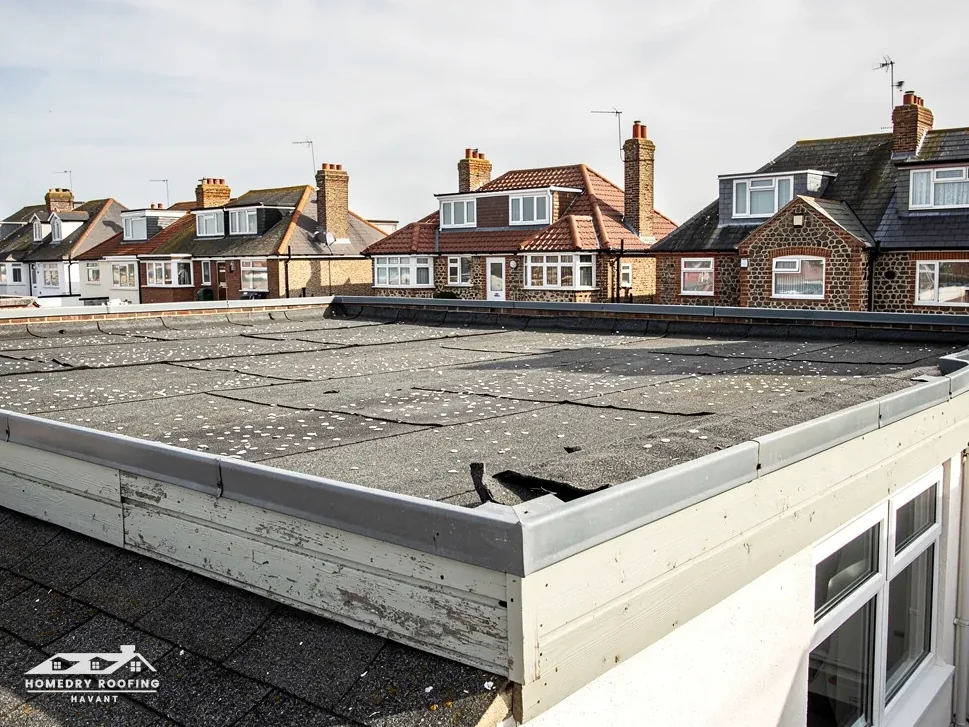
Where a flat roof drains through a hopper or a pipe at its edge.
Leaves and grit packed into that opening leave the water lying across the whole surface.
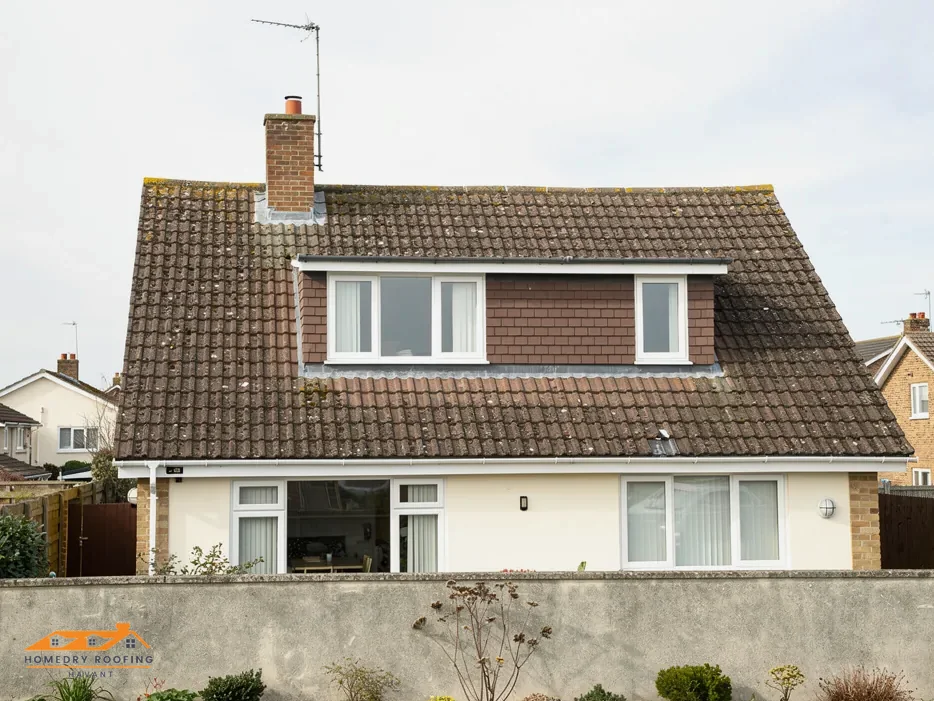
A window in a roof must be sealed all over again, edge by edge.
A roof window is a hole cut in a slope and framed between two rafters, which is why it has a flashing kit of its own, a rubber seal around the sash and a cill along the bottom. A Bitterne survey treats the unit as a small building: first the glass, for mist trapped between the panes, then the seal for hardening or gaps, then the flashing for lifted edges, and finally the opening itself for dark timber. Because rain on the tiles above runs down into the frame, the trace begins higher up the slope and only then comes back to the window. Our roof windows and skylights page explains what swapping a unit involves, and our roof repairs page covers the slope around it.
Conservation areas in the neighbourhood include Southampton City Council's Itchen Valley and Old Woolston, and over the boundary Eastleigh Borough Council's Gaters Mill and Romill Close at West End and Orchards Way, West End. For a Bitterne road, Southampton City Council is the one to ask. Directions under Article 4 can strip rights away, which makes Southampton City Council the body to consult before altering a slope that faces the street, and you can ask it about your own road. Our planning guide for roof work sets out the national rules without our repeating them here.
Whatever the council says is written into the report ahead of any price, with the day it was said, so a decision about a window never rests on memory. Where a unit does need replacing, the opening is measured first, because a like-for-like unit that fits the existing frame spares the rafters and the plasterwork inside. The tiles around it are then lifted and relaid against a new flashing kit, and the old unit goes out with the rubbish.
Damp in the reveal beside the glass puts the blame on the window, and now and then it is deserved. Sometimes tiles higher up have slipped and are pouring their run-off into the frame instead. We trace uphill before recommending a new unit, so that nobody pays for glazing when the fault is two courses above it, and the report says which part of the opening failed, with a photograph of it.
Damp plaster and flaking paint along one side of the reveal, worse after a night of steady rain.
A hardened seal, a lifted flashing corner, or water sheeting off dropped tiles above and flooding the frame.
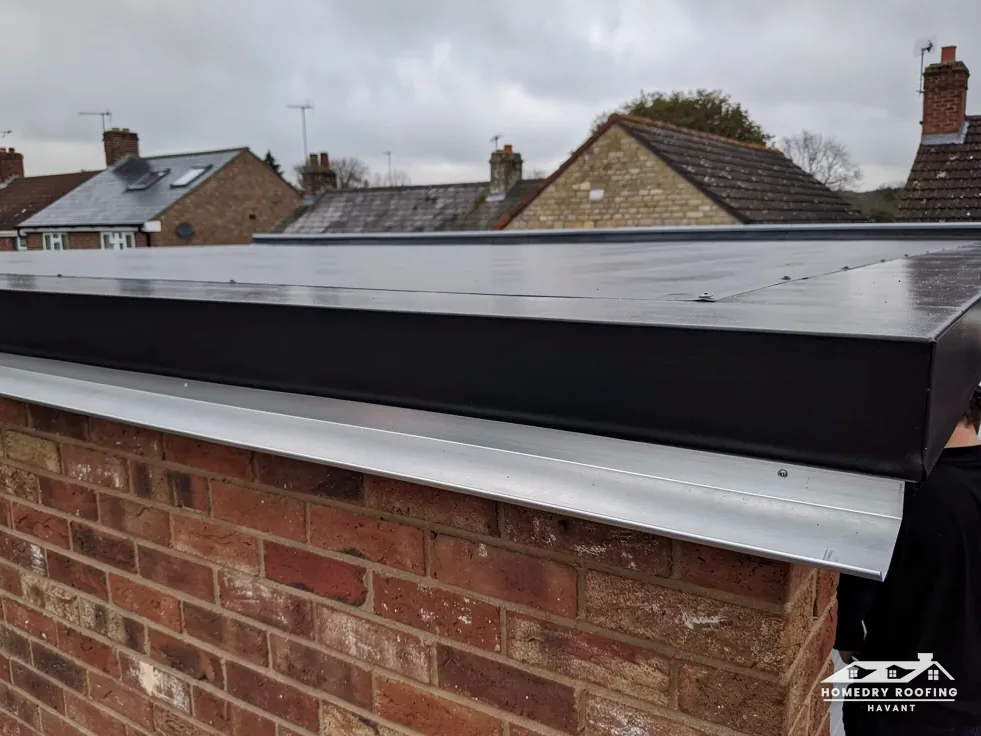
Either the fall has gone in that spot, or the outlet is blocked or set too high. We check the outlet first, then the surface, and the report says whether clearing, patching or relaying is the right answer.
Flat roofs fail in three places, and a survey reads each in turn: the upstand where the covering climbs the house wall, the surface between, and the outlet where the water leaves. We look for splits at the turn, blisters and ponds on the membrane, and grit or leaves packed into the hopper. BS 6229:2025 sets a minimum finished fall of 1:80 for membrane flat roofs, so a roof is designed to a steeper fall to allow for tolerances, and water still standing a day after rain says that the fall has been lost or the outlet is choked. Each cause needs a different repair, and the report names yours. See our flat roofing page for what a new covering involves.
The Church of the Holy Saviour in Bitterne is listed Grade II. It is a Church of England church in use, so its works fall under the church's faculty system and not listed building consent. A private listed house takes the council route, with consent under section 7 of the 1990 Act for work affecting its character.
For re-roofing, the Planning Portal asks whether less than 25 per cent of the building envelope and less than 50 per cent of the roof is touched; a covering 15 per cent or more heavier is a separate approval trigger, however modest the patch. Your building control body takes Bitterne cases, and we ask it first, then pass the reply to you in ordinary words. Scaffold licences here come from Southampton City Council, and we arrange it with our scaffolder. The last metre of the job is the gutter and downpipe at the roof's edge: a dripping joint, a sagging stretch or a pipe discharging onto brickwork shows up quickly from the top of a ladder, and each is cheap to deal with early.
A flat roof that keeps its puddle is giving you a message.
A pond that is still there the day after rain is evidence. It means the roof has lost its fall in that spot, or the outlet cannot clear the water at the rate it arrives. We look at both before suggesting a repair, because a fresh layer laid over a hollow only hides the hollow, and the water will gather in exactly the same place a season later, so the fix has to address the hollow itself.
Rain landing on the tiles above a roof window runs down into its frame, so a slipped tile higher up can drown a sound window and make it look faulty. The trace therefore starts uphill, checking the tiles, their fixings and the felt, and only then turns to the flashing kit, the seals and the glazing. Mist between the panes points to a failed unit, whereas damp on one side of the reveal can point upslope. The report says which applies and what each would involve, and a sound window is left exactly where it is when the fault turns out to lie in the slope.
The Planning Portal gives two figures. Re-roofing that touches less than 25 per cent of the building envelope and less than 50 per cent of the roof is not normally something you apply for, though a covering 15 per cent or more heavier needs approval, however little of the roof it replaces, and a structural check may be asked for. Bitterne addresses fall under your building control body, so ours is asked before the job is booked. The answer is relayed in ordinary language and a copy is kept with the paperwork. If that body asks for a structural opinion on a heavier covering, that is flagged before the job is booked and not after.
A scaffold standing over a pavement or carriageway needs a licence under section 169 of the Highways Act 1980, and in Bitterne it comes from Southampton City Council. Southampton City Council says contractors who hold £10 million public liability insurance may apply for a licence, with a £496 minimum made up of a £157 licence fee, £146 for pre- and post-inspections, a refundable £157 deposit and £36 per weekly inspection, renewable weekly at £36 per week. We arrange it with our scaffolder, and the proposed dates reach you before the application is lodged, so a start is never promised that the licence cannot support.
The Church of the Holy Saviour is listed Grade II (list entry 1339965) and is in use for Church of England worship. Churches of that kind sit outside listed building consent, and roof works go through the church's own faculty system. A private house on the list is different: section 7 of the 1990 Act requires consent for work touching its character, and the council handles that question, ideally before any work is priced or booked. Search the register for your address before ordering anything, and send us what it says, so the report can be written around any restriction and the repair kept modest.
Conservation areas in the neighbourhood include Gaters Mill and Romill Close at West End, Orchards Way, West End and Old Woolston. Southampton City Council is the planning authority for a Bitterne address and the one to ask whether a road lies inside a boundary. Fitting a new covering to a house is normally permitted development even in a conservation area, but a direction under Article 4 may strip further rights away, which is why Southampton City Council is the one to ask. The planning guide covers the national rules, and whatever the council tells you is entered in the report with its date.
Not necessarily. Standing water on a flat roof means either the fall has been lost in that spot or the outlet is blocked or sitting too high, and the two have different cures. If the outlet is the trouble, clearing it and checking the pipe beneath it may be all that is needed, which is a modest job beside a relay. If the surface has dipped, patching can hold for a while, but a relay of the affected section is the lasting answer. The survey report says which case it is and why, with photographs of the pond and the outlet.
From inside, look for mist between the panes, a damp stripe in the reveal and rubber that has gone hard or pulled away from the frame. From outside, note any tile that has dropped near the window. Photograph what you see in daylight and again after rain, since a stain that darkens during a downpour points to an active entry. None of this decides the cause by itself, but good pictures let the first visit go straight to the likely source, along the water's route from the tile to the drain.
A clear description of the work, a statement of whether VAT and scaffold are inside the total, and one figure at the bottom. Ours arrives after someone has been on the roof, with the survey photographs attached, and a repair comes ahead of a replacement wherever it will do. Good and fair pricing is what we work to. If a different quote is vague about scaffold or VAT, ask the firm to write that down, so the two can be compared on the same terms, because a lower total that leaves out scaffold may cost more once the extras arrive.
You'll get one written total price.
Fill in what you like. It opens WhatsApp with your message ready to send.