
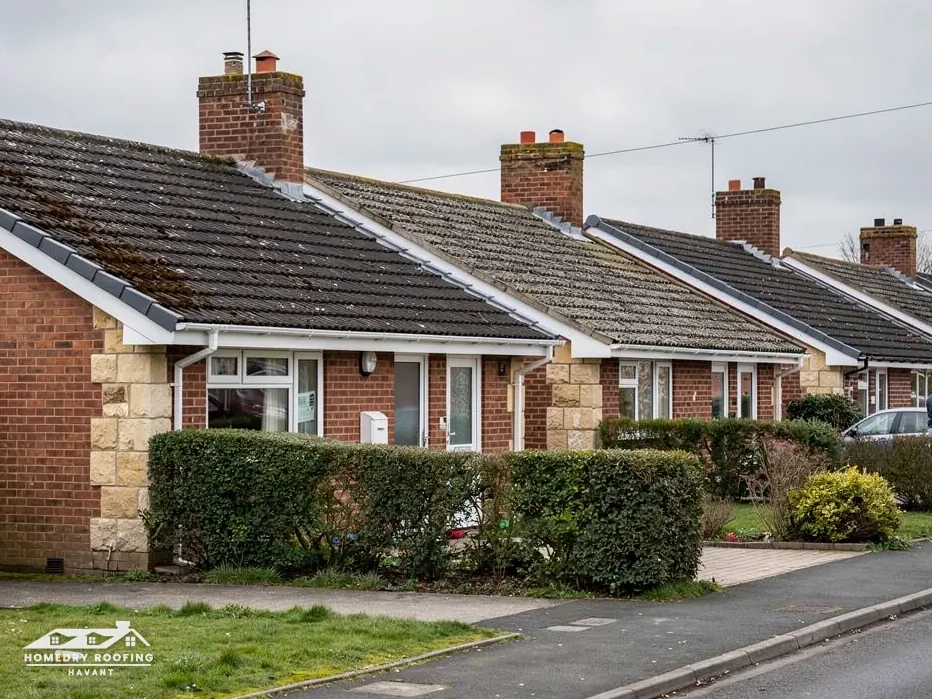
Bays
Above a Thornhill bay window, where a small roof of its own meets the wall of the house.
If the flashing along that wall lifts, rain runs behind it and marks the plaster above the glass.

Roof repairs and re-roofs for Thornhill homes, a district of Southampton, with bay roofs, hips and gutters traced to the cause and one written total price to follow.
10-year workmanship guarantee, in writing
Above a Thornhill bay window, where a small roof of its own meets the wall of the house.
If the flashing along that wall lifts, rain runs behind it and marks the plaster above the glass.
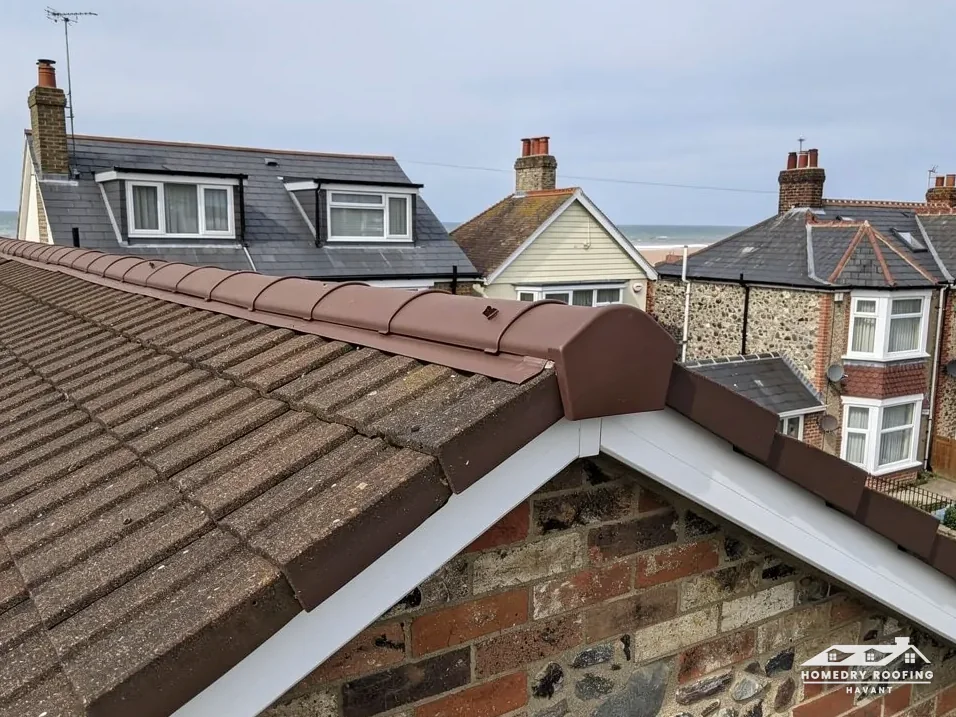
At an outward corner of a Thornhill roof, where a hip tile is bedded along the line two slopes share.
A hip tile that has moved lets rain reach the joint it was bedded to cover.

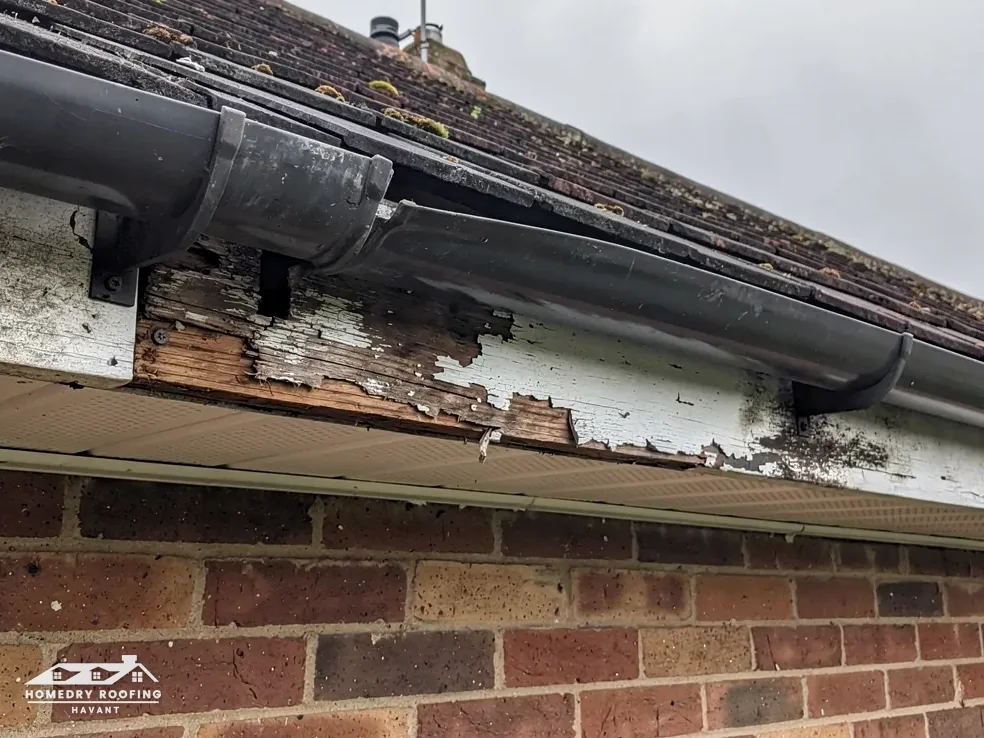
Along the roof edge, where a gutter collects the slope's water and moves it towards one outlet.
A weeping joint, or a sagging length, keeps the board behind it permanently damp.
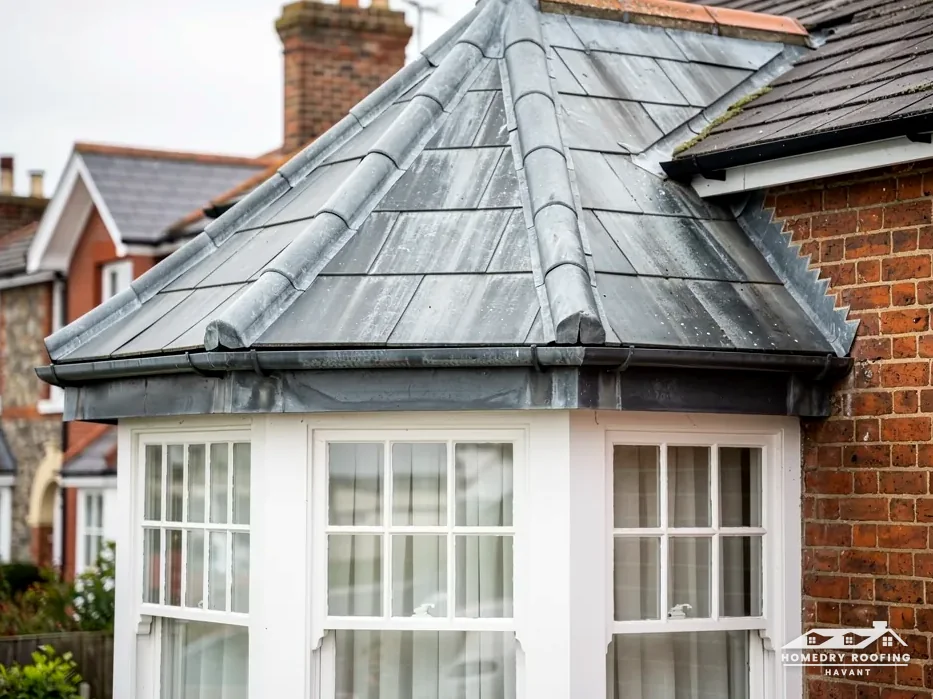
A bay roof is a small roof with a great many joints.
Over a bay window sits a little roof, and it is a meeting point for several parts of the house: a short ridge or a flat top, a pair of hips, a flashing along the wall above the glass, and a gutter that has to turn a corner. In Thornhill we start at the flashing where the bay's roof stops against the house wall, because water can run down that wall as well as fall on the bay. We look for lead that has lifted or split, for pointing above it that has dropped away, and for cut tiles that have slipped along the hips. A flat top gets a close look for splits in its covering and for pools after rain. Inside, a damp patch on the ceiling of the bay, or staining on the plaster above the window, is a clue to be followed up the wall to its source. Our lead roofing and leadwork page explains lead flashings and bay-top linings.
The Itchen Valley conservation area belongs to Southampton City Council, while Old Bursledon, Bursledon Windmill and Orchards Way, West End lie across the boundary in Eastleigh Borough. Southampton City Council is the body that says whether one of its areas reaches your road. An Article 4 direction can withdraw permitted rights, so check with Southampton City Council before any work. For a re-roof in Thornhill we confirm the Building Regulations route with your building control body before work starts. The roof rules sit in the planning guide for roof work, and this page leaves them there.
Nothing here is guesswork from the pavement. The survey touches each junction, and the findings name the tile, the stretch of lead or the joint at fault, with a photograph of it, so the work can be directed at one place and not spread across the slope.
A bay roof is small, but much of its length is a junction: ridge to hips, hips to main slope, flashing to wall. Each junction is an entry point if it fails, and from the ground they look alike. We climb to each one, photograph it, and mark the sound ones as well as the faulty ones, so the work goes to the junction that is letting the water in.
A damp mark on the plaster above a bay window, or a stain on the ceiling inside the bay.
Lead lifting from the wall above the bay, or a hip tile that has moved, so rain runs behind the metal or into the joint.
Spilling in light rain points to a blocked hopper, an opened joint or a fall that has gone, not to a gutter that is too small. We check those three first, because clearing a hopper is a smaller job than renewing a run.
Rain leaves the slope into the gutter, which has one task: carry it to an outlet. We follow the run from the first bracket and ask five questions. Does it fall towards the outlet? Do the joints weep? Has a length sagged enough to hold a pool? Is the hopper at the corner clogged with leaves? Does the downpipe take the water away freely? A gutter spilling in light rain can be blamed on its size, but a clogged hopper or a joint that has opened gives the same spill, so we rule those out before anything bigger is proposed. We probe the fascia behind the run with a screwdriver, because timber that has been wet gives way under the point. The gutters, soffits and fascias page lists the options, anything from tightening one bracket to a complete new run.
Beyond the gutter the downpipe carries the water to the ground, and its last metre gets as much care as its first. A pipe that ends short of the gully, a gully choked with silt, or a path tilted towards the wall each return the water to the house. We note what sits at the foot of every downpipe, so the findings cover the full route from roof edge to ground.
With every stage read, the verdict on the roof is a repair or a replacement, given with its reasons and photographs. A repair comes first where the covering and timbers are sound, and the roof repairs page shows the kind of work that means. Soft timber found at the eaves is traced back to its source before any board is replaced. The price arrives after the survey as a single written total, and the site is left clean.
The gutter run is the roof's last stage before the drain.
A fascia that looks fine from the drive can be soft behind its paint. A screwdriver tip pressed in at the back shows timber that has been wet for some time, and the check takes seconds. When soft wood turns up, the work moves to its cause, whether a weeping joint, a slipped bracket or an overflowing hopper, because a new board hung under the same drip would soon go the same way.
Because a bay roof packs several junctions into a small space: the flashing against the house wall, the hips, the ridge or flat top, and a gutter that turns a corner. Water can run down the wall above the bay as well as fall on the roof, so the flashing takes more than it appears to. We read each junction in order, then look at the ceiling and plaster inside the bay. The findings say which junction is at fault, with a photograph, so a whole bay roof is not recovered when one flashing needs attention. The same visit looks at the main slopes, so one report covers the lot.
The two are separate. For Building Regulations, the Planning Portal sets two limits: less than 25 per cent of the building envelope and less than 50 per cent of the roof. Staying under both, an application is not usually required; separately, a new covering 15 per cent or more heavier needs approval, wherever the roof sits. In Thornhill we confirm the building regulations route with your building control body before work starts, and hand you the reply in everyday words. Planning permission is a different question, answered in our planning guide, which covers listed and conservation area addresses too.
Southampton City Council says: "Contractors who hold £10 million public liability insurance may apply for a licence." Southampton City Council's fee is £496 minimum, made up of a £157 licence fee, £146 for pre- and post-inspections, a refundable £157 deposit and £36 per weekly inspection, and the licence is renewable weekly at £36 per week. We arrange it with our scaffolder, and your part is limited to agreeing the working dates with us once the survey is accepted, which lets the weekly renewal be planned around the length of the job.
Itchen Valley is Southampton City Council's own; Old Bursledon, Bursledon Windmill and Orchards Way, West End are Eastleigh Borough Council's, beyond the city boundary. Whether a Thornhill address falls inside a conservation area is for Southampton City Council to say, so put the question to it directly. For a house, a new roof covering is ordinarily permitted development, inside a conservation area too, but a direction under Article 4 can withdraw permitted rights, so check with Southampton City Council before booking. The council's reply can be added to our survey papers, with the full roof rules in the planning guide.
Ask Southampton City Council which directions apply to your road, what each one covers, and whether any of it touches roof work. A direction under Article 4 can withdraw permitted rights, so check with Southampton City Council before work begins, rather than assuming a re-roof is free of conditions. Ask for the answer in writing, because it can then be filed with the survey notes and the quote. If the reply raises planning questions, our planning guide explains how roof work fits the permitted development rules, and we are happy to go through it with you.
Not if the lead is in good order apart from one lifted edge or a loose fixing. MyJobQuote says correctly installed lead flashing can last for over 80 years, though that is a figure for flashing; a local repair suits a sound run. Thinning or splitting along the run calls for a different answer: that length is cut out and relaid with fresh fixings and repointing at its top, never sealed over. A photograph of the lead shows which case applies, and the findings spell out the choice so that the decision stays with you.
A bigger gutter may not be the answer. Four faults produce a spill: a hopper full of leaves, an opened seam, a dropped bracket that lets the run sag, or a lost fall, and each is a smaller job to correct than a new run. We look at all four before suggesting anything larger, and the findings show the cause in a photograph, whichever it turns out to be. Soft fascia timber behind the run is traced back to the same fault, so a new board is not hung beneath a continuing drip, and the work follows the leak to its source.
A survey, and then a document. The survey covers the roof, the loft and the drainage route; the document sets out what was found in plain English, with photographs, and says whether the roof is a mending job or needs covering again, with the reasons. One written total price goes with it. Check any other quote for scaffolding and VAT, since a figure that leaves them out is not the same offer. Expect prices to be good and fair, and expect that once the crew has gone the drive and garden are clear of anything dropped during the work, with nothing left for you to sweep up.
You'll get one written total price.
Fill in what you like. It opens WhatsApp with your message ready to send.