
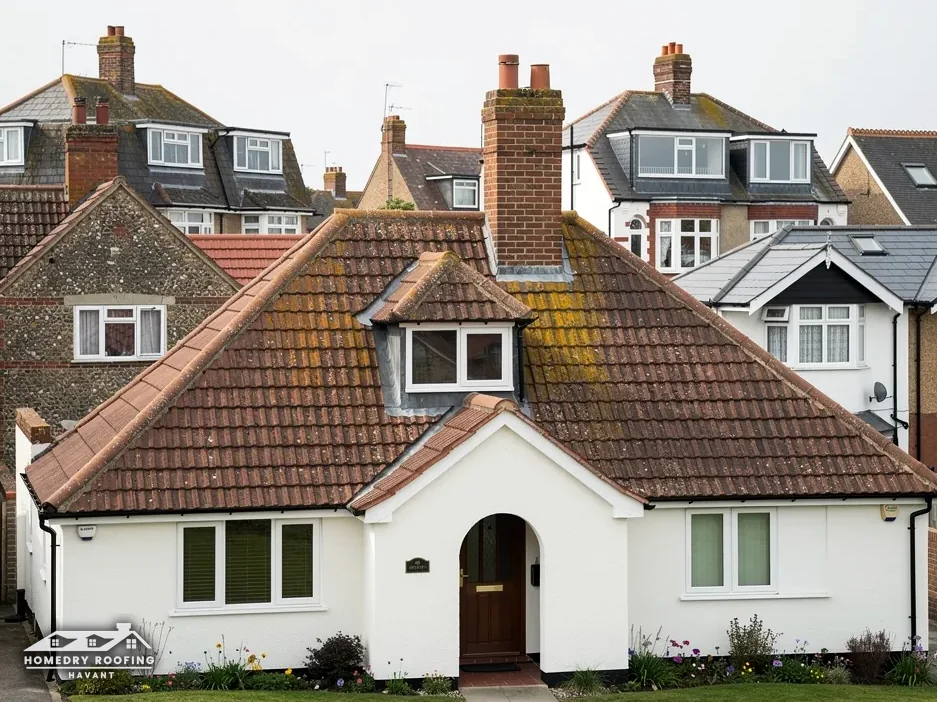
Battens
Timber strips fixed across the rafters; each tile or slate hangs from one.
Softened or split battens let a covering sag and slip out of line.

Bursledon lies 18.4 road miles west of Havant and falls under Eastleigh Borough Council. Each roof is read from the loft upwards, and one written total price follows the survey.
10-year workmanship guarantee, in writing
Timber strips fixed across the rafters; each tile or slate hangs from one.
Softened or split battens let a covering sag and slip out of line.
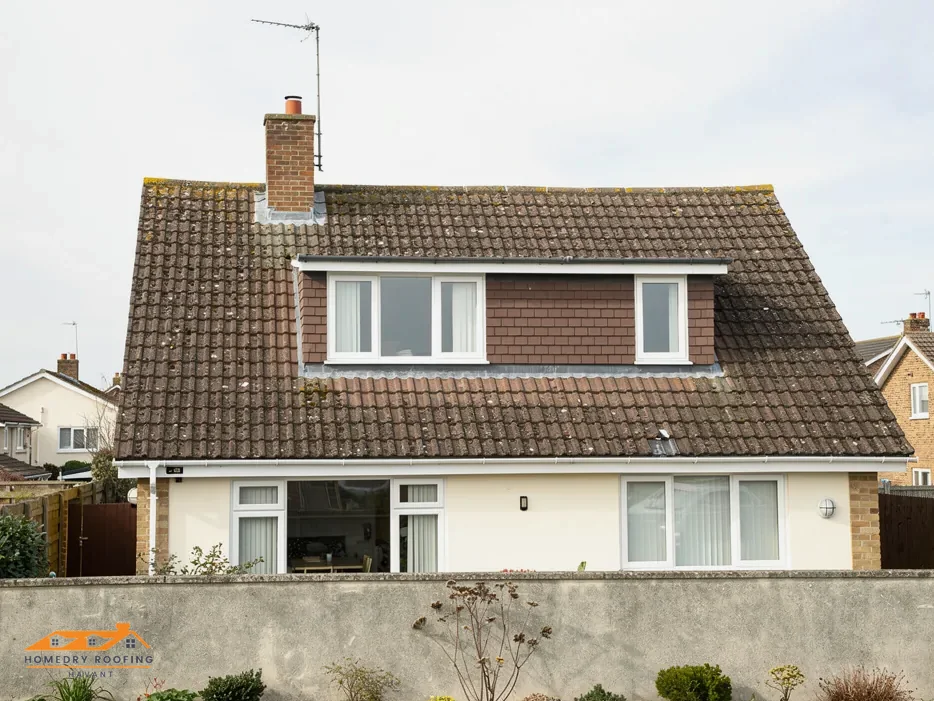
The membrane beneath the covering that carries stray water down to the gutter.
A torn or sagging sheet lets that water drip onto the loft floor.
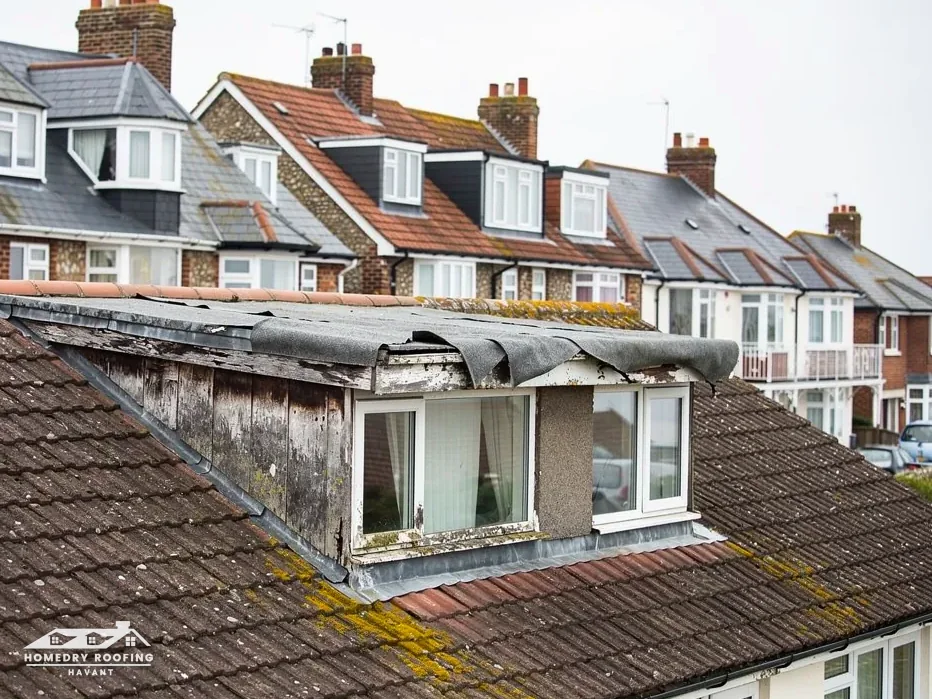
A roof window set into the slope between two rafters, with flashings round its frame.
A perished seal there leaves a damp reveal beside the glass.
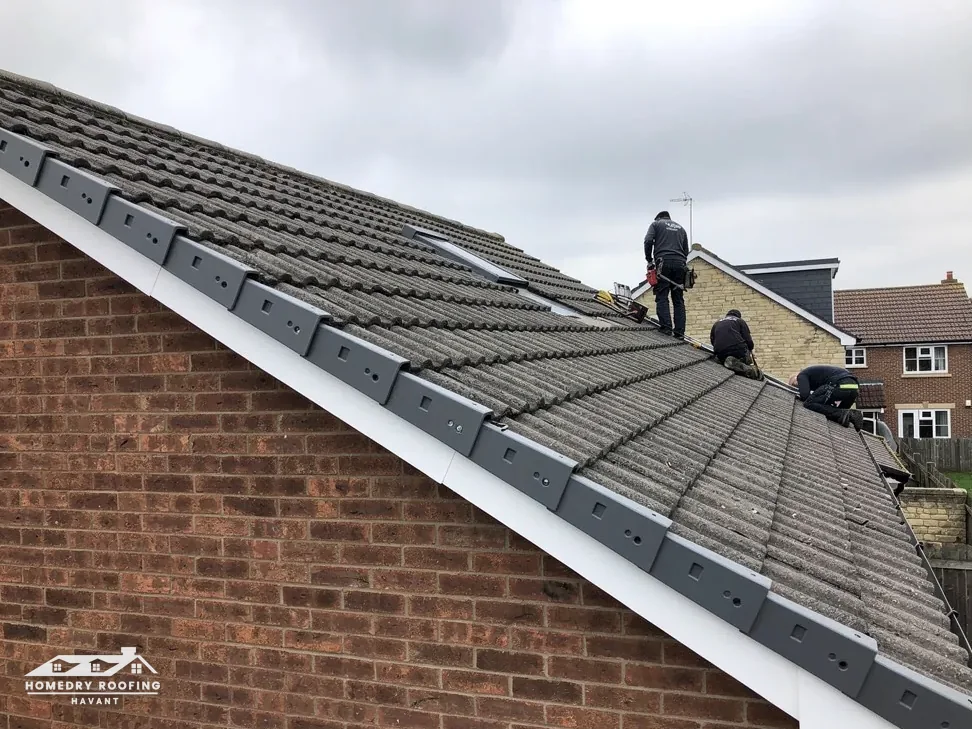
The roof seen from the street hangs on what stays out of sight.
Under every tile or slate lies a hidden layer that decides how the roof behaves: timber battens nailed across the rafters, and an underlay sheet stretched beneath them. A Bursledon survey goes up into the loft with a torch to read it from below. We look for daylight where none belongs, an underlay sheet that has torn or drooped, battens turned dark or spongy, and nail tips poking through. Outside, a tile that has slipped on its batten shows from the ground as a line out of true. Earlier repairs seen from the loft, such as a patched batten or a taped tear, are listed too, since they mark where the roof has been dealt with before. When those faults are scattered across a slope rather than local, the work moves from a patch towards a re-cover, and the findings say which. Our roof inspections page sets out what a survey records.
The Church of St Leonard in Bursledon is Grade II* listed, and the Church of England uses it for worship, so its roof is a matter for the faculty system, not for listed building consent. K6 Telephone Kiosk, High Street and The Old Cottage are Grade II listed too; works that affect the character of a listed building need listed building consent from Eastleigh Borough Council, and the list entry on Historic England's site shows what is covered.
Old Bursledon is a designated conservation area. An Article 4 direction can withdraw rights that would otherwise apply; whether one touches your road, and which rights, is for Eastleigh Borough Council to confirm, so check with Eastleigh Borough Council first. This page does not describe the contents of any direction. The planning guide for roof work holds the rules that are not tied to one place.
Standing in the loft with the lights off is the simplest test there is. A thin bright line between tiles marks a gap, a dark stain on a rafter marks water that has run along it, and a damp batten gives under a thumbnail. We photograph each find with the torch beam beside it, so the findings can show you the same thing you would see if you climbed up with us.
A drip into a loft bucket on a wet night, or a stain that spreads outward along a ceiling.
A torn or sagging underlay, or a batten that has softened, letting water through where tiles overlap.
Mist between the panes means the sealed glazing unit has failed, which is a fault of the unit and not of the roof around it. We confirm that the frame, flashing and seals are sound before saying a replacement unit is the answer.
A roof window means an opening cut through the slope and framed between two rafters, so it brings its own seals, its own flashings and its own way of failing. On a Bursledon roof we examine the flashing kit round the frame, the rubber seals, the cill at the bottom edge and the glazing for mist between the panes. Any rubber seal that has hardened or cracked is photographed beside the frame. A damp reveal beside the glass does not always blame the window: tiles slipped above it can push water into the frame, so the trace begins higher up. Our roof windows and skylights page covers replacement, which depends on a sound frame and a unit that fits the opening.
Land near Bursledon sits in Flood Zone 2 according to the Environment Agency. That tells you about the ground, and no roof repair or standard changes because of it. The sensible use of it is to check where roof water goes: each downpipe is followed to its outlet, gutters are run with water from a hose where access allows to see whether the fall carries it away, and the findings note any pipe that empties against a wall.
Re-roofing is covered by a Planning Portal test with two limits, less than 25 per cent of the building envelope and less than 50 per cent of the roof. Inside both, no building regulations application is normally required, and approval is needed wherever the new covering adds 15 per cent or more to the roof's weight. In Bursledon, Eastleigh Borough Council runs building control through a partnership arrangement with Southampton City Council, and that is the team we ask before any work starts, so the route is known before you commit. Its answer is relayed in everyday language and kept with the survey papers, and the decision is yours.
Every opening in a slope needs a seal of its own.
When water shows at the side of a roof window, the quickest conclusion is to blame the unit. We take the longer route upwards first: the tiles above the frame, the way run-off is directed round it, and the flashing along each edge. Then the seals and the glass. Buying a new unit to cure a fault that sits two courses higher helps nobody, and the findings name the true source before any price is written.
Map of Bursledon and the places around it, with the dashed line of our 30-mile service area from Havant. The same places are listed below the map.
The underside of the roof tells things the outside cannot. With a torch and the lights off, we look for daylight at the joints between tiles, for an underlay sheet that has torn or sagged, for battens that have darkened or softened, and for nail points that have come through. Wet marks on rafters show where water has been running, which is not always where the stain appeared on the ceiling, so the loft is read from the lowest point upwards. Everything found is photographed from several angles, and the findings say whether the faults are local, so that a patch will do, or spread across a slope.
Under the Planning Portal's guide, a re-roof affecting less than 25 per cent of the building envelope and less than 50 per cent of the roof needs none, in the normal run, while approval is required wherever a new covering adds 15 per cent or more to the weight of the roof. For Bursledon addresses we put the route to Eastleigh Borough Council's building control, which works through a partnership arrangement with Southampton City Council, before any work is booked. Its answer reaches you in everyday language, set beside the survey findings, and the choice remains yours alone.
Old Bursledon is a designated conservation area, but its edge is a matter for Eastleigh Borough Council, which can say from a house number and road whether an address lies inside. Ask, and keep the answer: it can be filed with the survey photographs. A house outside the area gets the same survey, to the same depth. Where the roof rules come from is explained in our planning guide, which is the one place on this site that sets them out, and the council's reply to you can be added to the survey notes for later reference.
Only Eastleigh Borough Council can say whether an Article 4 direction reaches your road in Old Bursledon and what it covers. The scope of any notice cannot be summarised from here. A direction like this can remove permitted development rights, which is why Eastleigh Borough Council should be asked before roof work is planned, and the question is a short one. If it does apply, we go through the notice together and write the price once its requirements are clear, never before they are known, so that nobody is committed to work the direction would not allow.
The Church of St Leonard is Grade II* listed, and the Church of England uses it for worship, so repairs go through the faculty system and not through listed building consent. A listed building outside that arrangement is different: K6 Telephone Kiosk, High Street and The Old Cottage are Grade II listed, and alterations touching their character would call for listed building consent from Eastleigh Borough Council. Historic England's list entry sets out what each protects, and reading it comes first, before any materials are ordered or dates are agreed with anyone, since a listing can restrict what may be altered.
Hampshire County Council licenses scaffolding on the highway in Bursledon, and it states: "Scaffolding companies must apply on behalf of their customers." Its fee is £211.90 on application for the first 2 weeks and £72 for each additional 2-week period, with 10 clear working days' notice. We arrange it with our scaffolder, so the programme you receive already allows for that notice, as the council asks, and the waiting time is planned in from the first conversation instead of turning up as a delay once the work is booked.
It means nothing new for the roof itself. In the Environment Agency's mapping, land near Bursledon is Flood Zone 2, which describes the ground and sets no repair rule, so the survey is carried out in the same way as anywhere else. The useful part is practical: roof water should have a clear route away, so the survey follows every downpipe to its end and notes any that discharges against a wall. For flood risk at one particular property, the Environment Agency publishes the map and is the body to ask, and the survey notes on gutters and gullies stay with you either way.
Once the survey is done, one written total price is given, with the findings attached. It lists the job, the covering and the fixings and states whether VAT and scaffold are within it, and where a repair is sound it is the first thing put forward. Good and fair is the standard set for the figure, and a useful comparison is to request the same particulars in writing from each firm quoting, since a lower-looking figure may have left something out. Photographs of the roof accompany it, so the description can be checked against the roof itself by anyone who looks.
You'll get one written total price.
Fill in what you like. It opens WhatsApp with your message ready to send.