
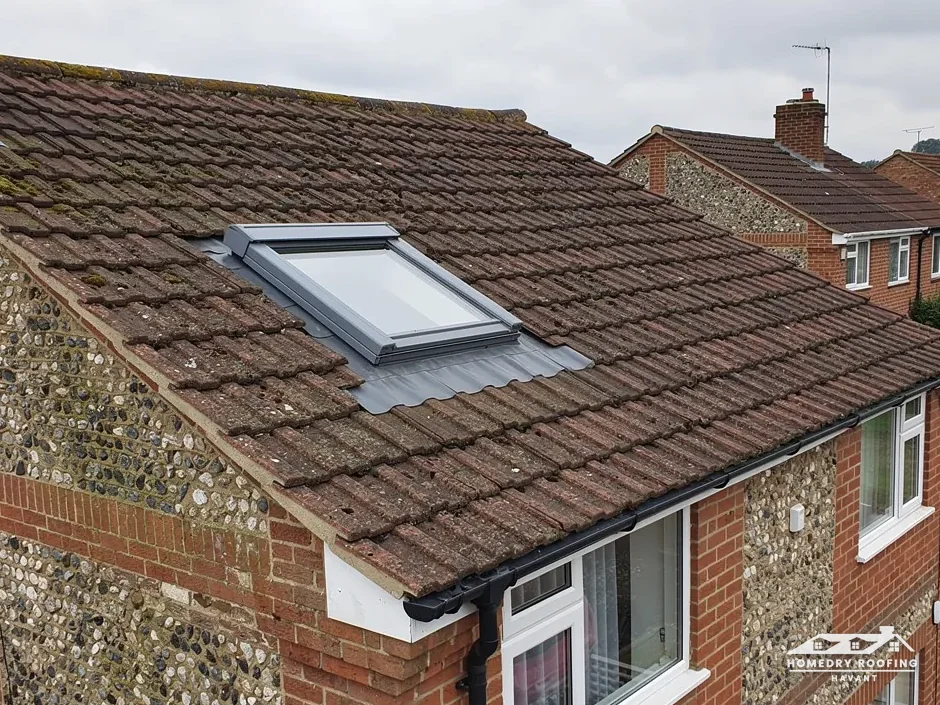
Why one figure does not fit every window
A roof window works as a system. The flashing leads rain round the frame, the sash shuts against a rubber gasket, and the glass is a sealed unit whose edge seal can fail on its own. The frame, whatever it is made of, lasts as well as it has been kept dry.
| Part | What wears | How it shows |
|---|---|---|
| Gasket | Rubber perishes and loses its grip | Draughts, or wet at the sash in driving rain |
| Hinges | Pins and screws loosen | A dropped sash that rubs or sits out of square |
| Glazing unit | Edge seal fails | Mist between the panes |
| Flashing | Laps lift or corrode | Damp lining or a stain below the frame |
A window can need a new gasket long before its glass or its frame gives any trouble, and a perished hinge can be renewed without touching the glazing. Ageing is therefore read part by part, and the date on the invoice tells you little. Two windows fitted together can be in very different states a few winters later, depending on aspect, ventilation and how well the surround was dressed.
Figures that exist for the roof round the window
Published lifespans exist for the materials that surround a window, and they show how wide the range runs.
- MyJobQuote says lead flashing that is correctly installed can last for over 80 years.
- HomeBuilding gives approximate lifespans of 100+ years for Welsh slate, 60-80 years for clay tiles and 40-50 years for plain concrete tiles.
These figures are for the materials, they are approximate, and they are no promise for a window, yours included. Where the covering and the lead round a frame are sound, a new window can be set into them with some confidence. Where they have worn, a new window set into them takes on the same weak points.
That is why the survey reads the surround along with the glass, and why a new frame put into a tired flashing leaves the old fault in place. Where an old window was flashed in lead and the lead is sound, it may be kept, and the quote says whether the flashing is new or kept.
A quote or brochure that gives a lifespan for the window itself should say where the figure comes from.
Signs of wear to look for
Look from the room, in daylight, with the sash open and then shut. These are the signs that a part is on its way out.
- A gasket that is cracked, flattened or lifting away from the frame.
- A hinge that has dropped, so the sash rubs or will not pull tight.
- Mist or a film between the two panes that no cloth will reach.
- Timber round the frame that is dark, soft or flaking at the corners.
- Dampness creeping along the foot of the lining beneath the sill.
- A ceiling stain a good way beneath the window.
From the ground, look for moss banked against the lower edge of the window, and for slipped or cracked tiles or slates in the surround. Please keep off the roof, and take photographs from the ground to send us instead. Pictures taken in daylight, with one of the whole slope and one close to the frame, tell us a good deal.
One sign alone can mislead, so the survey puts them together to find the part that has actually failed.
Repair, reglaze or replace
The decision follows the part that has gone. A worn gasket, or a hinge that has dropped, is a repair to the window itself. A misted unit in a sound frame may be reglazed, which our answer on reglazing a Velux window explains. A soft frame, a worn flashing or a model that can no longer be supplied points towards fitting a new window of the same size, and our guide to replacing a Velux window walks through that job.
For scale, £1,100 is MyJobQuote's September 2026 average for one standard mid-range Velux unit, a published figure that cannot see your roof.
Our figure comes in writing as one total, after the survey. Ask any quote whether VAT and scaffold are included, and what is planned for the flashing. Clearing moss, leaves and grit from the head of the frame from time to time keeps rain running past it. Our roof windows and skylights page describes the wider work.
An older window that still works needs no replacement just because of its date, and the survey says which route fits.