
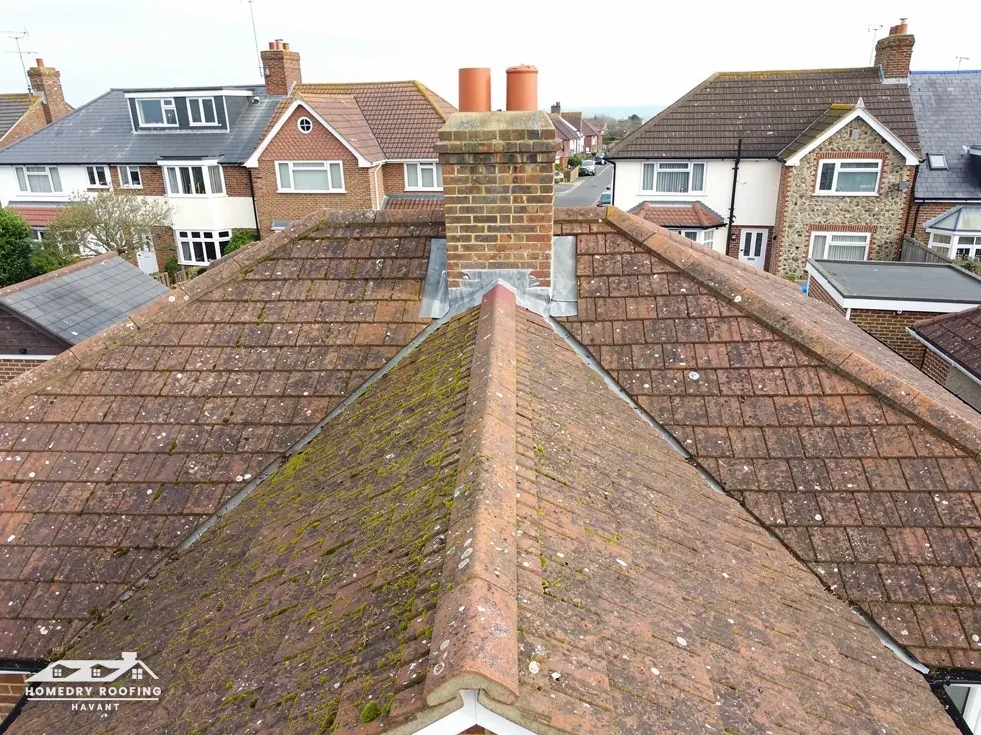
From the ground, a roof tells you very little. You cannot see the fixings, the flashings or the felt, and you should not climb up to look. That is exactly why the person you pick, and the paper they give you, matter so much more than they do for a job you can inspect with your own eyes.
This post is written for anyone checking any roofer, in Havant or beyond, including firms we will never meet. It is a set of checks you can run from your kitchen table: what the written price should say, whose name is on the contract, how to treat someone who knocks on the door after a storm, what the law gives you when you sign at home, and where to turn if the work goes wrong.
None of this needs special knowledge. It needs a little patience and a readiness to say no to a deadline. A sound roofer will not mind being asked any of it, and the answers tell you more than a business card ever will.
Start with a written total you can read
The first and simplest test is whether a written total is on offer at all. Someone who has been up on the roof, or at least looked at it properly, ought to be able to put one price on paper and say what it covers. A price quoted over the doorstep or a text message, with no description of the work, is a guess, and it can grow.
Look for these on the page before you agree to anything:
- One total, with a clear statement on whether VAT is in it.
- The work described in plain words: what comes off, what goes on, and which parts of the roof are included.
- Whether scaffold is part of the price, and who deals with any licence.
- Where the rubbish goes, and what condition the site is left in.
- How any extra work would be agreed, in writing, before the price changes.
Vague wording is the warning, not the length of the document. A line that says only "roof repairs" with a number beside it leaves you nothing to hold anyone to. A line that names the ridge, the valley or the chimney flashing, and says what will be done to each, can be checked afterwards.
Our post on how roofers price a job explains what goes into the total and why a quote that names its parts is easier to hold to account.
Who the contract is with
Ask a simple question before you sign: whose name is this contract in? A genuine firm gives you a name you can write down, a postal address, a phone number and an email, and those details appear on the quote. If the only contact is a mobile number and a first name, you have little to go on when something needs putting right.
It also helps to know who will be on your roof. A roofer may use their own crew, or may bring in others for part of the job. That is not a problem in itself, but the written terms should make clear that the firm you contracted with answers for the work, whoever carries it out.
The law puts a floor under every job. Under the Consumer Rights Act 2015, section 49, a service must be performed with reasonable care and skill. That applies to a roof repair as it does to a haircut, and it gives you something to point to if the work falls short.
A few details worth writing down for yourself:
- The name and address on the quote, checked against what you were told on the phone.
- The date of the survey and what the roofer said was wrong.
- A phone number that someone answers, called once before you sign.
- Any promise made out loud that matters to you, asked for in writing.
None of this is about suspicion. It is about making sure that, if there is ever a disagreement, there is a record, and a person at the other end of it.
The knock at the door after a storm
High winds and heavy rain can bring callers who say they were passing and noticed a loose tile on your roof. Some may mean it. The way to treat every one of them is the same: do not decide on the doorstep.
A caller who tells you the roof is dangerous and must be fixed today is asking you to skip the steps that protect you. You can ask to see photographs of the fault, then get your own survey from a firm you chose, on a day that suits you. A real problem will still be a real problem tomorrow, and a short wait costs far less than a bad contract.
If the damage is real and you want a temporary fix, make the roof safe first, take photographs, and tell your insurer before any repair is agreed. The Financial Ombudsman Service says it will usually look at expert reports and photos of a property's condition, so pictures taken before anything is moved are worth having. Keep every receipt.
Here is how the paperwork changes with the way the visit came about:
| What happened | What the law says |
|---|---|
| A trader surveyed at home, you signed there | You can cancel within 14 days, and work starts sooner only on your written request. |
| You asked for a visit to carry out urgent repairs | No cancellation right applies to that visit. |
The first row is for a contract concluded at your home, which includes a doorstep sale. The second is why asking someone in to deal with an urgent leak is different, and why you should be sure you want the work before you invite anyone in.
Pressure, deposits and how you pay
Pressure is a warning sign to take seriously, and it can take several forms. A price that is good only if you say yes now. A story about materials left over from another job. A demand for cash, or for payment in full before a tile has been touched. None of these is proof of anything on its own, but together they tell you to slow down.
Roofing does involve costs before work starts, so a firm may ask for a deposit. The useful questions are what the deposit pays for and when the rest falls due. Sensible terms tie payments to stages you can see: materials delivered, the strip finished, the roof closed in, the site cleared. Asking for these stages in writing is reasonable, and a firm that refuses to explain its payment terms has told you something.
A few habits protect you whatever the firm:
- Pay by a method that leaves a record, not by an envelope of cash.
- Get a receipt that names the job and the amount.
- Do not pay for work that has not been done, and hold back the last payment until you have walked round with the roofer and are satisfied with what you see, from the ground and from photographs of the roof itself.
- Ask for the guarantee terms on paper if one is offered.
A firm that is run properly is comfortable with all of this. It has its own reasons to want clear paperwork, because it protects the firm as well as you.
Checking a good roofer in Havant
Once you have ruled out the warning signs, you can look for the positive ones. These are questions to put to any roofer you are thinking of, and the sort of answer a sound one gives.
| Question | A clear answer |
|---|---|
| Have you been on the roof? | Yes, with photos of what was found, explained in plain words. |
| Is the price one total? | Yes, in writing, stating what is and is not included. |
| Who arranges the scaffold licence? | The firm does, with its scaffolder, if the scaffold stands on the public highway. |
| Will building control be told? | The roofer confirms the route with your building control body before work starts. |
The third row has a local source. Hampshire County Council, the highway authority for Havant, says scaffolding companies must apply on behalf of their customers, so a firm that tells you to apply for the licence yourself is out of step with that council's own page.
The fourth row matters because the rules change with the work. Planning and Building Regulations are separate questions, and a roofer should know which applies. For anything affecting a listed building or a conservation area, Havant Borough Council customer services can be reached on 023 9244 6019, and our planning permission for roof work guide sets out the national rules.
If you are weighing up a repair against a replacement, a good roofer says which and why, and will repair first where the repair is sound.
If the work goes wrong, who to complain to
Start with the firm, in writing, saying what is wrong and what you want done about it. Keep the letter or email, because a dated record of the complaint is useful if it goes further.
If the firm does not put it right, the Citizens Advice consumer helpline is on 0808 223 1133. Citizens Advice says it can "pass information about complaints on to Trading Standards (you can't do this yourself)". It also explains your options for disputes, and since 6 April 2026 the duty to tell customers about dispute resolution has sat in section 308 of the Digital Markets, Competition and Consumers Act 2024.
Where the damage was caused by a storm and you have an insurance claim in progress, a complaint about how the insurer handled it goes to the insurer first. For most complaints a business has up to 8 weeks to consider it, and the Financial Ombudsman Service on 0800 023 4567 can look at the complaint within 6 months of the insurer's final response.
Where to read more
You can read more on cancelling at Citizens Advice. Our own answer on cancelling a roofing contract covers the same ground for roof work.
The best protection is the one you set up before you sign: a written total, a named firm, a record of what was promised and enough time to think it over without anyone at your shoulder. If you would like a survey and a written price from us, the HomeDry Roofing Havant homepage has the form.