
Stacks
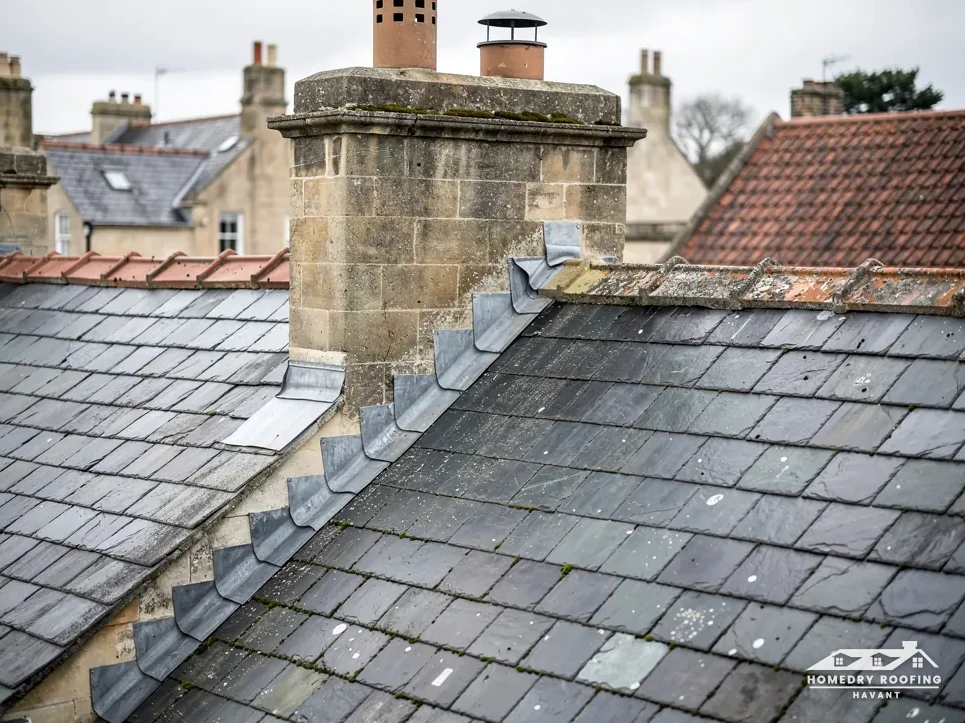
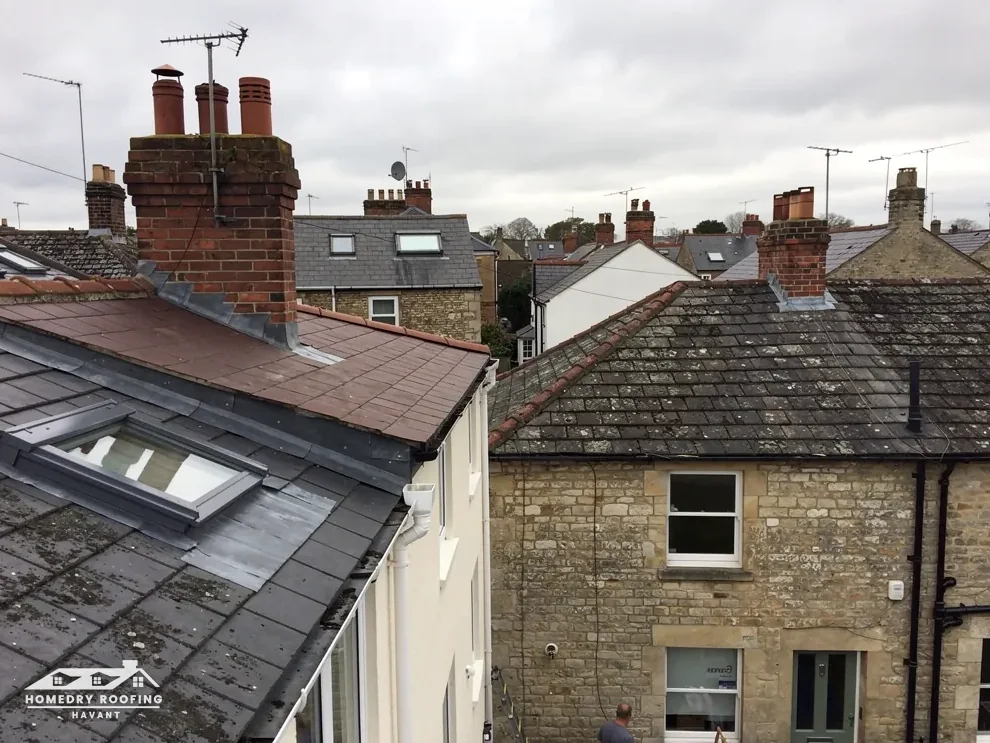
Where a Southampton chimney climbs through the slope with lead dressed around its foot.
One lifted corner in that lead is enough to stain the bedroom wall beside the breast.

Southampton is 21 road miles west of Havant; for the city's chimney stacks, parapet walls and commercial roofs, the job starts with finding where the water entered, not where it landed.
10-year workmanship guarantee, in writing
Where a Southampton chimney climbs through the slope with lead dressed around its foot.
One lifted corner in that lead is enough to stain the bedroom wall beside the breast.
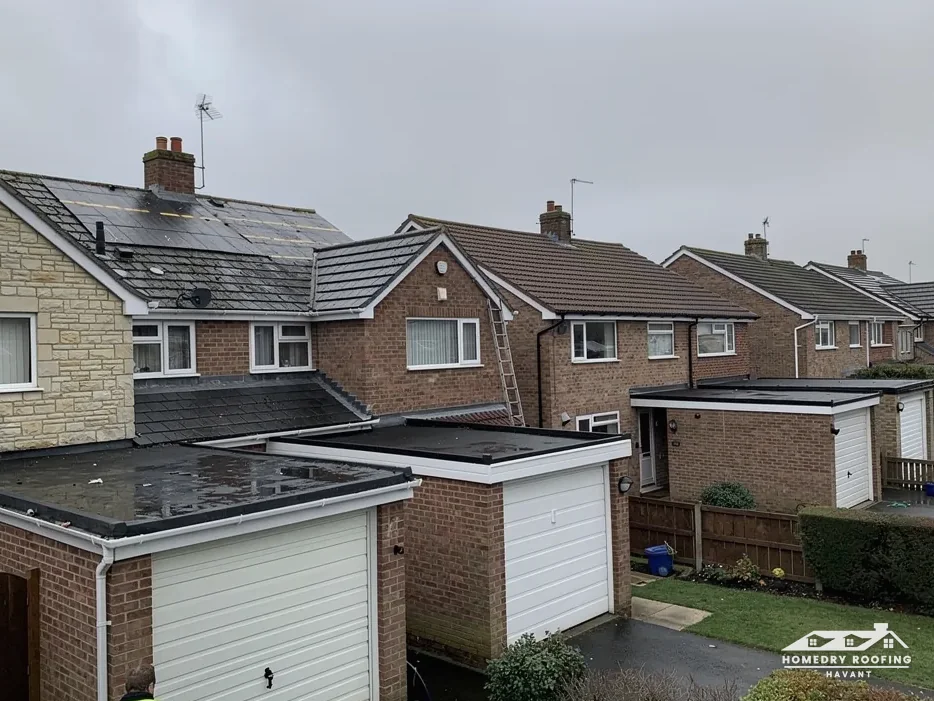
Where a wall carries on above the roof edge and a coping stone caps its top.
A cracked joint in that capping soaks the masonry, then the ceiling below it.
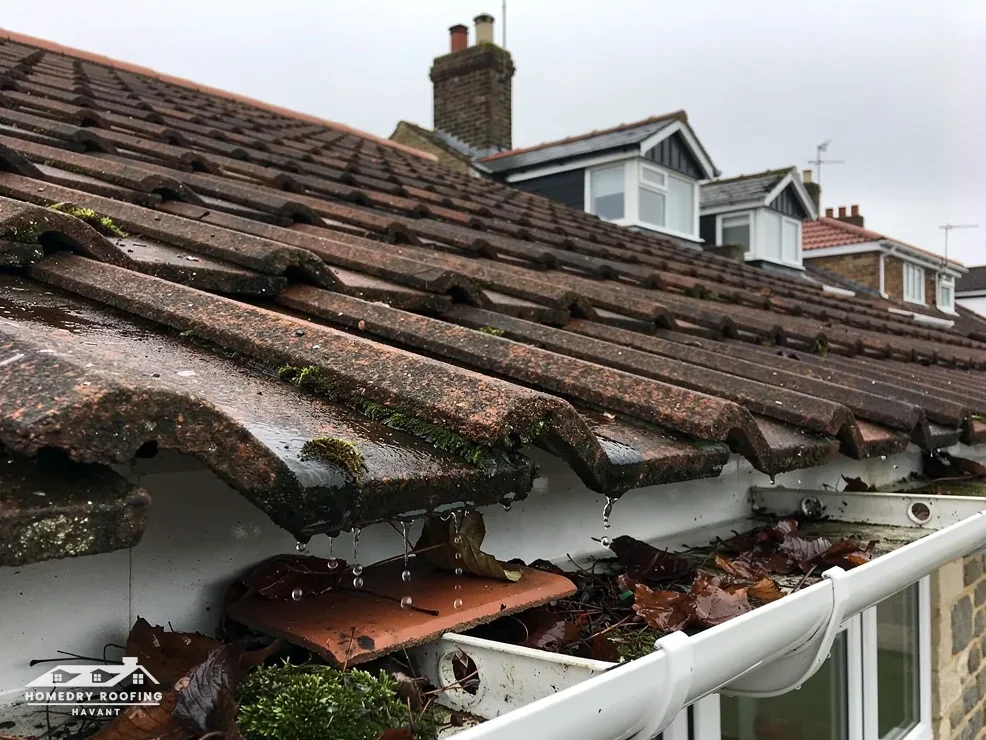
Where a gutter hidden behind a parapet gathers the roof's water and carries it to a pipe.
Silt in that channel makes it brim over the edge and run down the wall inside.
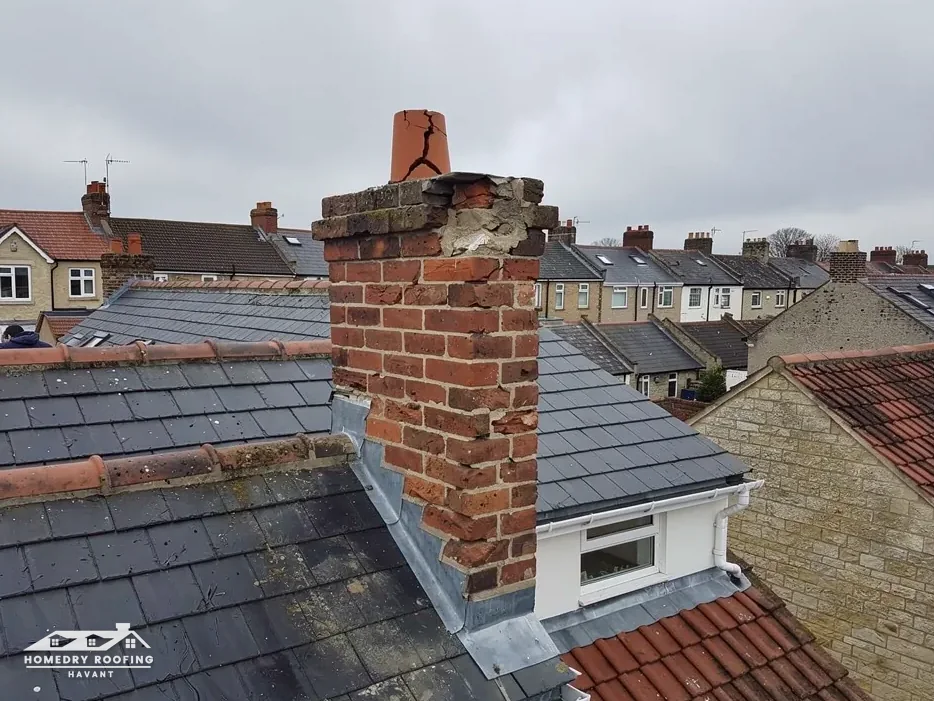
The chimney is forgotten right up to the first stain.
A chimney can go unnoticed for years, until a stain appears on the wall below it. The survey therefore starts at the stack's foot, where lead has to be dressed over the join with the slope, and climbs from there: stepped flashings, the mortar line that pins them, the cement collar at the pots and the brick above for open joints. A leaning stack or a cracked cap is noted too, because a stack that moves will open the lead again however well it was dressed. Our chimney repairs page deals with rebuilding and repointing, while our leadwork page shows how flashings are cut and dressed.
Five conservation areas lie around the city centre: Old Town North, Canute Road, Old Town South, Oxford Street and Old Town West, all Southampton City Council's. The National Heritage List has three Grade I entries nearby, the Church of St Michael, Bar Gate and Guildhall and Tudor House Museum. St Michael's is in use for Church of England worship, so its works go through the church's faculty system and not listed building consent. Town Wall: the Bar Gate is a scheduled monument, where consent is required by the Ancient Monuments and Archaeological Areas Act 1979, section 2. A privately owned listed house follows section 7 of the 1990 Act, and the council is where that question is answered.
Since an Article 4 direction may take rights away, ask Southampton City Council about your own street before touching a stack or slope that can be seen from it. Our planning guide for roof work holds the national rules, so they are not repeated on this page. Whatever the council tells you is written into the report with the date, ahead of any price.
The loft tells the story the slope hides. With a torch we follow the breast and the timber beside it, looking for damp lines, darkened brick and rafters stained at their ends. Those marks show whether water got in at the lead, at the cement collar or further down the flue, and the pictures from above and below go into the report together, so the entry point is shown to you instead of described.
A yellowing stain by the flue breast in a bedroom, widening after several days of rain.
A corner of lead standing off the brick, or a cracked collar at the pots that lets water slide down the flue.
Yes, a cracked stone can be rebedded or replaced alone, provided the joints either side are sound and the lead beneath has not been wetted through. We check the stones either side and the tray below before saying so.
Where a wall continues above the roof edge, the roof has to be tied into it on one side and drained away from it on the other. A parapet survey therefore reads three things in order: the coping along the top for cracked or loose stones and open joints, the lead tray or flashing beneath it, and the hidden gutter behind, which we call the gully. Silt in a gully stops it draining, and a gully that brims over runs down the inside of the wall. Our commercial roofing page describes work on larger buildings, and the report says whether a stretch needs clearing, pointing or relaying, with a photograph of each stretch it names.
The Planning Portal's test for building regulations is this: re-roofing that stays under 25 per cent of the building envelope and under 50 per cent of the roof is outside the application rule as a general matter, but a covering 15 per cent or more heavier sets off a separate approval step regardless of size. Southampton addresses go to your building control body, and its answer is passed on to you before any date is held, so the route is settled while the plan can still change.
Poles and boards over a street need a highway licence, and in the city it is Southampton City Council that grants one. Southampton City Council invites contractors who hold £10 million public liability insurance to apply for a licence; its minimum fee is £496, and the licence is renewable weekly at £36 per week. We arrange it with our scaffolder; the start we propose is shown to you in advance, and nothing is promised beyond what the licence allows. That keeps a larger roof from standing under scaffold longer than the work needs.
A hidden gutter does its work out of sight and fails the same way.
A gully that is dry on a wet morning is as informative as one that is full. Standing silt means the outlet has been choked for some time, and a clean trough with a wet wall beneath points back to the coping or the lead tray. We photograph the gully, the outlet and the wall together, so the cause is shown and not argued, and the repair is aimed at it.
The join between the stack and the slope is where one trade stops and another starts, which makes it the likeliest entry for rain. We check the lead apron for lifted edges, the pointing that pins it for gaps, the collar round the pots for cracks and the brick above for open joints, then read the timber beside the breast from the loft. A stain indoors can sit well away from the true entry, so the trace climbs from the mark. The report says whether the lead needs refixing or renewing, and nothing on a sound stack is touched, which keeps the repair modest.
Re-roofing that touches under 25 per cent of the building envelope and under 50 per cent of the roof is not caught by the application rule, according to the Planning Portal, whereas a covering 15 per cent or more heavier sets off approval regardless of how much of the roof is replaced. Your building control body covers Southampton addresses, so yours is asked before work is booked. Its reply reaches you in everyday language, and we file a copy with the survey notes so the position is on record for whoever owns the house next. If a structural opinion is requested, that is flagged before a date is held.
Poles or boards over a public footway or road need a licence under section 169 of the Highways Act 1980, and within the city it is Southampton City Council that grants it. Contractors who hold £10 million public liability insurance may apply for a licence, according to Southampton City Council. Southampton City Council's minimum is £496: a £157 licence fee, £146 for pre- and post-inspections, a refundable £157 deposit and £36 per weekly inspection, renewable weekly at £36 per week. We arrange it with our scaffolder, with the dates shown to you before anything is lodged, so the booking never gets ahead of your agreement.
Five sit around the centre: Old Town North, Canute Road, Old Town South, Oxford Street and Old Town West, each held by Southampton City Council. The boundaries are the council's to confirm, so put your own road to it rather than reasoning from a street name. Re-covering a home counts as permitted development as a general matter even there, but a direction under Article 4 may strip further rights away, so the council is the one to consult. The planning guide covers the national picture, and the answer you are given is entered in the report with the date.
The Church of St Michael is listed Grade I (list entry 1179142) and holds Church of England worship, which routes its works through the church's own faculty system, outside listed building consent. Bar Gate and Guildhall is listed Grade I (1092087), and Town Wall: the Bar Gate is a scheduled monument (1001930), where consent is required by the Ancient Monuments and Archaeological Areas Act 1979, section 2. A privately owned listed house needs consent under section 7 of the 1990 Act for work affecting its character, and the council deals with that question.
From the roof each stone is tried by hand for movement, the joints between them are looked at for gaps, and the lead tray or flashing beneath is lifted at the edge to see whether it is dry. Silt in the hidden gutter behind is cleared first so that the outlet can be seen working. Loose stones are marked on a photograph. The report says whether one stone can be rebedded, whether a run needs relaying or whether the tray below has failed and needs renewing, so the repair matches what was found, and a coping that is sound is left exactly as it stands.
Binoculars from the street will show lead standing proud of the brick, dark streaks below the stack and white powder on the masonry. Along a parapet, look for staining beneath the coping and for water spilling over the edge in heavy rain. Inside, a yellowing patch beside a breast or along a ceiling edge that returns after wet weather deserves a photograph. A picture sent before the visit lets the survey open at the likeliest join, though none of it fixes the cause on its own.
A Southampton quote should do three things: describe the work, show whether the figure covers VAT and the scaffold, and end in a single total. We write ours once the roof has been surveyed from above and from the loft, attach the photographs, and put a repair first, with a replacement proposed only when the evidence calls for one. If a competing price is silent on VAT or the scaffold, get both confirmed in writing, because only then can two totals be laid next to each other. Pricing that is good and fair is the target.
You'll get one written total price.
Fill in what you like. It opens WhatsApp with your message ready to send.