
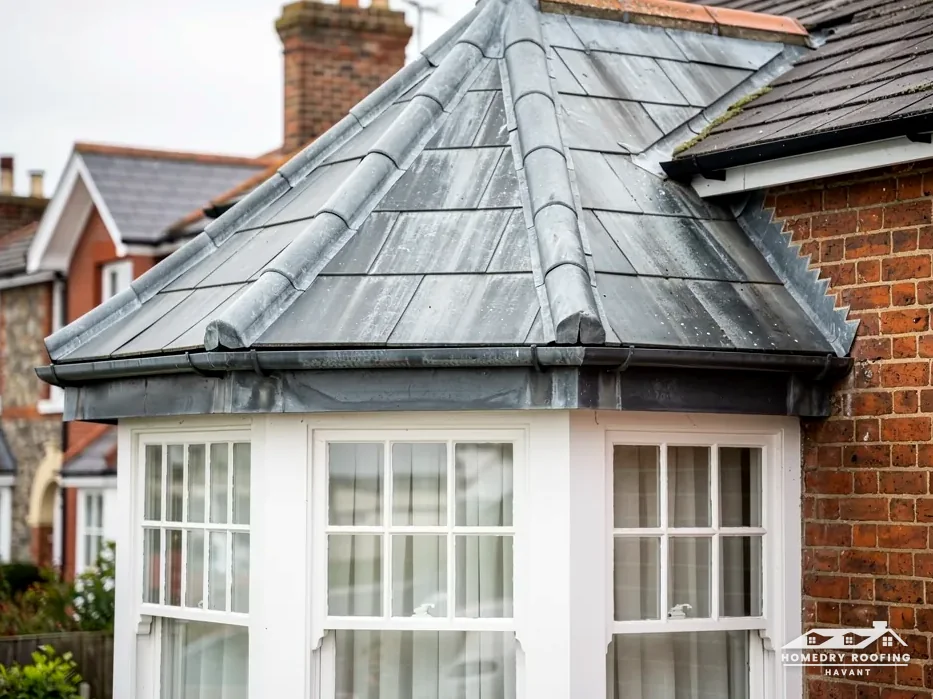
Valleys
The V-shaped trough where two roof planes run together and one lining drains both.
Thinned metal or a drift of leaves in that trough turns a flow into a flood.
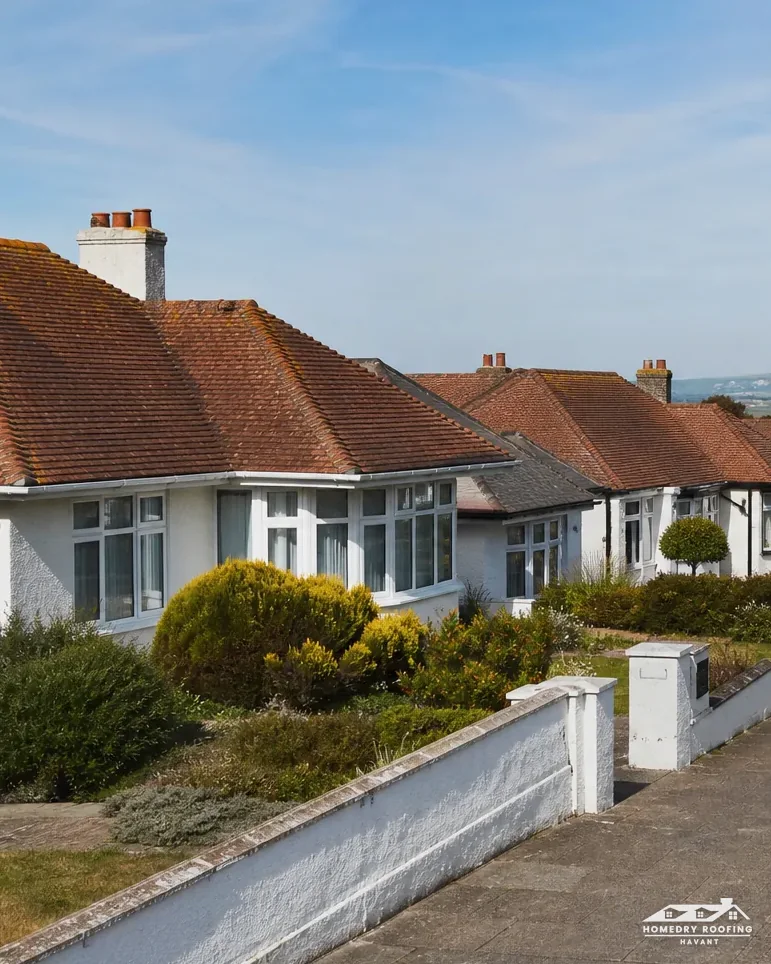
Rustington is 26.2 road miles east of Havant. Valleys, lead linings and the roof edge are read from the roof itself, and a written total is only given once that is done.
10-year workmanship guarantee, in writing
The V-shaped trough where two roof planes run together and one lining drains both.
Thinned metal or a drift of leaves in that trough turns a flow into a flood.
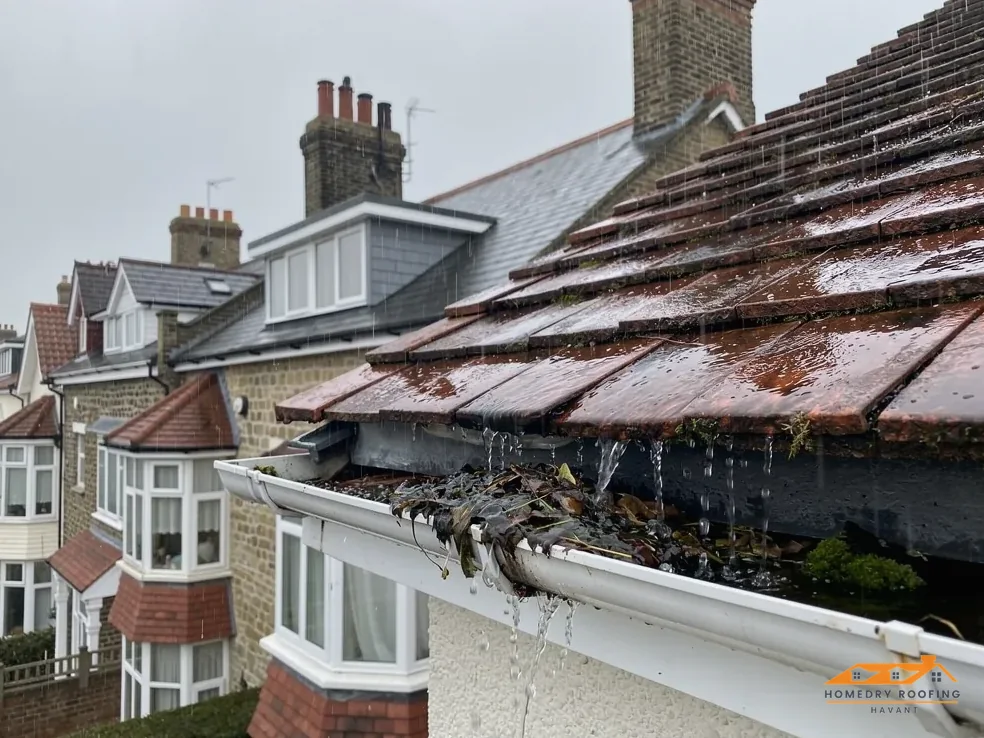
The boards fitted beneath the overhang, closing the gap between roof edge and wall.
A stain or a split on one reports on the damp above it.

The small metal arms that clip a gutter to the board behind it.
Once that board softens near a joint, a bracket loses its grip and the run sags.
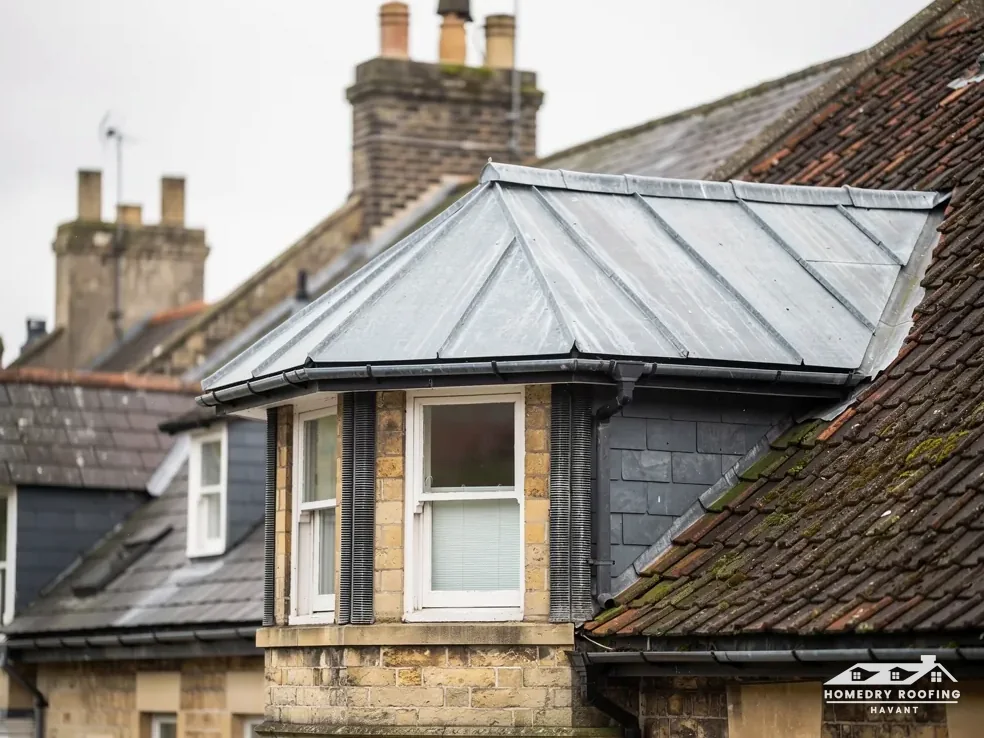
One crease drains two roofs, so one weakness costs double.
A valley is the V-shaped trough formed where two roof planes run together, and it takes the rain of both. Its lining may be lead or a formed sheet, and either wears where the flow is thickest. The survey begins by clearing leaf mould and moss out of the trough, since they hide what lies beneath. Then we read the metal from top to bottom for splits and thin patches, study the way the covering has been cut along each flank, and check that the edges of the lining still lie flat. A fault here admits the water of two roofs at once, so it earns the most careful look, and a trough merely blocked with debris is cleared and reported as sound. Our leadwork page covers lining and flashing work in detail, and our roof repairs page covers mending a single section.
Rustington is a coastal village, and Cupa, the slate maker, writes that "buildings positioned on slopes, hills or coastal areas as well as tall buildings will be graded with higher exposure". For a roof, that exposure is handled in the fixing specification, which BS 5534 has the designer calculate for the site. While we are up at the valley we note how the covering beside it is held, and the findings report whether the fixings are sound at that point of the Rustington roof.
Rustington has a conservation area. Arun District Council holds the map for it, and it is the council to ask whether an Article 4 direction reaches your road before any date is fixed. The Parish Church of St Peter and St Paul is listed Grade II and serves Church of England worship, so its roof repairs follow the faculty route. Knightscroft is listed Grade II*, and Manor Club Grade II. Our planning guide for roof work holds the permitted rules.
The loft tells the story of a valley before the roof does. A tide mark on the timber beneath the trough, or a darkened patch on the underlay, shows where water has been working through for some time. We look from inside with a torch, then go out and match what we saw to the lining above it. That way the repair goes to the exact spot, and not along the whole length unless the metal demands it.
A patch on the landing wall that darkens in heavy rain, then dries and returns the next storm.
A split or thinned patch in the valley lining, or an edge lifted from the covering beside it.
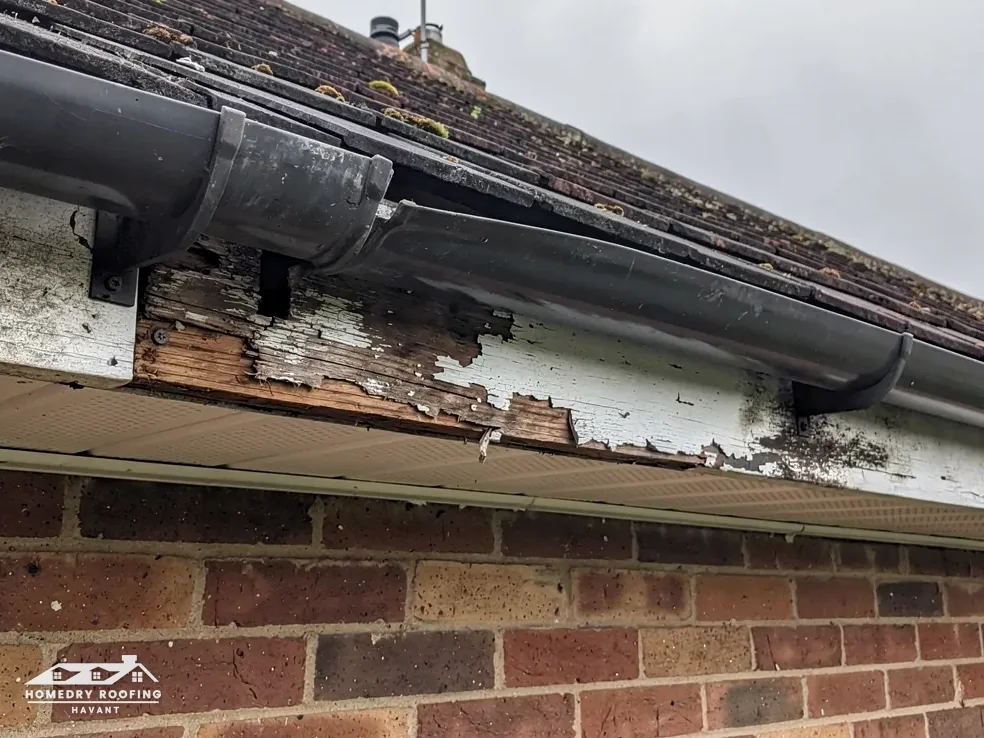
A sag means a bracket has lost its hold, because the board behind it has softened, or a joint has opened and loaded the run with weight. We press the board, check the bracket spacing and look at the joint before proposing a repair.
The roof edge is made of four parts that lean on one another: the covering, the fascia board standing upright beneath it, the gutter fixed to that board, and the soffit boards fitted beneath the overhang. When one fails the others soon follow. A soffit that has split or stained tells us damp above it has been there a while. A fascia that has softened near a joint means the gutter brackets have lost their grip. We walk the whole edge, press each board, look up into the overhang and note any gap where the weather could reach the timber behind, together with any board that has been patched before. Our gutters, soffits and fascias page describes how a run is renewed when the findings call for it.
Drainage is the last part of the survey. Where does each downpipe end, does the gully take what it is sent, and is every outlet clear? We photograph each discharge point and put the answers into the findings. A gutter that drains to the wrong place leaves one patch of wall wet in every storm, and the roof is wrongly accused of a stain it never made. A short extension to a downpipe, or a gully cleared of silt, can be the whole remedy, and the findings say so where it is.
The first call on a re-roof is Arun: its building control page includes "replacing roof coverings on pitched and flat roofs" in its list of "many alteration projects that need approval", so a Rustington re-roof goes to the council before booking. The Planning Portal gives the national position, and the questions below carry its figures in full. A written total reaches you after the findings are in, naming scaffold and VAT so you know what it contains.
Four parts hold the roof edge together, and each leans on the rest.
A soffit board is out of sight from most of the garden, which is why it gets left. Yet a brown stain on one means water has been running behind the fascia, and a hole in it is a way in for wasps and birds. We check each board from a ladder, press its edge for softness and note every stain, so a few boards can be replaced before the damp reaches the rafter ends.
Map of Rustington and the places around it, with the dashed line of our 30-mile service area from Havant. The same places are listed below the map.
The trough is cleared first, because moss and leaf mould hide the metal. We then read the lining from top to bottom for splits and thin patches, study the cuts in the covering along each flank, and check that both edges still lie flat. From inside the loft we look for tide marks on the timber beneath, which show where water has been working through. The findings explain whether a section can be repaired or the whole lining needs renewing, with photographs of each point so the evidence is yours to see, and an old valley with sound metal is described as such.
Cupa, the slate maker, says the most significant factors in a roof's environment are "exposure to wind and rain", and that coastal areas are "graded with higher exposure". Rustington is a coastal village, so the fixing specification is calculated for the site under BS 5534. We record how the valleys, hips, ridge and edges are held now, and the findings set that against the calculation. The exposure grading Cupa describes concerns the site, so the notes set it beside the method chosen and the reason for it. The specification rests on the roof in front of us, board by board and fixing by fixing.
Arun District Council's own building control team, on 01903 737756, is where we ask first, because its building control page lists "replacing roof coverings on pitched and flat roofs" among alteration projects needing approval. At national level the Planning Portal gives two thresholds below which a re-roof needs no building regulations application as a rule: under 25 per cent of the building envelope and under 50 per cent of the roof. Weight is tested separately: a covering 15 per cent or more heavier requires approval, which is why the survey records the existing covering.
A licence under section 169 of the Highways Act 1980 is needed wherever scaffold obstructs the highway. In Rustington that is West Sussex County Council's to grant: £266 buys one month, and the application wants at least 10 working days' notice. Expect to be shown the proposed dates before they are final. We arrange the licence with our scaffolder. If the job may outlast the month, say so at the survey, so the period requested is long enough from the start and no rushed extension is needed halfway through. Any change of date reaches you the moment the scaffolder reports one.
The Parish Church of St Peter and St Paul is listed Grade II and serves Church of England worship. Its roof repairs come under the Church of England's faculty system, and not a listed building consent application to the district council. A listed house is treated differently, and Arun District Council must grant listed building consent before work that would alter what the house is listed for. The Historic England entry for a property shows whether it is listed at all, and what the listing covers.
Ask Arun District Council, which keeps the boundary of the Rustington conservation area. Put a second question in the same message: does any Article 4 direction cover the road? Such a direction may remove permitted rights from the road. Listed status is a separate matter, answered from the Historic England list. Whatever you are told goes into our survey papers, so the quote and the council agree about your road. What the planning rules allow is covered by our guide to roof work, and this answer leaves the detail there on purpose.
Knightscroft carries a Grade II* listing and Manor Club a Grade II listing. Each entry sets out what it protects, and reading it comes first. A neighbour's roof is not covered merely because it stands close by, and a listing never carries over to the next house along the road by accident. If your own house is listed, Arun District Council must grant listed building consent before work that would alter what it is listed for, and the photographs from our survey can go with that application.
The written figure is a single total, delivered after the roof has been surveyed, with a plain account of the findings attached. Scaffold and VAT are named, so you know what the figure contains. Another firm's quote can be read against it only if that quote names them too, so ask. Where a repair will serve, that is what we price first, and the figure covers the work in front of us and nothing beyond it. The findings let you see why each part of the roof is, or is not, in the total.
You'll get one written total price.
Fill in what you like. It opens WhatsApp with your message ready to send.