
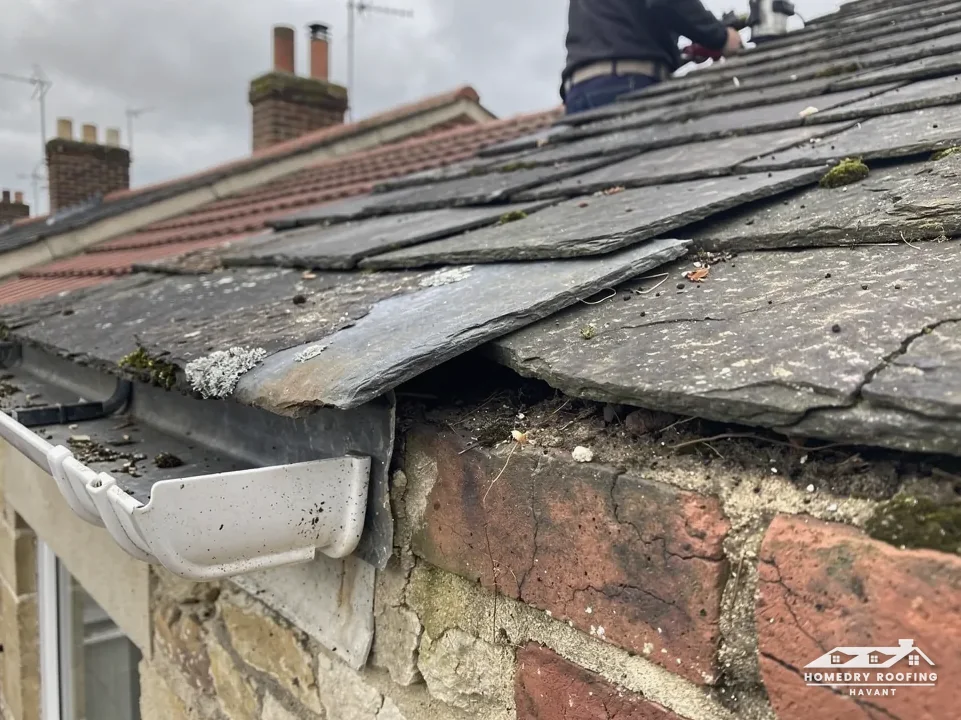
Valleys
Where two slopes meet at an angle and one fold carries the rain of both.
A thin lining or a chipped tile edge there lets water in beside the metal.

Easebourne is 24.4 road miles north-east of Havant; each valley, rafter and batten is followed from the covering down through the loft, and the survey is followed by one written total price.
10-year workmanship guarantee, in writing
Where two slopes meet at an angle and one fold carries the rain of both.
A thin lining or a chipped tile edge there lets water in beside the metal.
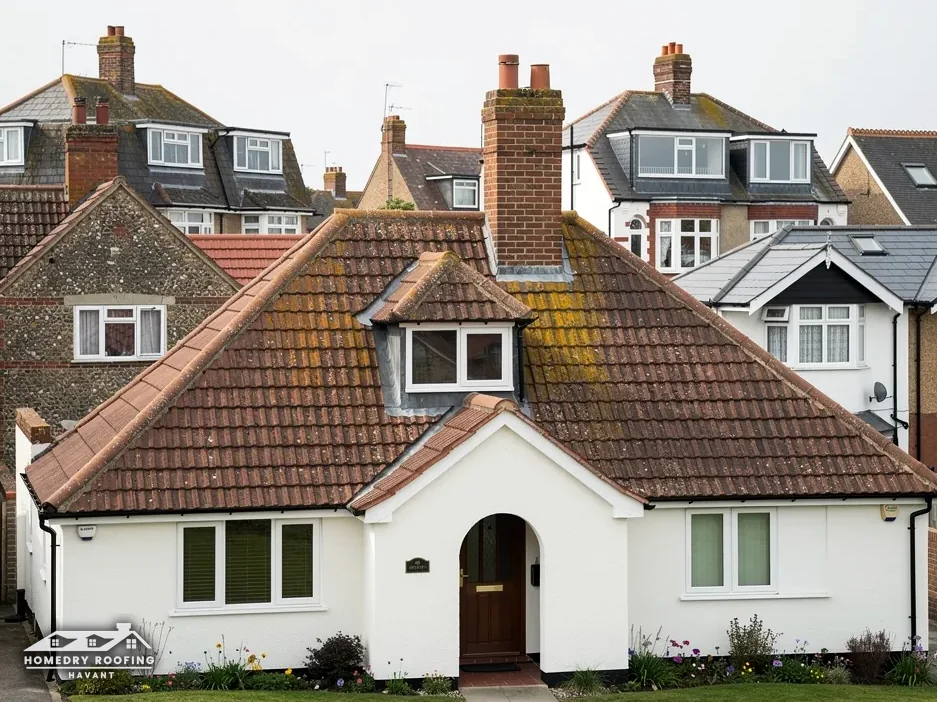
Where the sloping timbers of the roof frame carry every batten and tile.
Dark tide-marks on the wood show where a slow leak has been running for a while.
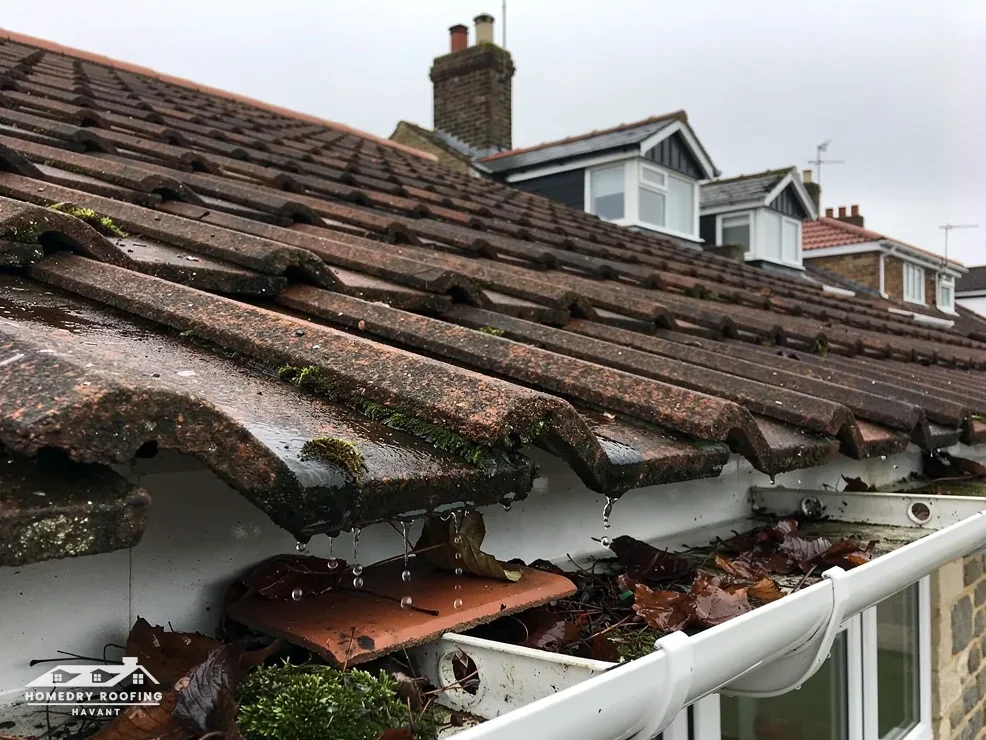
Where thin timber strips cross the rafters and hold each course of covering.
A soft or split batten lets a tile slip, and the gap carries rain under it.
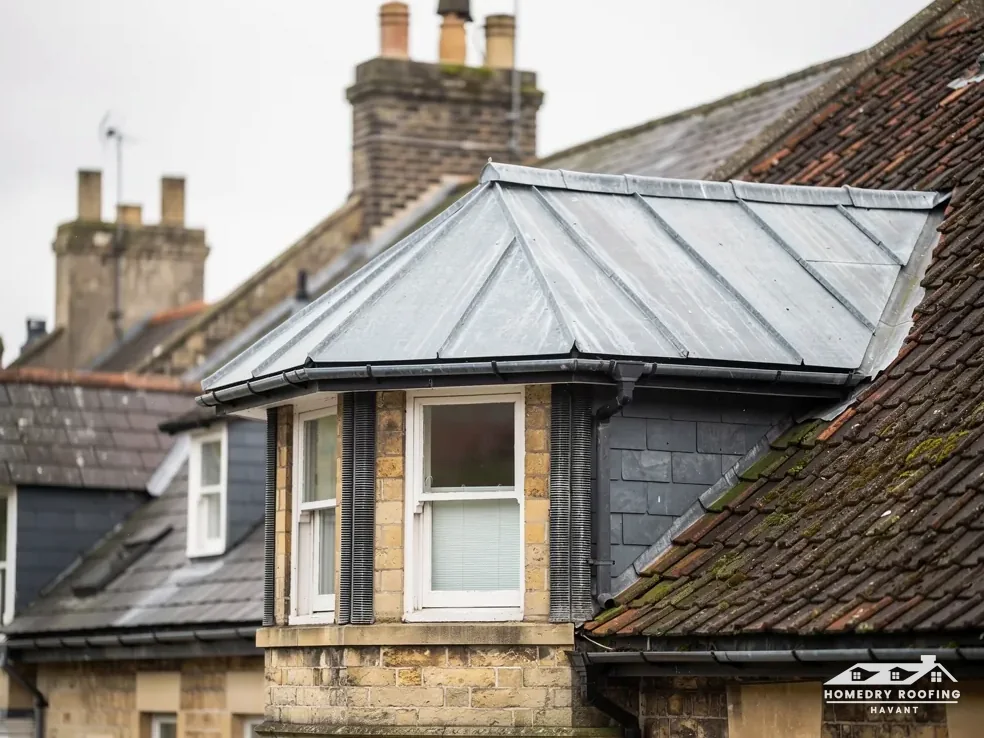
The fold sits where two slopes meet, and the wall beneath it may be a side wall. Water that gets past the lining runs down the timber and shows on the plaster beside the join before it reaches the ceiling at all.
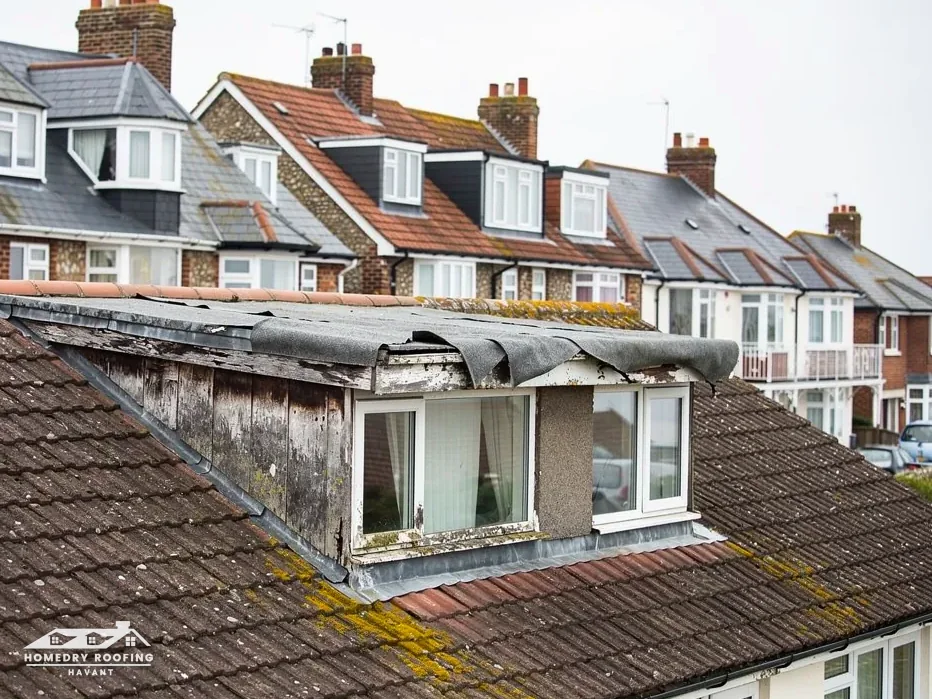
Where two slopes meet at an angle, the join is a valley: a fold that gathers the rain of both roofs and sends it on toward the gutter, so its lining works harder than any other single strip of covering, and the survey starts there. We clear moss and leaves, then check the lining for wear and cracks, the tile edges either side for chips, and the foot of the fold for anything that narrows the flow, such as a lump of moss or a slipped tile. A shaded valley can stay damp for days, which is why a slow stain on an upstairs wall may trace back to it, and why we look at the loft timber beneath the fold as well. Our pitched roofing page describes how a slope is built and repaired.
Easebourne has three Grade I entries on the National Heritage List: Church of St Mary, Priory Flats the Priory, and The Refectory. Church of St Mary still serves Church of England worship, and that status puts works to the building under the faculty system, not under the council's listed building consent. A building with an entry of its own follows the council instead, because listed building consent must be granted before any work that would alter its character as a building of special interest.
Two conservation areas lie close to Easebourne, Easebourne and Midhurst, and the village sits inside the South Downs National Park. Chichester District Council processes planning applications for a roof here on South Downs National Park Authority's behalf, as its host authority. Whether an Article 4 direction touches your lane is a question for Chichester District Council, which takes enquiries here for the Authority. Our planning guide for roof work covers the rules themselves.
Where two roofs drain into one fold, the fold decides the outcome.
Shade and a narrow channel keep a valley damp long after the rest of the slope has dried, and leaves collect in it. We lift the debris, photograph the lining before and after cleaning it, and show you any thin spot, split or lifted edge. If the lining is sound the job ends there; if not, we say how much of its length needs renewing and why.
The frame under the tiles shows what the surface has been hiding.
Seen from inside the roof space, a roof tells its story in timber. Rafters run from ridge to eaves, battens cross them to carry the tiles or slates, and an underlay sits between, meant to catch whatever gets past the covering. Where the loft is boarded or crowded with boxes, we ask for a clear route to the eaves, since the lowest rafters are where damp collects. We take a torch up the hatch and look for daylight through the slope, dark tide-marks on the rafters, damp insulation, drips of condensation under the underlay and battens gone soft. Condensation and a leak can look alike from below, so we note where the damp sits and whether it follows a rainy night or a cold morning. Our roof inspections page explains what a survey takes in.
If the findings call for a new covering, the questions change. Under the Planning Portal's guide, re-roofing does not normally need a building regulations application if it affects less than 25 per cent of the building envelope and less than 50 per cent of the roof, though a new covering 15 per cent or more heavier does need approval. That is why we check what the existing frame carries before a heavier tile is chosen, and for Easebourne addresses we put the question to Chichester District Council's building control team before work starts. Our new roofs page covers full replacement.
Whether a covering is repaired or renewed, the timber beneath is looked at while it is open. Battens that are split or soft are replaced, and the underlay is checked for tears at the laps and around the rafters. You see photographs of the bare frame before anything new goes on, since that is the one moment the whole structure can be read at once. A roof renewed over a rotten batten only moves the failure underneath the new tiles.
A damp loft does not always mean a hole in the covering. Warm air from the rooms below can settle as moisture on cold timber and underlay, and it leaves marks that look much like a leak. We compare the pattern. A leak follows rain and tracks down from one point, while condensation spreads across a wide area. Knowing which one you have saves a repair that would not have cured anything, and keeps the money for work that matters.
A musty loft with a tide-mark on one rafter, or drips falling onto the insulation some hours after rain has stopped.
A cracked tile edge or a torn underlay lap above the stain, with the water running down the frame to where it shows.
The lining is only the start. We also read the tile edges on each side of the fold for chips and slipped courses, because a cracked edge drops water beside the metal, and we follow the fold down to the gutter to see that nothing narrows the flow at its foot. Inside, we check the rafters and battens below the valley for dark staining, since a slow fault leaves marks there before anything shows on a ceiling. You get photographs of each finding and a plain view on mending or renewing the lining. We also say plainly if the gutter at its foot is the real culprit.
Church of St Mary holds a Grade I listing, and Church of England worship continues there. A church in that position falls under the faculty system, so works to it are not decided through listed building consent from the council. The two other Grade I entries, Priory Flats the Priory and The Refectory, and any home with an entry of its own, follow the council's listed building consent route instead. Look your address up on the National Heritage List before a date is fixed, read the entry through, and tell us if it has one, so the survey can plan around it.
We do, working with our scaffolder: we arrange the licence with our scaffolder. A licence under section 169 of the Highways Act 1980 is required for scaffolding that stands on or over the highway, and for Easebourne that licence is granted by West Sussex County Council. West Sussex County Council charges £266 for one month and asks for at least 10 working days' notice, so the start is fixed once those days have been counted. You agree the date with us first, and the written price shows whether scaffold sits inside the total, a point worth checking on any other quote that reaches you.
Yes, where the Planning Portal's two measures are met: less than 25 per cent of the building envelope and less than 50 per cent of the roof affected, in which case a building regulations application is not normally needed. One condition overrides that, because a new covering that is 15 per cent or more heavier still needs approval. We raise the plan with Chichester District Council's building control team before the first tile is lifted, and pass its reply to you in everyday language, which leaves the route clear before any date is fixed.
They are Easebourne and Midhurst. Whether your own address falls inside either of them is a question for Chichester District Council, which handles planning enquiries here for South Downs National Park Authority, since Easebourne lies within the Park. A direction under Article 4 can take away permitted development rights that a house would otherwise keep, and the same office can say whether one reaches your lane. Ask it before you settle on a plan for the roof, and keep the answer. Two lists can meet on one road, so give the full address.
The Park Authority holds the planning powers, since Easebourne lies inside the South Downs National Park. Chichester District Council usually processes applications for the Authority as host, and anything called in passes to the Authority's Midhurst planning team. Building control is not the Authority's business and stays with the district council, so a re-roof can involve two offices, each answering a different question. The planning guide on this site sets out what the rules ask of a roof, but for your own address the first answer comes from Chichester District Council, ideally with photographs of the existing roof sent along.
Watch the timing and the shape of the damp. A leak follows rain, drips from a single point and leaves a stain that tracks down a rafter from one spot. Condensation follows cold mornings, spreads across a wide patch of underlay and timber, and tends to bead on cold surfaces. Take photographs on the day you notice it, note the weather and the time, and keep a look-out for whether the marks grow, then send everything our way. The survey confirms which it is, and if ventilation is the cause, the report says that and no repair is sold.
The sum identifies the job and the covering to be used, and tells you whether the VAT and the scaffolding are counted within it. Nobody writes it until a person has climbed up and examined the roof, and it is a single written total with our findings alongside. We discuss a lasting repair ahead of any replacement, and photographs explain why. You can expect a fair price for the work. If a quote you are comparing is silent on scaffolding or VAT, ask for both in writing, and a swept garden should come with the job.
You'll get one written total price.
Fill in what you like. It opens WhatsApp with your message ready to send.