
What the published lifespans say, row by row
HomeBuilding's lifespan table, last updated 30 September 2025, is headed Lifespan (approx), and each row is an approximate figure for the covering named. Slate and two kinds of tile are set out below for comparison, so you can see where the stone sits against the alternatives.
| Covering | Approximate lifespan |
|---|---|
| Welsh slate | 100+ years |
| Spanish natural slate | 75 to 100 years |
| Reclaimed Welsh slate | 50 to 80 years |
| Clay tiles | 60 to 80 years |
| Plain concrete tiles | 40 to 50 years |
Read the hedge along with the number. A plus sign on 100 means the table sets no upper limit, not that any particular roof will reach it, and the column heading itself says approximate.
The figures describe the covering as installed and looked after. They say nothing about a roof whose nails have gone, whose battens have rotted or whose lead has split, and those are the faults that bring a slate roof to the point of needing work. A table of covering lifespans is a starting point for a conversation about a roof, not a verdict on it.
Why the slate can outlive the rest of the roof
A slate roof is a stack of parts, and the slates are only the top layer. Beneath them sit components with lives of their own, and each can wear out on a different timetable from the slate above it.
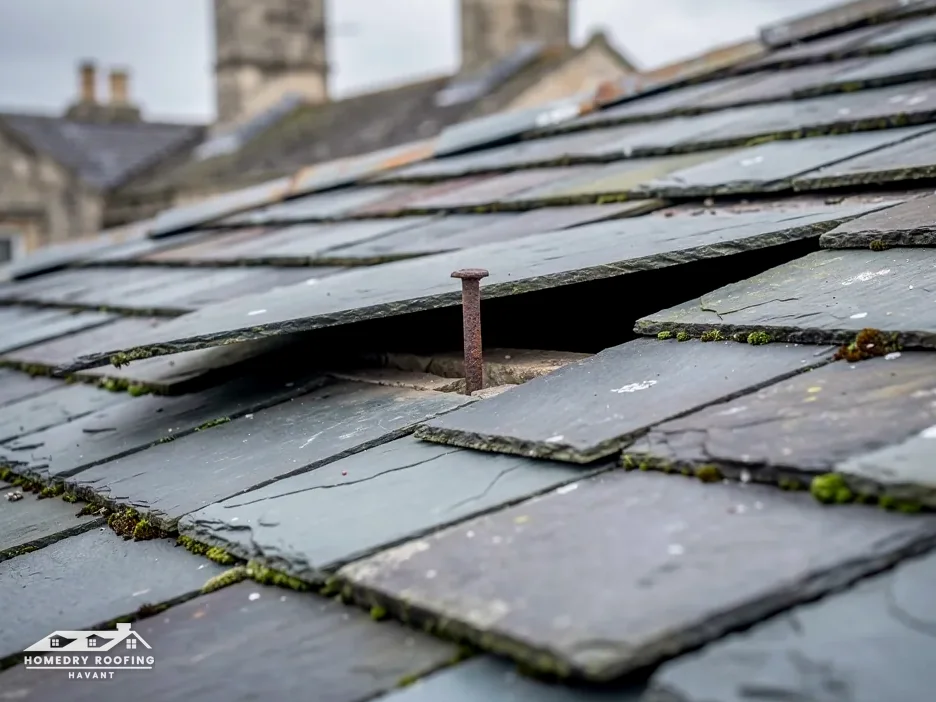
- the fixings that hold each slate, which can corrode while the slate stays sound
- the battens the slates hang from, which are timber
- the underlay beneath, out of sight until the roof is opened
- the lead in valleys and around chimneys
On lead, MyJobQuote says correctly installed lead flashing can last for over 80 years. That is a long life, yet it is a different number from the slate's, and it depends on how well the lead was fitted in the first place.
An old slate roof can call for work even though its covering is still sound. Groups of slipped slates can mean the fixings are failing, a condition covered in our post on nail sickness, and the answer may be to renew what holds the slates and put the sound ones back.
So the question to put to an old roof is not only how old its slate is, but which of its parts have run out. A roof of fine slate with spent fixings is a different job from one with sound fixings and a few cracked slates.
Signs that a slate roof is wearing out
Age alone is a poor guide, so a survey reads the roof's condition instead. The signs below can be spotted from the ground or the loft hatch, and none of them needs anyone to climb.
- slipped slates, especially several together on one slope
- broken pieces of slate collecting in the gutter
- cracks or flaking across many slates, not just one
- dark or damp patches showing on the rafters and battens
- sagging or torn underlay seen from the loft
- repeat repairs in the same area of the roof
One sign points to a repair. A cluster of signs across a slope points to a bigger conversation. On the survey a few slates are lifted to look at the nails and the battens beneath, and you are told what the roof needs, with the evidence for it. Sometimes the finding is simply that the roof has years left, and that is worth knowing too.
Keep off the slope while you look. HSE says "all roofs should be treated as fragile until a competent person has confirmed they are not." Our answer on walking on a slate roof explains the reasoning.
Repair, refix or re-slate: how the survey decides
When the survey is done, the roof falls into one of three outcomes, and each is explained to you with the evidence behind it.
Where a few slates have slipped or cracked and the fixings are sound, a repair fits. Refixing suits a roof whose slates are good but whose nails are not, so the slope is stripped, renewed beneath and the same slates put back. A full re-slate is for a covering that has run its course, with cracks and flaking across the slope.
Repair comes first whenever the fixings and battens are sound. When they are not, you are told why, with the findings in front of you, so the decision rests on evidence and not on the age of the roof alone. Our guide to re-slating or repairing a slate roof sets out the questions that decide between them.
The quote follows the survey and comes as one written total, with nothing given over the phone. If you want the whole range of slate work in one place, our slate roofing page has it.