
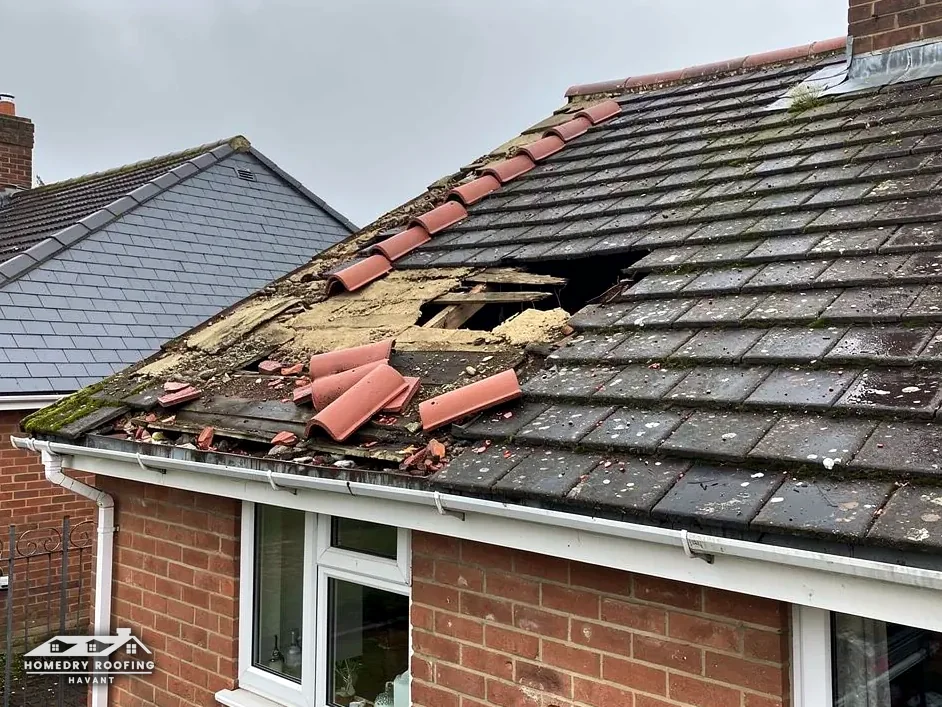
What makes a repair tile a true match
Colour is the first thing the eye sees, and it is the least of the checks. A tile that matches in colour but differs in size, profile or thickness will not lap correctly with the tiles beside it, and a poor lap is a route for rain.
For a true match we look at:
- the profile, plain or interlocking, and the shape of the side joints
- the size and the lap the old tiles are laid to
- the material, clay or concrete, and the surface finish
- the batten spacing the roof was set out to
- the minimum pitch of the replacement tile
Pitch matters because every tile has a published minimum, and a replacement that is laid below its own minimum is a design fault even when it looks right. Marley sets out the minimum pitch of each of its products, and the maker's data sheet for the exact tile has the final say.
New tiles also differ from old ones in age, so a fresh tile beside weathered ones will show for a time. That is a matter of appearance only, and we tell you when a patch will be visible before you agree to it.
Reclaimed tiles and slates as a source
Where the roof is old and the tile is no longer made, reclaimed tiles can be the way to a good match. They carry the age and the weathering of the originals, so a repair blends in. A reclaimed tile has to be sound, and it has to be the right size and profile, so we check each one before it goes on the roof.
HomeBuilding lists reclaimed Welsh slate at an approximate 50 to 80 years, against 100+ years for new Welsh slate. A reclaimed covering is already part-way through its life, a point to weigh against the look.
For a slate roof the picture is similar. A repair uses slate of the same size and thickness, fixed in the way the roof was laid, and where a close match is not available the choice is between reclaimed slate and a new slate chosen to sit well beside the old.
We do not promise a perfect match. We tell you what is available, how close it will be, and what the alternatives are, before work starts.
Listed homes and conservation areas
In England, the rules for older homes bear on what can be done with the roof covering, and the match is part of that. Under the General Permitted Development Order 2015, known as the GPDO, Class C covers re-roofing a house, and the notes below are the exceptions.
- Listed homes keep their permitted development rights for roof work, but listed building consent is needed for anything that affects the building's character.
- Ordinary re-roofing is normally permitted development even in a conservation area, but dormers are not.
- An Article 4 direction can remove further rights, so we check with the council first.
For a listed home the covering is part of the character, so a mismatched repair can be a consent matter as well as a visual one. Ask your local council before work starts, and we will confirm the route with the council as part of the survey. Where a home is in a conservation area, the same call covers whether an Article 4 direction applies to the street.
Our answer on roof pitch and tile choice explains the technical limits on any replacement tile.
What happens when no match exists
Sometimes no tile close enough can be found. The old tile was made by a firm that has closed, the profile is rare or the colour has weathered beyond anything new. You then have three routes, and the survey shows which suits.
- A repair using reclaimed tiles, which is the closest in age and look.
- Moving the sound old tiles to the front slope and using the best available new ones on the back, where they are seen less.
- A re-cover of the whole slope or roof, which gives a uniform finish at a higher cost.
Each route has consequences for weight, fixings and approvals, and those are explained before you decide. Weight is checked first: the Planning Portal's test asks for approval when a covering is 15 per cent or more heavier. Earlier patches made in a different tile are noted too, since they can be part of what is being matched.
You get a written account of the options, with the pros and cons of each, and one written total price for the route you choose. The rest of our tiled roof work sits on our pitched roofing page, or see our answer on slipped tiles, refixed or replaced if the tile has simply moved.