
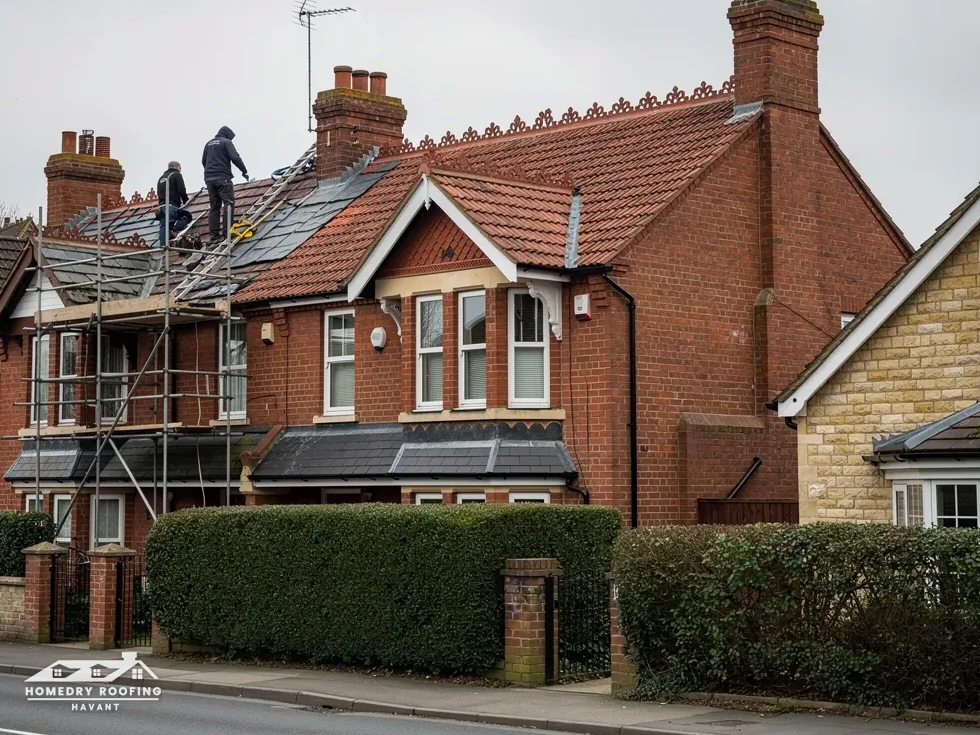
The HSE presumption, applied to a tiled slope
The Health and Safety Executive starts roof work from a presumption: "all roofs should be treated as fragile until a competent person has confirmed they are not." It names no covering as the safe exception, so fired clay and moulded concrete get no special treatment.
Competence means training and equipment for the particular slope. It does not come from owning a ladder or being steady on your feet. Until somebody who has that training has looked and confirmed, the assumption stands, and the sensible reading for a householder is simple: the roof is looked at, not stood on.
Tiles bring a second problem on top of the fall itself. A tile that cracks under a boot may look untouched from below, since the courses above and beside it still cover the break. Rain then gets to the sheet and the timber laths beneath, and the first sign is a damp bloom on a bedroom ceiling weeks later, far from the footprint that started it.
The useful question, then, is who needs to be on the slope at all, and what has been set up before anyone steps onto it. That is decided at the survey.
How a stepped-on tile lets rain through
A tiled slope keeps rain out by overlap. Each course laps the one below, and each tile hangs from a batten by its top edge while its neighbours hold it in line. The arrangement carries wind and weather very well and carries a person badly.
A boot puts the whole weight of a body onto a small patch of one tile. The tile can crack across its face, or snap at the edge that hangs from the batten, and either fault is hidden by the course above. A hairline in a tile still sheds most rain, but it is a weakened lap that wind-driven rain can find.
So a visit made to look at one loose tile can leave behind a handful of new faults. A crack sits on the upper face, out of sight from the ground, which is why a tile that has been walked on is worth tracing again at the next survey, along with those around it.
A fall is the worse outcome, and no leak justifies going up a wet slope without equipment. If water is coming in now, put a bowl under it, move belongings clear and ring for a survey.
Reading a tiled roof without climbing it
Plenty of evidence is visible from the ground. Choose a dry day, walk round the house and look along each slope in turn.
- a row that sags, or tiles that no longer line up with their neighbours
- a dark shadow where a tile has dropped below the course beside it
- chips and broken corners in the gutter, a flower bed or on a lower flat roof
- tufts of moss, or a drift of leaves where two slopes meet
- a ridge line that dips, or ridge tiles that have moved
- stains spreading across a bedroom ceiling, or green streaks down the wall under the eaves
A pair of binoculars, or a phone zoomed right in, does the work of a ladder here. In the loft, a torch will show daylight between tiles, dark timber and underlay that sags or has split. Keep your weight on a boarded walkway or the joists, because the plasterboard between them will not carry you.
Date-stamped pictures let us form a view of the roof before we turn up. Our guide to common pitched roof problems ties each of these signs to a cause.
How a survey reaches the slope itself
When the ground check turns something up, access is arranged before the survey and the extent of any walking is settled on the spot. What comes out of it is a written account of the fault and its cause, so the repair deals with the way in and not only with the tile that happened to be seen.
The route of the rain guides the order of work. It begins at the stain or the slipped tile, climbs the slope to the point where rain got in, and takes in the battens, underlay and fixings along the way. Where a repair will do, the job stays a repair, and where the covering is spent, you get the reasons in writing.
You then receive one written total price, never a figure given over the phone, and the choice to proceed is yours after reading what we found. For the wider subject of tiled roofs, see our pitched roofing page, and for a tile that has moved without cracking, our answer on refixing or replacing slipped tiles.