
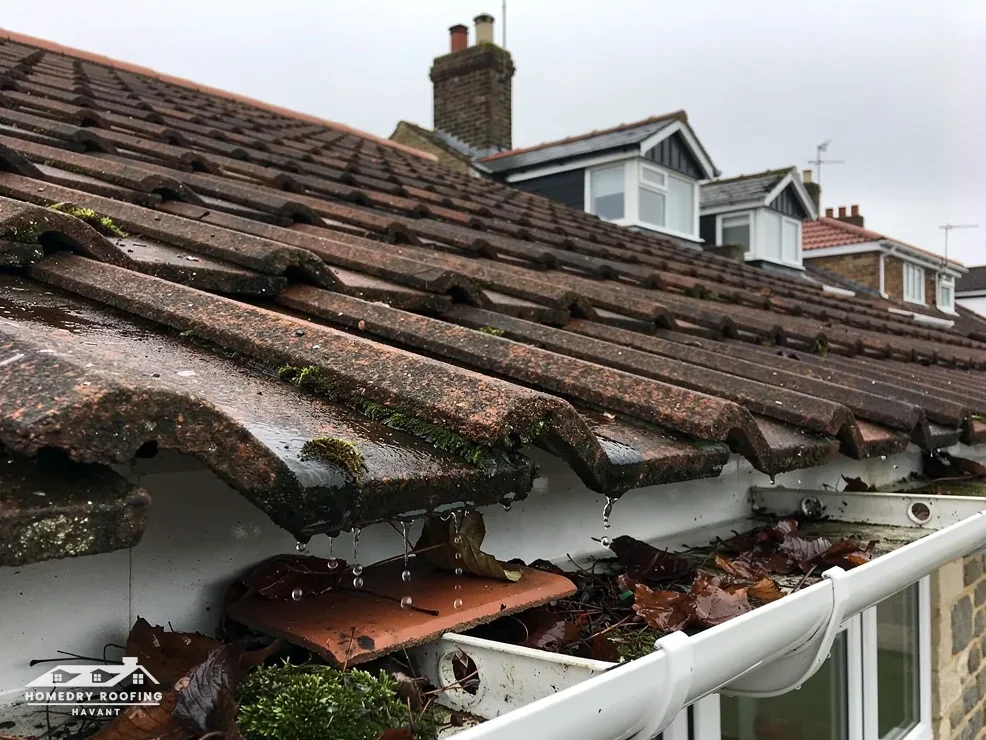
What separates the two materials
uPVC is a plastic, and aluminium is a metal. Both are made into gutters in several profiles, so the shape you want, whether half-round, square or a moulded section, does not have to decide the material. What is more useful is how each is supplied and fitted.
uPVC gutters come as lengths and fittings that join together, so a long run has several joints. Aluminium can be supplied in the same way, and it can also be formed on site as seamless gutters, rolled to the length of each elevation. With seamless gutters each run is formed in one piece, so there are fewer joints to seal and to maintain.
Neither material cancels the need for a correct fall and clear outlets. Our answer on what fall a gutter needs applies to both.
The practical difference shows up at the joints and at the fixings. Every joint is a place where a seal has to hold, and every bracket is a place where the weight of a full gutter in a storm bears on the board behind. Whichever material is chosen, the installer's work at those points counts for as much as the material does.
Lifespans and why to be careful with them
For uPVC, an online board retailer's guide reads: "When installed correctly, they can typically maintain reliable performance for between 20 and 40 years." That figure is a seller's, it is a range, and it relates to fascia boards, so it is a loose guide to a plastic roofline rather than a measured life for a gutter.
For aluminium, be wary of any number that comes without a named maker or source. The sensible request is the same for both materials:
- The maker's published information for the exact system.
- The conditions attached to any lifespan figure.
- Who installs it, and what the installation involves.
A number on a leaflet has to be read alongside the conditions beneath it, and an installer who cannot explain them is a reason to ask more. Our answer on how long uPVC fascias last reads the retailer's range in full.
Treat any lifespan as an indication that comes with conditions. A gutter that is kept clear, fitted to a fall and hung from sound boards has the best chance of reaching the figure on the leaflet, and one hung from soft timber has the least.
What your house adds to the choice
Appearance is not trivial, because the gutter is a visible part of the roofline.
Several features of the house settle more than the material does.
- The fascia the gutter will hang from. A new run is only as secure as the board and rafter ends behind it, so soft timber changes the job whatever the material.
- The existing system. Fittings from different ranges do not always match, so ask whether the new run is one system or a mix.
- The look of the roofline, including colour and profile alongside neighbouring houses.
- Any planning limit on the building.
That last one matters in two cases. Listed building consent is needed for "anything that affects the building's character". In a conservation area, an Article 4 direction can remove further permitted development rights. We check with the council first in both cases, and you can do the same by ringing your own district council.
A good installer shows you a sample of the profile and colour before the order is placed, so what arrives matches what you pictured.
Questions to ask before you choose
Put these to whoever is quoting, and ask for the answers in writing:
- Which system and profile is being fitted, and who makes it?
- How many joints will the run have, and where?
- What happens to the fascia and brackets behind the old gutter?
- How is the fall set, and how is it checked at the end?
- What does the written quote cover, and are VAT and scaffold counted inside it?
The price for either material is a written total set once the survey is done, and our answer on the cost to replace gutters sets out the published figures and what moves them.
The wider roofline work is described under gutters, soffits and fascias.
It also helps to ask what happens at the downpipes and the drain, because the best run still needs somewhere to send the water. A roofer should say how the downpipes connect to the gully and who deals with a drain that is slow. Agree these points before work starts, put them on the quote so nobody has to remember them, and ask for photographs at the end of the job as a record.