
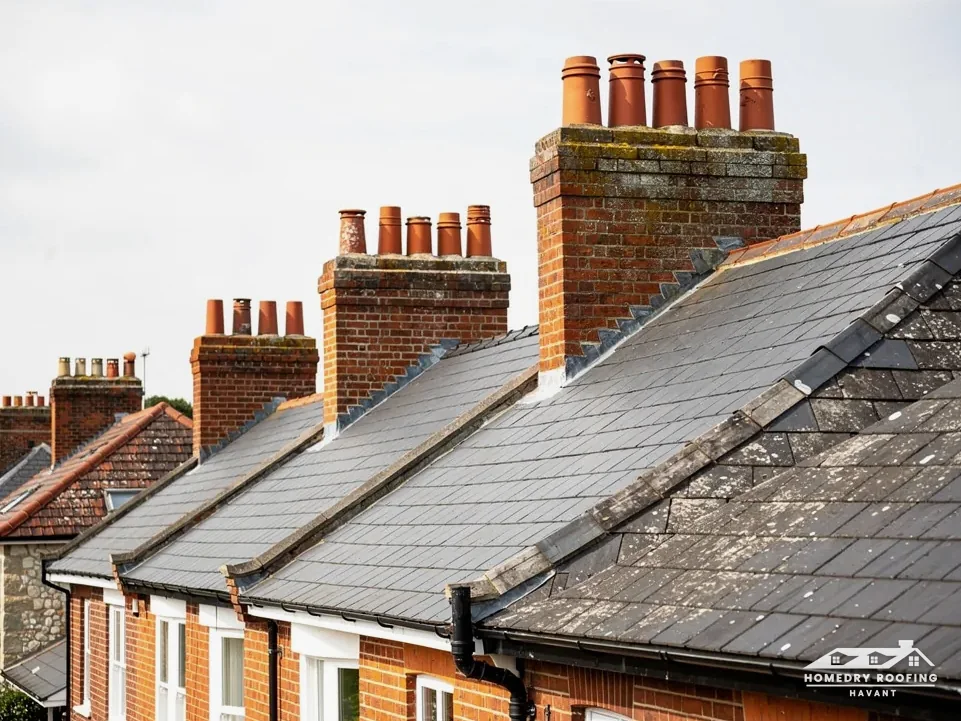
What the law protects at the eaves
Section 1 of the Wildlife and Countryside Act 1981 sets out the offence: a person who, intentionally, "takes, damages or destroys the nest of any wild bird while that nest is in use or being built" is guilty. Two points sit in that wording. The offence turns on intent, and it concerns a nest that is in use or being built, so the first job on any roofline visit is to find out whether anything is using the space.
GOV.UK states that there are no licensing purposes to permit development or construction where wild birds are concerned. A roofer therefore cannot lean on a licence to clear an active nest and carry on with the fascia boards, and the work has to be planned around the birds.
Bats fall under separate rules. GOV.UK guidance describes every species, with its breeding sites and resting places, as "fully protected by law", and it lists "repairing or replacing a roof" among activities that may affect them. The 2017 Habitats Regulations (regulation 43) cover the roost itself, and the limb on damaging or destroying a breeding site or resting place carries no intent word, so it bites with or without intent. A roost behind a fascia counts the same way as one in a loft.
Signs that something is using the gap
You can look without touching anything. From the ground, on a dry day, watch the roof edge for a few minutes and note what you see:
- A bird going in and out of the same gap behind the fascia or in the soffit.
- Dry grass, twigs or feathers hanging from the gutter or the tile line.
- Chirping from inside the board, especially in the morning.
- Staining or droppings on the wall beneath one small opening.
- A gap that has been tidy for years and has suddenly started to look worn at the edges.
Bats are harder to spot, because a roost can be a narrow crack. If you are unsure, GOV.UK points to the National Bat Helpline, run by the Bat Conservation Trust on behalf of Natural England, which gives free advice if you find bats in your home. It cannot advise on building works that need planning permission.
Take dated photographs of anything you see and send them with your first message.
Watching on more than one day gives a better picture than a single glance, because a nest in use shows repeated comings and goings. A note of the dates and the time of day helps whoever surveys the roof edge.
How the job is planned around a nest
When we survey a roof edge, wildlife is part of what we look at before any quote is written. The sequence runs like this:
- Nothing is pulled out, stuffed with foam or blocked with mesh until someone has looked.
- The gap is checked from the ground and from the ladder, with a torch, to see whether a nest is in use.
- Photographs record what was found and where.
- If a nest is in use or being built, that length of roofline waits, and the order of work is rearranged so the rest of the job can go ahead around it.
- If bats could be involved, work stops at that spot and advice is taken before anything is opened.
Closing a gap matters as much as opening one. Section 9(4) of the same Act makes it an offence to intentionally or recklessly obstruct access to a place a bat uses for shelter, so sealing a hole before you know what is behind it is not a safe shortcut.
The same logic holds for a nest in a gutter. A clear-out that would remove an active nest waits, and the gutter can be dealt with when the birds have finished with it. That delay costs less than the alternative of committing an offence.
What your quote should say about it
Wildlife is easy to forget when you are comparing roofers, because nothing on a price list mentions it. Asking the question yourself, early, puts it on the table before a ladder goes up.
Before anyone clears a gutter or opens a soffit, the written quote should say who checks for nests and what happens if one is found: a pause, a return visit, or a different order of work. The written quote from us is one total, and the survey that precedes it is where this gets looked at. A roofer who has not thought about it may only discover a nest when the board is already off.
The same questions apply when the work is a plain clear-out. Our answer on how often gutters should be cleaned covers checking before you start, and our page on whether soffits need vents explains what is behind the board that is coming off.
The full range of roofline work sits under gutters, soffits and fascias. If a nest is the reason you are waiting, the quote can carry a start window instead of a fixed date, and that is a sensible thing to ask for.