
What each visit covers
A visit walks the path that rainfall follows over the building, from the highest point down to the outlet. Whatever the roof is made of, the checklist runs along similar lines:
- outlets, gutters and downpipes, cleared of leaves, silt and anything the wind has dropped
- flashings, copings and cappings, looking for lifting, gaps and cracked sealant
- fixings on sheeted roofs, looking for any that have backed out or rusted
- laps and seams on membranes, looking for splits and lifting edges
- rooflights, their frames and the area around them
- penetrations such as pipes, vents and plant bases, where roofs are cut through
- earlier repairs, to see whether they are holding
A small fault is mended there and then if that can be done safely, for example refixing a loose capping, resealing a joint or clearing a blocked outlet. A larger one is written up, photographed and quoted as one total before work starts. You are never asked to approve a vague extra while someone is standing on the roof, and the photographs go into the visit record so you can see for yourself what was found.
Flat, sheeted and pitched roofs
The emphasis of each visit shifts with the roof type, because each is built differently.
| Roof type | Main points to inspect |
|---|---|
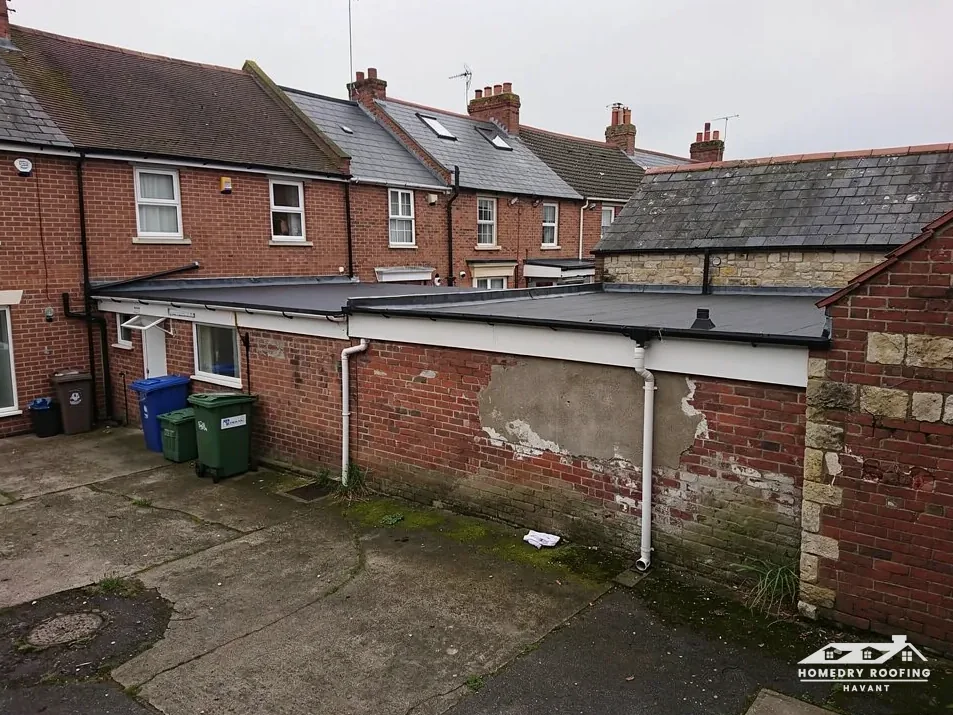
| Flat membrane roof | Outlets, upstands, laps, standing water |
| Profiled metal sheeting | Fixings, sheet laps, cappings, gutters |
| Pitched tile or slate | Ridges, valleys, flashings, gutters |
On flat roofs, standing water after rain is worth recording. NFRC reports that BS 6229:2025 sets a minimum finished fall of 1:80 for membrane flat roofs, which is why designers allow a steeper slope than that minimum, and a pool that stays after a dry spell is worth investigating. We note where it sits, take a photograph and say what we think is behind it.
Our guide to single-ply commercial flat roofs covers the membranes laid on shops, offices and units. A profiled metal roof has its own habits: the sheets expand and contract with the temperature, so fixings and laps are looked at closely, and the gutters behind the cappings are checked because leaves collect there. On a pitched roof of tile or slate, the visit looks for slipped or cracked pieces from a safe position, and for gaps where the ridge meets the walls.
Access, fragile surfaces and your records
Before anyone steps onto the roof, the survey establishes what can carry weight. HSE wants a competent person to examine a roof before anyone relies on it to carry weight, and it names fragile rooflights as a hazard in particular. Where rooflights are old, painted over or set in sheets that cannot be assessed from above, we work from boards or edge protection and keep clear of the lights.
The visit report is more than a courtesy. On non-domestic premises the Control of Asbestos Regulations 2012 place a duty to manage asbestos on whoever holds the maintenance or repair obligation or controls the premises, and a dated report of what was seen, where and when is useful evidence for that person. Reports go to whoever you name, which may be the building owner, an agent or a facilities manager. If a sheet looks like asbestos cement, work on it stops and the finding goes to the duty holder.
Read our guide to the duty to manage asbestos for the full duty, and our page on fragile roofs and rooflights on units for the access side.
Agreeing the plan and the price
A plan begins with a survey of the roof as it stands. From that we set out the visits we recommend and what each will cover, and you receive a single written total. Visits can be timed around the building's calendar, for instance before a tenant moves in or after one leaves. Check that the quote states whether VAT, access equipment and waste removal are included.
The survey also gives you a plain answer on whether the roof can be kept going. Where a repair will hold, we lean towards it. If the covering has reached the point where patching only moves the problem around the roof, you will hear that, with the reasons, and with what a replacement would involve.
A later renovation can trigger the energy rules in AD L Volume 2, which expect the whole element to be improved if more than 50% of its surface is renovated. Maintenance repairs sit well short of that, but the survey records the condition so the picture is clear when a decision is due. The commercial roofing page lists the repair and renewal work we take on.