
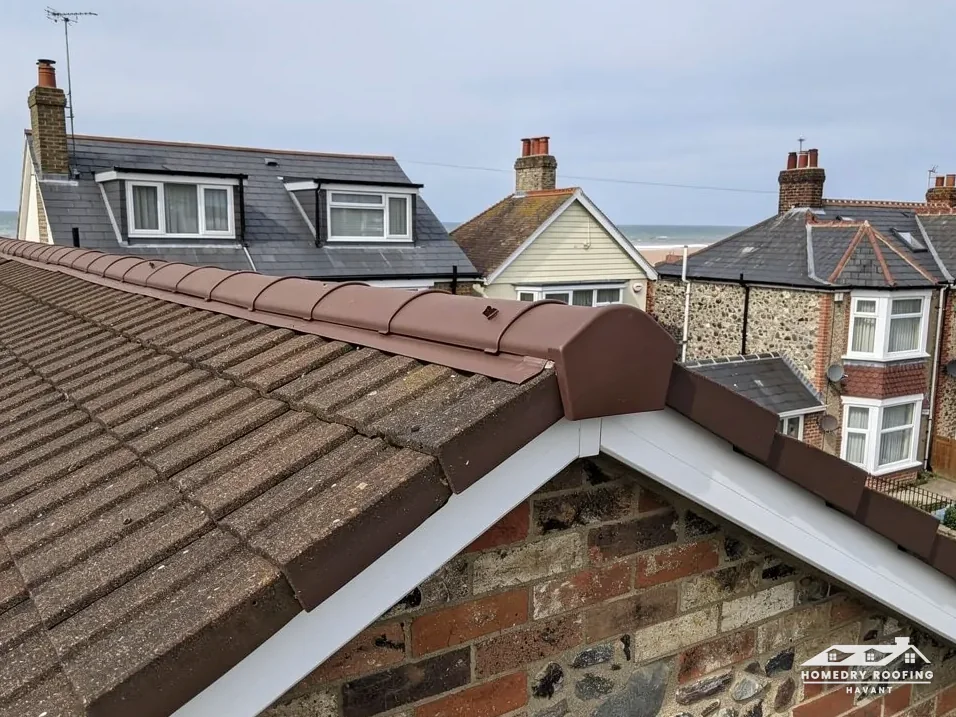
Ridges
Where the crest of the roof is capped and the two slopes lean against each other.
A shifted cap leaves a gap along the top that rain can slip through.

At 10.8 road miles from Havant, South Harting lies north-east of it, and its ridges, valleys, gutters and eaves are surveyed first, then quoted as a single written total.
10-year workmanship guarantee, in writing
Where the crest of the roof is capped and the two slopes lean against each other.
A shifted cap leaves a gap along the top that rain can slip through.
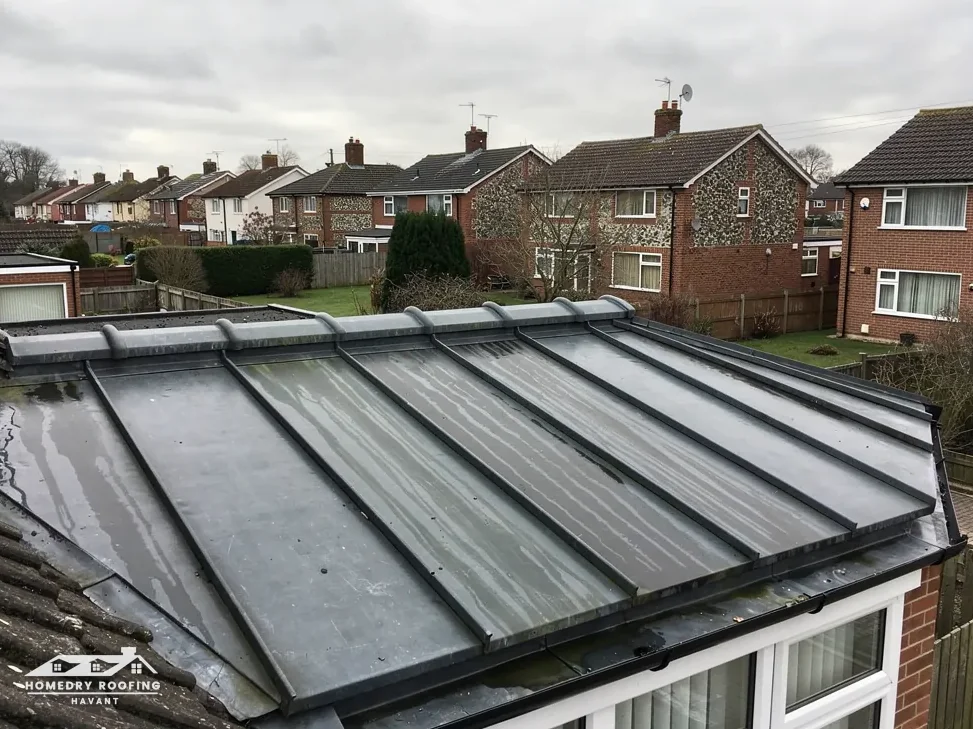
Where two pitches form an inner angle and a single channel drains the pair.
A split lining or a fold full of leaves pushes water sideways under the tile edges.

The underside boards that close off the overhang where roof edge and wall part company.
A spongy or brown-stained board records water arriving from the run above.
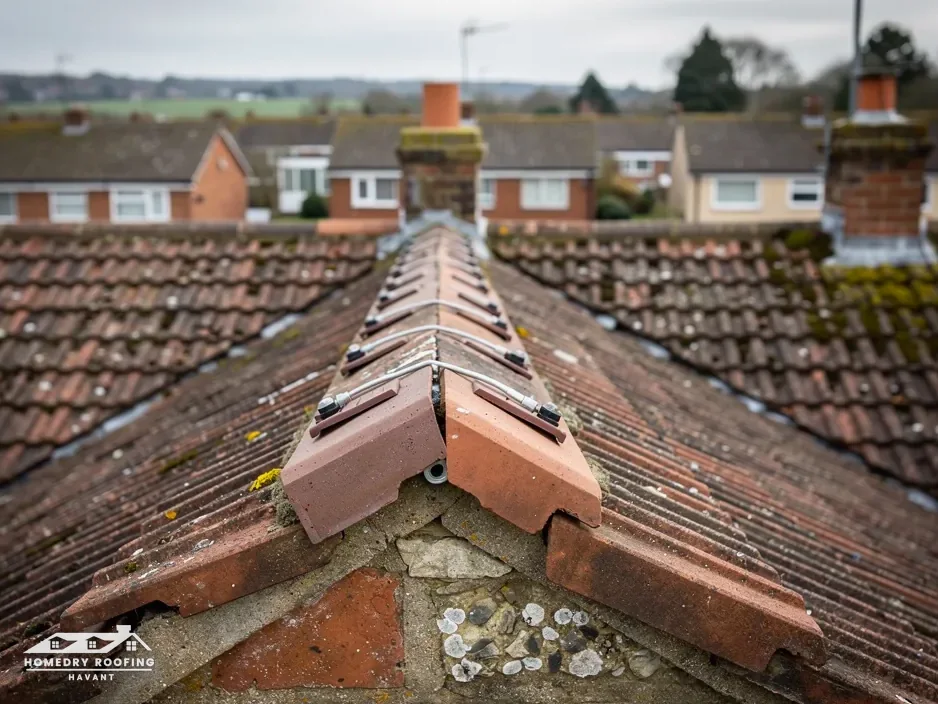
The joints between slopes decide where a pitched roof sends its rain.
At South Harting the upper roof is read from the crest downwards: ridge first, then the hips, then the valleys. The ridge runs along the top, a hip is the sloping edge where two pitches meet at an outer corner, and a valley is the inside angle at which they meet in a fold. At each one we look at the capping or lining, at what fixes it down, and at the tiles beside it. Because a valley drains two slopes through one channel, a split or a fold full of leaves does more damage than a single cracked tile. A mark inside, high on a wall or beside a chimney, is chased back along the loft timbers until its source is found. Our pitched roofing page explains the structure, and roof repairs covers a mend.
The Parish Church of St Mary carries Grade I listing; Harting War Memorial is Grade II* and Harting Church of England Primary School is Grade II. The church is in use for Church of England worship, which puts work to its roof under the faculty system instead of the council's listed building consent. A home with its own list entry follows the council route: an alteration that touches its character needs listed building consent first. The National Heritage List will show which description fits your address.
South Harting sits inside the South Downs National Park, so planning applications for a roof here go to Chichester District Council, acting on South Downs National Park Authority's behalf. Applications are handled by Chichester District Council acting for the Authority, with called-in cases passing to its Midhurst planning team. Chichester District Council's building control team, not the Authority, deals with building regulations. The village has a designated conservation area. Our planning guide for roof work covers the rules themselves.
A valley gathers the run-off of two slopes into one narrow lining, so it carries a heavier load than any other short stretch of covering. Debris lies in it, and the lining below wears under that traffic. We clear the fold, inspect what lies beneath and take a photograph for you. Where the lining is tired, we renew it end to end instead of patching its weakest spot.
A stain on a bedroom wall that comes back in one corner whenever the weather turns wet for days.
A worn valley lining, or a cap on the crest that has crept sideways and opened a slot.
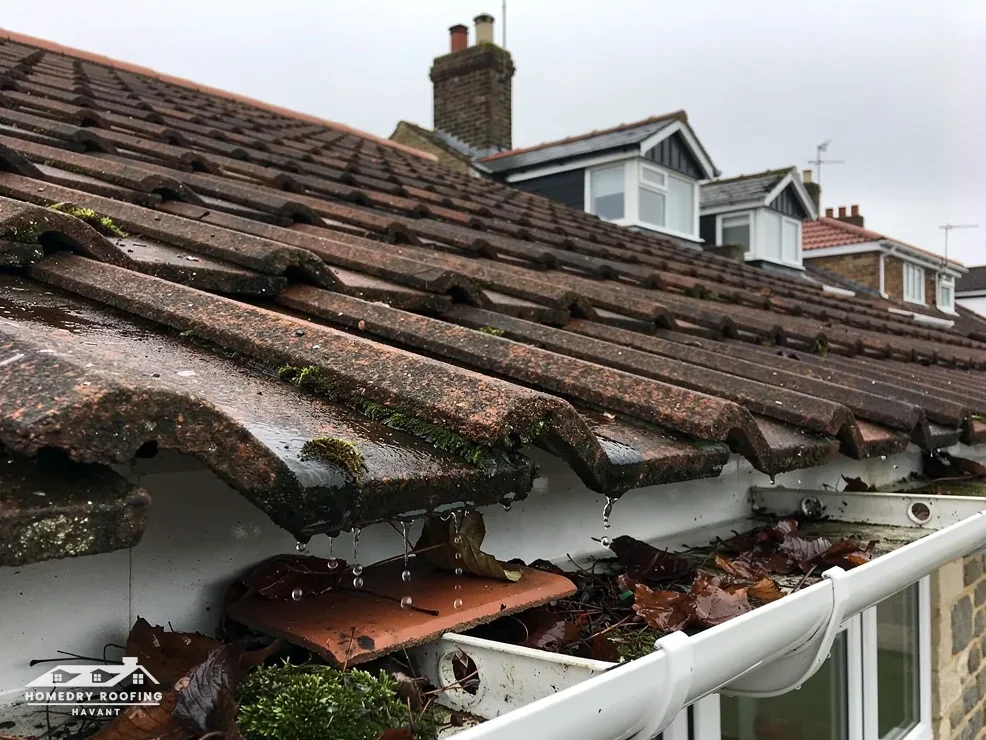
A choked hopper, an open joint or a sagging length can each be the cause. We check all three from the ladder and tell you which one it is, with a photograph, before suggesting any work.
Water leaves the last course of tiles and drops into the gutter, so the eaves come next in the South Harting survey. The run is read from its first bracket to its outlet: slope, joints, bracket spacing and the hoppers, which are the boxes where pipes pick up the flow. Brett Martin advises a fall of 1 mm for every 600 mm towards the outlet, which is the figure we hold a sagging length against. A corner overflow gets put down to a downpour; a choked hopper or a loose joint is what we look for first. Our gutters, soffits and fascias page lists what is possible, one refixed bracket at the small end and a complete new run at the large.
A gutter hangs from the fascia board, while the soffit is the one beneath the overhang, closing it off from the wall. A screwdriver tip pressed into each finds soft timber, brown staining and flaking paint are noted, and any vent strip in the soffit is checked clear, because it lets the loft breathe. Soft boards are replaced and sound boards stay, with the fault above cured first, so that new timber is never hung under an old problem. If the fascia carries a long run of heavy guttering, we also look at how well the bracket screws bite into it.
Last is the pipe and the ground at its foot. A pipe ending short of its gully, or a path that falls back to the wall, can undo a sound roof, so we trace each pipe to its end and write down what is there. After the survey you are told whether to mend or re-cover, and why, and mending is offered first wherever the covering and its battens are in good order. You then receive one written total, and our crew clears away its own mess before leaving.
Timber under a gutter holds the history of each drip it has taken.
Brown on the underside of a soffit, or a fascia that gives under a thumb, is a record of water that arrived earlier. Our job is to read where it came from: a weeping joint, a gutter that has tilted or tiles overhanging badly. The finding is written down and photographed, so that fresh boards do not go up beneath the same trouble.
Each hip and valley is cleared of debris and read in turn. Hip capping is checked for cracks and movement, the valley lining for splits, worn patches and curling edges, and the neighbouring tiles for chips that would let water slip beneath the lining. Up in the loft we read the timbers underneath for staining, as a mark there points to the same place. Lining that is sound under its debris is cleared and left; lining that is worn is renewed along its length, and photographs show you the reason for each choice, so the report can be checked against your own roof from the ladder or the garden.
On building regulations, the Planning Portal's rule of thumb is that a re-roof touching under 25 per cent of the building envelope and under 50 per cent of the roof needs no application in the normal run. A new covering that adds 15 per cent or more to the weight does need approval, and a structural check goes with it. Chichester District Council's building control team tells us which route applies before work begins. Planning is a separate subject: Chichester District Council handles its applications, but the powers here sit with the South Downs National Park Authority, so read the planning guide for roof work first, then ask that council about your address.
Section 169 of the Highways Act 1980 requires a licence for any scaffold standing on or above a public road or pavement, so the question is one for the whole job and not just the roof. West Sussex County Council licenses it, charging £266 for one month of cover and needing 10 working days' notice at minimum before the scaffold is erected. We arrange the licence with our scaffolder. Because the notice has to be allowed for, we put a likely start week to you early and book nothing until it suits you, so the poles stay up only as long as the job needs them.
Listed Grade I, The Parish Church of St Mary hosts worship under the Church of England, an exempt denomination. Works to a church in use go through that denomination's faculty system and not through the council's listed building consent. That exemption covers the church, not the houses around it. A home whose own address appears on the list follows the council route, where listed building consent is required for any alteration affecting its character. Yours can be checked by putting the address into the National Heritage List. If the wording of an entry leaves you unsure, ask the council before any date is fixed and before materials are ordered.
The decision belongs to South Downs National Park Authority, because South Harting is inside the Park. In practice Chichester District Council processes the application for the Authority, and if the Authority calls it in, its Midhurst planning team takes the application over. Building control sits elsewhere: the district provides it, and the Authority does not. The planning guide on this site covers the normal rules, and Chichester District Council can say how they apply on your road, which matters before any order for materials is placed. A short email or call at the start can save a re-order later, and we wait for the answer.
Our roof-work planning guide explains what the designation does and does not change for a house, so begin there. Article 4 is the thing to check, because a direction can strip away further rights, and only the council handling applications here can answer for your road, so contact Chichester District Council before a date goes in the diary. With the guide read first, you will arrive at that conversation with the right questions about your own address, and its reply then joins the survey notes.
Each list entry names one building or structure and describes it. Harting War Memorial is Grade II* and Harting Church of England Primary School is Grade II, so those entries concern those two sites. Your own home becomes a listed-building matter only if the list names it, and then anything that would alter its character needs listed building consent before the work begins. Type your address into the National Heritage List search to see, and ask Chichester District Council if the wording of an entry is unclear to you. Reading the entry matters, as each one says exactly what it covers.
A single total, written down after an inspection of the roof, outside and in the loft. It states if VAT and scaffolding come with the sum, which lets you set it next to another quote on equal terms. If the roof can be mended, the mend is priced before any re-cover is mentioned, and our reasons come with photographs of each fault, taken outdoors and in the loft. We work to a fair price. At the end of the job the crew clears up, and the findings stay with you for any later conversation.
You'll get one written total price.
Fill in what you like. It opens WhatsApp with your message ready to send.