
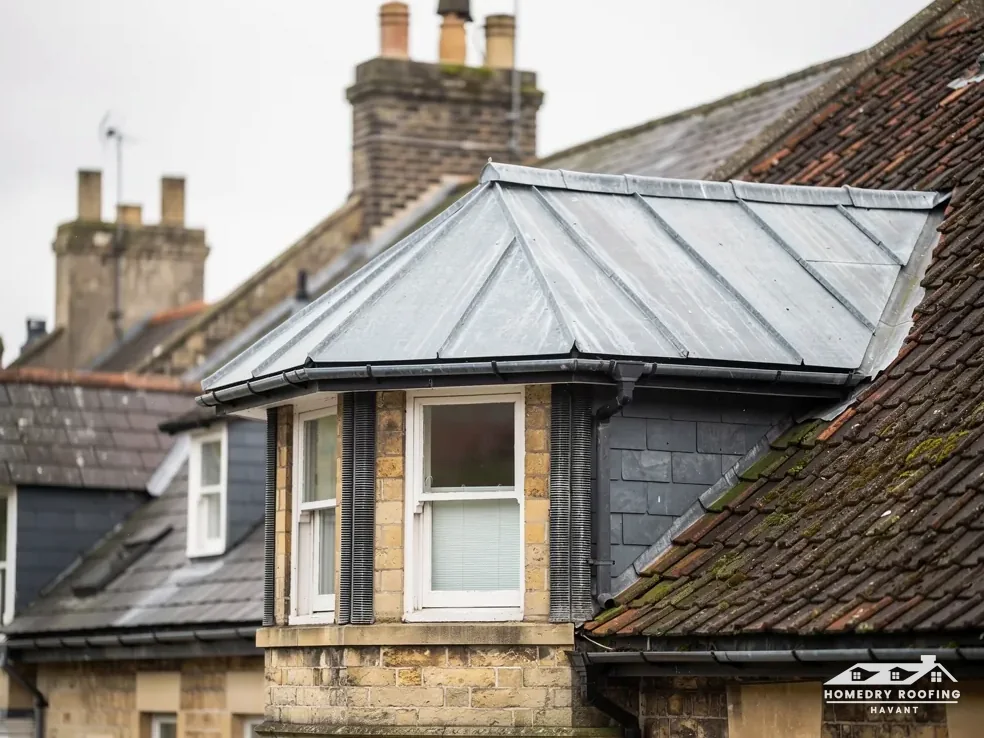
Flashings
Where the roof climbs a wall and a lead strip is pushed into a slot in the brick.
Once an edge of the strip lifts, rain slips behind it and runs down the masonry.

Lavant is 11.2 road miles east of Havant; its flashings, battens and underlay are surveyed from the outside and from inside the loft, then quoted as one written total price.
10-year workmanship guarantee, in writing
Where the roof climbs a wall and a lead strip is pushed into a slot in the brick.
Once an edge of the strip lifts, rain slips behind it and runs down the masonry.
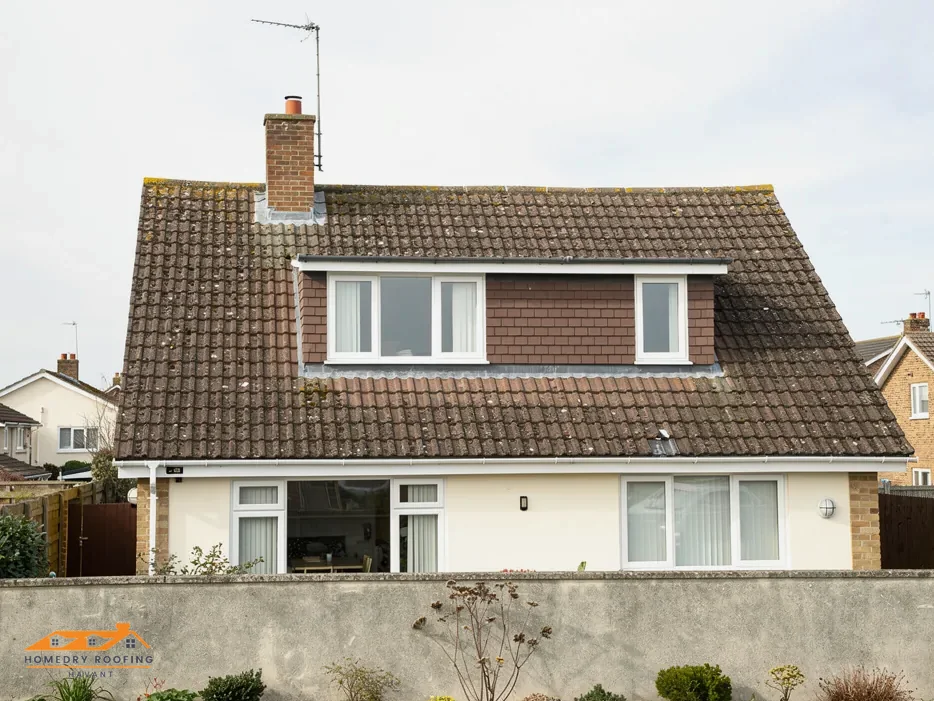
Timber strips set across the rafters, each carrying one row of tiles.
A dark, soft or split batten shows that water has been sitting on it.
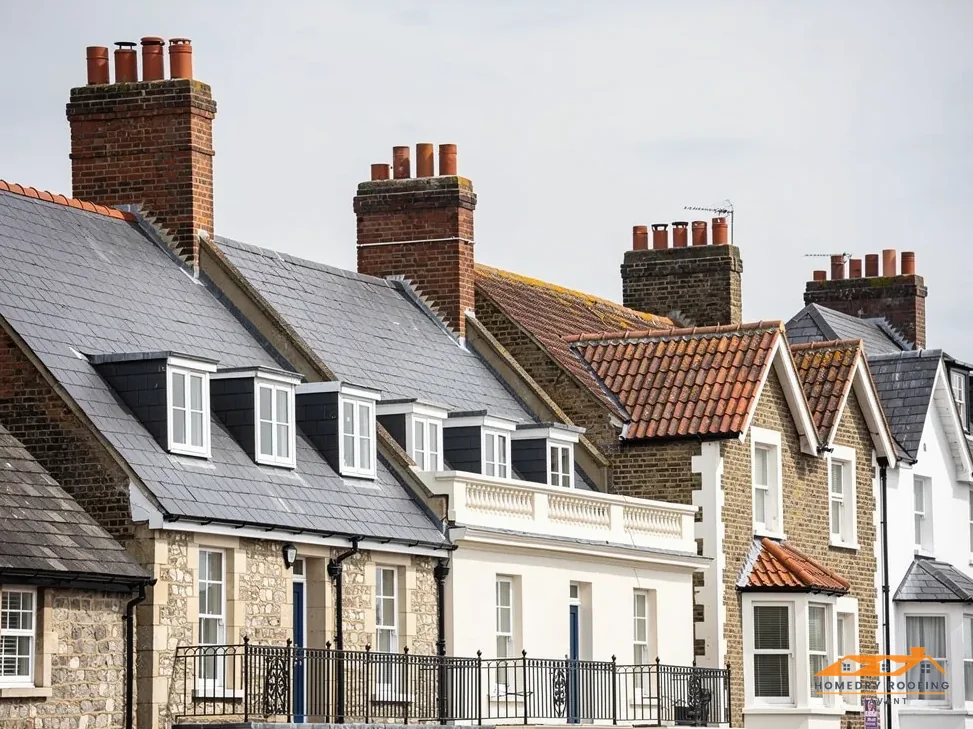
Where the loft meets the outside air and the insulation must stop short of the gap.
A blocked eaves gap leaves the underside of the roof damp and the timber tired.
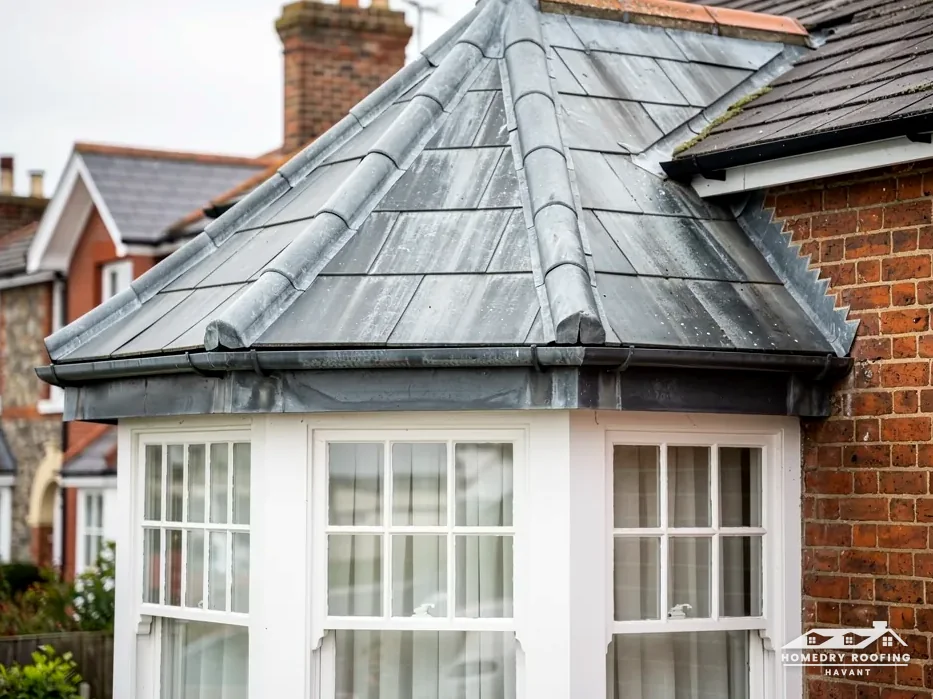
The metal can only be as sound as the join it fills.
Where roof meets wall along a slope, a flashing must close the join, and the Lavant survey reads these before the other details. The lead that closes such a join sits in a groove cut into the brickwork, a chase, held by wedges and sealed over with pointing. We look for edges that have lifted, for laps that have opened, and for mortar above the metal that has crumbled. MyJobQuote says correctly installed lead flashing can last for over 80 years, which is a sound reason to mend a good strip and not strip it out. Our lead roofing and leadwork page explains the metal, and roof repairs describes the smaller jobs.
The Church of St Nicholas has a Grade II entry, and worship there is Church of England, so roof work goes through the faculty system. Nutshell House and Redman Cottages are also Grade II. A private home carrying an entry of its own falls under the council's listed building consent instead, wherever work would affect what makes it special. The list entry for your address says which of these cases you are in, so look before a date is fixed.
Lavant is inside the South Downs National Park. Day to day, Chichester District Council processes applications for South Downs National Park Authority, which holds the planning powers, and should the Authority call a case in, its own team takes it on. Building control stays with the district, through Chichester District Council's building control team. The Mid and East Lavant conservation area is designated, and Article 4 is one more thing to check with Chichester District Council. Our planning guide for roof work sets out the rules, so we do not restate them here.
Lead is soft, which lets it be dressed tight into a brick joint, and it is long lived when it is fitted well. That is why a lifted edge can be a small mend, not a reason to renew the whole run. We photograph each lifted edge and open lap against the brickwork, so that you can see the extent of the fault and what the repair covers.
A tide-mark on an upstairs wall that sits just below the point where the roof slope meets masonry outside.
A curled lead edge, or crumbled mortar above it that has left a slot for the wet to enter.
It can show daylight through gaps, torn underlay, and tide-marks on timber where water has run. Those marks reveal where water entered and how far it travelled, which a view from the ladder alone cannot, and the photographs we take there are matched to a spot on the slope outside.
Much of the evidence on a roof is found from beneath it. In a Lavant loft the first thing we do is switch the torch off and look for daylight, because a pinprick of light shows a gap in the covering above. Then the torch goes on, and we read the timber for tide-marks, dark rings round nail tips and damp patches that show where water entered and how far it travelled. The loft is recorded by section, from the eaves up to the ridge, so each photograph can be matched to a spot on the roof outside. Our roof inspections page describes the survey as a whole, from the ladder and from inside.
Under the tiles lies the underlay, a sheet that catches whatever creeps past them, and the battens are the timber laths across the rafters that the tiles hang from. We look for underlay that is torn, sagging or wet, and for battens that are dark, soft or split where they cross a rafter. A batten that rings hard under a screwdriver handle is a different thing from one that gives, and the sound is part of the evidence. Where a section of covering has been stripped for one repair, both can be seen at once, which is the best chance to judge the rest of the slope.
Ventilation comes last. In a cold roof, with insulation laid along the ceiling and the loft above left cold, a high-resistance underlay calls for eaves ventilation, and Marley gives 25 mm at 15° or less and 10 mm above 15°. We also look for loft insulation stuffed hard into the eaves, because it shuts that gap. The verdict follows: mend or re-cover, each with its reasons, and a mend first where the timber is sound. The written quote comes as one total.
Much of a roof's story is written on the timber beneath it.
Stains on timber record the path of water long after the rain has stopped. A tide-mark on a rafter, a dark ring round a nail and a dry patch of insulation beside a damp one tell us where water entered and where it went. We photograph what we find in the loft, so you can set it beside the roof outside and see the two stories agree.
Map of Lavant and the places around it, with the dashed line of our 30-mile service area from Havant. The same places are listed below the map.
It looks at the lead flashing along the join for lifted edges, open laps and splits, at the chase it sits in, and at the mortar above it for gaps. We begin on the ladder and finish in the loft, since a stain indoors can be well away from the join responsible. A lifted edge means a small mend. A split along a length points to renewing that stretch. Each fault is photographed, so the choice between a mend and a renewal rests on evidence you can see for yourself, shot outdoors and indoors, each with its position marked on the roof plan.
Two separate questions can arise here, and neither depends on the other. The Planning Portal puts the building regulations test in two measures: less than 25 per cent of the building envelope and less than 50 per cent of the roof, inside which an application is not normally needed. Approval is needed regardless if the new covering is 15 per cent or more heavier. Chichester District Council's building control team is asked before work starts. On planning, South Downs National Park Authority holds the powers in Lavant and the same council does the processing, so read the roof-work planning guide on this site and then put your address to the council.
The Highways Act 1980, section 169, requires a licence to erect scaffolding on a road or pavement. West Sussex County Council issues it, at £266 for one month, and asks for notice of at least 10 working days before erection, which is why a date cannot be promised at the first visit. We arrange the licence with our scaffolder. You also hear the likely start week before anything is booked, as the notice period decides when the poles can first go up, and you can then plan around the scaffold, the parking and the pavement.
The Church of St Nicholas has a Grade II entry and is still used for Church of England worship. Such churches, while in use, sit outside the council's listed building consent and under the faculty system instead. Nutshell House and Redman Cottages are Grade II too, and an entry like theirs brings listed building consent into play for any work touching the building's character, however small the repair. The church exemption does not travel to neighbouring buildings. Should your own house appear on the list, the council route applies, and the entry itself will tell you.
Lavant lies inside the South Downs National Park, and the planning powers there sit with South Downs National Park Authority. Chichester District Council does the processing for it in the normal run, and an application the Authority calls in goes to the Authority's own team instead. Building control is not a Park function: it stays with the district. For the ordinary rules, the planning guide covering roof work is where to look, and Chichester District Council, as the host authority, can say how they bear on your property, ideally before you buy any materials or agree a start date with anyone, ourselves included.
The conservation area is designated, and you should ask Chichester District Council, which processes applications here for South Downs National Park Authority, whether your address falls within it. How far a designation alters things for a house is explained in the roof-work planning guide. The thing to check is an Article 4 direction, which could take away further rights on your road. Raise it with the council before a date is set and before any materials are bought, then pass on its reply, and the quote is written to match.
It is not a roofing rule. Land near Lavant sits in Flood Zone 3 on the Environment Agency's map, and the zone describes land, and is silent on how the covering of a roof is chosen or fixed. It is still a reason to look hard at the foot of each downpipe. We note where the pipe ends, whether the gully is clear and which way the ground falls, and the notes join the report you receive. Flood advice for your own address comes from the Environment Agency, not from a roofer, and we would send you there for it before anything else.
Roof timber stays healthier when the eaves can breathe. Where a cold roof is lined with a high-resistance underlay, Marley gives 25 mm of eaves ventilation at 15° or less and 10 mm above 15°, so we check that the gap is open and that loft insulation has not been pushed into it. If it has, the fix can be a small adjustment from inside. You receive photographs from the loft with the findings, ahead of any quote, and a repair comes before a replacement where the roof is sound. Nothing is priced from the garden.
You'll get one written total price.
Fill in what you like. It opens WhatsApp with your message ready to send.