
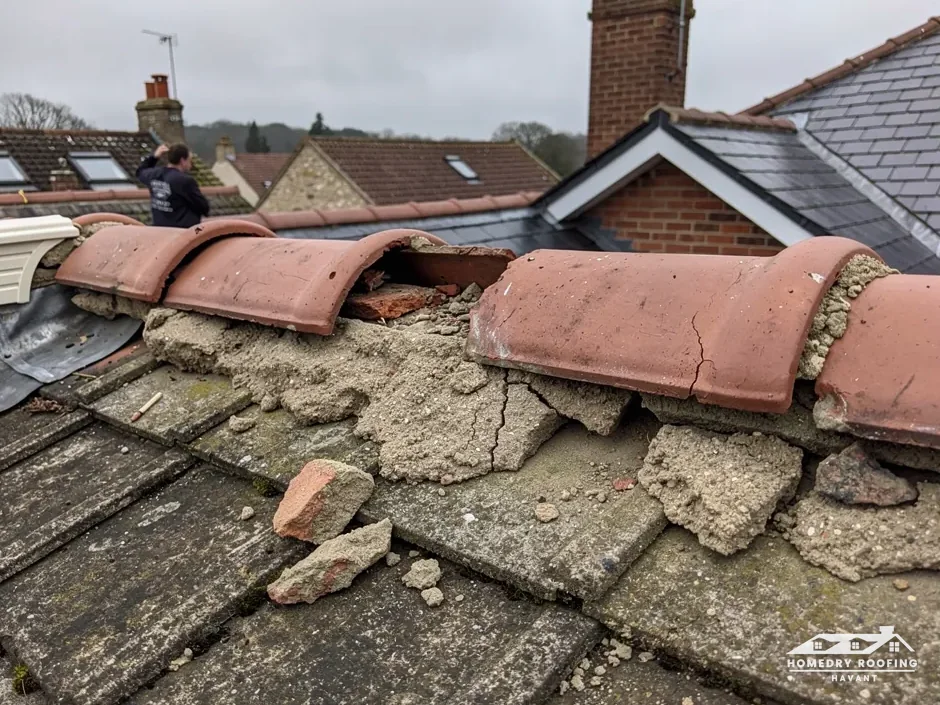
Ridges
Where the two slopes of a roof meet along the top line.
Cracked bedding or a loose cap tile gives rain a way in beneath the ridge.

Grayshott is 27.2 road miles north-east of Havant. Ridges, verges and eaves there are checked in the order rain meets them, and one written total price closes the survey.
10-year workmanship guarantee, in writing
Where the two slopes of a roof meet along the top line.
Cracked bedding or a loose cap tile gives rain a way in beneath the ridge.
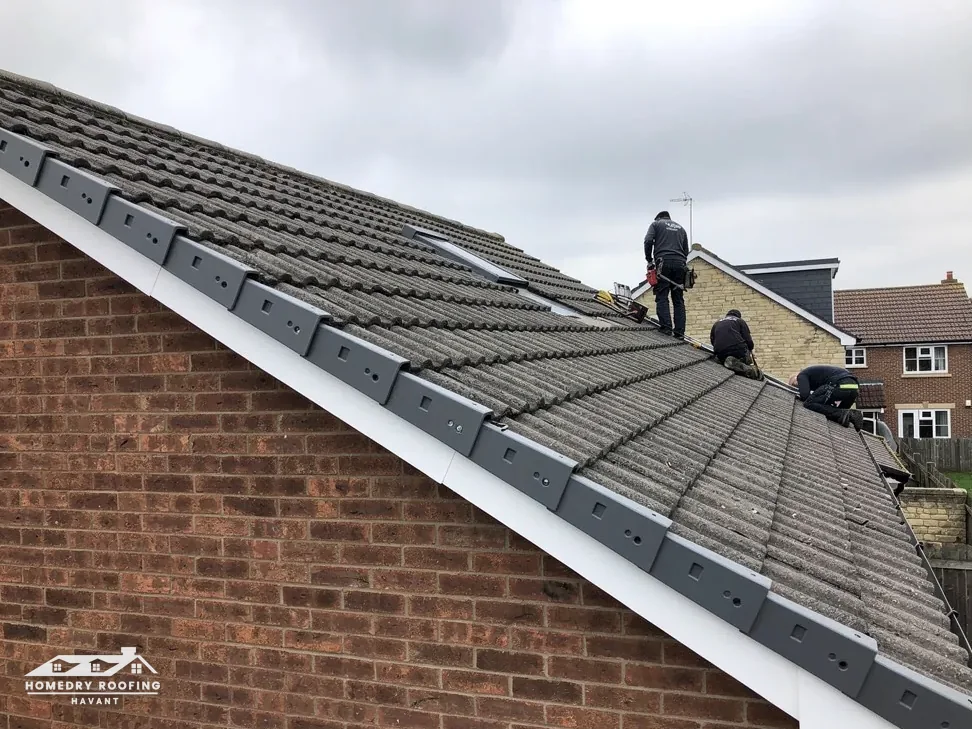
Where a gable roof ends over the wall and the last row of tiles overhangs.
Crumbling mortar there lets gusts lift the edge tiles and rain reach the loft.
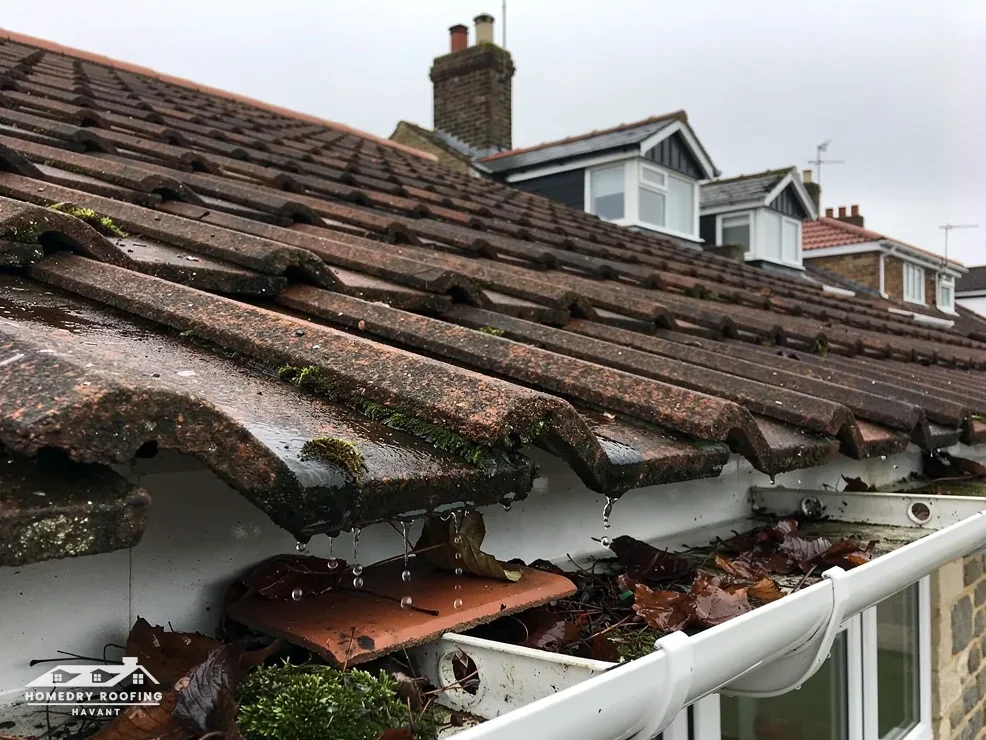
Where the slope ends over the wall and the gutter hangs on the fascia board.
A board gone soft cannot hold the gutter true, and the run starts to overflow.
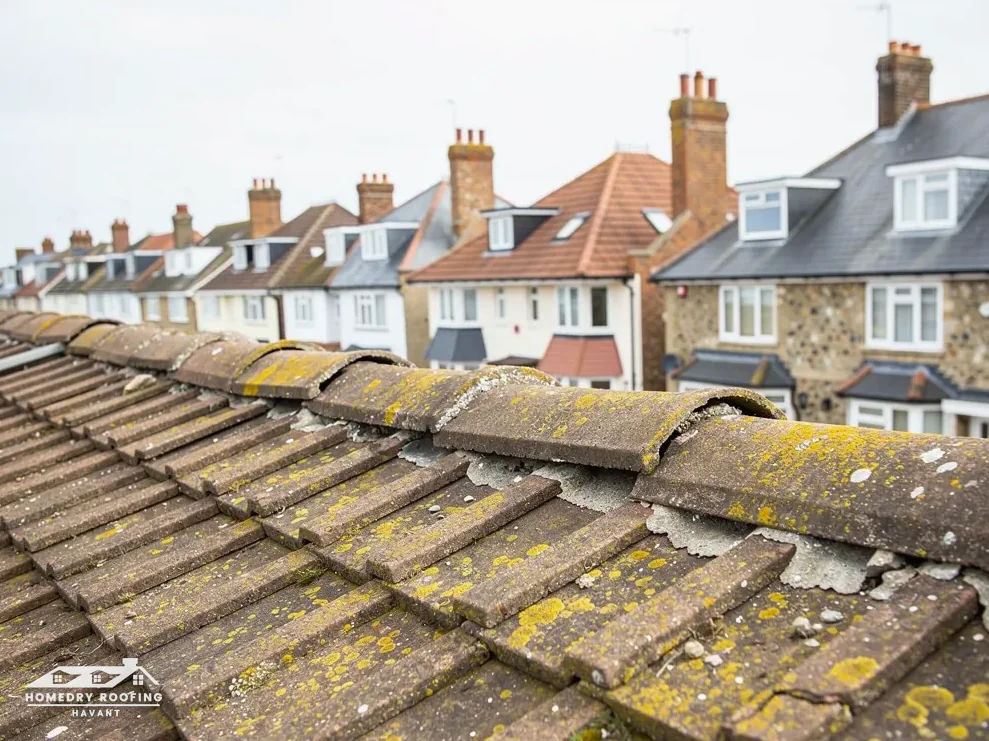
Where the tiles are sound and only the bedding has failed, yes: the caps are lifted, the line is rebuilt and each tile is fixed again. If the tiles themselves have cracked, those are replaced first, while the remainder of the slope stays untouched.
The top of a roof is the first stop on the route the rain takes, so the survey begins there. The ridge is the line where two slopes meet, a hip is the sloping edge between two slopes that turn a corner, and a verge is the edge of a gable roof above the end wall. On each we look at how the cap tiles are held, whether their bedding has cracked or dropped out, and whether the final course at the verge is still firmly pointed. A loose cap can be re-bedded and fixed; a run of failed bedding is rebuilt along its length. Our pitched roofing page describes the work, and a roof inspection is the way to start if nothing has leaked yet but you would like the top line checked.
St Luke's church in Grayshott, formally the Church of St Luke, is listed at Grade II and still used for Church of England worship, which makes its roof work a matter for the faculty system and not for listed building consent. Where a private house is itself on the list, work touching its character needs consent, the wording of the entry marks out what is protected, and reading that wording first saves a wrong turn before a date is fixed.
The Grayshott conservation area covers land close to the centre, and the Surrey Hills National Landscape, formerly an AONB, lies close by. A National Landscape is a designation and not a planning authority, so East Hampshire District Council still makes the decisions. The map settles which side of either line one address falls on, never guesswork. Our planning guide for roof work explains what each designation changes, and a short call with the council covers the rest.
Rain meets the ridge first, so the ridge is where the survey begins.
Give us your postcode and we check it against the conservation area and the National Landscape boundary before a date is fixed, instead of assuming. A direction under Article 4 can remove further rights, and the only safe answer for an address is the one East Hampshire District Council gives. Where a listed building is involved, the council's view on consent comes before any tile is ordered, and the order of events is explained to you at the start.
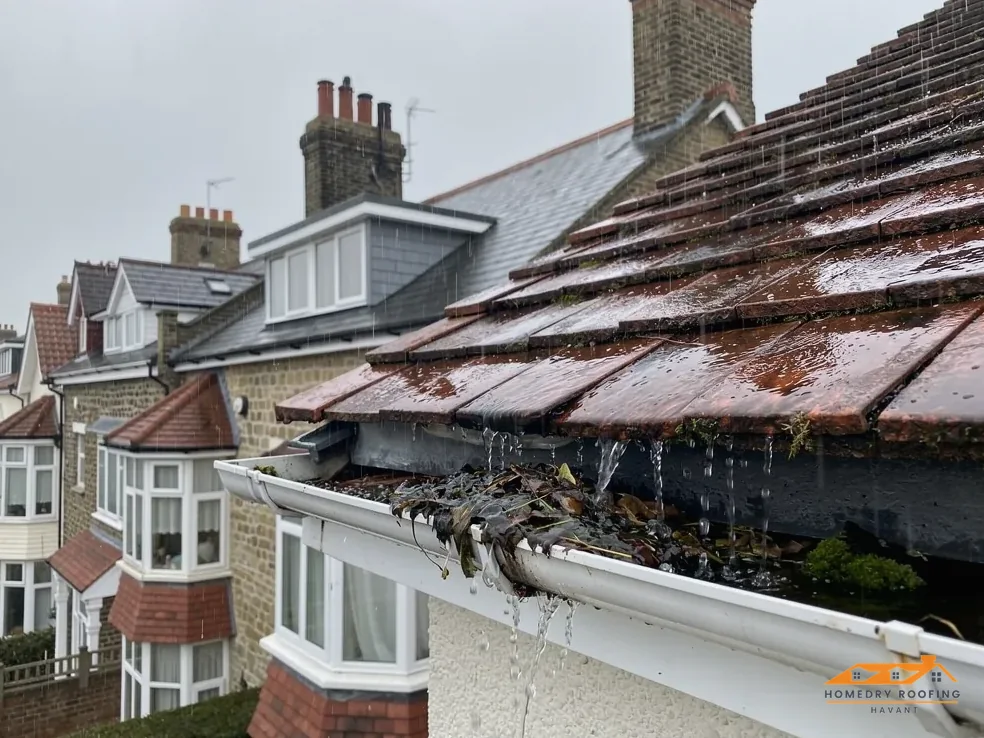
Whatever the slope gathers, the eaves must hand on without losing any.
Everything a roof gathers is delivered to the eaves, so a fault there is felt along the full length of the slope. The final row of tiles should overhang far enough to deliver its water into the gutter, never behind it. We check that overhang, the felt dressed over the fascia edge where it can be seen from the ladder, and the fascia board itself, pressing the timber to find soft patches. A board that has softened cannot hold a gutter on its brackets, and the soffit beneath it, the panel closing the gap under the overhang, can show the same fault. See our gutters, soffits and fascias page for the options.
The gutter run is judged for fall. Brett Martin advises a fall of 1 mm for every 600 mm towards the outlet, so a sagging length that holds a pool is already working against the water it has to carry. Joints that weep, brackets that have loosened and a downpipe that empties against the wall are all found from a ladder and a hose test, and each has its own remedy. Clearing leaves is a small job. Replacing a length that has bowed is a larger one, and the findings separate the two so you can see what each would involve.
Scaffold is worth planning at this end of the roof, because eaves work from a ladder only goes so far. Scaffold standing over a pavement or road is licensed by Hampshire County Council, and the lead time before that licence starts is part of the programme. You are told early what is needed, who arranges it and when work could begin, so the roof is not left open to the weather while the paperwork catches up with the calendar. Where the work is a small gutter repair from a ladder, none of this applies, and the findings say so.
A hose test can settle an argument about a gutter. With a helper running water into the gutter at the high end and someone watching the joints, a weeping bracket, a sagging stretch or an overflowing stopend shows itself within minutes. It costs nothing to run, it shows the fault to you as well as to us, and it saves replacing a length that only needed its fall corrected. Photographs of the result go into the findings.
A damp stain on the outside wall below the gutter, or green streaks that run down the brickwork after rain.
A joint that weeps or a length that has sagged, so the water overshoots the front or slips back behind the fascia.
We look at each cap tile for cracks and slips, at the bedding beneath for gaps where mortar has dropped out, and at the fixings that hold the line down. At a gable verge we check the pointing under the edge tiles and whether the last row has loosened. From the loft, a line of daylight under the ridge or staining on the timber beneath it points to the same places. The findings come with photographs, and a loose cap is mended as a loose cap, while a run of failed bedding is rebuilt along its length, because mending only the visible part would leave the weak stretch beside it.
Sometimes. If the gutter is sound but the brackets have loosened, or the fascia behind them is still firm, the run can be refixed to a proper fall and its joints resealed. If the fascia board has gone soft, a reset will not hold, because the screws have nothing to bite on, and the board has to be dealt with first. A gutter that has split or corroded along its length is replaced. We tell you which of those three you have, and why, with photographs of the fault, before a price is written, so the money goes on the actual cause and not on the nearest symptom.
The answer depends on how far the work reaches across the building. The Planning Portal's guide puts the line at less than 25 per cent of the building envelope and less than 50 per cent of the roof, inside which a building regulations application is not normally needed. Separately, approval is needed whatever the area where a new covering adds 15 per cent or more weight to the roof. For Grayshott, East Hampshire District Council's building control service takes application queries on 01730 234207. We work out which side of the line your roof falls before work is booked, and tell you in writing.
Scaffolding on the highway falls under section 169 of the Highways Act 1980, with the licence coming from Hampshire County Council. Hampshire County Council's licensing page says: "Scaffolding companies must apply on behalf of their customers." Hampshire County Council charges £211.90 on application for the first 2 weeks and £72 for each additional 2-week period, and its form must arrive with ten clear working days to spare before the first day on the highway. We arrange it with our scaffolder. All you need to do is agree the dates, which are settled with you before the form goes in, so the licence and the booking line up.
The Church of St Luke is listed at Grade II and is used for Church of England worship. For a Church of England church in use, roof work is authorised through the faculty process and not through the council's listed building consent, because the exemption follows the denomination. A private house that is itself listed cannot use that route. There, any work that alters the character of the building needs consent, so find its entry, read it carefully, and ask East Hampshire District Council before anything is ordered.
No. East Hampshire District Council decides planning applications here, and that does not change. The Surrey Hills National Landscape, formerly an AONB, is a designation that lies close to the area, and it grants or refuses nothing itself. Whether a given address falls inside its boundary is a matter for the map, and we check your postcode before any date is fixed. Ordinary re-roofing stays under the normal rules. Our planning guide sets out what a designation changes for other roof work, so look there before ordering any materials.
Not in itself. Ordinary re-roofing is normally permitted development even in a conservation area, so it is not a ban on re-covering, and no one has to wait for a special permission to start. The open question is whether an Article 4 direction removes further rights at your particular address, and only East Hampshire District Council can answer that, so ask before work is booked. If the building is listed as well, listed building consent is a separate matter altogether, and the list entry shows what is protected. Photographs of the roof as it stands help the conversation with the council, and we supply them from the survey.
It should name the parts of the roof being worked on and the new covering, and state whether the figure carries VAT and scaffold. It should arrive after a survey, from someone who has been up and looked. We give a single written total, set next to the findings, and where mending is enough, mending is what the findings recommend. We try to keep the price good and fair. If two quotes differ, compare what each leaves out before comparing the totals, because a missing scaffold can explain a lower figure.
You'll get one written total price.
Fill in what you like. It opens WhatsApp with your message ready to send.