
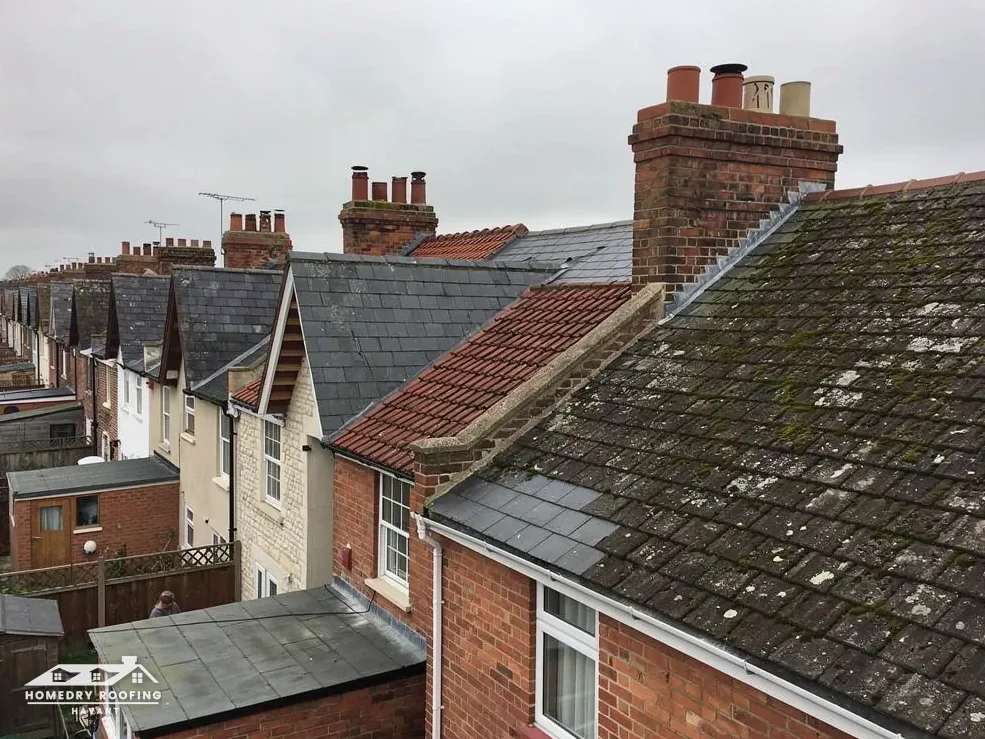
Pots
Where a chimney pot is bedded in a collar of mortar on top of the stack.
Once that collar cracks, rain drains past the pot and into the brick below.

Upham is 20.1 road miles north-west of Havant; brick stacks, verges and gable ends within the South Downs National Park are followed back to the point of entry before one written total is given.
10-year workmanship guarantee, in writing
Where a chimney pot is bedded in a collar of mortar on top of the stack.
Once that collar cracks, rain drains past the pot and into the brick below.
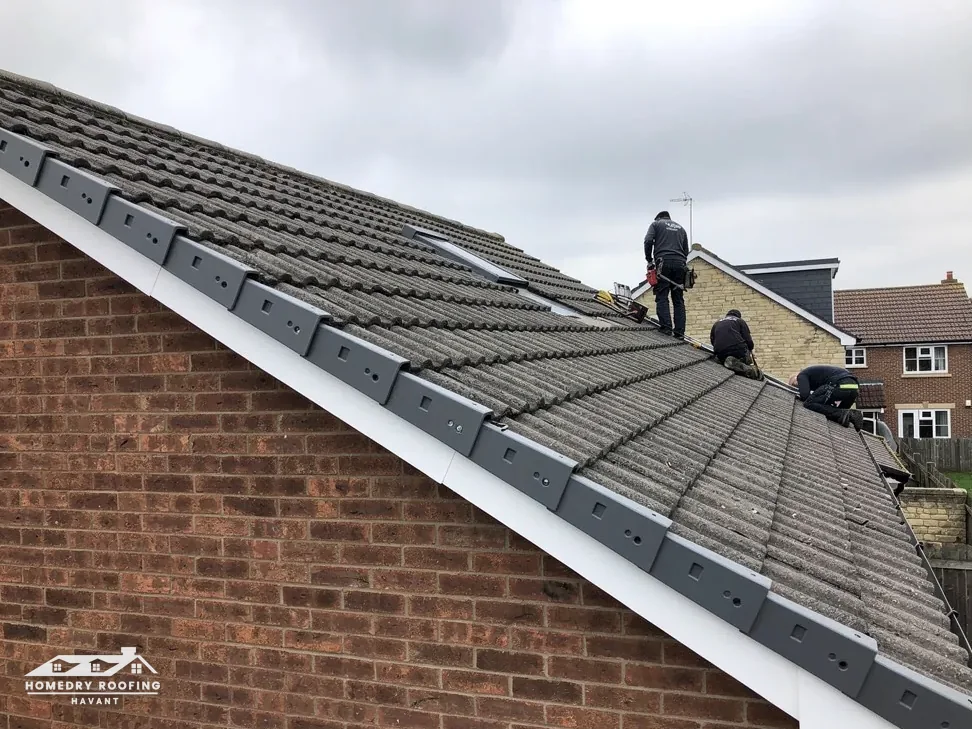
Where the tiles end at a gable and the wall runs on above them.
Bedding that has crumbled along that edge lets weather in sideways.
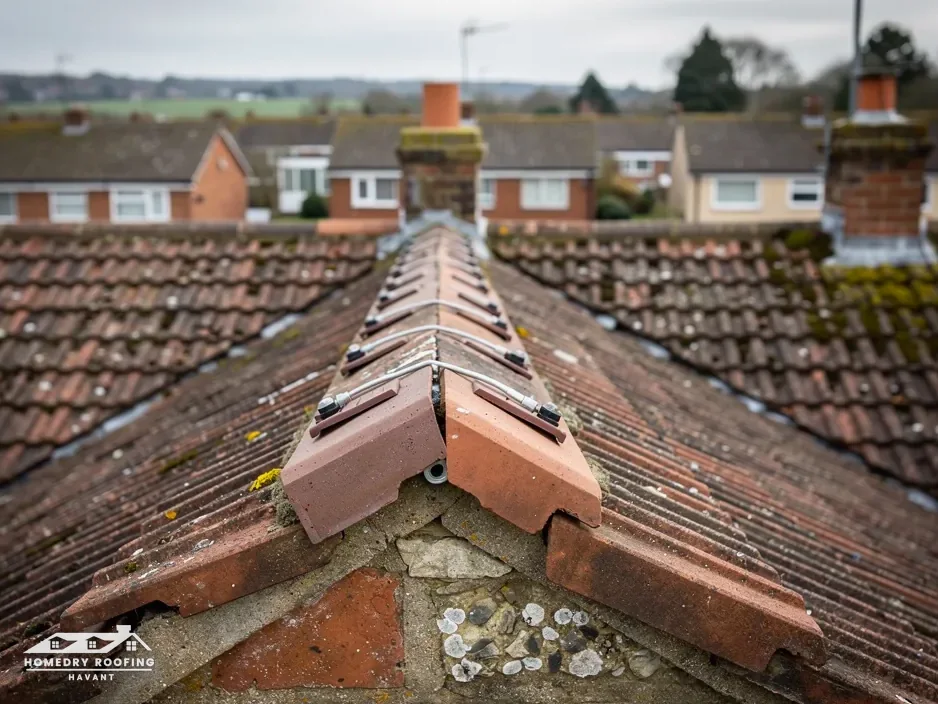
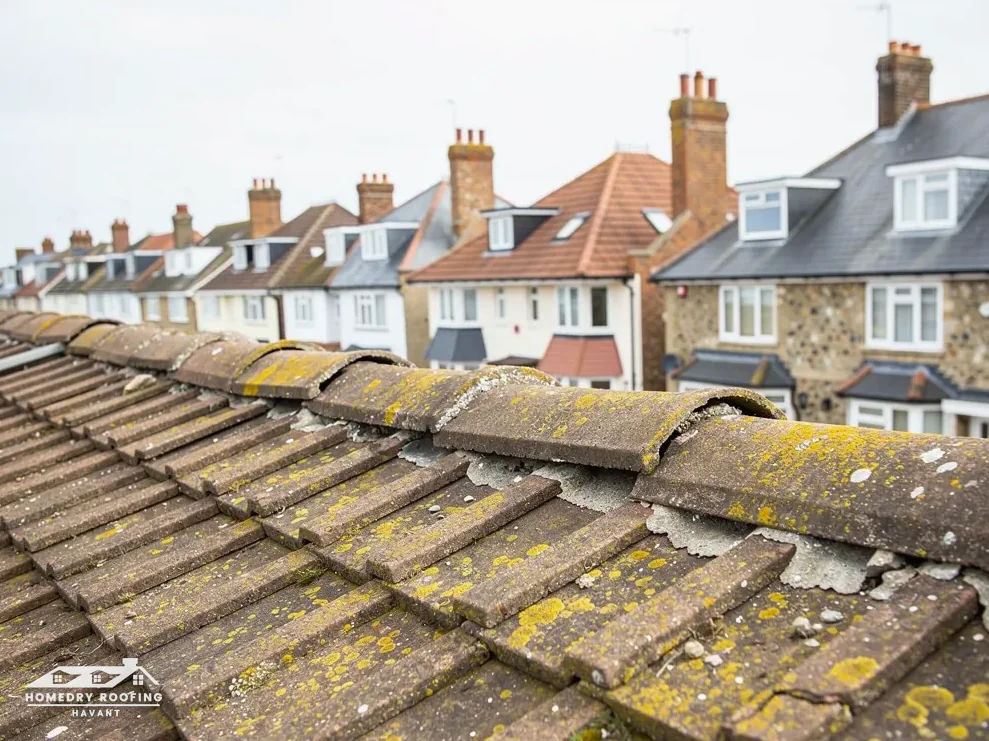
Where two slopes join along the top and capping tiles close the seam.
A cap tile loose at the end leaves that seam open to wind and rain.
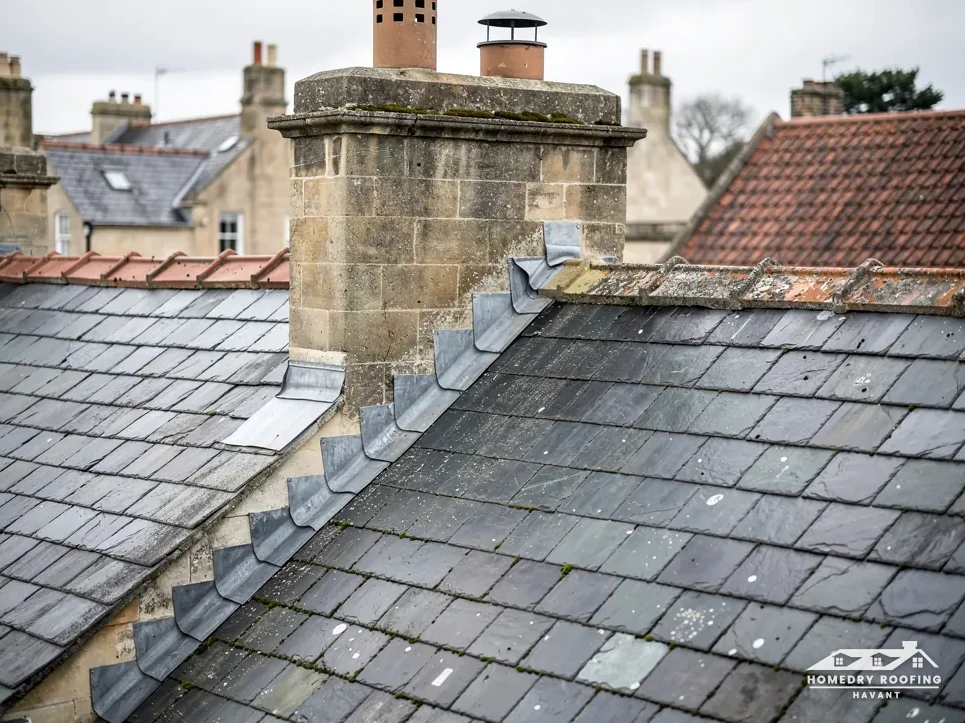
A stack meets the weather on every face, and each face needs its own look.
Every face of a chimney stack meets the weather, so the survey walks all the way round one. The pots come first, together with the mortar collar that anchors each, known as flaunching; then the brick, for joints that have opened; then the lead at the foot, where stack and slope meet. Brick that has lost its pointing soaks up rain, and the result shows up indoors as tea-coloured plaster on the chimney breast. Our chimney repairs page runs from a repoint to a rebuild, while roof repairs deals with the slope around the stack.
The National Heritage List holds Grade II entries in Upham: the Church of St Mary, The Rectory, and the Tomb Monument 30 Metres East of the Chancel. St Mary's is a working Church of England church, which sends its roof repairs to the faculty system rather than to the council's listed building consent. The other case is a listed private home, where that entry's wording settles what the consent covers. The list holds further entries around the village than those three, so look up your own address instead of guessing.
Upham sits within the South Downs National Park, so South Downs National Park Authority decides planning here, with Winchester City Council receiving applications for the Authority, bar those the Authority calls in to itself. Building control remains with the district: Winchester City Council's building control team, 01962 848 176. The Authority lists the Upham conservation area, and Winchester City Council, as host, can say whether a given address lies inside it. A given lane could also fall under an Article 4 direction, so put that question to the same council. The planning guide for roof work holds the roof rules.
A damp mark on the chimney breast points to the stack, yet the stack hides three suspects: the brick, the lead around its foot, and the mortar collar under each pot. All three are examined before we name one, and photographs show the one we pick. Repointing a stack whose real fault is the lead would leave the damp exactly where it began, and the owner would have paid for a job that missed the cause.
A brown patch on a bedroom chimney breast that spreads after rain from one direction.
Brick joints that have opened, a cracked collar beneath a pot, or lead lifted at the foot of the stack.
No. A single slipped tile on firm bedding needs only a small repair. Crumbled bedding along the whole edge, or a rotten board beneath it, is a bigger one. The survey tells the two apart, and the findings show which case yours is.
A verge is where the roof covering stops at a gable and the wall keeps rising. Weather reaches it sideways as well as from above, so the survey checks it from a ladder and then again from the roof space. Are the verge tiles firmly held? Has the bedding or pointing under them cracked? Is the board beneath the edge sound? Some verges are bedded in mortar and some are dry-fixed with units screwed down, and the survey names the kind on your roof and what that means for a mend. Our dry ridge and verge page describes both.
The end of the ridge and the head of the gable wall are close by, so the same pass takes them in. Cracked bedding at a ridge end shows from underneath as a chink of daylight or a darkened timber, and it is easier to make good before a tile slips than after. A verge that has been patched with cement more than once raises its own question, whether a clean relay would hold better than one more patch. Both sides of the edge are photographed, so the report shows what each remark refers to.
Once the edges are read, you learn if the roof needs a mend or a new covering, with the reasoning set out. A mend is put forward first where the battens and tiles can carry on, and a gable end that is the only fault is quoted as a gable end job. A single written total sits beside the findings, and the site is left tidy. If you would rather see what the survey finds before deciding anything, it can stand alone, and the photographs are yours to keep either way.
At the edge of a roof, the weather arrives sideways.
From the loft, a gable end gives its own clues: a thread of daylight beside the last rafter, a damp batten end, or a stain on the underlay below a lifted verge. Each is matched to the same spot outside, because inside and outside views together show whether a tile has slipped or the bedding under it has failed, and both go into the findings with pictures, so the report follows the roof from its top edge downward.
Map of Upham and the places around it, with the dashed line of our 30-mile service area from Havant. The same places are listed below the map.
Pots first, with the mortar collar that holds each one; then the brick joints on the way down; then the lead where the stack leaves the slope. The roof gets a close look and so does the loft, because a damp mark on a bedroom chimney breast can start at any of those three. A cracked collar or a run of open joints means work to the stack, while lead that has lifted means work to the flashing. The findings name which one applies, with a photograph of each, before any price is written. A stack in sound order is reported as exactly that.
They sit with different bodies. For planning, South Downs National Park Authority is the authority at Upham, with Winchester City Council taking in applications on its behalf, bar called-in cases. For building control, ring Winchester City Council's building control team on 01962 848 176. Planning Portal guidance puts the building regulations line at under 25 per cent of the building envelope together with under 50 per cent of the roof; a new covering 15 per cent or more heavier changes the answer and needs approval. Before work begins we put that question to the council ourselves, then tell you in plain terms what it said, and the answer is written into the findings.
Section 169 of the Highways Act 1980 covers scaffolding on the highway, and Upham lanes fall under Hampshire County Council. Hampshire County Council charges £211.90 on application for the first 2 weeks and £72 for each additional 2-week period, and asks that ten clear working days separate the application from the start. Hampshire County Council's scaffolding page states: "Scaffolding companies must apply on behalf of their customers." We arrange the licence with our scaffolder, which keeps the paperwork off your desk, and the dates reach you first, before anything goes in. The scaffold is erected for the length of the job only, and the period on the licence is set to suit the work.
Not while it remains a place of worship. Its Grade II entry (number 1350596 in the National Heritage List) names the church, and the Church of England holds worship there, so a roof repair goes to the faculty system. Council consent is for another kind of building, a house that carries its own list entry. In that case listed building consent applies to work affecting its character, and the entry spells out what it covers. Check the entry ahead of any date or order for materials, because the entry is the thing that decides, and no roofer can overrule it.
The Authority lists the Upham conservation area, and planning in Upham belongs to South Downs National Park Authority, which Winchester City Council assists by handling applications. For a house, a straight re-roof is normally permitted development even inside a conservation area, though an Article 4 direction can take rights away, which is why we check first, before a date is put in anyone's diary. Put the boundary question, and the one about any direction on your lane, to Winchester City Council, and turn to our planning guide for the rules on the roof itself.
Wind and rain get beneath the tile from the side and start washing out the bedding. The first clue indoors may be a thread of daylight beside the end rafter, or a damp batten. We examine the tile, the bedding and the board under it, then say whether the trouble is one tile or the length of the edge. A lone slip on firm bedding is a small mend; bedding that has failed along the run is relaid, and the photographs explain why that is the better course for the roof, and what the edge will look like afterwards.
The survey answers it, in writing, with reasons. Repair comes first when the battens, the covering and the details can carry on. A new covering gets justified by the defects found in them. One failed verge, a lifted flashing or a cracked collar under a pot counts as a repair. A covering worn through across a whole slope, with softened battens beneath, is the other case. Pictures from the ladder and the loft back up the view, so you can judge the evidence for yourself and show it to anyone else you trust, and the choice between the two is yours alone.
It is a single written total, delivered once the survey is over, and the findings sit next to it. Ask what VAT and scaffold add to it, or whether they are inside the total already; a lower-looking figure elsewhere may simply leave one out, and asking for it in writing puts the two on equal terms. Where a sound repair is possible, it leads the quote, and a full replacement is quoted only where the roof leaves no alternative. The pricing aims to be good and fair; when we finish, the garden and drive are checked for stray tile and mortar, with the debris taken away.
You'll get one written total price.
Fill in what you like. It opens WhatsApp with your message ready to send.