

Stacks
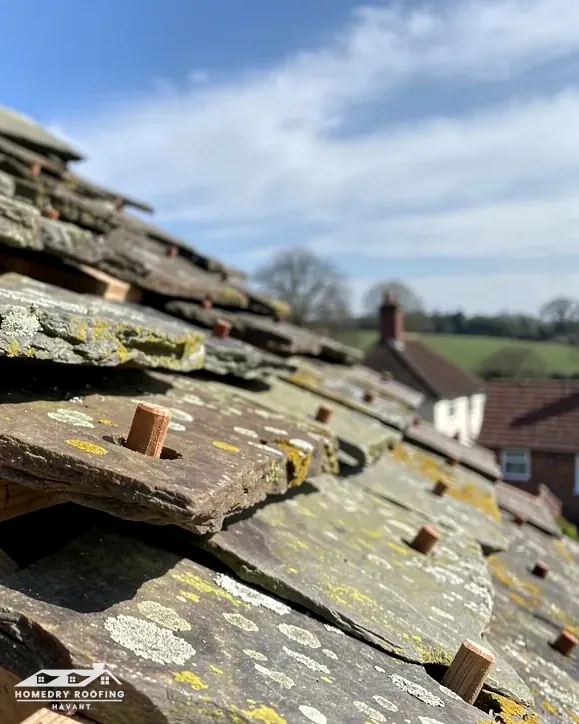
Where a Lovedean stack of brick comes up through the tiles and lead turns up its sides.
A lifted edge of lead lets rain run behind the brick and down into the roof space.
Chimney, gable and roof window work for Lovedean homes, which lie north-west of Havant, 7.3 road miles away; the cause is found before the price is written.
10-year workmanship guarantee, in writing
Where a Lovedean stack of brick comes up through the tiles and lead turns up its sides.
A lifted edge of lead lets rain run behind the brick and down into the roof space.
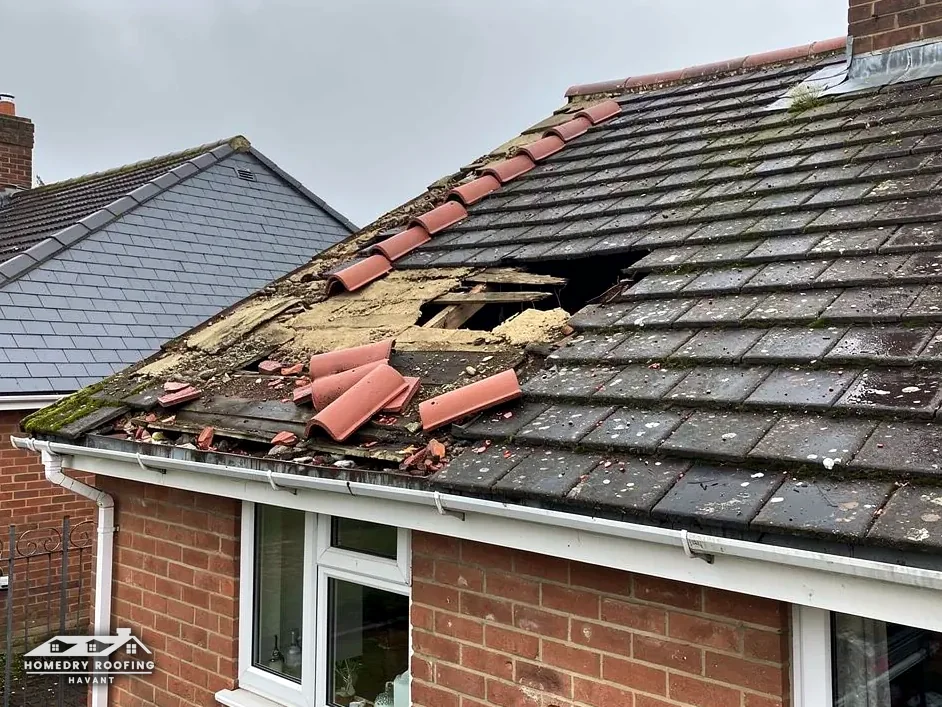
Where a roof ends at an open edge above the end wall of the house.
Crumbling pointing under the end tiles gives the wind a way beneath them.
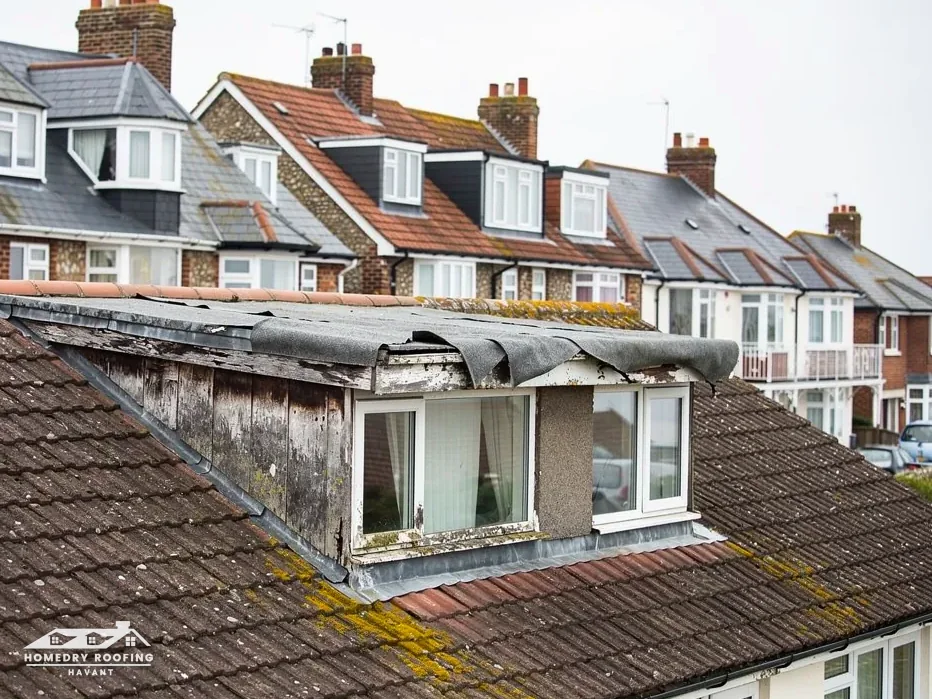
Where a window set into the slope has its own frame and a flashing kit around it.
A hardened seal or a raised flashing edge sends rain behind the frame.
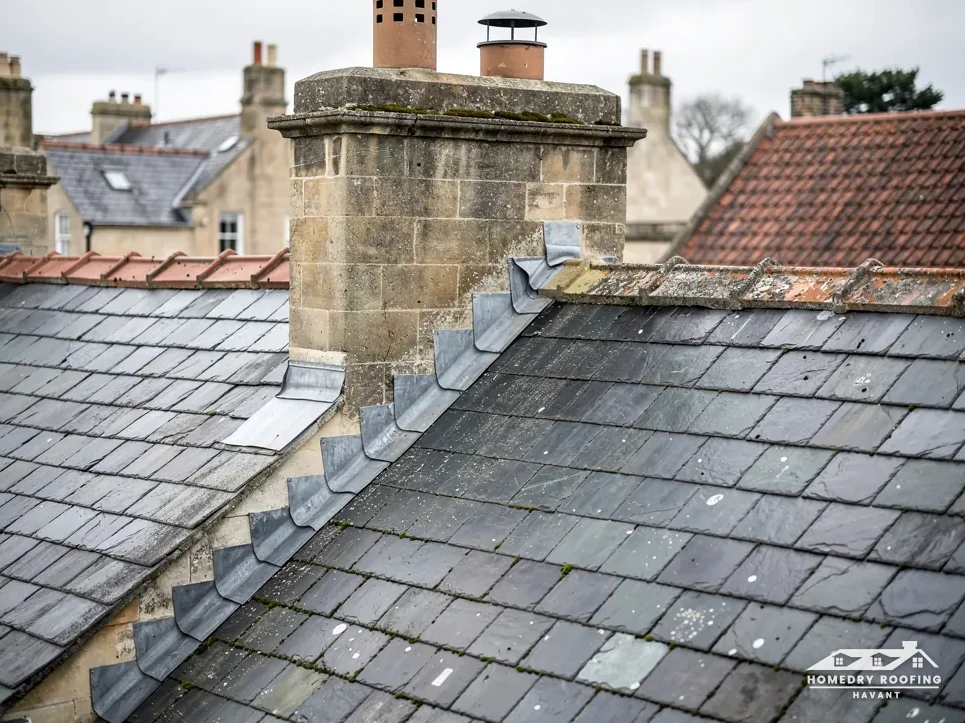
It belongs to the stack, because it is the mortar bed at the top that holds the pots in place. Cracks there let rain into the flue, so we check it at the same visit as the lead below.
A chimney stack is a brick column carrying one or more pots, with a bed of mortar called flaunching holding the pots in place at the top. Lower down, lead flashings turn from the stack into the slope so that rain running down the roof cannot get behind the brickwork. On a Lovedean survey we take each part in turn: the pot seating and flaunching at the crown, open joints in the pointing, and lead that has lifted or split where it meets the tiles. The lead on the upper face of a stack is dressed differently from the lead on its sides, so each is checked separately. MyJobQuote says lead flashing that is correctly installed can last for over 80 years, which is why we study the fixing and the laps before we call any flashing worn out. Our chimney repairs page explains what a stack repair involves.
Indoors, a damp chimney breast shows that rain has reached the stack. It does not show where it came in, because water can enter at the crown, run down inside the brickwork and appear on a lower floor. We trace it from the top down, and the loft timbers around the stack show how long they have been wet. A crack in a crown can hide from the ground, so ladder photographs go into your report. Then you hear whether the answer is new pointing, new lead or something more, and why.
The National Heritage List includes Rose Cottage in Lovedean, listed Grade II (list entry 1091607). A listed home still has its permitted development rights for roof work, but listed building consent is a separate step for any work that would change what makes the building special. If your own home is listed, the survey notes it, and the findings go to whoever has to give consent.
The damp patch indoors marks where the rain ended up, never where it started.
The crown of a stack takes the weather first, and three small things hold it together: the pots, the mortar bed around them and the pointing between the bricks. A crack in any one lets rain into the flue and the brickwork below. We photograph the crown from the ladder so the condition is plain to see, and then explain which of the three needs work and the reason.
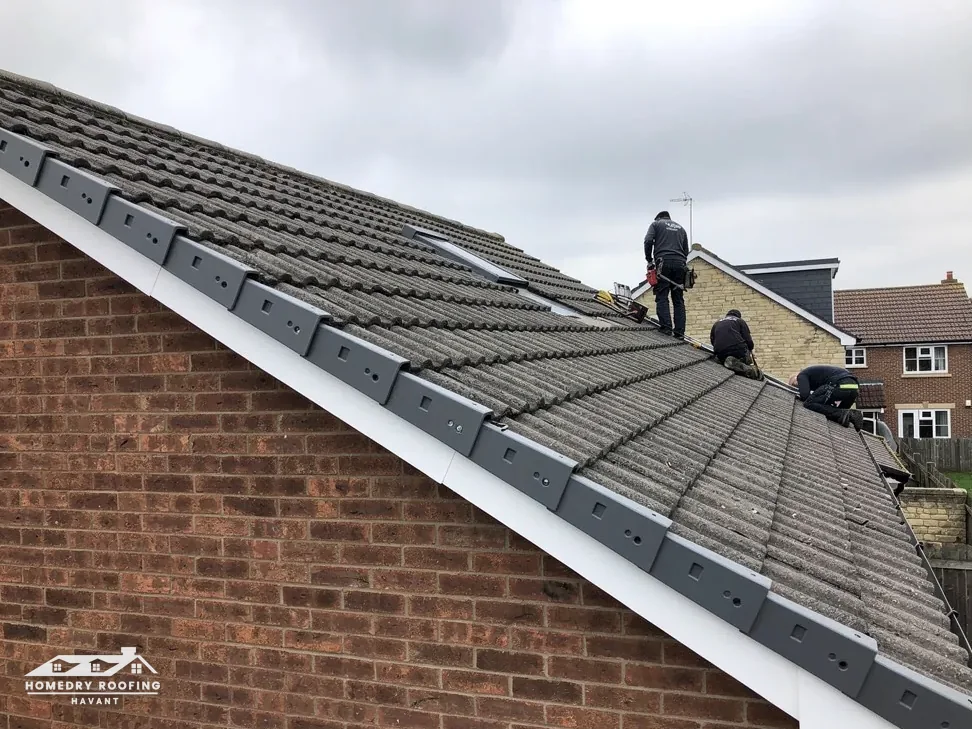
At a gable the wind comes from the side, and the end tile takes it first.
Where a Lovedean gable ends, the roof finishes at an open edge called the verge, and the end tiles sit above the wall below. Wind and rain strike the verge sideways, so we check how the end tiles are held: pointing that has crumbled, tiles that sit proud, or a dry-fixed system with clips missing. Marley says BS 5534 requires mechanically fixed ridge and hip tiles, and BS 8612:2018 specifies dry-fixed systems for ridge, hip and verge, and our dry ridge and verge page explains how those work. From the garden a verge shows as a line of end tiles, and from the loft it shows as daylight along the gable wall. A leaking verge can mark a bedroom corner, so we look at the wall below it too. Rain driven at a verge from the side pushes under any tile that has lifted.
A roof window sits in the slope with its own frame and a flashing kit around it, and the joints between frame, kit and tiles are where rain tries first. We look for staining below the frame, a flashing edge that has lifted and a seal that has hardened, and we open the sash to see that it closes squarely. Until 24 March 2027, AD L 2021 Table 4.2 sets 1.4 W/m²K or Window Energy Rating Band B for roof windows, which matters if a window is being replaced. Our skylights and roof windows page lists the work.
Lovedean falls under Havant Borough Council, and the closest conservation areas, Catherington, Horndean and Blendworth, are all in East Hampshire District Council's area. The edge of the South Downs National Park is close, and Lovedean's centre is outside it, so an address near the boundary should be checked before work starts. Our planning guide for roof work explains how the Park changes the rules.
From inside the loft, the gable wall is a useful witness. Daylight along its top edge, a tide mark on the timber beside it or damp on the end rafter each say something about the verge outside. We read those marks before we go out onto the slope, so the repair goes to the true cause and the end tiles are not simply bedded again over a joint that is open.
Damp on the upper corner of a bedroom wall, or daylight along the top edge of the gable wall in the loft.
Pointing that has crumbled under the end tiles, or a dry-fix clip that is missing, so the tile can lift.
Map of Lovedean and the places around it, with the dashed line of our 30-mile service area from Havant. The same places are listed below the map.
The survey begins at the crown of the stack, then drops to the lead where it meets the slope. At the crown we look for cracked flaunching and open pointing; at the lead, for edges that have lifted or split. The tiles above come next, since rain can run a long way down a slope before it reaches the brick. Inside, the loft timbers around the chimney breast show staining if the leak is old. Once the entry is clear, you are told whether the stack needs a repair or a renewal, with the reasoning, and one written total price follows. Photographs from the roof come with the report.
Two tests sit in the Planning Portal's guide to re-roofing. Less than 25 per cent of the building envelope and less than 50 per cent of the roof affected means no building regulations application is normally needed, while a new covering 15 per cent or more heavier does require approval. Before work on a Lovedean house starts, your building control body is asked which route applies, and you receive the reply in plain terms. A heavier covering also calls for a structural check of the rafters, and that is raised early, before you agree to anything.
Putting scaffold over a footway or a carriageway needs a licence, under section 169 of the Highways Act 1980. Hampshire County Council licenses scaffolding on the highway at £211.90 on application for the first 2 weeks and £72 for each additional 2-week period, needs ten clear working days' notice, and says scaffolding companies must apply on behalf of their customers; we arrange it with our scaffolder. Because Hampshire County Council does not offer extensions, the licence is requested for the whole job, and your start date allows for that notice. The dates are settled before the scaffold is booked, because extending the stay means applying again.
Rose Cottage is listed Grade II (list entry 1091607), which describes that building and not yours; Historic England's list is where to see if your own address has an entry. If it does, work that would affect the building's character needs listed building consent, and Havant Borough Council decides on it. Listed homes keep permitted development rights for roof work. We write up what the survey found, where and why, so a consent application has its evidence ready before anyone orders materials or books a scaffold. Whichever route applies, the cause of the leak is set out in plain terms.
Havant Borough Council is the planning authority here, which makes it the council to ask. The closest conservation areas are Catherington, Horndean and Blendworth, which East Hampshire District Council lists, and your own address may or may not sit inside one. Havant Borough Council's Article 4 page names no direction for Lovedean, but a direction can withdraw permitted development rights across a defined area. Put your road to the council before you book work, and the survey can then be shaped around its reply. Where a direction does apply, the survey notes carry that point forward.
It can, for an address close to the boundary. Lovedean's centre lies outside the Park, but the Park's edge is near enough that an address on the margin might come under the National Park Authority and not the borough council. Check the address with Havant Borough Council before work starts. Ordinary re-roofing is still judged under the normal rules, while our planning guide explains how the Park alters what else can be done to a roof, so you can read the detail for yourself. Anyone unsure where the boundary runs can ask the council for the answer in writing.
That depends on what the survey finds. Lead that is sound but has lifted at one edge can be refixed and dressed back, while lead that has split along a fold or worn thin across its width is better renewed. MyJobQuote says correctly installed lead flashing can last for over 80 years, so age alone is not the test; the fixing, the laps and the joint with the brick are. It is a decision made on the evidence, not on a rule of thumb. You see the lead in photographs, and the written total price follows the decision.
One total price, in writing, comes after the survey. The quote describes the work and the covering or lead used, and it should say if VAT and scaffold are included, and any quote you hold is worth checking for the same. A repair that is enough is priced as a repair, not as a bigger job. Ask for the survey findings alongside the price, and each part of the work can be matched to something seen on the roof. Ask the same of any quote you compare with ours; the site is swept before the crew leaves.
You'll get one written total price.
Fill in what you like. It opens WhatsApp with your message ready to send.