
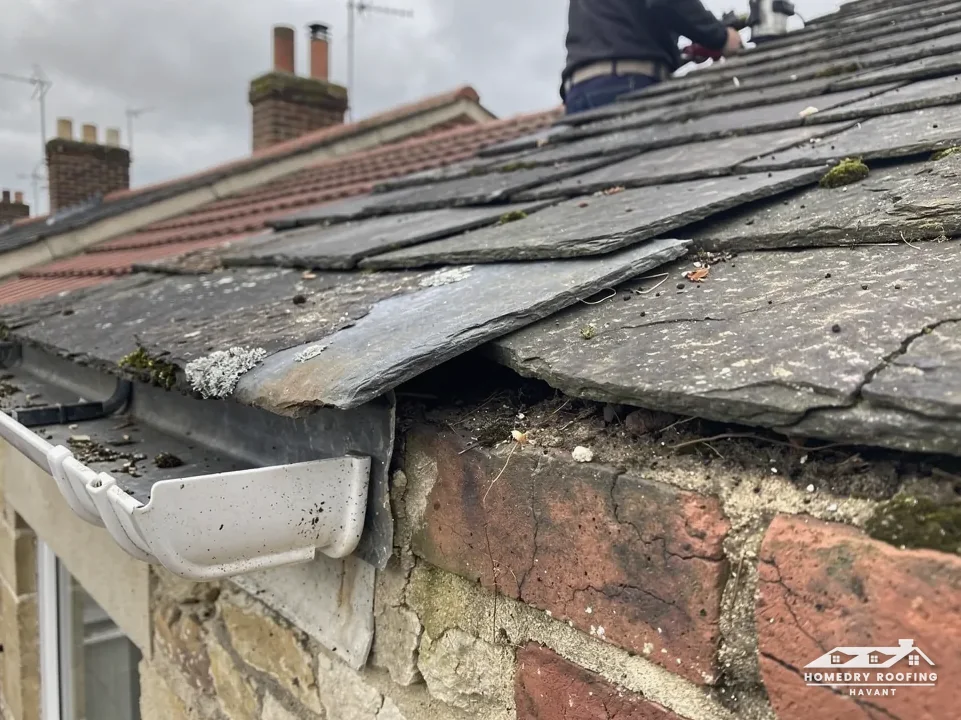
Flashings
Where a Durrington slope runs into a wall or a chimney and lead is turned into the brick.
A lifted edge or a hollow pointing joint lets rain track behind the metal and into the house.

Durrington is a district of Worthing in West Sussex, east of Havant. Flashings, flat roof upstands and outlets are traced to their source, and a written total price follows the survey.
10-year workmanship guarantee, in writing
Where a Durrington slope runs into a wall or a chimney and lead is turned into the brick.
A lifted edge or a hollow pointing joint lets rain track behind the metal and into the house.
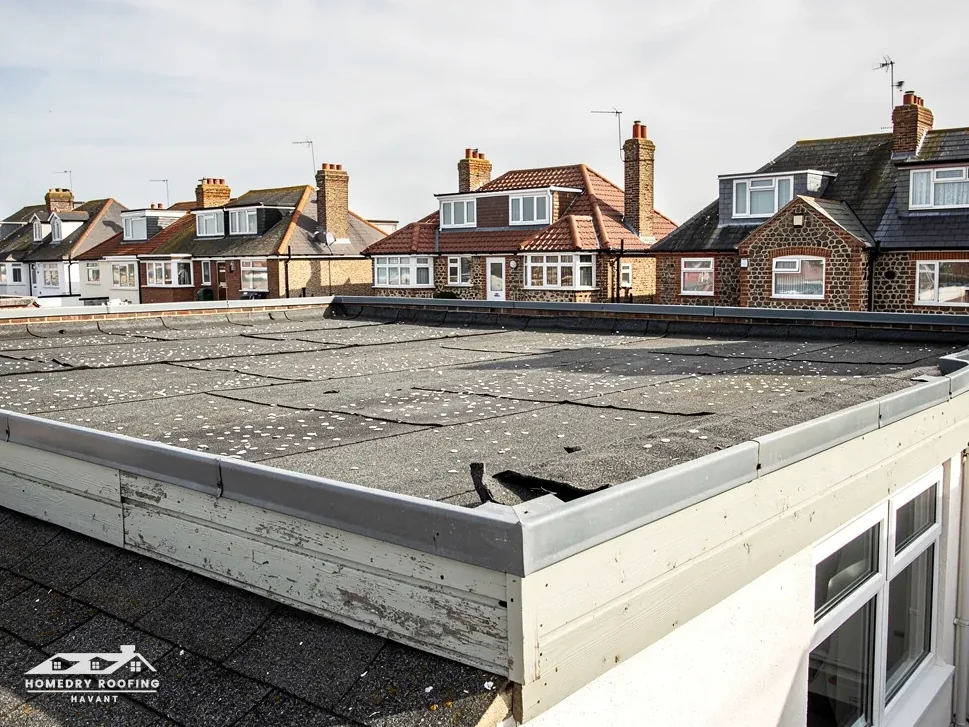
Where a flat roof covering climbs a house wall in a short vertical return.
A split along that return, or an edge that has curled, lets rain reach the wall behind it.
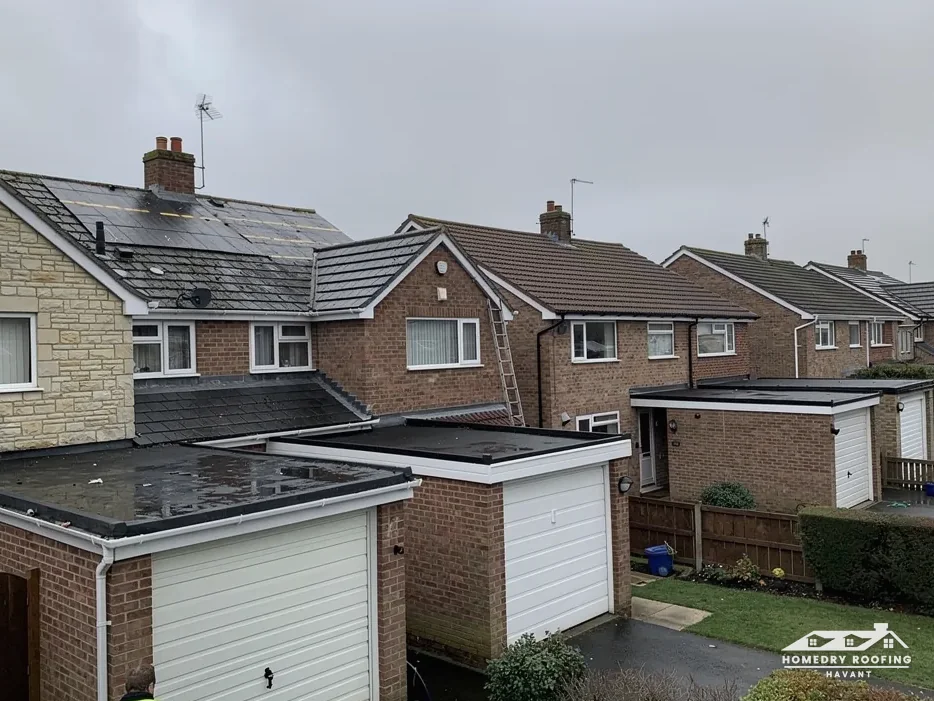
Where a flat roof drains: a small opening at the low point, with a pipe beneath.
Leaves and grit packed into it leave a pool that sits on the surface for days.
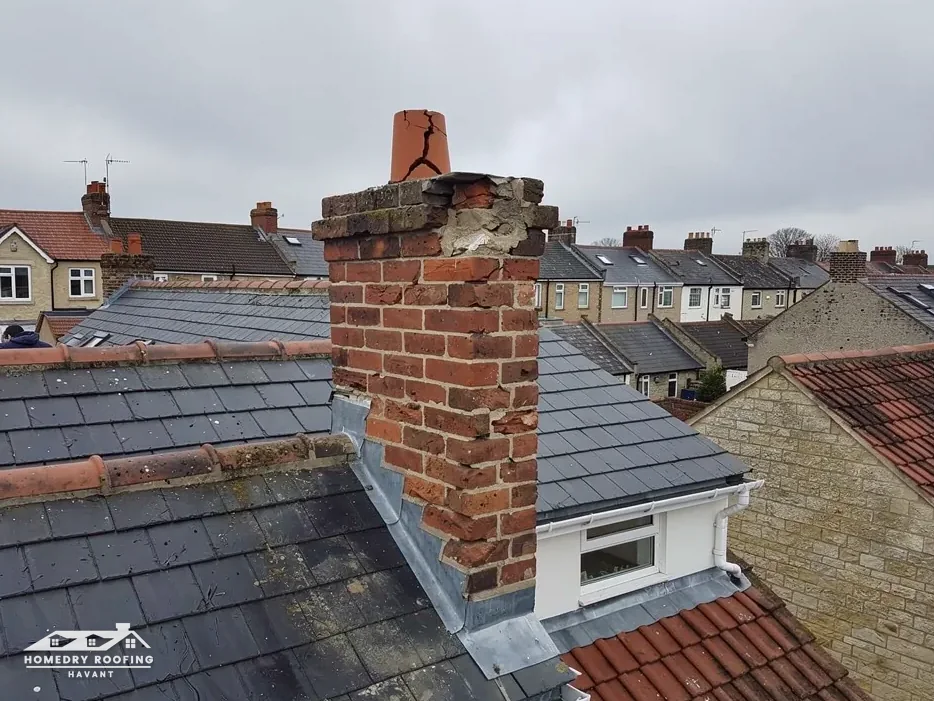
Sealant can hide a gap for a season, then let go and leave the joint wetter than before. We look for why the edge lifted, whether the mortar or the metal, and say which repair fits.
Wherever a slope runs into a wall, a chimney or the cheek of a dormer, a strip of metal has to bridge the join, and the survey reads each one in turn. The lead is checked for lifted edges and thin patches, the pointing that holds it for hollow or crumbled joints, and the tiles beside it for any movement. Metal set into a failed joint soon fails with it, so a bright new strip pressed into rotten mortar is not a repair. At a chimney, the front apron and the side steps are read as separate details. At each wall we also look up into the loft on the other side of it, because a damp mark on the timber there says where the rain has been arriving. The lead roofing and leadwork page describes how flashings are formed and fixed, and roof repairs explains what a mend involves.
The Church of St Symphorian is listed Grade II and remains in use as a Church of England place of worship, so repair work there goes through the faculty system, not listed building consent. St Mary's Farmhouse, and the Barn and Outbuilding to South of St Mary's Farm House, are also listed Grade II. For a listed building the council route applies: consent is needed before any work touching its special character, and a roof repair is no exception.
Durrington is a district of Worthing, so Worthing Borough Council is the planning authority. The Durrington conservation area is one of its own, which makes the council the body to ask whether your road lies inside it. An Article 4 direction may take rights away, and only Worthing Borough Council can say whether one touches your road. Our planning guide for roof work carries the rules.
A strip of lead relies on the joint it grips.
Lead cannot grip crumbled pointing, so the brickwork gets as much attention as the metal. We scrape gently at the joint above each flashing, lift any edge that moves, and photograph what is behind it. If the mortar has gone hollow, the repair starts there, because new lead set into poor pointing would let go again, and the written findings say which joints are sound and which are not.
A tide-mark beside a chimney breast upstairs, or paint lifting on a wall that meets the roof.
A raised edge on the stepped lead, or pointing above it that has gone hollow, so rain runs in behind the metal.
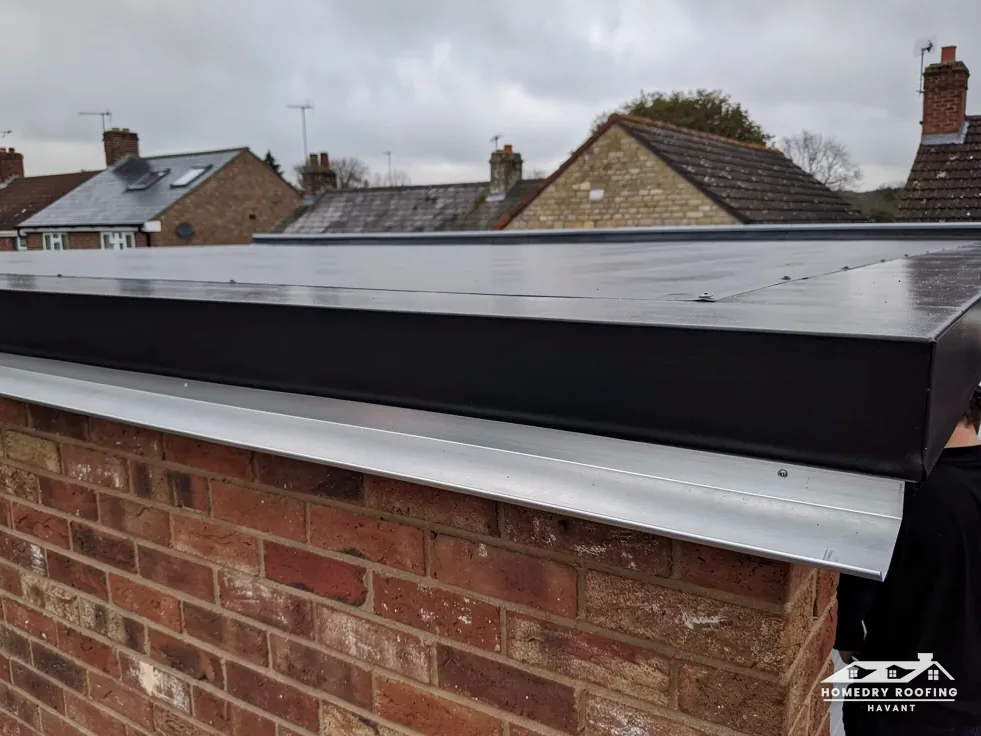
A choked outlet or a lost fall can hold the water on the surface, and each calls for its own repair. We clear the outlet first, watch where the water goes, and then say whether the covering can stay.
A flat roof is not quite flat. Its covering falls gently towards an outlet or a gutter, rises up the house wall in an upstand, and ends at an edge trim. BS 6229:2025 sets a minimum finished fall of 1:80 for membrane flat roofs, so designers go steeper to leave room for tolerances. We look at the upstand for splits and curling, at the surface for pools that last more than a day after rain, and at the outlet for leaves and grit. Ponding has two causes, a lost fall or a blocked outlet, and the cure differs for each, so a jug of water poured after clearing shows whether the flow now gets away. Our flat roofing page describes the coverings and the repairs, and the findings say which one your roof needs.
Reaching a flat roof over a garage or an extension is simple enough, but work on a house front can need scaffold on the pavement. West Sussex County Council licenses scaffolding on the highway: its page quotes £266 for one month, with 10 working days' notice at the least. We arrange the licence with our scaffolder; you agree the start date before anything is booked. The edge trim and any gutter beneath it get a look as well, since a flat roof sheds its water over that edge.
For re-covering a flat roof, the building regulations test from the Planning Portal counts how much of the building envelope and of the roof is touched: under 25 per cent of the envelope and under 50 per cent of the roof, no application is normally required. We ask your building control body which route suits the work, and report back in plain terms before a price is fixed, so the written total never has to change course midway.
A flat roof has to fall somewhere, and the outlet is where it falls.
Standing water on a flat roof is information. If it sits near an outlet, the outlet is probably blocked; if it sits mid-roof, the fall may have been lost, and clearing a drain will not cure that. We note where each pool lies and how deep it is, then record whether a mend will do or the covering needs relaying, with the reasons set out beside the photographs.
Map of Durrington and the places around it, with the dashed line of our 30-mile service area from Havant. The same places are listed below the map.
We start at each place where the slope meets a wall or chimney, and read the lead for lifted edges, thin patches and splits. Next the pointing above it is tested for hollow or crumbled joints, because lead set into poor mortar lets go again. Tiles beside the flashing are checked for movement. The loft side of the wall gets a torch too, for damp marks in the timber. Photographs and plain notes go to you, with a clear statement of whether the flashing needs a refix, a rebuild of its joint, or nothing at all. A sound flashing is reported as sound and left alone.
The Planning Portal's guidance for re-roofing sets two thresholds: less than 25 per cent of the building envelope and less than 50 per cent of the roof. Work that stays under both limits needs no application as a rule, while 15 per cent or more additional weight in the new covering is a trigger for approval by itself. For Durrington work we raise the question with your building control body and pass on its reply. Planning permission sits apart from all that, and the guide on planning has the details, along with the points that apply near a conservation area. The reply from building control goes into the survey notes.
Scaffolding on the highway needs a licence, and in Durrington the council that licenses it is West Sussex County Council, whose page quotes £266 for one month and asks for 10 working days' notice at the least. We arrange the licence with our scaffolder, so the paperwork does not land on you, and the start is fixed with you beforehand. If wet weather moves it, a fresh date is settled with you rather than assumed. A scaffold standing wholly on private land is a separate case. During the visit the front of the property is checked, and the finding goes to you in writing.
The Church of St Symphorian is a Grade II listed building still used for Church of England worship. Such a church is exempt from listed building consent while in use, and repairs go through the Church of England's faculty system instead. If you own a listed house nearby, the council route applies, and listed building consent comes first for any work touching its character, however small the repair seems. Nothing in that touches an ordinary house elsewhere in the district, and anyone unsure of their own house can look it up on the National Heritage List.
St Mary's Farmhouse, and the Barn and Outbuilding to South of St Mary's Farm House, are each listed Grade II at Durrington. Listing applies to those buildings and not to the houses around them, so a neighbour's roof follows the ordinary rules unless it is listed in its own right. Put the address into the list search and read the entry, which tells you which applies. For a listed building, consent is needed before work that affects its character, and Worthing Borough Council can answer questions about it.
Durrington is one of Worthing Borough Council's conservation areas, and the council can say whether your own road falls within it. An Article 4 direction can remove rights that would otherwise apply, so we check with the council first, and our planning guide covers the rest. Anything it tells you is written into the survey papers, so the job follows its advice and nothing is assumed from a map alone. A single enquiry to the council, quoting your road and house number, is enough to get its answer.
Pooling has two causes, and the repair differs for each. A blocked outlet holds water back, and clearing the grit and leaves can cure it. A lost fall leaves the water nowhere to go, and a clear drain will not fix that. BS 6229:2025 sets a minimum finished fall of 1:80 for membrane flat roofs, so new work is designed steeper. We watch where the water settles after rain, then write down whether a mend or a relay is the better course. Either way the trace comes first, because it decides the job.
Quotes for a roof here deserve a careful read. The figure should be a single total, produced after a surveyor has inspected the roof, with the covering and the work described in everyday words. Look for a plain statement about VAT and about scaffold, since a lower-looking sum may omit either. If the existing covering is sound, a repair leads the options. Prices should come out good and fair; the notes from the survey sit next to the number so it can be tested against what the roof showed, and questions about it are welcome before you accept.
You'll get one written total price.
Fill in what you like. It opens WhatsApp with your message ready to send.